It was 2:30 in the morning on a night shift last October. I stood at the end of aisle B, holding an inspection notice in my hand.
The fire inspector would walk in at 9 AM. Annual fire inspection.
Let me be straight with you. After a decade and a half running warehouses, no inspection scares me except the fire inspection. Because fire safety is the thing nobody looks at until someone does — and when they do, it's serious. A fine is the small part. If they order you to shut down for corrections, one lost day of outbound volume will hurt for half a year.
That night I took two veteran leads and walked the entire building, top to bottom. We wrote down two full pages of notes. The next day the inspector came, flagged two minor issues, gave us three days to fix them, done.
Folks, the 12-item self-check list below is what came out of that night. Every year since, we run through it before the annual fire inspection. Never had a big problem again.
Why Fire Inspections Always Go Wrong at the Last Minute
The problem isn't that people don't care. The problem is fire safety is so ordinary that nobody thinks it will ever matter.
Sprinkler heads sit on the ceiling. Nobody looks up all year. Fire extinguishers hang on the wall, collecting dust, and nobody wipes them. Fire lanes? During peak season someone drops a pallet there — "just for one night" — and it sits for three months.
Never walk into an inspection assuming "we're probably fine." Our building learned that in 2019: the monthly extinguisher check cards went three months with no signatures. The inspector flipped through the logbook and wrote us up on the spot. The fine was a few thousand dollars. The money was nothing — the embarrassment was everything. The whole company knew our fire safety program had a hole in it.
Since then we have one rule: one week before the annual fire inspection, management walks the building personally. Not a formality. A real check.
The 12 Self-Checks: This Is How Our Warehouse Does It Now
This table is our current pre-inspection checklist. What to check, how to check it, and what a failure looks like — all spelled out. A new supervisor can follow it cold.
| # | Check item | How to check | What a failure looks like |
|---|---|---|---|
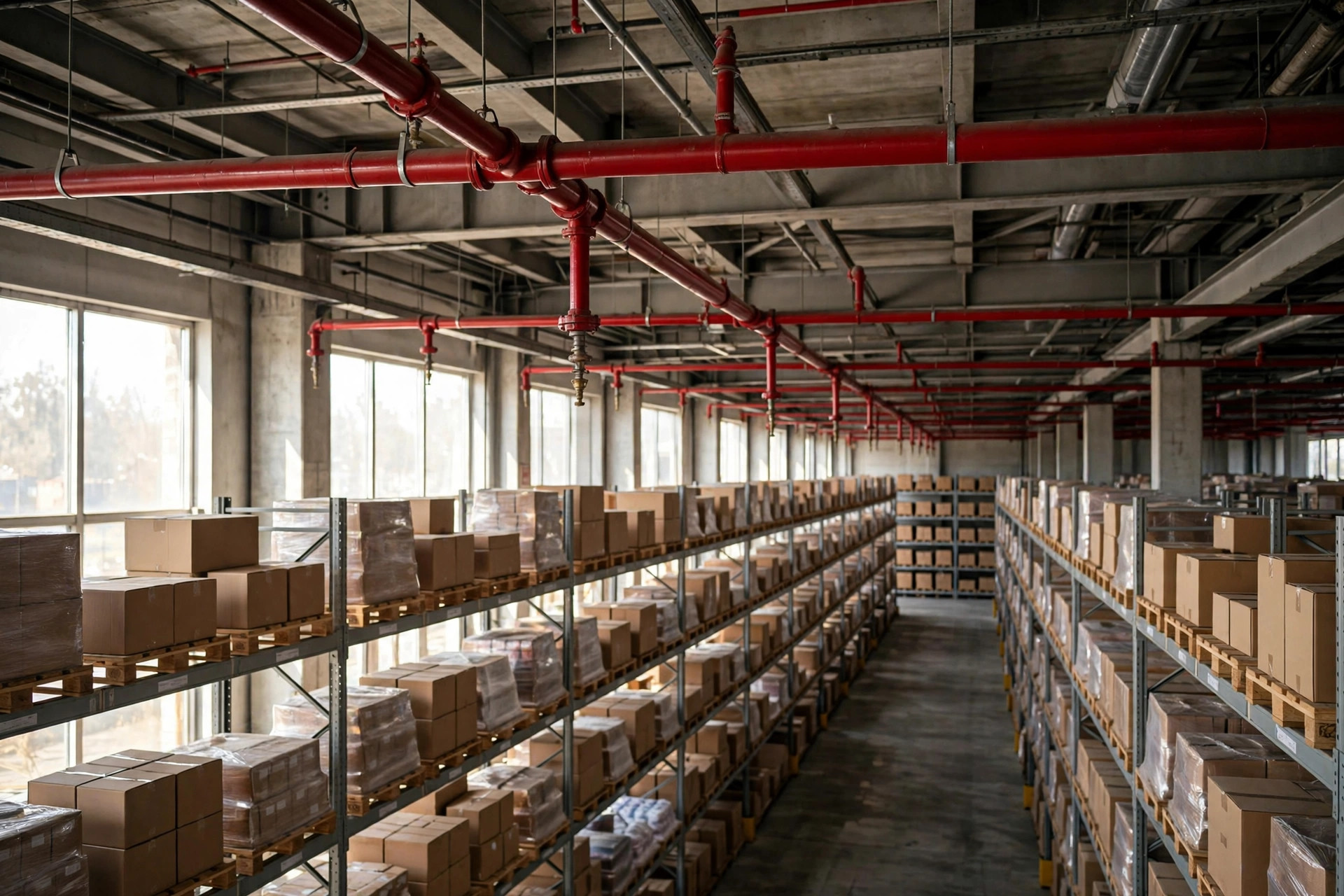
| 1 | Sprinkler head spacing and obstructions | Look up: are heads blocked by rack beams or piping? Is product stacked too high underneath? | A beam covering half a sprinkler head; pallets stacked within arm's reach of a head |
| 2 | Alarm activation test | Hit the test button: do the horns and strobes go off? Does the fire panel receive the signal? | Nothing happens; or it sounds but the panel logs nothing |
| 3 | Fire lanes and egress paths | Walk them end to end, measure the width, swing every fire door fully open | Pallets or empty carts blocking the lane; a fire door wedged open |
| 4 | Extinguisher inspections | Check each one: gauge needle in the green, tamper seal intact, monthly card signed | Needle in the red; seal missing; check card unsigned for three months |
| 5 | Fire pump room | Go inside: can the pump start manually? Any leaks? Are valves in the normal-open position? | Pump room used as storage; a valve shut and nobody knew |
| 6 | Emergency lighting | Kill the power or hit test: do the emergency lights come on, and how long do they last? | Lights dead; or they light up and die in fifteen minutes |
| 7 | Exit and directional signage | Walk the evacuation routes: are signs lit, pointing the right way? | Burned-out sign; a new banner hung right in front of one |
| 8 | Electrical | Open the panels: any daisy-chained power strips, nicked wiring, overloaded outlets? | A row of power strips chained together at the forklift charging station; abraded cable jackets |
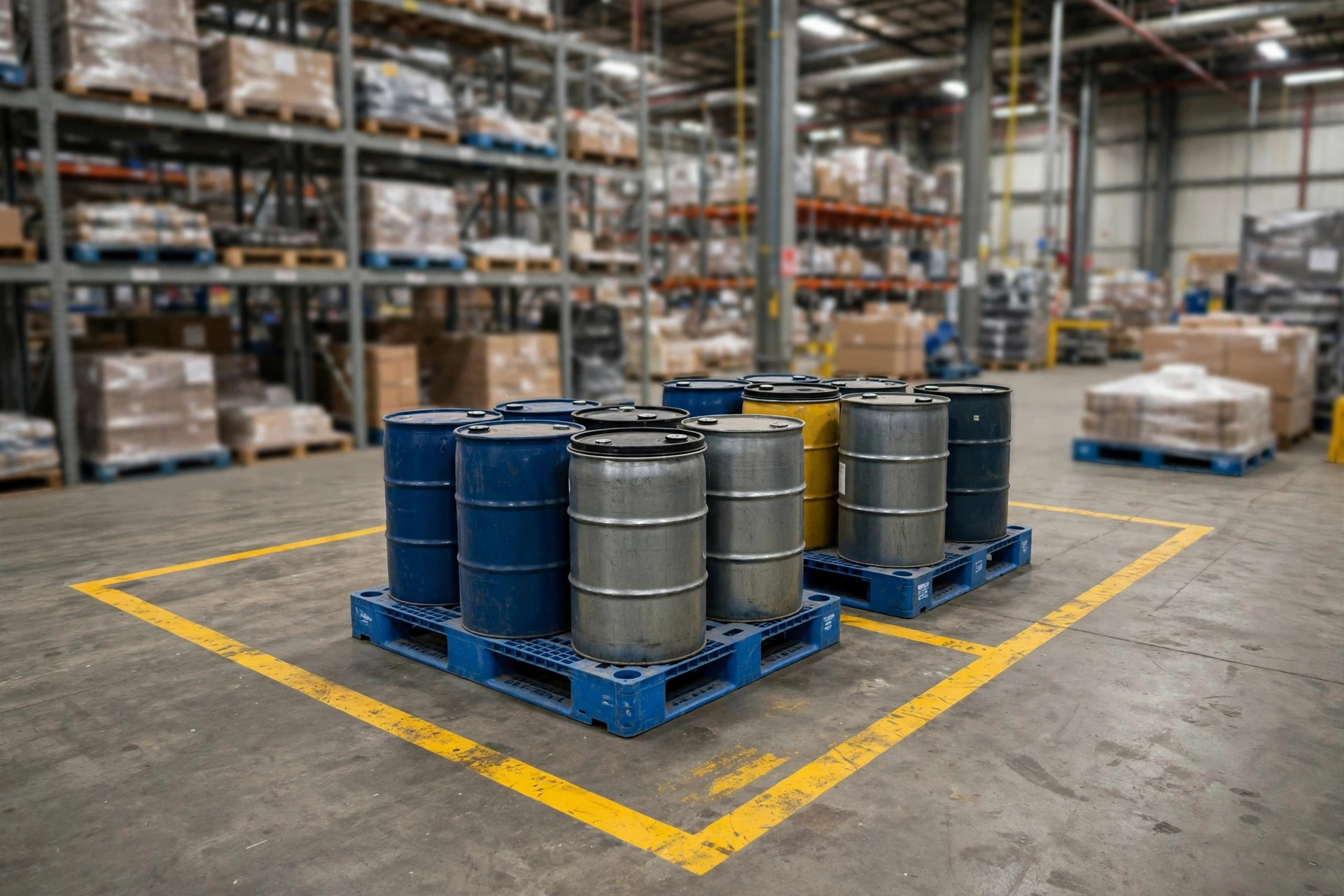
| 9 | Hazmat area | Verify segregation, SDS sheets on site, spill kit stocked | Paint and adhesives mixed in with general freight; nobody can find the SDS binder |
| 10 | Fire doors and rolling shutters | Test: do fire doors self-close? Is anything stored under the rolling shutter? | Something jammed under the door so it can't close; pallet debris stuck in the shutter track |
| 11 | Fire panel watch log | Read the logbook: alarms, troubles, and false alarms recorded, with signatures? | Three blank months; a false alarm nobody wrote down |
| 12 | Storage height vs. sprinkler clearance | Walk the racks: is there enough clearance between the top of storage and the sprinkler heads? | Peak season added a level and product is nearly touching the heads |
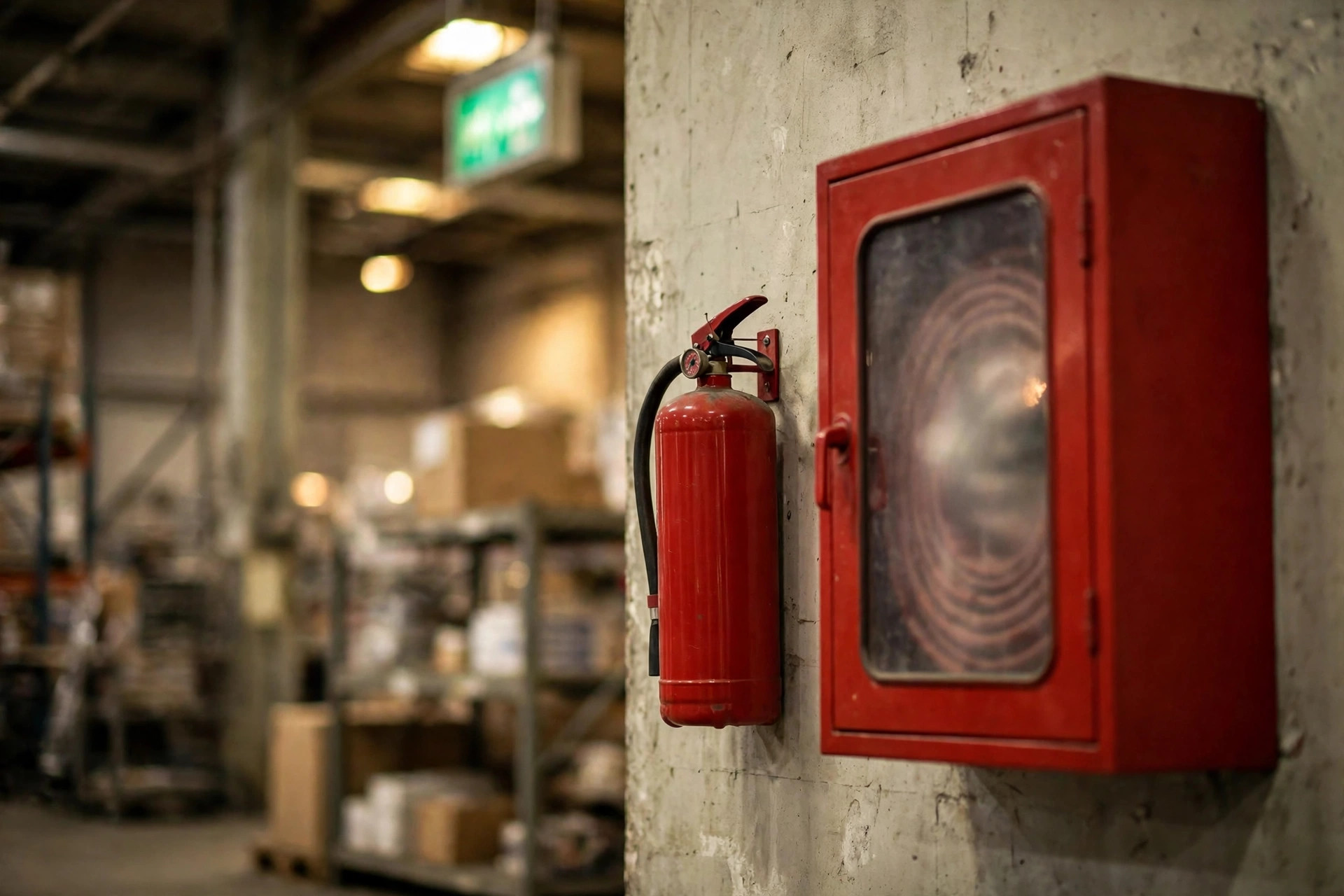
Real talk: of these twelve, items 3 and 4 fail the most. Lanes and extinguishers. Nine out of ten warehouses trip on those two.
The 3 Things Inspectors Love to Flag
After years of dealing with inspectors, I've noticed the first thirty minutes after they walk in are basically scripted.
First: lanes. The inspector looks at egress paths before anything else. He doesn't need a tape measure — one glance tells him if it's blocked. We got burned in 2022: two pallets of returns sat temporarily in aisle C, "waiting for the forklift." The inspector happened to walk by, took a photo, wrote it down. That simple.
Second: records. Check cards, watch logs, alarm test records. Inspectors love records because records can't fake it — or rather, faked records are obvious. Same handwriting on every line, consecutive dates with no gaps. He knows.
Third: sprinkler obstructions. This one hurts the most. Rack reconfigurations, new lighting, cable runs — any of them can block a sprinkler head, and nobody thinks about fire protection when making those changes. In 2020 we installed a row of LED fixtures that landed just below and between two sprinkler heads. The inspector flagged it, we tore them out and reinstalled, lost a week.
A Counterintuitive Take: The Inspector Isn't There to Get You
Here's something counterintuitive I've learned over the years: the better prepared the warehouse, the fewer findings the inspector writes up.
He's not going easy on you. It's that when you lay out your self-check sheet, your inspection logs, and your corrective-action list in front of him, he sees one thing: somebody runs this building. He won't go hunting with a magnifying glass. But a warehouse with messy records and blocked lanes? He'll dig deeper and deeper, and the findings pile up.
So our strategy is simple: before the inspector arrives, we play inspector ourselves. We find every finding first. Whatever's left are the real hard problems that need time and money — and those go on a plan with dates.
One more honest note: code numbers, clearance distances, all of that varies by state and by city. Always go by your local fire department's latest requirements. Don't Google a number and treat it as the standard. A wrong number is worse than no number.
Our Fixed Pre-Inspection SOP: 30 Days Out, Every Year
This is our rhythm now, same every year, no exceptions:
Thirty days out, admin confirms the inspection date and scope with the fire department. Seven days out, I lead the walk-through using the twelve items above — every issue gets a name and a deadline. One day out, we re-verify every fix, lay out the logbooks and check cards, and clean up the pump room and panel room.
On inspection day, one person escorts the inspector. Answer what he asks. If you don't know, say "let me check and get back to you" — never make it up. Afterward, fix on the spot whatever can be fixed on the spot; everything else goes on the plan.
Folks, passing a warehouse fire inspection isn't about luck. It's about the other 364 days. Pin the twelve-item sheet on the office wall, spot-check two items a month, run the full list before the inspection. When the inspector walks in, you'll have peace of mind.
Don't wait for the citation to look up at your sprinkler heads.
By Chen Feng, Warehouse Operations Manager