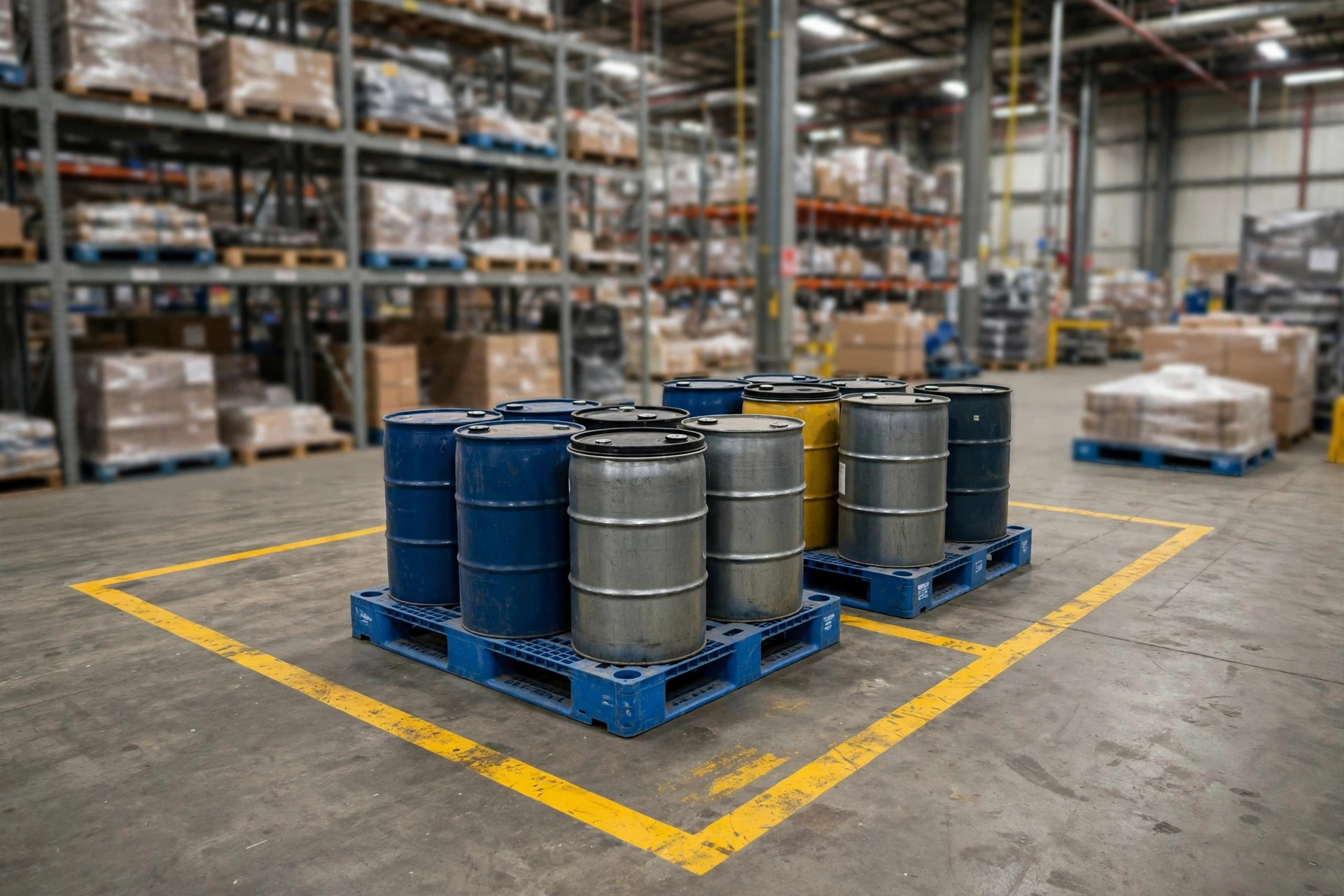
I'll start with the verdict: most warehouses put their hazmat area in the wrong place. Either too close to people, too far from the fire crew, or just mixed in with regular goods, betting nothing goes wrong. Win the bet and you save a few thousand dollars. Lose it and the whole building is gone.
Isolation is not "draw a zone and lock the door." There are two sides to this. One side is compliance — the fire marshal, your insurer, OSHA. The other side is the business — the tighter the hazmat isolation, the slower the picking and the higher the labor cost. You have to serve both. Lean too far either way and you pay tuition.
The Tuition I've Seen Paid Too Many Times
In 2018, I walked into an 80,000-square-foot 3PL warehouse in Ontario, California. Their client sold automotive care products: aerosol cans, motor oil, carburetor cleaner. To save time at receiving, the aerosols went straight into the general pick area, mixed in with paper towels and household goods. During the hottest week of summer, a forklift clipped a pallet while backing up. Dozens of cans rolled across the floor; two valves cracked open and the whole zone filled with fumes. The shift supervisor evacuated half the building on the spot. Nobody lit anything, nobody got hurt — pure luck.
The bill was real, though. The fire department came in and issued a correction list: a dedicated fire-rated room, mechanical ventilation, spill-containment flooring, a separate sprinkler zone, a rewritten emergency plan. About $180,000 all in. I later ran the math with the owner: had they built the hazmat area to code from day one, it would have cost roughly $50,000 to $60,000. Three years late, double the money, plus a shutdown for corrections.
This is not an outlier. I've seen too many warehouses where the owner says "we only store a little, it's fine" — and that "little" quietly grows for three years into a corner nobody dares to touch. By the time the fire marshal or the insurance inspector shows up, the remedial bill is several times what the original build would have cost.
What Counts as Hazmat: Classify First, Isolate Second
Before you draw a single line on a layout, answer four questions. The answers decide how much you spend and how far you go.
First, what exactly are you storing? Aerosols, flammable liquids, corrosives, oxidizers — each has completely different isolation requirements. Don't guess. Line your products up against OSHA 29 CFR 1910.106 and NFPA 30 classifications first, and if you're unsure, ask the fire department for a pre-review. That step is free. Get it wrong and everything downstream is wrong.
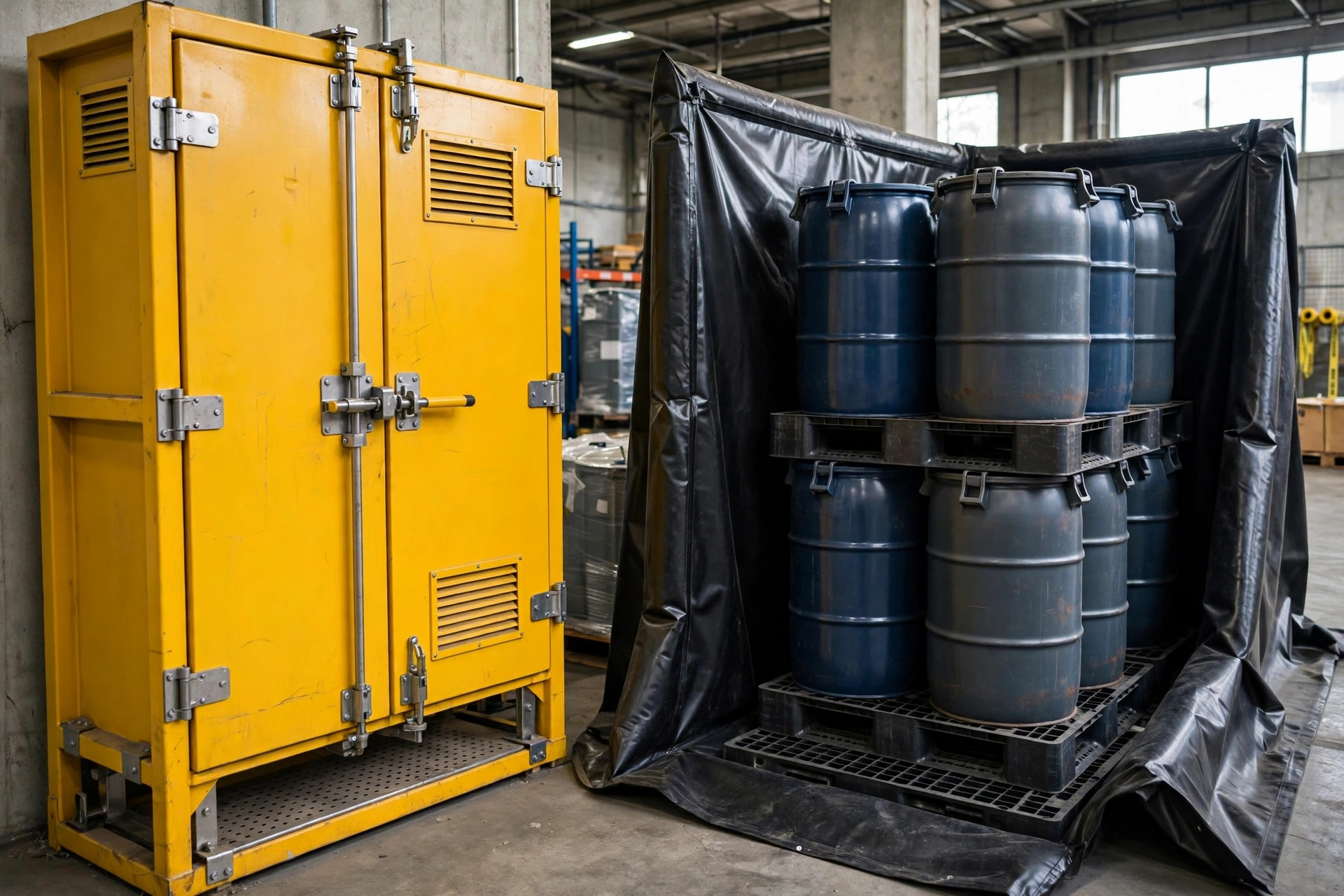
Second, how much? Dozens of gallons and thousands of gallons are two different businesses. Under the International Fire Code approach, a sprinklered control area can hold several times what an unsprinklered one can — check the latest numbers with your local fire authority. Small quantities: fire-rated cabinets plus a segregation cage may be enough. Large quantities: build the dedicated room and stop looking for loopholes.
Third, how often does it move? A product touched fifty times a day needs a different layout than one touched once a month. High-frequency hazmat can't sit too far from the work zone, or operators will "temporarily" stage it in the aisle to save steps — and that staging is where real accidents start. Codes are rigid; people aren't. Design with human nature, not against it.
Fourth, what does the building allow? Retrofitting an old warehouse, the killers are the floor and the drainage. If you can't do containment flooring or run ventilation ducting, pick a different spot. Look at the building first, draw second. Never the reverse. I've seen beautiful drawings die on site because the clear height under the beams couldn't fit the ductwork.
Hazmat Isolation: Where the Money Really Goes (Not the Wall)
When people hear "isolation," they think of walls. The wall is the cheapest part. The three things that actually cost money — and actually save lives — are ventilation, containment, and the sprinkler zone.
Ventilation: vapors from flammable liquids and aerosols are heavier than air. They pool near the floor. Without mechanical ventilation, leaked vapor accumulates in low spots until a static discharge or an electrical spark sets it off. Exhaust vents go low, intake goes high, keep the air moving. Don't cheap out here, or the isolation is theater.
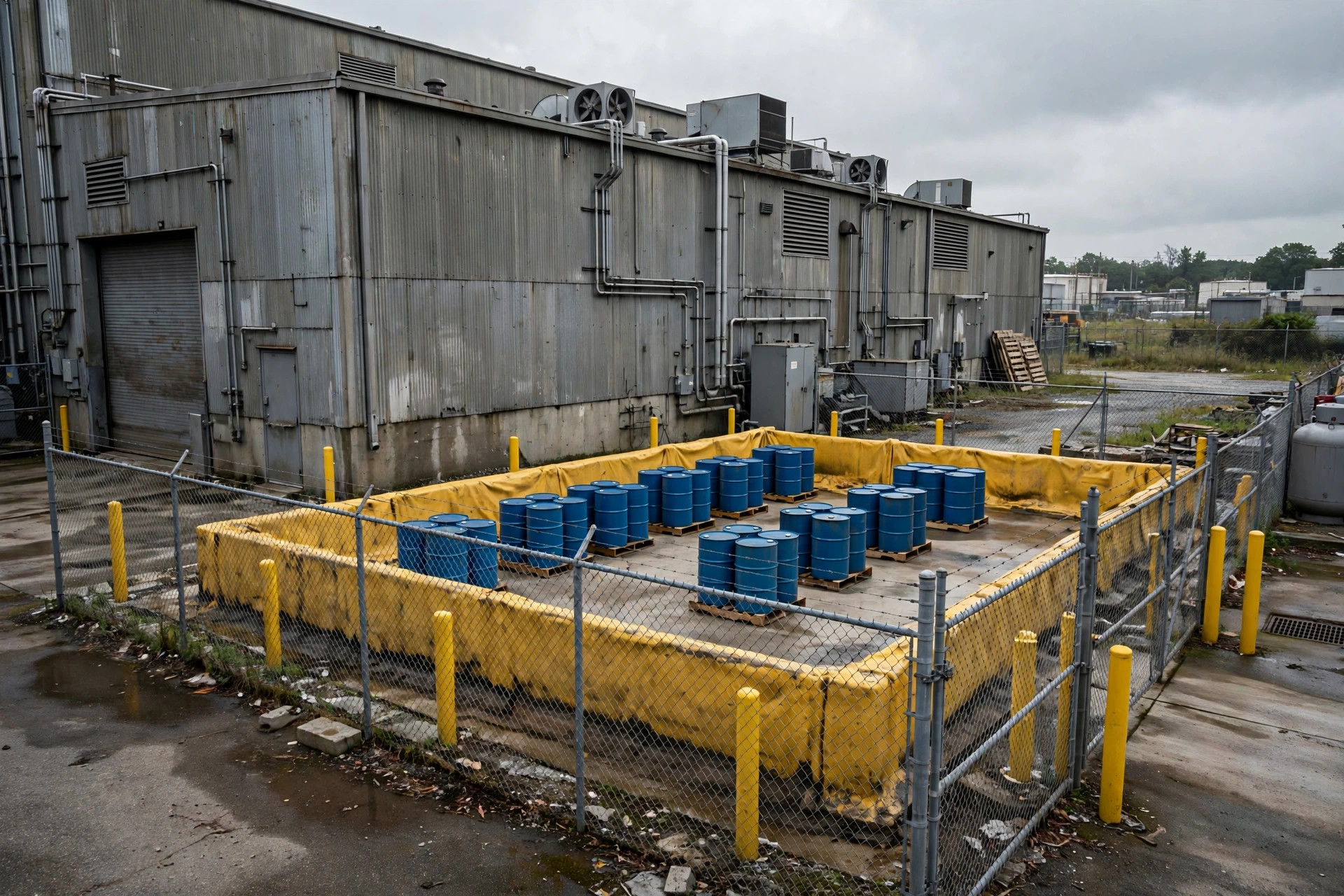
Containment: the floor needs to be impermeable, with a raised lip or ramp at the door, and the berm volume has to hold at least the full contents of your largest single container. I know a warehouse with beautiful walls and a plain concrete floor. One drum of solvent tipped over, soaked straight into the slab, and the soil remediation cost ten times what the walls did. Walls are for people to see. The floor is for the accident.
Sprinklers: the hazmat area gets its own sprinkler zone, separate from general storage, with different head types and water density. Hire a licensed fire protection contractor for this. Don't freelance it. Get it wrong and you either don't have enough water when it matters, or you soak things that shouldn't be soaked and the secondary damage is worse than the fire.
Corner or Near the Dock? Both Sides Have a Point
Location is the biggest trade-off. One camp says: put it in the farthest corner, farthest from people, safest. The other says: put it near the dock, easy picking, best efficiency. Both are right. Both have traps.
The corner's trap: the corner is usually farthest from hydrants and extinguishers, with the longest fire-truck access route. In a real fire, crews have to cross half the building to reach it, and your losses double. Corner ventilation is also typically the worst, which makes the ventilation retrofit the most expensive. The "safest spot" can be the hardest spot to rescue.
The dock's trap: near receiving, foot traffic and forklift traffic are heaviest, so collision risk is highest. And in a leak, the evacuation routes are the first thing compromised — the whole receiving operation stops.
My approach is the middle: put it mid-way along a side wall, and demand three conditions. One, a dedicated exterior exit, so a leak can be evacuated without crossing the main work area. Two, fire-truck access right to the door, hydrant within about 50 meters. Three, no more than a three-minute walk from the main pick zone, so operators never stage product in the aisle to save steps. Priority order: fire access first, evacuation second, efficiency third. Efficiency can be fixed with process. If the fire crew can't get in, nothing else matters.
One more thing people forget: signage and drills. A perfectly built hazmat room means nothing if the night shift doesn't know what's inside it. We make every new hire walk the hazmat area on day one — not a slideshow, an actual walk — and the evacuation drill runs twice a year, once per shift. The cheapest part of the whole program, and the one most warehouses skip.
The Math on Three Approaches
| Approach | Upfront cost | Compliance risk | Picking efficiency | Fits whom |
|---|---|---|---|---|
| Mix it in, bet on luck | $0 | Extreme — one incident can cost you clients and your insurance | Highest | Nobody. Don't gamble |
| Fire cabinets + segregation cage | ~$10k–$30k | Medium, workable for small quantities | Higher | Few hazmat SKUs, small volume, low frequency |
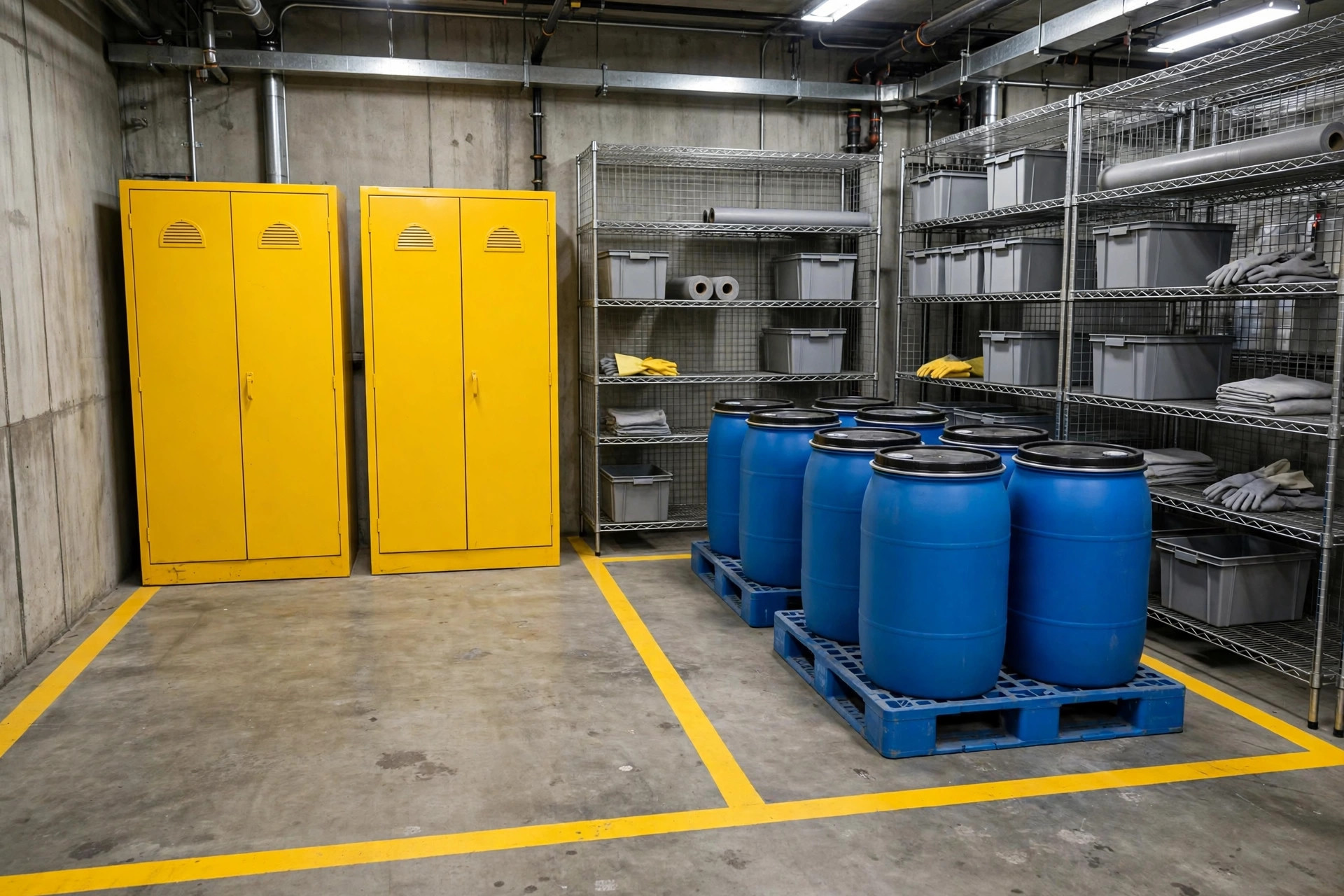
| Dedicated fire-rated room | ~$50k–$100k | Low, passes inspection when built to code | Medium, a few extra minutes of walking | Long-term operators expecting growth |
Here's the contrarian part: each step up in isolation roughly doubles the upfront cost, but insurance premiums and expected accident losses drop. Most owners only do the math on the upfront side. One client of mine saw property insurance drop about 15% a year after building the dedicated room — the savings paid back the extra cost in five years. Isolation isn't a cost. It's insurance by another name, except you're insuring your own building.
One last thing: next time you walk a warehouse, don't look at the racking first. Look at how far the hazmat area is from the nearest hydrant. That distance is how far the company is from a disaster.
By Lao Mi, Supply Chain Veteran (20 yrs)