I'll tell you something I've figured out in fifteen years behind the wheel: nobody pays attention to a warehouse's fire alarm linkage — until inspection day. Then the warehouse manager sweats bullets. I've watched it happen.
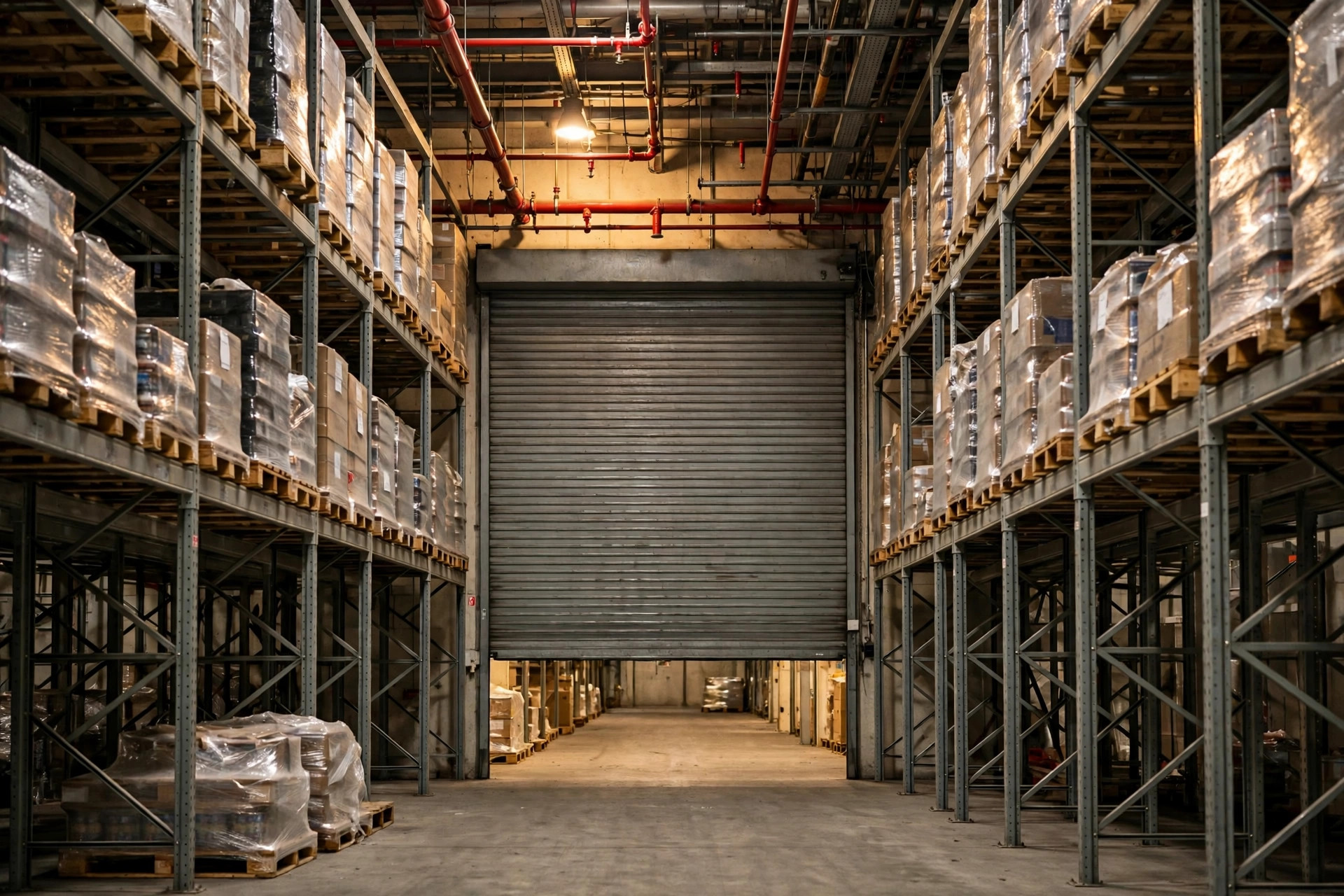
Last fall I was waiting to unload at a big warehouse out in Fontana. My appointment was 10 a.m.; by nearly 1 p.m. the guard waved me off — the dock area was closed for the day. I got out to stretch my legs and saw the whole dock lit up, alarms blaring, a fire-rated rolling shutter coming down... and stopping halfway. Stuck. Dead still. A few uniformed folks stood around looking grim. The forklift driver filled me in later: fire inspection day. The inspector had asked for a linkage test — trip one smoke detector and watch the whole chain fire off on its own: alarms, smoke exhaust, shutters, sprinklers. The detector tripped, the alarms screamed, the exhaust fans spun up — and the shutter jammed halfway down. A chunk of pallet wood was wedged in the track, and the frame looked like a forklift had kissed it some time back. The inspector shook his head on the spot: fail, fix it, see you next week.
I just stood there thinking: that door goes up and down every day, looks perfectly fine — how does it quit on the one day that matters? The electrician kid told me they hadn't run a linkage test in three months. Sure, they opened and closed it by hand all the time. But "works by hand" and "drops on its own when the alarm trips" are two completely different things.
And here's a funnier one. At a warehouse in Ontario, also inspection day, the inspector wanted to see the smoke exhaust. They flipped the switch, the fan roared to life — and the air had nowhere to go. The exhaust outlet was buried behind a solid wall of pallets, freight stacked nearly to the ceiling. The inspector pointed at the pile and asked: where exactly is the smoke supposed to go? The manager's face went green. They called people over to move freight, and it took nearly an hour to clear a path. Tell me that isn't a shame — good equipment, working fan, failed inspection, all because somebody used the exhaust outlet as bonus storage space. Ever since then I've remembered one thing: in fire protection, the failure always happens in the spot you assumed was "fine."
Fire alarm linkage, in plain words: one rope, everybody tied to it
I asked around with some warehouse buddies afterward, and here's the linkage logic as a driver understands it. It's a row of dominoes:
A smoke detector or pull station trips → the alarm panel gets the signal → several things happen at once: horns and strobes go off, the voice evacuation system starts talking, smoke exhaust fans kick on to pull the smoke out, fire shutters drop to seal off the burning area, and the sprinkler system stands ready.
See? It's one chain. The alarm is the eyes, the exhaust is the nose, the shutter is the hands, the sprinklers are the water at the end. The eyes see it, the hands and feet have to move. If any link in the middle breaks, the whole chain is useless: shutter doesn't drop, smoke and fire run down the corridor; exhaust doesn't spin, smoke banks up at the ceiling. Simple as that — but when it counts, the link that breaks is always the one nobody ever tested.
Last summer I was picking up at a warehouse near Riverside around 2 a.m. when the alarms went off and everybody poured outside. I thought: this is it, real fire. Turned out somebody upstairs was reheating leftovers at two in the morning and smoked out a detector. False alarm. But the second half was something to see: alarms screaming, every shutter dropped with a roar, exhaust fans humming, the PA calmly saying "please evacuate in an orderly manner." Start to finish, under a minute, smooth as you like. I asked their warehouse manager later. "We run a full linkage test every month, no exceptions. Shutter tracks get cleaned every week." Same kind of equipment as everybody else. The difference is somebody actually tests it.
And that's the part that runs against common sense: fire protection isn't about how fancy your equipment is — it's about whether anybody has actually tried it. I've seen warehouses with brand-new everything fail inspection because they'd never run one linkage test. And I've seen older buildings with older gear pass with flying colors because they test monthly. The finest equipment in the world can't save a linkage system that nobody touches after installation. The inspector doesn't care what you paid. He cares whether it moves when the alarm trips.
There's a pattern I've noticed over the years: the spots that look the most "fine" are the ones that fail on inspection day. The shutter runs every day, so you assume it's fine. The exhaust vent sits on the wall, so you assume it vents. But fire alarm linkage doesn't test whether each device works on its own — it tests whether they all move together when the alarm trips. Looked at one by one, everything's fine. Linked together, everything's got a problem. That's exactly why the inspector leads with a linkage test. He's watching the teamwork.
My five-item self-check before the inspector shows up
I'm a driver, not a technician. But after watching this stuff for years, I've got my own mental list. If your warehouse has a fire inspection coming, walk through these five yourself first and you'll dodge half the trouble:
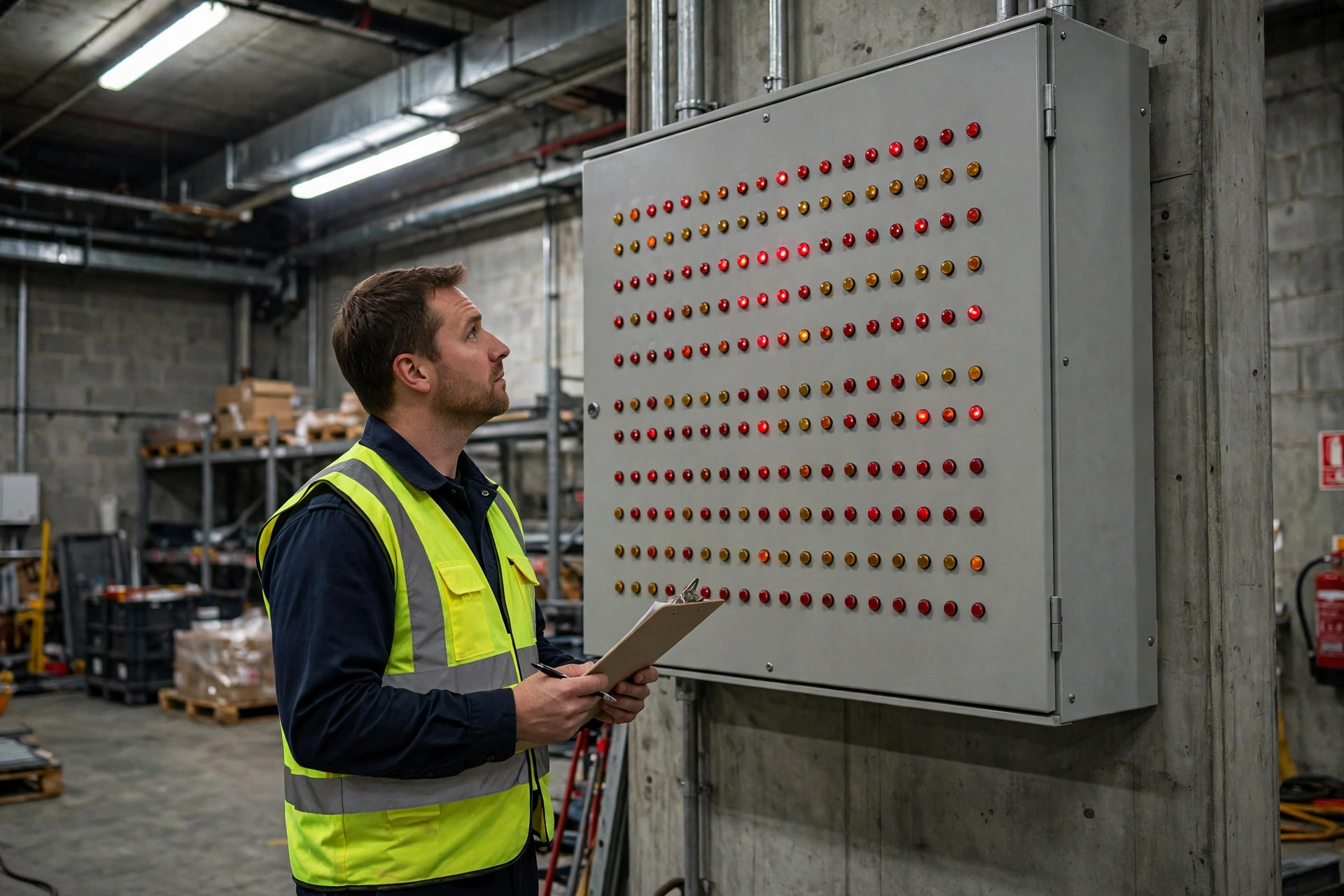
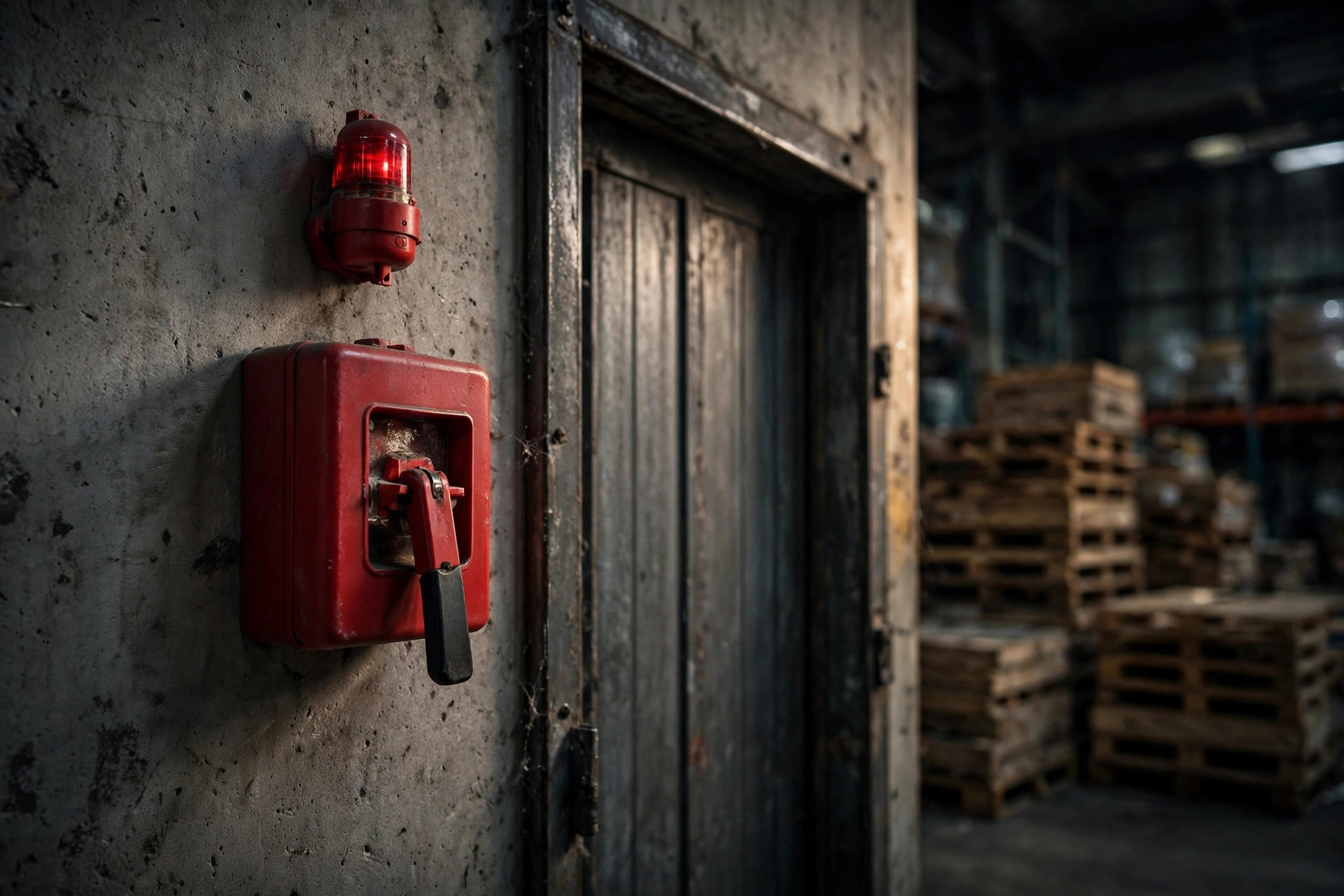
1. When somebody hits the alarm, does the panel actually hear it? Don't just check whether the little light on the wall button is on. Actually press it. Actually test it. Every detector, every pull station, one by one — then look at the panel to confirm it registered. A lit LED is not the same thing as a signal received.
2. When the signal comes, does the shutter actually drop on its own? This is where most places fail. Is there pallet debris or wood chips jammed in the track? Has a forklift bent the frame? A shutter that stops halfway is an automatic fail. Run it up and down by hand a few times, then do one real linkage drop test so you know for sure.
3. Do the smoke exhaust fans actually spin? In a lot of warehouses the exhaust outlets are blocked by stored goods, and the fans haven't turned in years — flip the switch and they trip the breaker. Run them manually before inspection day. Listen for anything wrong. Make sure the outlets aren't buried behind freight.
4. Do the horns and the PA actually sound — loud and clear? A horn that doesn't sound is decoration. If the PA system crackles and nobody can understand it, the inspector will write that down too. Station somebody in the farthest corner of the building and have them listen.
5. Is somebody actually on duty in the fire control room — and are the test logs complete? The inspector will always ask: who monitors this? Where are your test records? No records, and everything else counts for less. Test once a month, write it down once a month. Paper with words on it keeps everybody calm.
Five items, plain as day, and every one of them is a place I've personally watched somebody fail. Sounds simple. But the number of warehouses that actually walk through all five before inspection day? Not many.
One piece of advice, driver to driver — and to the shippers
We drivers fear two things at a warehouse: waiting, and something going wrong. Fire protection has nothing to do with us on a normal day — but if a fire ever breaks out, the person most likely to get trapped is the driver in the middle of unloading. These days I've got a habit: walk into a warehouse I don't know, glance up at the sprinkler heads, glance at the shutter tracks to see if they're clean, check whether the doorways are blocked by freight. Three seconds, and I know: does this place take fire safety seriously, or is it all for show?
There's an old saying: raise an army for a thousand days, use it for one morning. A fire alarm linkage system is the same — it's raised on all those routine tests nobody sees. Don't wait until the inspector is shaking his head in front of you to remember that shutter hasn't moved in three months. By then the rework, the re-inspection, the lost business all cost far more than a monthly test ever would. Even a driver like me can do that math.
By Shifu Zhao, Trucking Veteran (15 yrs)