In August 2026, German mobile-robot maker SAFELOG announced UL 3100 certification — plus CAN/UL 3100 for Canada — for its S3, M4, and L2 series, formally opening the North American market. Not a headline story, but a turning point for warehouse automation equipment exporters: the timeline and cost of UL certification have moved from sales-department afterthought to R&D-department input. More and more Chinese makers of AMRs, AGVs, and sortation lines have written "get the UL mark" into their export roadmaps — and discovered the math is more complicated than a single quotation.
The pattern: eight years from "nice to have" to bid requirement
UL 3100, the Outline of Investigation for Automated Mobile Platforms, is UL's North American safety standard purpose-built for AMRs and AGVs. It covers electrical and mechanical safety, batteries and battery management systems, charging systems, emergency stop, obstacle detection, functional safety, enclosure design, and UL 94 flammability ratings.
Three dates trace the standard's commercialization. In April 2018, Dematic's AGV received the world's first UL 3100 certificate — more of a technology statement at the time. In July 2020, GreyOrange's Ranger GTP became the first goods-to-person mobile robot certified to the second edition of UL 3100, rated for 220 to 3,500 pounds and explicitly listed for commercial and industrial environments. In August 2026, SAFELOG certified three series at once to UL 3100 and CAN/UL 3100, with its announcement framing market access in the US and Canada as the direct payoff. In eight years, the same certificate went from industry first to market ticket.
Once leading vendors are certified and bid documents require an NRTL listing, certification flips from optional to mandatory — and for Chinese exporters, discovering the gap after equipment crosses the Pacific makes rework far more expensive.
Where the money goes: the cost structure of UL certification
One fact first: UL does not publish list prices — certification is quoted per project, so confirm figures against UL's official quotation. The cost structure, however, is public and stable, with five components.
First, project setup and documentation review: UL engineers review the technical file — schematics, bill of materials, certification status of critical components, BMS design documentation. Inexpensive in itself, but it sets the trajectory for everything after: every uncertified critical component can become a rework item during testing.
Second, sample testing — the largest and least compressible line item. UL 3100 testing is system-level: battery abuse and thermal runaway, charging-system safety, functional-safety verification of e-stop and obstacle detection, enclosure strength, flammability ratings. Testing happens in UL laboratories, and fees are assessed per test item and per round: fail the first round, redesign, resubmit, and the fees are assessed again.
Third, factory inspection: an initial production inspection before the mark is granted, then recurring follow-up visits verifying that mass production matches the tested samples — a recurring annual cost.
Fourth, rework and redesign — the line most often underestimated, and the one most likely to blow up. If R&D never considered UL 3100, problems found in testing are not fixed by swapping a component; they may mean retooling an enclosure mold, redesigning a battery pack, or rewriting BMS logic. The industry keeps re-learning this pattern: the cost gap between passing on the first submission and failing twice is driven less by test fees than by engineering rework and lost time.
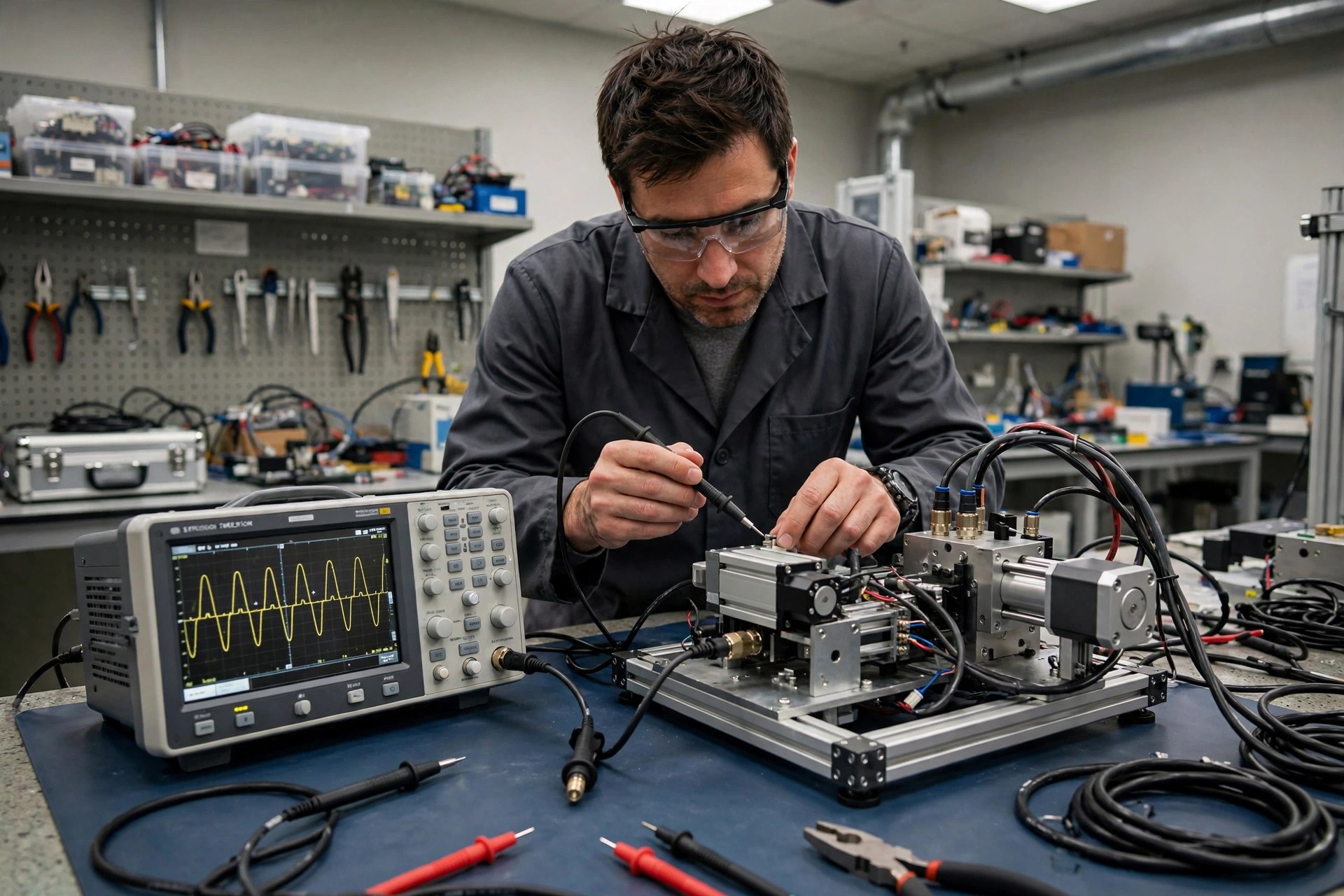
Fifth, the cost of time: every day in the certification cycle presses on delivery and cash collection, plus the hidden layer of international sample freight, engineer travel for US-based testing, and the iteration speed lost to freezing a design revision.
Seen together, these five items surface a counterintuitive conclusion: in the UL certification cost equation, test fees are only the visible tip — total cost is determined by the work done before submission, by whether the design phase included pre-compliance. More thorough pre-compliance means fewer test rounds and a lower total, which is why manufacturers increasingly move certification engineers upstream into R&D.
How long it takes: the UL certification timeline from submission to the mark
There is no standard answer for duration either, but the phase structure is clear: application and quotation, file review, sample testing, initial factory inspection, listing, and ongoing follow-up inspections — with file review and testing as the two main variables.
For an AMR prototype already designed to the standard, industry practice suggests the span from complete file submission to finished testing is measured in months; without pre-compliance, systemic issues found in testing can stretch it past half a year. Control panels — the more standardized product family under UL 508A — move faster, but again the file completeness and first-pass rate decide.
UL test scheduling is resource-constrained: lab slots and engineer availability are finite, and repeated documentation rounds consume not just calendar days but a position in the queue. Half of the timeline depends on UL — half on applicant preparedness.
Why now: attribution, plus a necessary correction
Why did UL certification become a visible export barrier in 2024–2026? Public information supports a three-layer attribution. The regulatory layer: OSHA requires workplace electrical equipment to be certified by an NRTL — a Nationally Recognized Testing Laboratory. Note the wording: NRTL, not UL. UL is simply the best-known of the dozen-plus NRTLs; Intertek (ETL), CSA, and TÜV listings carry equivalent legal standing. "Equipment must bear the UL mark" is a market convention, not the regulatory text — a correction that shapes the path choices below.
The procurement layer: when large end customers — big-box retail, e-commerce, 3PL operators — write "NRTL listing" into bid documents, certification becomes a competitive question. Without the certificate, there is no bid.
The liability layer: when an electrical fire or injury occurs, the first question in insurance and liability proceedings is whether the equipment carried recognized third-party certification. The value of UL 3100 is not only winning the order but having an answer when something goes wrong.
Three routes, one trade-off: fit over optimum
Exporters in practice choose among three routes, each with a different timeline, cost structure, and fit:
| Route | Fit | Timeline | Cost structure | Limitation |
|---|---|---|---|---|
| Full UL listing | High-volume flagship models | Months | Setup + testing + annual factory-inspection fees; confirm against UL quotation | Longest cycle, largest upfront commitment |
| Another NRTL listing (e.g., ETL) | Same North American market access | Months, usually slightly faster | Similar structure; market reputation for somewhat lower fees | Some US buyers only recognize the UL mark |
| Field evaluation | Single units, small batches, or already-installed equipment | Weeks | Per-evaluation fee, no recurring annual fees | Covers only the evaluated unit; uneconomical at volume |
The table hides a trade-off: the UL mark has the strongest recognition but the longest timeline and highest cost; other NRTLs are legally equivalent and usually faster and cheaper, yet face "UL only" purchasing habits; field evaluation is fastest and most flexible but priced per unit. The practical answer is often a combination: full listing for flagship models shipping dozens of units a year, field evaluation for the two or three customized machines on a specific project.
One frequently missed option: certify the control panel first. The electrical core of most automation equipment is the panel, and panels have the mature UL 508A standard — getting the panel compliant first sharply reduces electrical risk in whole-machine certification, a step-by-step strategy suited to smaller manufacturers.
Outlook 2026–2028: three developments worth tracking
From the pattern, the numbers, and the attribution above, three grounded judgments for the next two to three years follow — each with a timeline and a way to verify.
First, certification will move upstream as standard practice among leading vendors — certification as an R&D input, not a post-launch remedy, as the SAFELOG pattern shows. Watch 2027 new-product releases from major AMR makers: if technical documentation includes a certification plan alongside the specs, the "design first, test later, redesign on failure" model is being retired.
Second, competition among NRTLs will intensify. When UL scheduling becomes the bottleneck and UL fees burden smaller vendors, the "equivalent legal standing, faster and cheaper" pitch from ETL and others turns attractive. The data point to watch: whether the share of non-UL NRTL marks rises in 2026–2027 certification announcements from Chinese AMR exporters. If it does, the market is voting with its feet.
Third, Chinese vendors' strategies will stratify: leaders pursuing full UL listings as brand assets, mid-tier players combining UL 508A panels with field evaluation for complete machines, small-batch custom builders relying on field evaluation long-term. This is not a quality ranking but a natural mapping of shipment volumes and business models — certification strategy is, at bottom, part of commercial strategy.
The timeline and cost of UL certification were never just "how much, how long." They mirror export maturity: compliance as the last formality before shipment, or as part of product definition. What is truly worth watching is not who earns the certificate, but what manufacturers build as their next moat once it goes from scarce asset to standard issue.
By Dr. Chen, Supply Chain Researcher