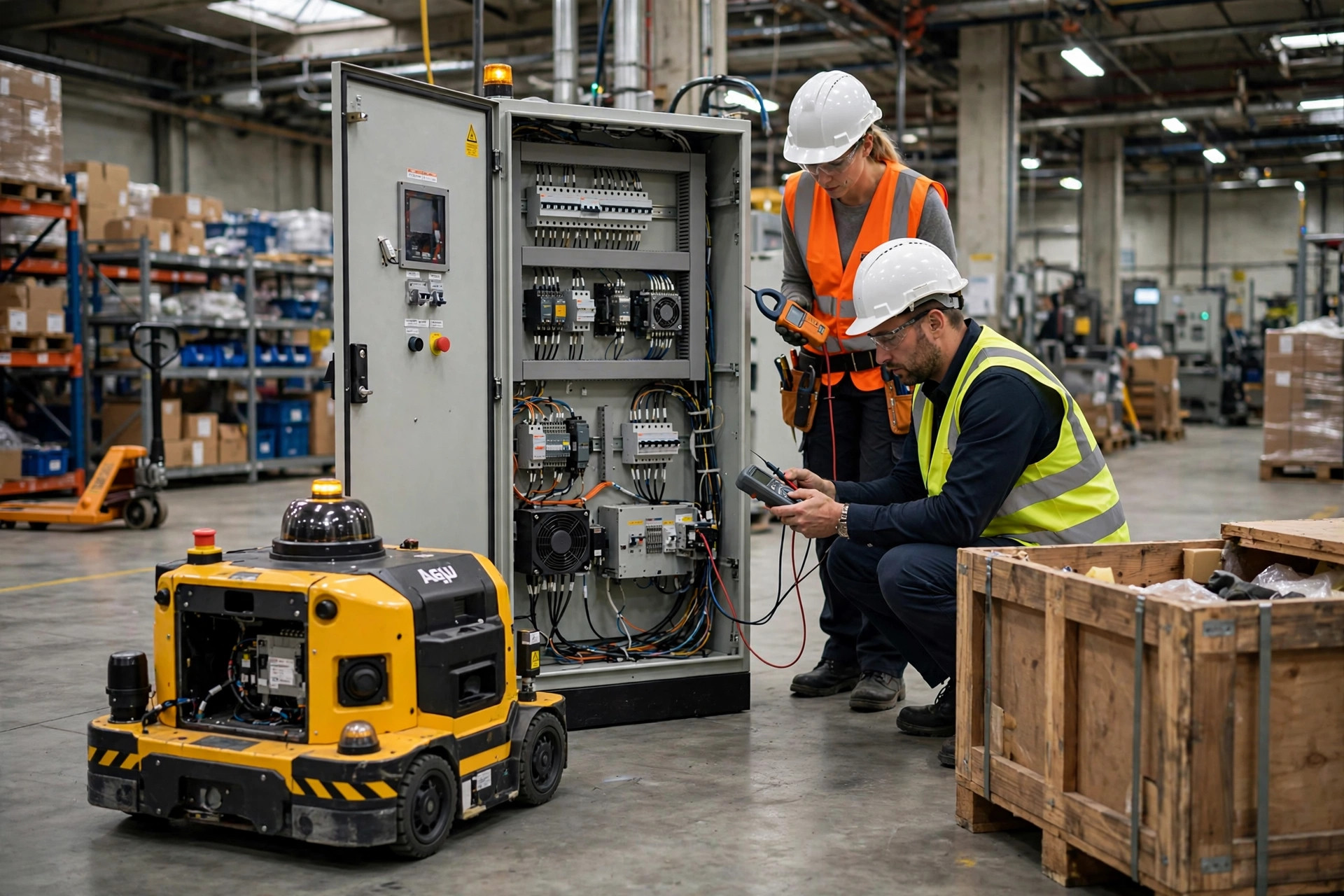
Since the second half of 2024, a new pattern has emerged in conversations with Chinese warehouse-equipment makers selling into India: the buyer's first question is no longer about price, but about where the vendor stands on BIS certification India. Handheld scanners, control cabinets, AGV charging piles, LED high-bay lights — any electrified warehouse gear is being repriced by India's compliance bar. The CRS timeline and cost picture behind it deserves a careful breakdown. According to the Bureau of Indian Standards (BIS), the Compulsory Registration Scheme has steadily expanded its mandatory product list over the past two years, while ISI-mark requirements for industrial electrical equipment keep tightening. This is not one customer's quirk; it is a structural shift in the market.
The phenomenon: compliance is becoming a precondition for orders
Chinese equipment vendors used to compete abroad on product, price, and delivery. India has now added a gate — and it is a rigid one: without BIS certification, goods may not even clear the port. Notably, this did not happen overnight. BIS expands its mandatory list incrementally, adding product categories each year, and warehouse electrical equipment happens to sit in the recent expansion band. For vendors still on the fence, the base-case judgment is simple: the list will only grow, never shrink.
The data: two real pitfall cases
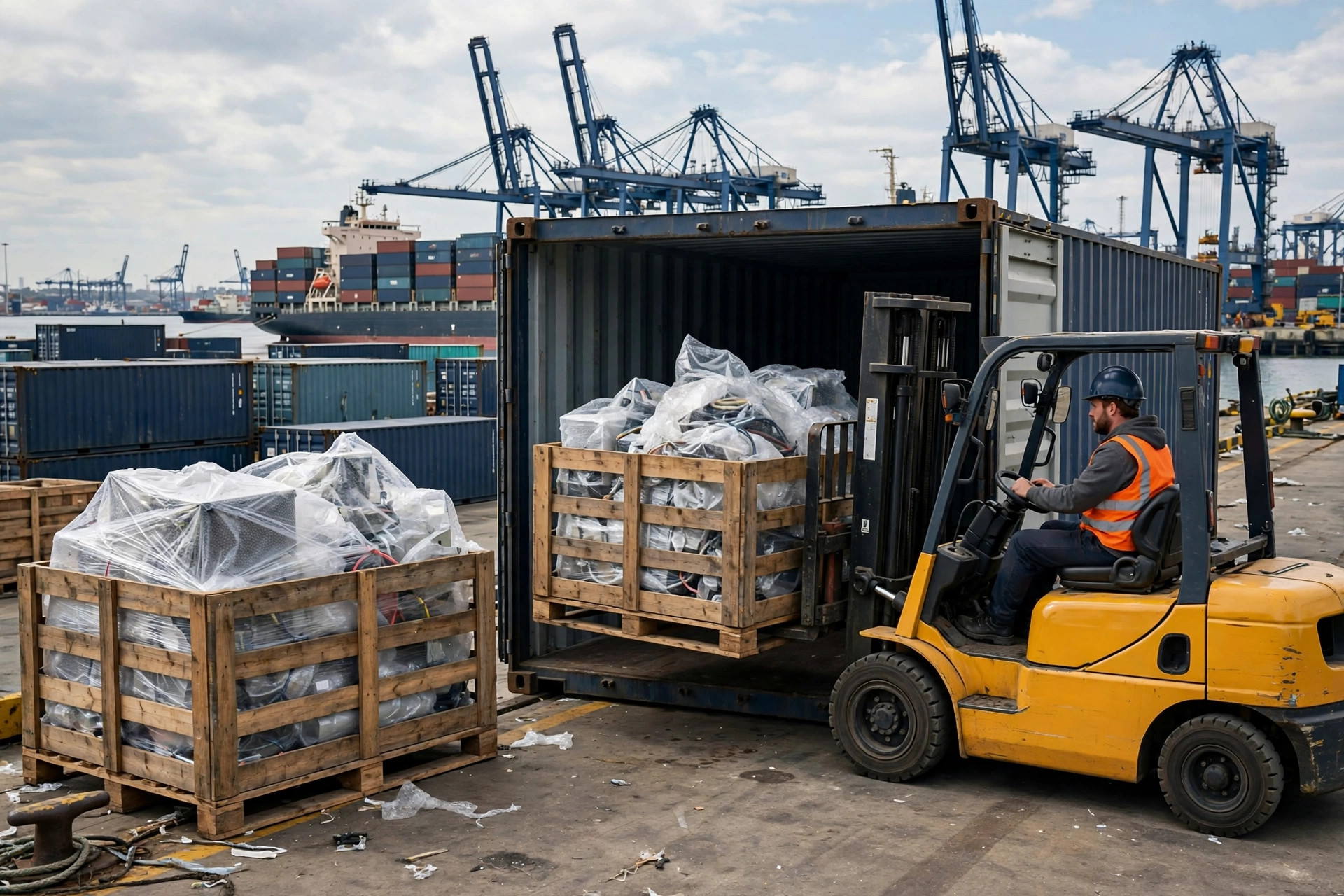
Case one: detained in New Delhi, 40% of margin gone. In September 2024, a scanner-terminal maker in South China won a 2,000-unit order from an Indian 3PL, worth roughly RMB 3 million-plus. The goods reached New Delhi — and stalled at customs. The product sat on the CRS mandatory list, and the vendor held no BIS registration number. After three weeks of detention, the shipment was sent back; the vendor air-freighted samples to an Indian lab for testing and re-shipped by sea, losing nearly two months. The math is unforgiving: demurrage, return freight, air-freighted samples, and late-delivery penalties ate close to 40% of the order's gross margin. "We didn't lose on the product," the sales director told me afterward. "We lost to a piece of paper we didn't know about."
Case two: FMCS slips a quarter, misses the customer's budget window. In March 2025, a control-cabinet manufacturer in Zhejiang chose the FMCS route. The plan: a BIS auditor on-site in April, certificate in hand before the Indian customer's new fiscal year (India's fiscal year starts each April) released its budget. The auditor's Indian visa slipped by two weeks; then the samples bound for the Indian lab sat at Mumbai port for ten days — shipped without a commercial invoice, customs treated them as ordinary cargo. Start to certificate took nearly five months, a quarter behind plan, and the customer's budget window had closed. The order slipped to the next fiscal year. On the FMCS path, time is the least controllable variable.
Why two pathways: the different logic of CRS vs FMCS
At its core, BIS certification is India's requirement that certain products sold domestically conform to Indian standards. In practice it runs through two mechanisms with fundamentally different logic:
- CRS (Compulsory Registration Scheme): for electronics and IT products. The logic is "test the product, not the factory" — samples go to a BIS-recognized lab, and a passing test report earns the registration certificate. Built for standardized, fast-iterating electronics.
- FMCS (Foreign Manufacturers Certification Scheme): for products requiring the ISI mark. The logic is "test the product and audit the factory" — BIS sends auditors to the overseas plant before issuing the license. Built for industrial equipment, cables, steel, and similar traditional categories.
A routing table for warehouse-equipment vendors:
| Equipment | Likely pathway | Rationale |
|---|---|---|
| Handheld scanners / data terminals | CRS | Typically on the electronics mandatory list |
| AGV charging piles / power adapters | CRS | Power products largely sit under CRS |
| LED high-bay lights | CRS (model-dependent) | Some lighting categories are mandatory; verify per model |
| Control cabinets (complete units) | FMCS/ISI or split certification | Whole cabinets usually fall under industrial electrical equipment |
| Racking / pallets (non-electrical) | Generally not required | Not electrified, outside the mandatory lists |
One caveat: the mandatory list is revised yearly — always check the current BIS schedule before committing. The table is directional, not legal advice.
BIS certification India: CRS timeline and cost structure
CRS timelines stretch widely around three variables: whether documentation is complete on first submission, whether testing passes on the first round, and whether the lab has a queue. With all three favorable, 2–4 weeks is achievable; in peak season, with queues or retests, 6–8 weeks is common. A prudent project plan should assume a 2–8 week band.
Costs fall into five buckets: BIS statutory fees, lab testing fees, the AIR (Authorized Indian Representative) annual service fee, series/model extension fees, and international sample freight plus customs clearance. I deliberately give no figures — lab quotes and the BIS fee schedule move every year, and a printed number would mislead. Two further facts matter: foreign manufacturers must appoint an AIR as the in-country compliance owner under both CRS and FMCS — without one, the application cannot even be filed. Certificates typically run 1–2 years and can be renewed up to 5 years; start renewal three months before expiry, not after.
FMCS pathway: timeline, cost, and the factory audit
FMCS runs application, document review, audit scheduling, auditor visas, sample clearance, lab testing, and licensing — 3–6 months end to end is normal. On top of the five CRS cost buckets, add audit-related travel costs. From the cases I have seen, three choke points recur: samples delayed 1–2 weeks at Indian customs (samples without a commercial invoice get inspected most), failed tests forcing rework (poor control of sample-to-mass-production consistency), and factory-address documents inconsistent with the application triggering BIS queries (the business license, lease contract, and application must match character for character). Reserving two weeks of buffer each for visas and clearance is the cheapest insurance an FMCS project plan can buy.
The counterintuitive math: time costs more than fees
Here is the calculation most vendors get backwards: the biggest cost of certification is not the official fee — it is time. A CRS project slipping two months costs a selling season; an FMCS project slipping a quarter costs the Indian customer's entire fiscal-year budget window. Fees and testing charges are published and budgetable; time losses are invisible and unbudgetable, yet often several times larger. More worrying is how vendors organize for it: many treat certification as a purchasing task — "pay money, get certificate" — handed to a sales rep to follow up part-time. That is precisely where rework and delays begin. Certification is project management, not procurement. It needs someone owning the timeline, document consistency, and the lab queue.
Trend judgment: the mandatory list is extending toward industrial equipment
BIS's moves over the past two years point one way: the mandatory list is extending from consumer electronics toward industrial equipment, and warehouse electrical gear sits squarely in that expansion band. Scanners need certificates today; charging piles, sensors, and HMI panels may tomorrow. Vendors planning for India should front-load BIS into product planning: confirm the target schedule at the design stage, reserve test interfaces, and prepare English technical files. Starting certification after the order arrives means handing your delivery schedule to a lab's queue.
As India shifts from an optional market to a mandatory question, the real issue may no longer be whether to pursue BIS certification, but whether your product iteration speed can outrun the expansion of the compliance list. That is worth serious thought for every team shipping hardware overseas.
By Dr. Chen, Supply Chain Researcher