Let me say something that will annoy half the certification brokers out there: most of what gets sold as "CE certification" is paper. Real CE certification for warehouse equipment entering Europe comes down to three things: the Machinery Directive (2006/42/EC, replaced by a new regulation from January 20, 2027), a Declaration of Conformity you sign yourself, and a technical file you must keep available for 10 years. Understand these three and you already know more than most salespeople.
Think of it this way: CE is not an exam you pass. The EU hands the judge's gavel to the manufacturer. You assess the risks, you affix the mark, you sign — but the evidence chain (risk assessment, test reports, drawings, manuals) must be kept for a decade. Customs spot-checks, customer QA audits, insurer investigations after an accident — they all look at the same file. Five minutes to stick the label on, ten years of evidence behind it. That's the truth about CE.
It's like filing taxes: most people file on their own — that's self-declaration. But certain high-risk industries need a certified audit — that's where a Notified Body steps in. Roughly 90% of warehouse equipment goes the self-declaration route, but you must know exactly where the boundary is. Get it wrong and your shipment gets held at the port.
What CE Certification Actually Covers on Warehouse Equipment
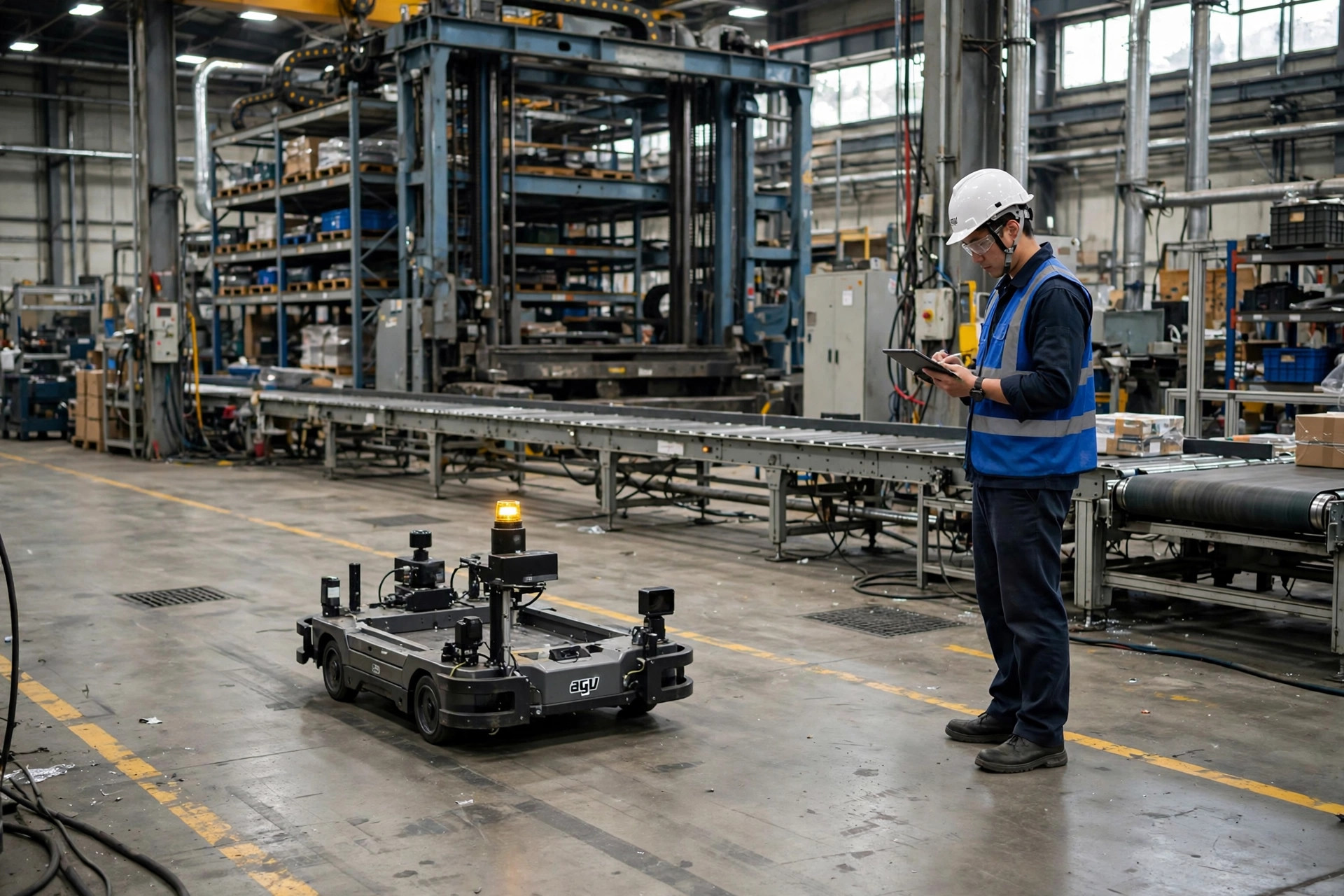
That CE mark on an AGV usually represents not one directive but four or five stacked together:
- Machinery Directive 2006/42/EC: the main one, covering machine safety. AGVs, conveyors, stacker cranes — all in scope.
- EMC Directive 2014/30/EU: electromagnetic compatibility. AGVs roaming a warehouse full of wireless comms and motor drives must neither emit nor succumb to interference.
- Low Voltage Directive 2014/35/EU: triggered when electrical parts exceed 50V AC (or 75V DC). Chargers and high-power drives almost always qualify.
- Radio Equipment Directive 2014/53/EU: triggered by Wi-Fi, 5G, or Bluetooth communication modules.
- RoHS Directive 2011/65/EU: restriction of hazardous substances in electrical equipment.
So "doing CE" is never about one certificate — it's working through the applicable directives one by one. Anyone promising "one certificate covers every directive," walk away. That's a fake need, full stop.
One more thing with a 2027 deadline: the new Machinery Regulation (EU) 2023/1230 replaces Directive 2006/42/EC starting January 20, 2027. As a regulation rather than a directive, it applies directly and uniformly across all member states — no national transposition needed. It tightens requirements for equipment with self-learning safety functions (think AI-based safety navigation on AMRs) and moves the high-risk machinery list into its own annex. Check the EU Official Journal for the transitional provisions, and if you're signing long-term supply contracts now, add a clause assigning compliance responsibility when the switchover happens.
The Boundary: When Warehouse Equipment Needs a Notified Body
This table is the most valuable part of this article. The rule is simple: the Machinery Directive has a high-risk machinery list (Annex IV of 2006/42/EC). Only listed machinery needs Notified Body type-examination; everything else goes through internal production control — you assess, mark, and sign the Declaration of Conformity yourself.
| Equipment type | Typical directives | Conformity route |
|---|---|---|
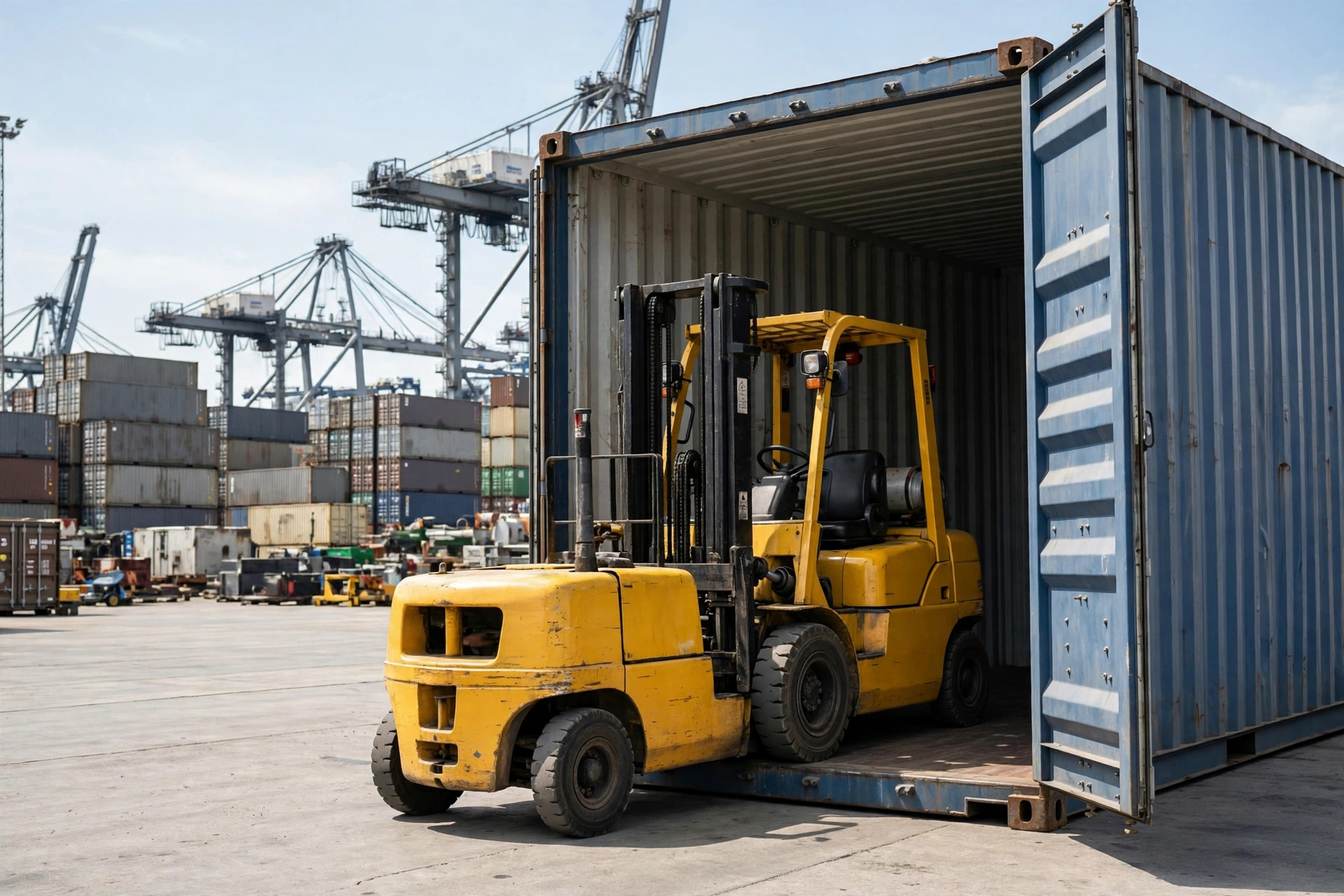
| Buried-load / forklift AGVs, AMRs | Machinery + EMC + LVD / Radio | Self-declaration (equipment with self-evolving AI safety functions may trigger Notified Body review under the new regulation — check the Official Journal) |
| Conveyors, vertical lifts | Machinery + EMC | Self-declaration |
| Rail-guided stacker cranes | Machinery + EMC | Self-declaration |
| Integrated line (AGV + conveyor + stacker) | Reassessed as a machinery assembly | Integrator acts as manufacturer, new self-declaration |
| Annex IV high-risk machinery (e.g., certain vehicle lifts) | Machinery | Notified Body type-examination |
The integrated-line row deserves emphasis: bolt three CE-marked machines together and legally you've built a new "machine." Individual CE marks do not equal line-level CE. The integrator must redo the risk assessment and sign a new Declaration of Conformity as the manufacturer. In 2023, a Chinese integrator delivered a full line to a German customer — every standalone certificate in order, no line-level declaration. Customer QA rejected it outright; remediation dragged on for two months. Lesson: when you sell a line, the CE work for the whole line must be in your quote.
Reference these harmonized standards in your technical file: EN ISO 12100 for risk assessment, EN ISO 3691-4 for driverless trucks, EN 619 for continuous handling equipment, EN 528 for storage and retrieval machines, EN ISO 13849-1 for safety-related control systems. Get one standard number wrong and any competent QA engineer will see through it.
The Technical File: What Customs and Customers Actually Ask For
The technical file is never submitted to any authority — but it must be producible on demand, for 10 years. Here's the checklist; every missing item is a landmine:
- Risk assessment report (EN ISO 12100 method: hazard identification → risk estimation → protective measures → residual risk)
- Assembly drawings, control schematics, critical component list
- List of applicable directives and harmonized standards (the numbers above)
- Type-test reports (EMC testing, safety function validation)
- User manual — in the language of the country of sale. An English-only manual for a German customer will get flagged.
- The Declaration of Conformity itself: manufacturer name and address, equipment description, applicable directives and standards, signatory name and title, date of signature

The most common declaration failure: no signature. A Declaration of Conformity needs a real person's name and title — a company stamp alone doesn't cut it. The second: importer obligations. If you're the importer bringing equipment into the EU, the law requires you to verify the manufacturer performed the conformity assessment, that the declaration travels with the goods, that the CE mark is affixed — and to keep a copy of the declaration for 10 years. Plenty of trading companies don't realize their legal identity is "importer" until something goes wrong.
Here's a real case from 2022: a Ningbo AGV maker shipped 40 forklift-style AGVs to Poland, CE marks affixed. Customs asked for the Declaration of Conformity. The document had no signatory and listed no applicable standards. The shipment sat at the port for three weeks while they paid a German Notified Body for a remedial assessment. The cleanup cost more than three times what a proper technical file would have cost upfront. Penny-wise, pound-foolish — that's exactly this.
And one more fake need to kill: brokers selling "CE certificates" — a pretty document with a number, supposedly issued by a Notified Body. The truth: under the self-declaration route, no official "CE certificate" exists, and Notified Bodies don't issue certificates for non-Annex machinery. That paper impresses only buyers who don't know better. Spend the money on risk assessment and testing, not on paper.
Is the money worth it? Look at this one number: 10 years. That's how long your technical file must survive scrutiny. Every page you skip today is a landmine waiting up to a decade to go off. Flip it around: a solid technical file is the hardest currency you have when negotiating with European customers — worth ten times any sales deck.
By Da Liu, Automation Engineer