Let me tell you something. After all these years on the road, the call I dread most is the one about a warehouse electrical fire in the middle of the night. One autumn evening I was waiting to load outside a warehouse in California when a night-shift kid came running out: the charging area smelled like something burning. A forklift charger plug was scorched black, with cardboard boxes less than a meter away. No fire, that time. But I sat in my truck for a long while afterward, thinking how close that building came to going up. A warehouse electrical fire sends no warning. It just shows up.
Here is a number worth keeping in your head. According to the National Fire Protection Association, U.S. warehouses averaged 1,544 structure fires a year from 2020 to 2024. Electrical distribution or lighting equipment started 16 percent of them and accounted for 18 percent of the direct property damage. Here is the scarier part: fires between midnight and 6 a.m. were only 18 percent of the total, but caused 40 percent of the direct property damage. In plain English, that means people catch small fires during the day. At night, nobody is there, and the fire gets all the time it wants to grow. That is the cruel thing about an electrical fire. It picks the hours when nobody is watching.
The charging area is where warehouse electrical fires love to start
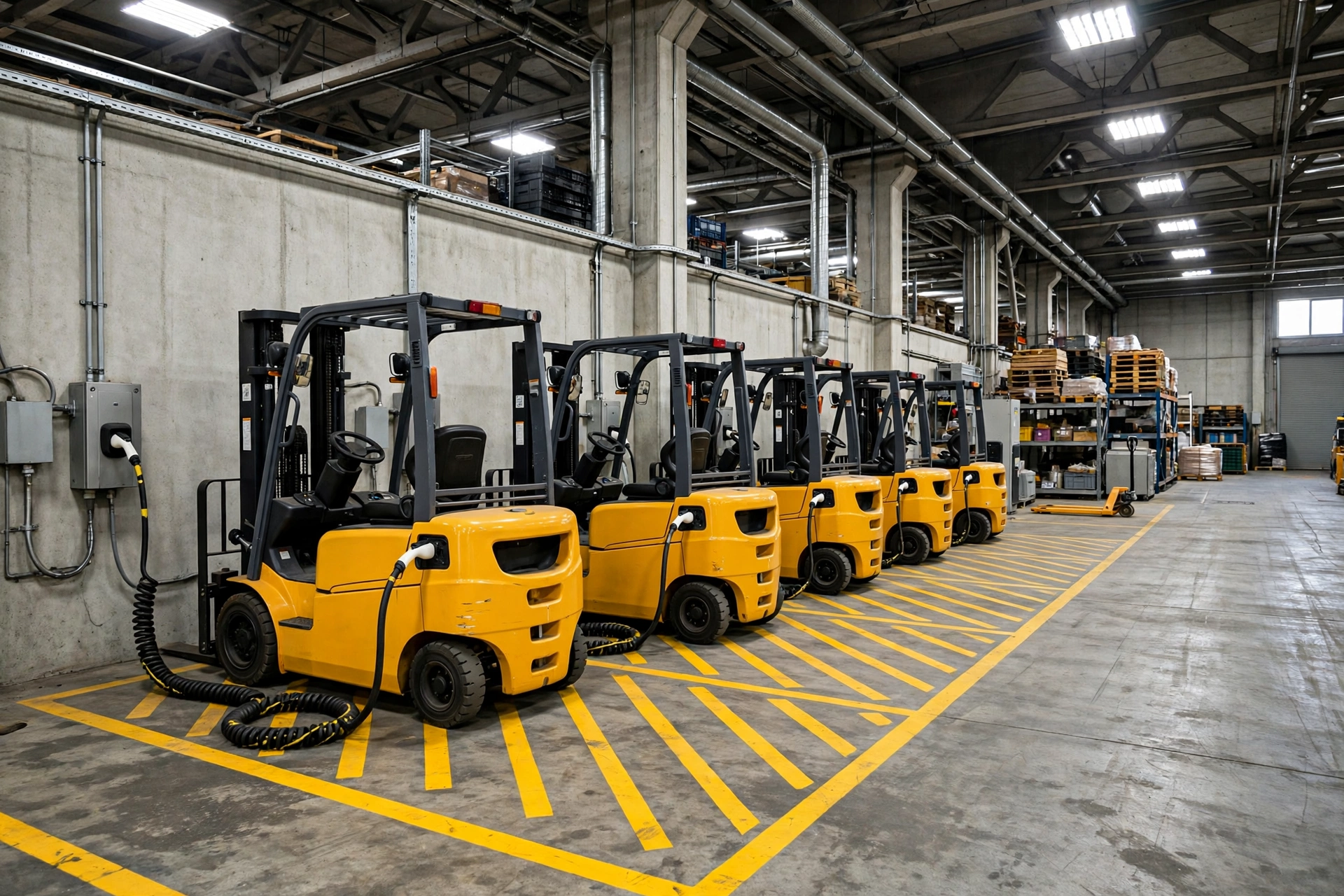
These days almost every forklift runs on lithium batteries. They charge fast and they are easy to use, but the charging area has become the hottest corner of the whole building. I have seen plenty of warehouses where the charging area is just lines painted on the wall and a row of chargers, forklifts parked bumper to bumper, cables on the floor, pallets and cardboard stacked right next to them. It looks handy by day. At night, several trucks charge at once, plugs, cables, and chargers all heating up, with nobody around to check.
I will say it straight: charging has three red lines, and you do not cross any of them. First, charge only in the designated area. Do not plug in beside a rack or in an aisle just because it is convenient. The U.S. Occupational Safety and Health Administration puts it plainly: battery changing and charging belong in areas the employer designates, ignition sources stay out of charging areas, and charging needs ventilation. Check the exact wording on the official OSHA site for the latest policy. Second, if a battery looks wrong, do not charge it. Swelling, heat, a strange smell, or a battery that will not take a charge — any one of those means stop, move it somewhere open and safe, and handle it the way the manufacturer and the fire department require. Do not gamble on one more plug-in. Third, keep combustibles away from the charging area. Cardboard, pallets, plastic wrap — they look harmless, and they catch faster than anything. Keep the meter around a charger clear.
There is another scene I will never forget. A night supervisor once told me about a close call in his building: a little after 2 a.m., a forklift was charging, the charger's fan had stopped, and the case was too hot to touch. Luckily the person on patrol smelled it and cut the power. They checked afterward and found the air intake clogged with dust, so the charger could not cool itself. Most fires do not start because equipment fails all at once. It is dust, heat, and nobody looking, adding up a little at a time.
The warehouse electrical room door that nobody wants to open
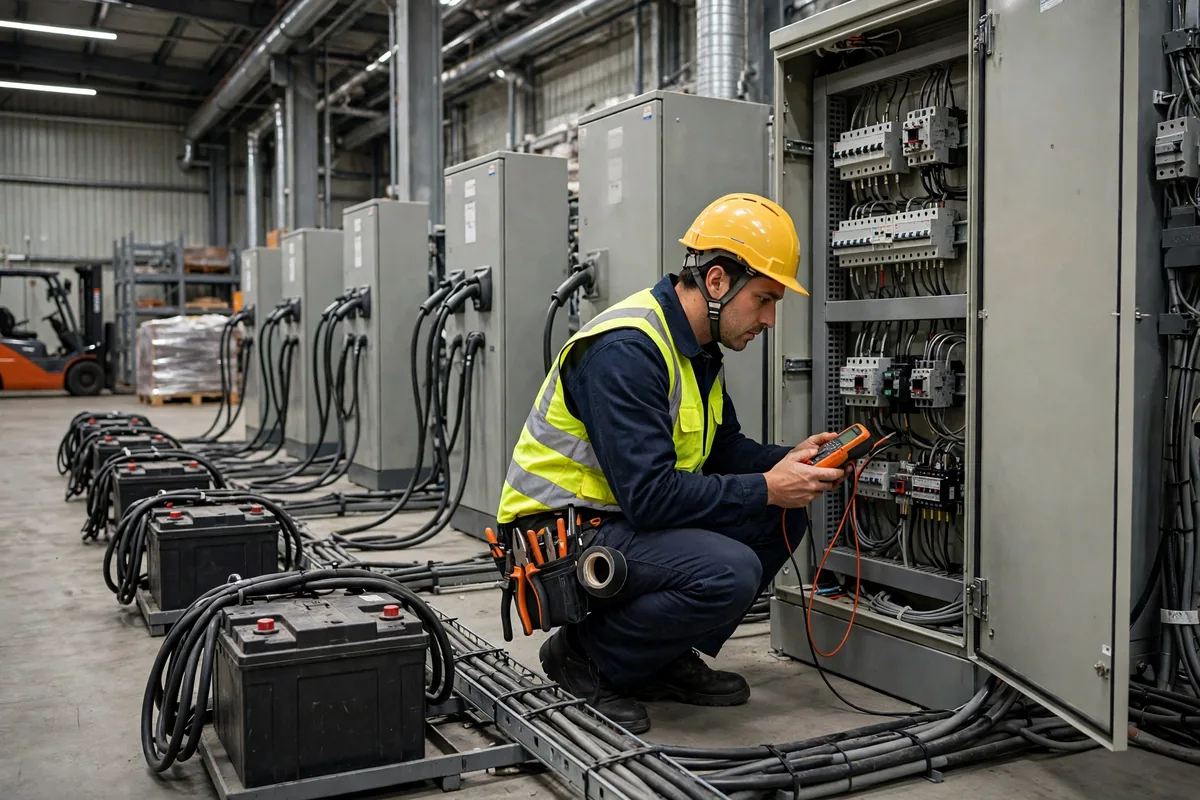
The electrical room is the other danger zone. In all the warehouses I have walked into over the years, eight out of ten electrical rooms are locked, and in the other two, you open the door and find boxes, mops, and old labels piled inside, with no room to stand in front of the panel. An electrician has to move stuff out of the way before doing any work at all. How is that supposed to work?
The rules are simple: keep the front of the panel clear, with room to work; do not daisy-chain cables off one outlet; and have a qualified electrician open the panel on a schedule and replace anything loose, worn, or blackened. And the electrical room is not a storage closet. Two boxes today, a mop tomorrow, and before long it is the warehouse's second storeroom. That habit has to go.
I have also seen warehouses expand, add equipment, and keep the same ten-year-old panel, with circuits running at full load until they trip every summer afternoon. A trip is not the enemy. It is the system shouting for help. What scares me is when somebody gets annoyed, fits a bigger fuse, and swaps in a larger breaker, silencing the shout. I have seen that more than once, and every time I hold my breath. If the load is too much, add capacity. Never mess with the protection. That red line belongs to everyone.
Temporary power: convenient today, smoking tomorrow
Temporary power is the thing warehouses let slide most easily. Peak season brings extra people and extra equipment, somebody runs an extension cord and a power strip, and the thinking is that it works today, so it is fine. I have heard that line until my ears hurt. Temporary wiring has two enemies: forklifts and pallets crushing the cable until the insulation splits open, and a power strip loaded with a heater, chargers, and a fan all at once until the cord runs hot.
My rule is simple. A temporary cord is temporary. When the job is done, roll it up. Anything that needs to stay gets a proper fixed run and a fixed outlet. Never plug one power strip into another, like a relay race, getting riskier with every link. Keep cords out from under pallets, out of water, and out from under anything heavy. When you walk the floor, look down at the ground. That one look might be worth a whole warehouse.
| Area | Most common problem | Red line |
|---|---|---|
| Charging area | Scorched plugs, cables on the floor, cardboard stacked nearby | Charge only in the designated area, stop charging a faulty battery, keep combustibles away |
| Electrical room | Clutter in front of the panel, overloaded circuits, tampered protection | Keep the front clear, have an electrician inspect on schedule, add capacity when the load grows |
| Temporary power | Daisy-chained strips, cords run over by forklifts, temporary wiring left in place | Remove it when done, never daisy-chain, run fixed wiring for permanent loads |
Inspections are not a checklist exercise
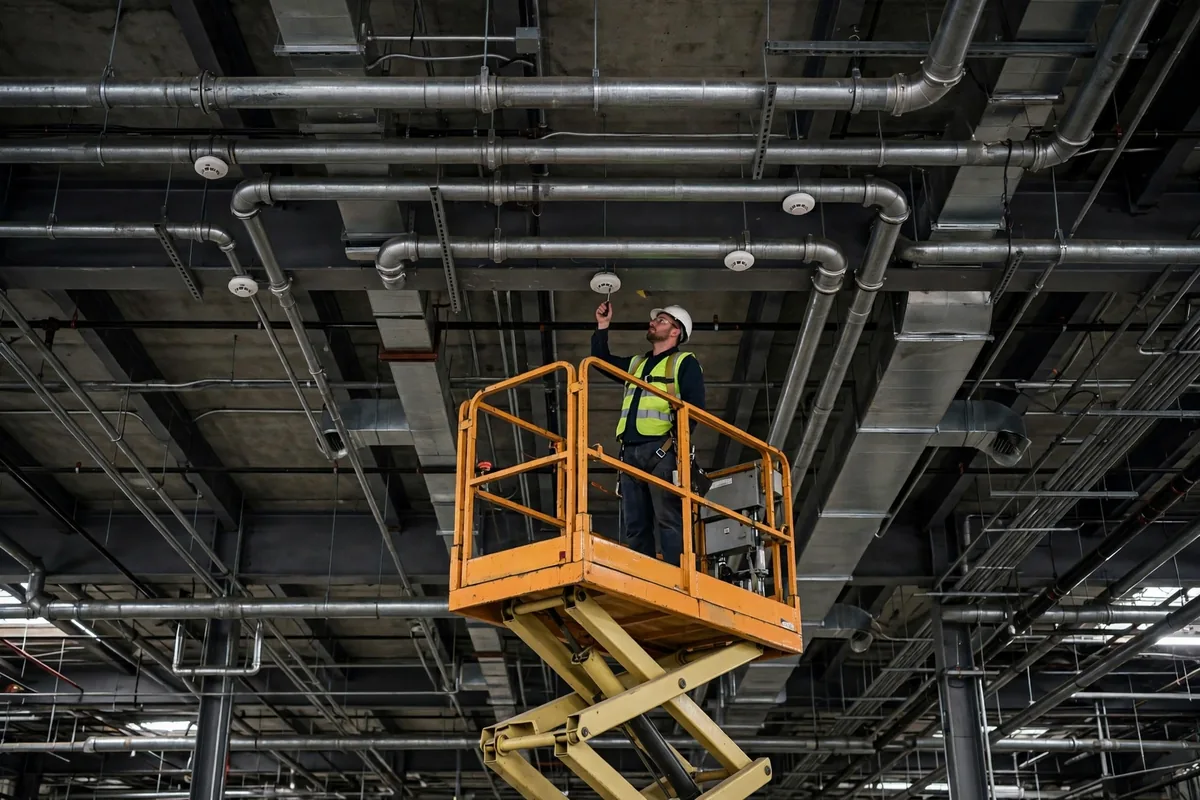
It all comes down to inspection in the end. An inspection is not ticking boxes on a form. It is looking, touching, and smelling for real. Before the shift ends, walk the charging area: are the plugs hot, are the cables damaged, is the charger fan spinning, has anything new been stacked nearby? Open the electrical room once a week: any smell, any blackened marks, has the front been piled up again? Glance at temporary cords every day as you pass. A split cable or a blackened plug gets replaced the same day, not tomorrow.
Now run the numbers. The figures below are a hypothetical example for illustration only. Take a mid-size warehouse with 20 forklifts. Keeping the charging area tidy, inspecting the electrical room, and bringing an electrician in on schedule costs a few thousand dollars a year, all in. One small electrical fire in the middle of the night — damaged stock, stopped shipments, customer claims, higher insurance — easily runs into hundreds of thousands of dollars, and a bad one can shut the building for weeks. Prevention is the best money a warehouse ever spends. For exact insurance and payout terms, follow the policy wording and the latest official policy.
Here is the counterintuitive part: an electrical fire is not mainly a fight against big flames. It is a fight against the few unwatched hours when a small spark has nobody to notice it. During the day, people are everywhere, and even old equipment has eyes on it. The dangerous hours are the ones after midnight, when the charging area is empty, the electrical room is locked, and the temporary cords are still live. Guard those hours and you have taken away most of the warehouse electrical fire risk.
There is an old saying: better safe than sorry. Give your warehouse wiring one extra look each day, and it will give you one less disaster when it counts. Tonight before you leave, walk to the charging area, smell the air, touch a plug, and move the boxes away from the electrical room door. Five minutes of work. Worth a whole warehouse.
By Shifu Zhao, Trucking Veteran (15 yrs)