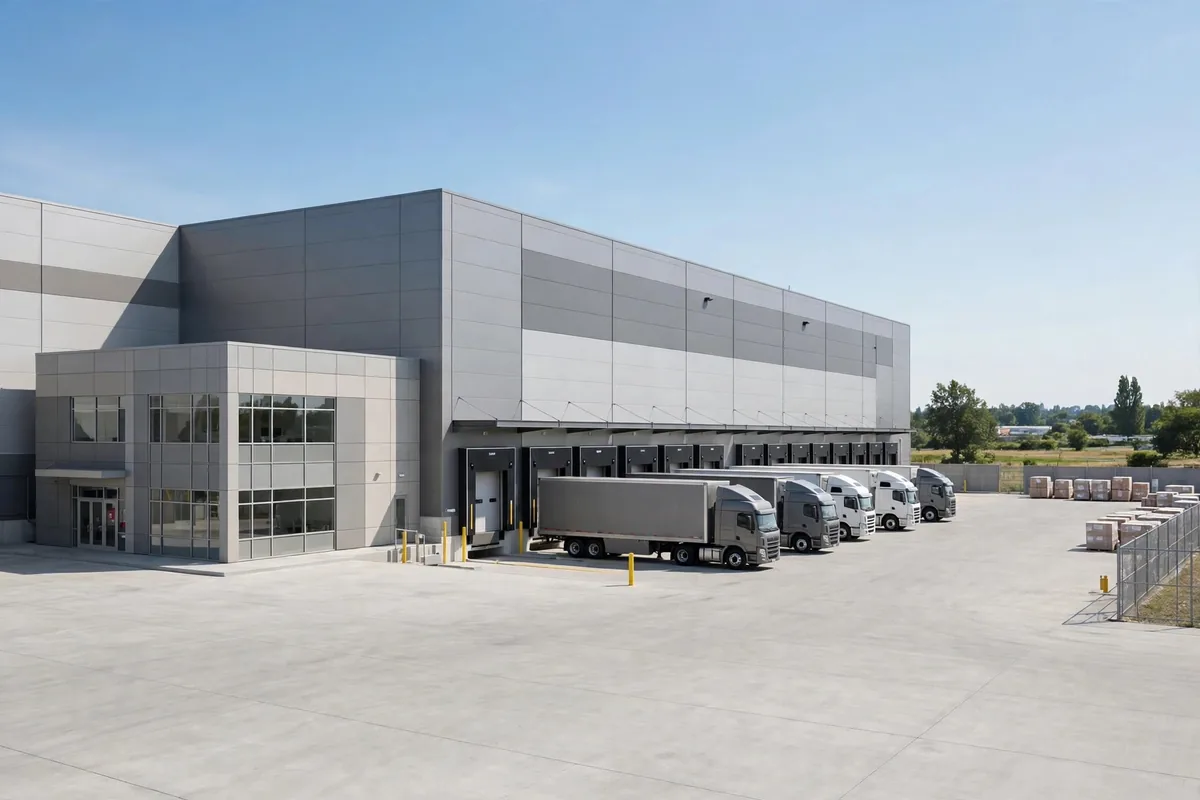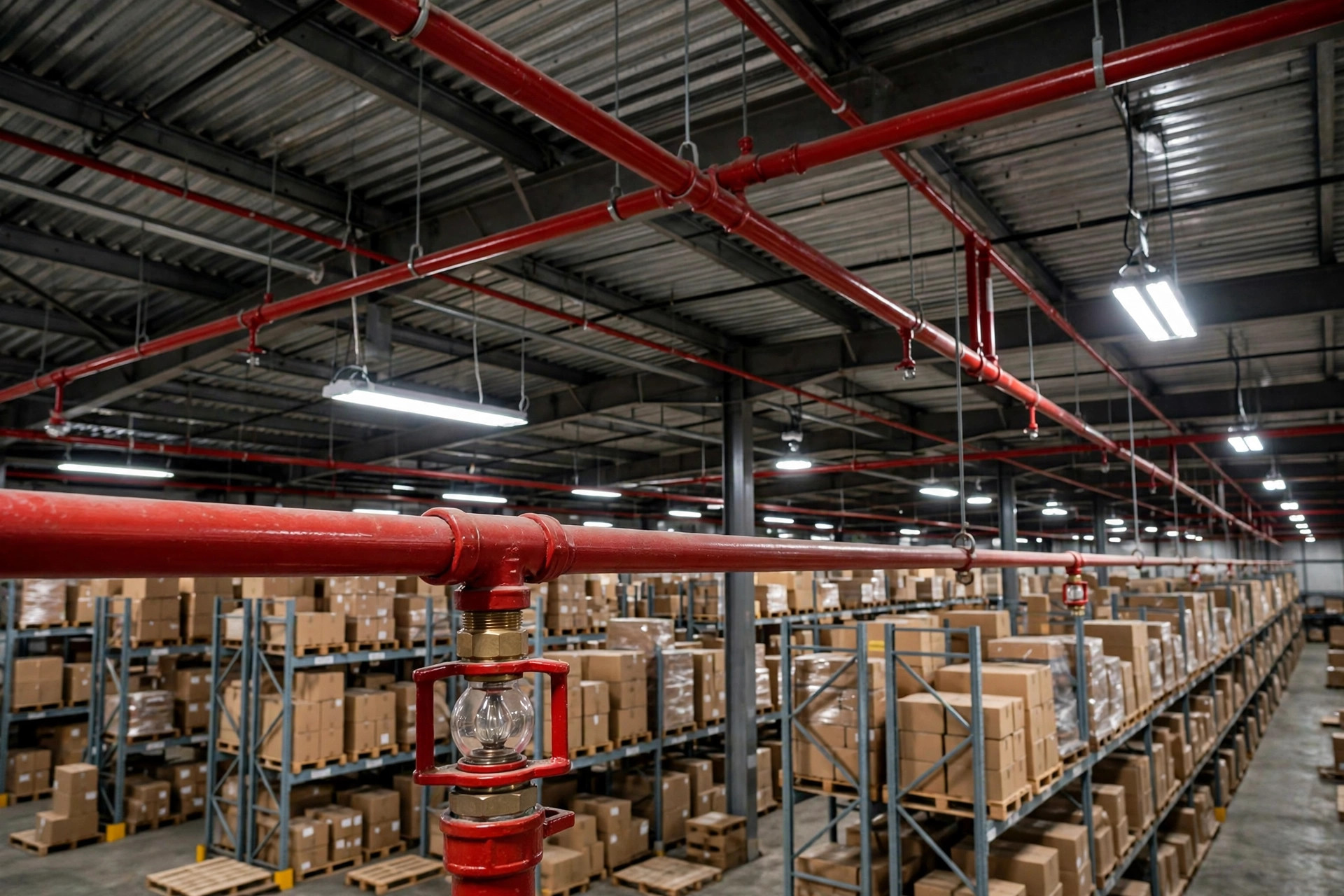
Let me start with the bill. A 50,000-square-foot older warehouse, a brand-new sprinkler install priced at the market reference range of $5 to $12 per square foot, comes to $250,000 to $600,000. If warehouse lease sprinkler fire responsibility is not spelled out in your lease, that bill will most likely land on you, the tenant. Every hour you skip in negotiation before signing shows up later as real money out of your pocket.
I have watched tenants sign leases by staring at the base rent alone. Thirty cents less per square foot feels like a win. Over five years on 50,000 square feet, that saves $75,000. But one failed fire inspection can trigger a sprinkler retrofit worth several hundred thousand dollars, and the rent you saved does not even cover the change. That is money spent for nothing, and the waste was baked in the day you signed without pricing fire responsibility into total cost.
Warehouse Lease Fire Responsibility Comes Down to the Contract
There is no single answer in American commercial leasing: who pays depends on the lease language and on local law. Fire codes, enforcement, and the adopted edition of the standard vary by state and city, so do not copy another state's experience. The contract and local regulation govern — check both, and get local counsel before you sign.
The industry's usual dividing line has two sides. An upgrade required because the building itself was non-compliant or under-protected is base-building work, the landlord's. An upgrade triggered by your racking going higher, your commodity changing, or your storage method changing is the tenant's. That sounds clean. In practice, leases often compress it into one sentence — "tenant shall comply with all applicable laws" — and the whole obligation slides across the table.
A public California case shows how this plays out. A trading company leased a warehouse in El Monte. A sprinkler head struck a rolling door and discharged; employees could not shut the valve, and $422,000 worth of inventory was destroyed by water. The tenant sued the landlord. The court held that the lease said the tenant accepted the premises in good order and was responsible for repairs, and the landlord was not liable for the inventory loss. $422,000 decided by contract wording. I will not quote statute numbers for you — they differ by state — but the logic travels: the court reads what you signed.
Triple-net (NNN) leases deserve extra care. The tenant pays base rent plus property tax, insurance, and maintenance, and sprinkler maintenance often defaults to the tenant. Routine maintenance and capital improvement are two different things, but if the lease never separates them, a landlord can dress up a major overhaul as "maintenance" and send you the invoice. That is why warehouse lease sprinkler fire responsibility is really a question about whose budget the money comes from, not about fire protection in the abstract.
Breaking Down the Warehouse Lease Sprinkler Retrofit: It Is Never Just the Heads
A sprinkler retrofit has four cost blocks. Miss one and your budget is fiction. This is the breakdown I use when I run the numbers for a client; figures are market reference ranges, and the real number is whatever your local contractor quotes.
| Cost block | Reference range | What drives it |
|---|---|---|
| Modifying an existing system | $3–$8 per sq ft | Relocating heads, re-certification; cheaper when little moves |
| Brand-new installation | $5–$12 per sq ft | A building that never had sprinklers — the most expensive case |
| Riser, backflow preventer, fire pump | $50,000–$150,000 | Low water pressure forces a pump; the line item most often missed |
| Alarm tie-in and sign-off | Priced separately | Sprinklers and fire alarm are separate systems, separate contractors, separate permits |
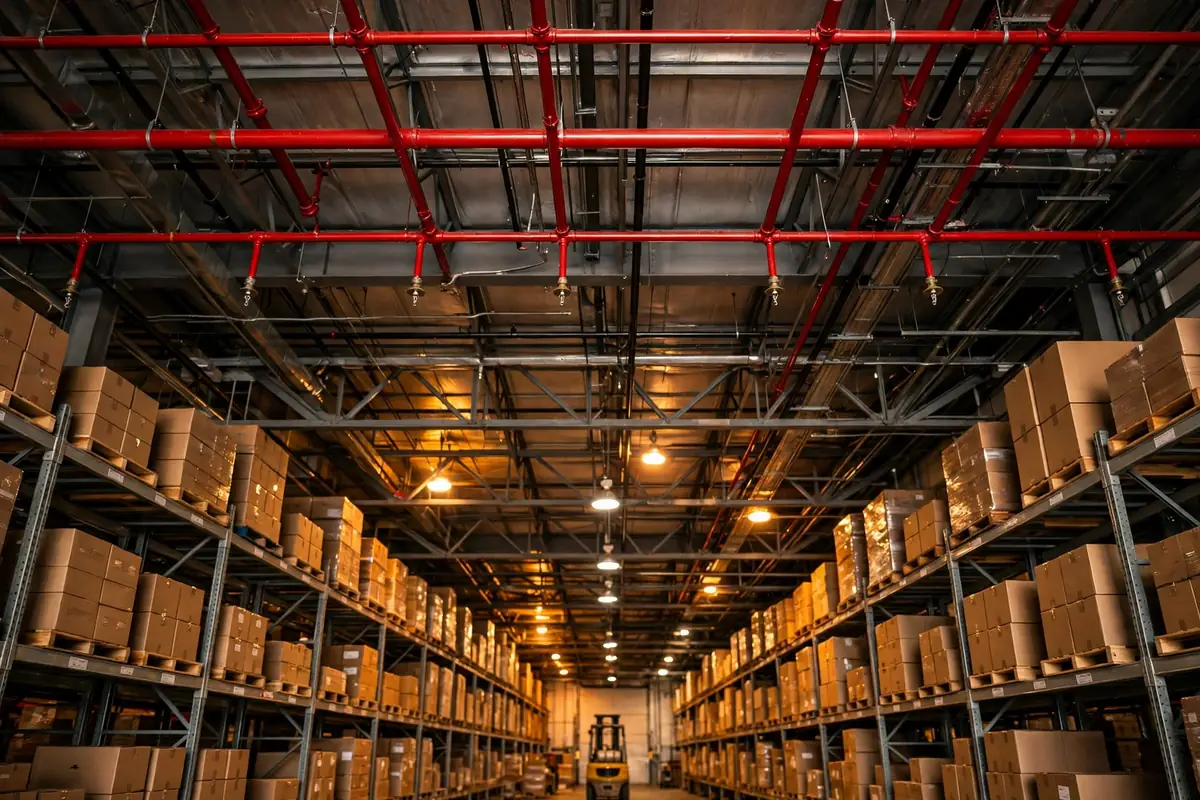
Water supply is the biggest variable. Raise the ceiling, raise the racks, and an ESFR (early suppression, fast response) system demands more water at more pressure. If the supply cannot keep up, you add a fire pump — $50,000 to $150,000 gone. Signing without a water flow test is signing a blank check.
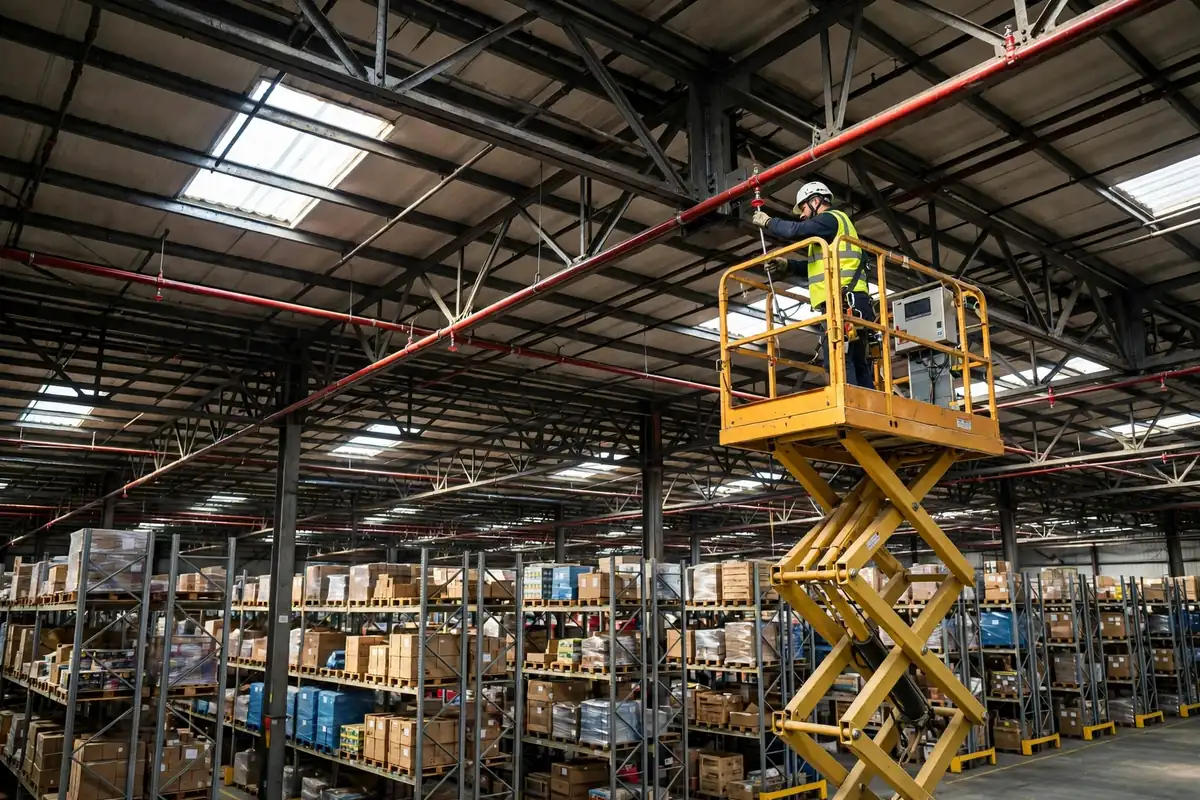
One more line tenants forget: NFPA 13 is the U.S. standard for the installation of sprinkler systems. OSHA 29 CFR 1910.159(c)(10) requires at least 18 inches of vertical clearance between a sprinkler deflector and the material below it; ESFR systems require 36 inches. Add one rack level and the clearance is gone, and so is compliance. NFPA 25 covers inspection, testing, and maintenance after the system is in service. Each standard governs one stretch of the system's life, so the lease should state which edition applies and who is responsible for meeting it. Where anything is uncertain, go by the latest official publication and your local fire authority's requirements.
Four Levers Before You Sign That Put Warehouse Lease Fire Responsibility on the Right Side
Lever one: demand a fire-protection condition report before signing — existing sprinkler coverage, design hazard classification, water flow-test results, riser and backflow condition, alarm coverage. Whatever is not in that report does not exist at the negotiating table. Finding out you need a fire pump during due diligence costs a few thousand dollars. Finding out during construction costs ten times that.
Lever two: turn adequate water supply into a landlord representation. One sentence in the lease — "landlord represents that the existing water supply meets fire-protection design requirements" — moves the pump cost back to the landlord. Without it, the pump is your problem by default.
Lever three: make the tenant improvement (TI) allowance explicitly cover fire-protection work. Allowances are negotiated per square foot, and whether sprinklers are named in the scope can swing the outcome by tens of thousands of dollars. Unused allowance usually does not convert to rent credit, so name the fire line item while you are still negotiating.
Lever four: run a five-year total cost comparison before you sign. The table below is an illustrative example — a 50,000-square-foot space on a five-year term, with rents and retrofit costs estimated — comparing three ways to split the bill:
| Split | Who funds the retrofit | Extra cost over 5 years (illustrative example) |
|---|---|---|
| Landlord funds it all | Landlord | $0 out of pocket; base rent may run 3%–5% higher |
| Tenant funds it all | Tenant | $250,000–$600,000 in one lump sum |
| Landlord funds, amortized into rent | Shared over the term | Roughly 6%–9% of the retrofit cost added per year |
Same building, three versions of the lease, tens of thousands of dollars apart over five years — sometimes hundreds of thousands. A base rent thirty cents lower is not a bargain. The allocation of fire responsibility is the real price.
Here is the counterintuitive part: the cheapest old warehouse on rent is often the most expensive warehouse in total cost. Its sprinkler system was designed for the previous tenant's goods. Change your commodity, change the hazard classification, and the system no longer complies. A newer building at 10% higher rent with fire protection already in place can easily be the cheaper choice. People who calculate total cost look at five-year TCO. People who only look at rent look at the number on signing day.
Before you sign, get these three sentences into the lease: the fire-protection condition report attached as an exhibit; the landlord's written representation that water supply is adequate; and retrofit costs split by trigger — building-caused upgrades to the landlord, tenant-use-caused upgrades to the tenant. Without those three, warehouse lease sprinkler fire responsibility stays a mess. And a mess has only one ending: whoever signed first, pays.
By Lao Zhou, Logistics Cost Analyst