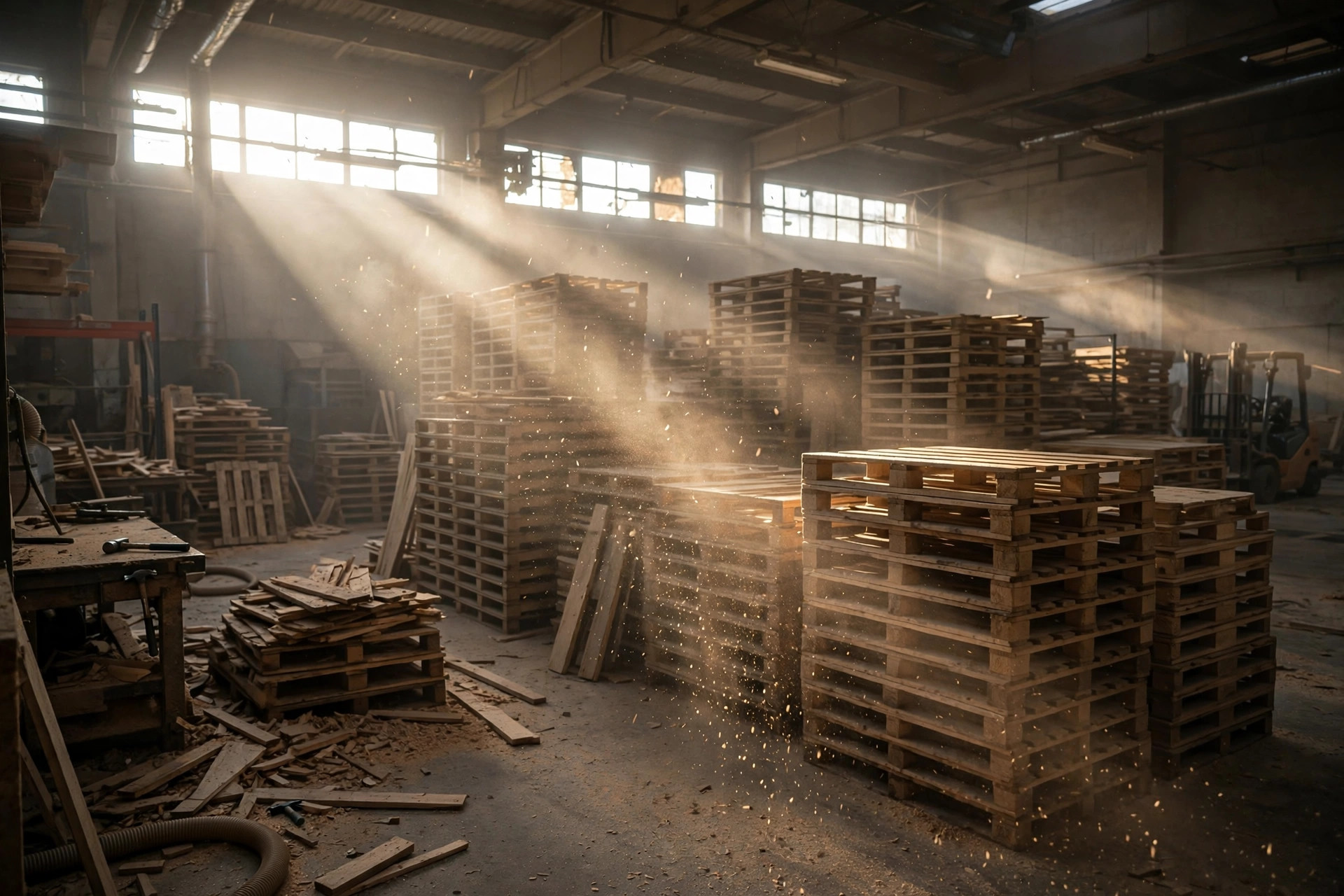
Honestly, I used to think warehouse dust explosion prevention was somebody else's problem. That's for big factories, flour mills, the kind of place that ends up on the news. We run a 3,000-square-meter warehouse — how much dust could we possibly have? Then last spring, a customer's auditor walked in with a flashlight, shone it on the beam above our cutting area, and wiped a finger through a layer of wood dust. My face went red. He didn't lecture me. He just wrote one line: dust accumulation not cleaned. That was the day I started taking this seriously.
Warehouse Dust Explosion Prevention Comes Down to Five Elements
An explosion sounds terrifying until you break it down. It takes five things: combustible dust, oxygen, an ignition source, a dust cloud, and a confined space. Miss one and nothing happens. Get all five and you get a bang. Oxygen is always there — you can't do anything about that. The one people underestimate is the dust cloud. A layer of dust on the floor looks dirty but it won't burn. Kick that same dust into the air at the right concentration, add one spark, and it's a different story. And sparks are everywhere in a warehouse: grinder sparks, static, forklifts, hot work, a worker sneaking a cigarette in a corner. Of the five elements, a small warehouse can really only control two: don't let dust pile up, and don't let it get airborne.
There is a scarier part: the secondary explosion. The first small blast shakes months of dust off the beams and rack tops, and the whole building turns into one big dust cloud. The second explosion hits much harder than the first. In many accident investigations, the second blast is the one that does the real damage. That is why the dust on your beams isn't a housekeeping issue. It's ammunition.
Wood Dust, Flour, and Metal Dust Behave Differently
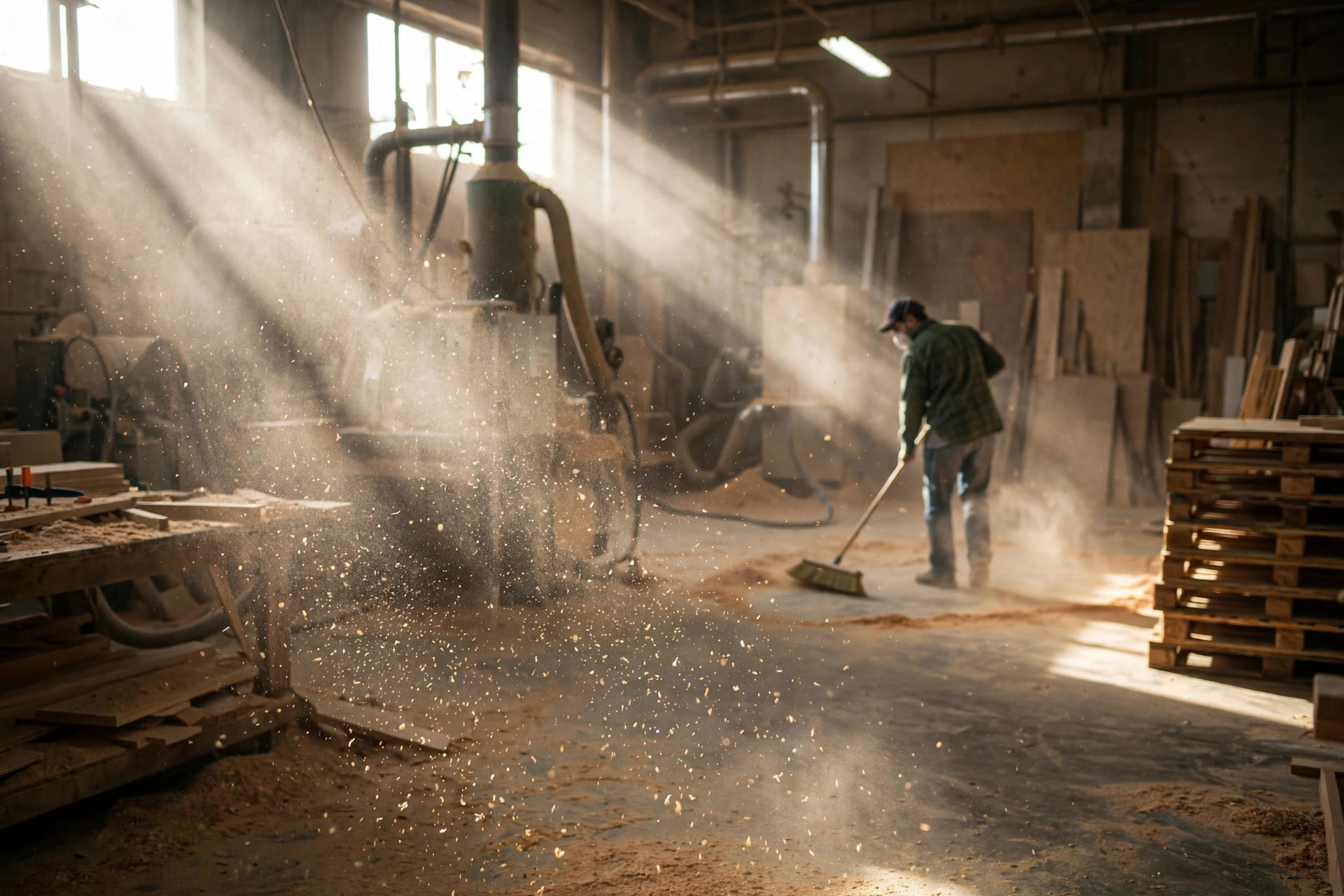
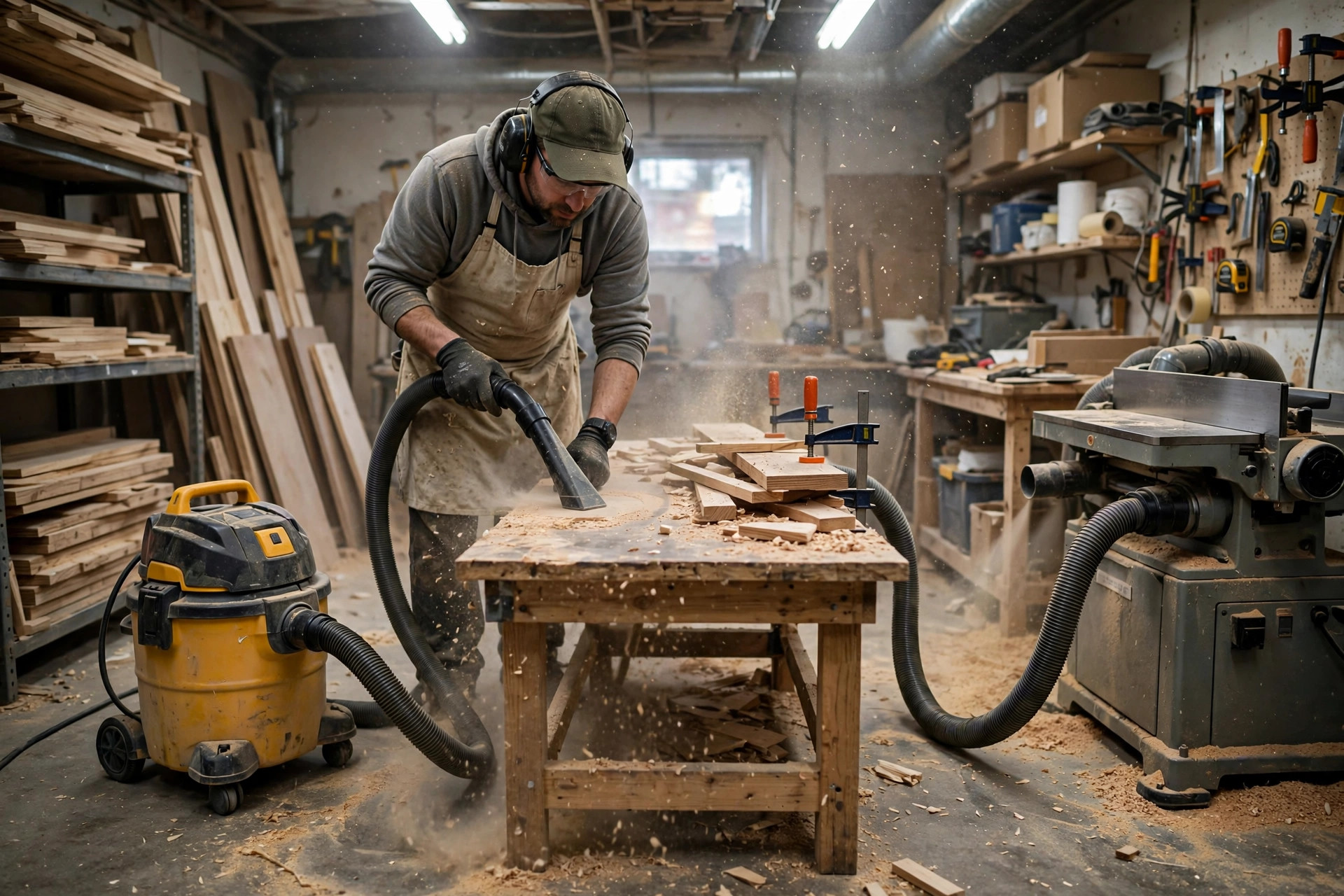
Wood dust is our everyday problem. Cutting and sanding produce fine wood dust that is light and drifts everywhere — onto beams, light fixtures, the tops of racks, places nobody looks. The worst part used to be how we cleaned it. We'd blast it with compressed air because it was fast. The dust was gone, sure — and the whole shop was suddenly full of a dust cloud, all five elements lined up. Compressed-air blowdown is now banned in our warehouse. I put it in the pre-shift meeting. Break the rule and you buy drinks for the whole crew.
Two winters ago I visited a friend's flour repacking warehouse in the next town. White around the filling heads, white on the floor. Flour is finer than wood dust and stays suspended even longer. My friend said he fears two things: workers blowing dust off their clothes with an air gun to save time, and a dust collector filter that clogs because nobody changed it. His fix is simple: shut down and clean at the end of every shift, and keep the filling area physically separated so dust doesn't travel through the whole building.
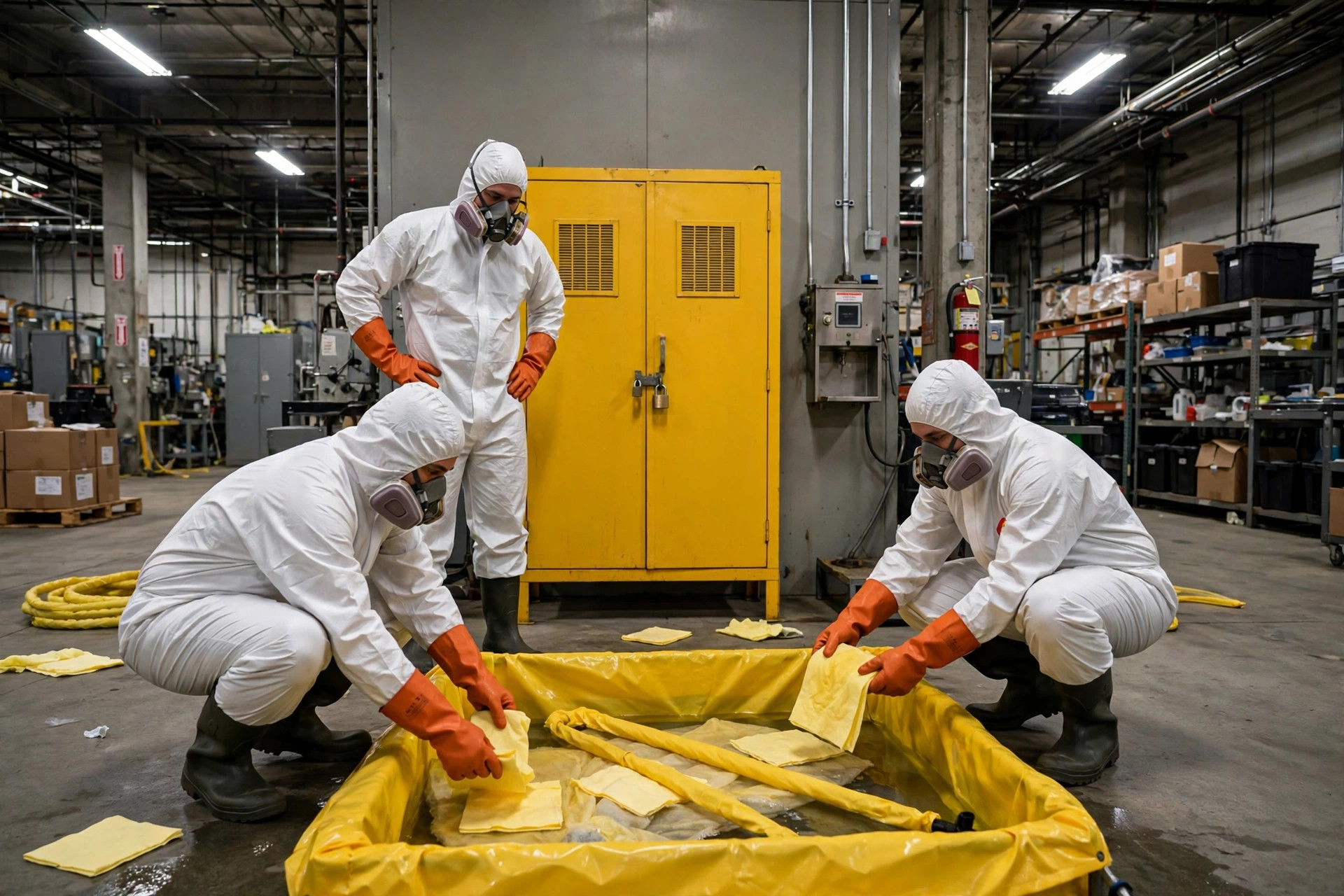
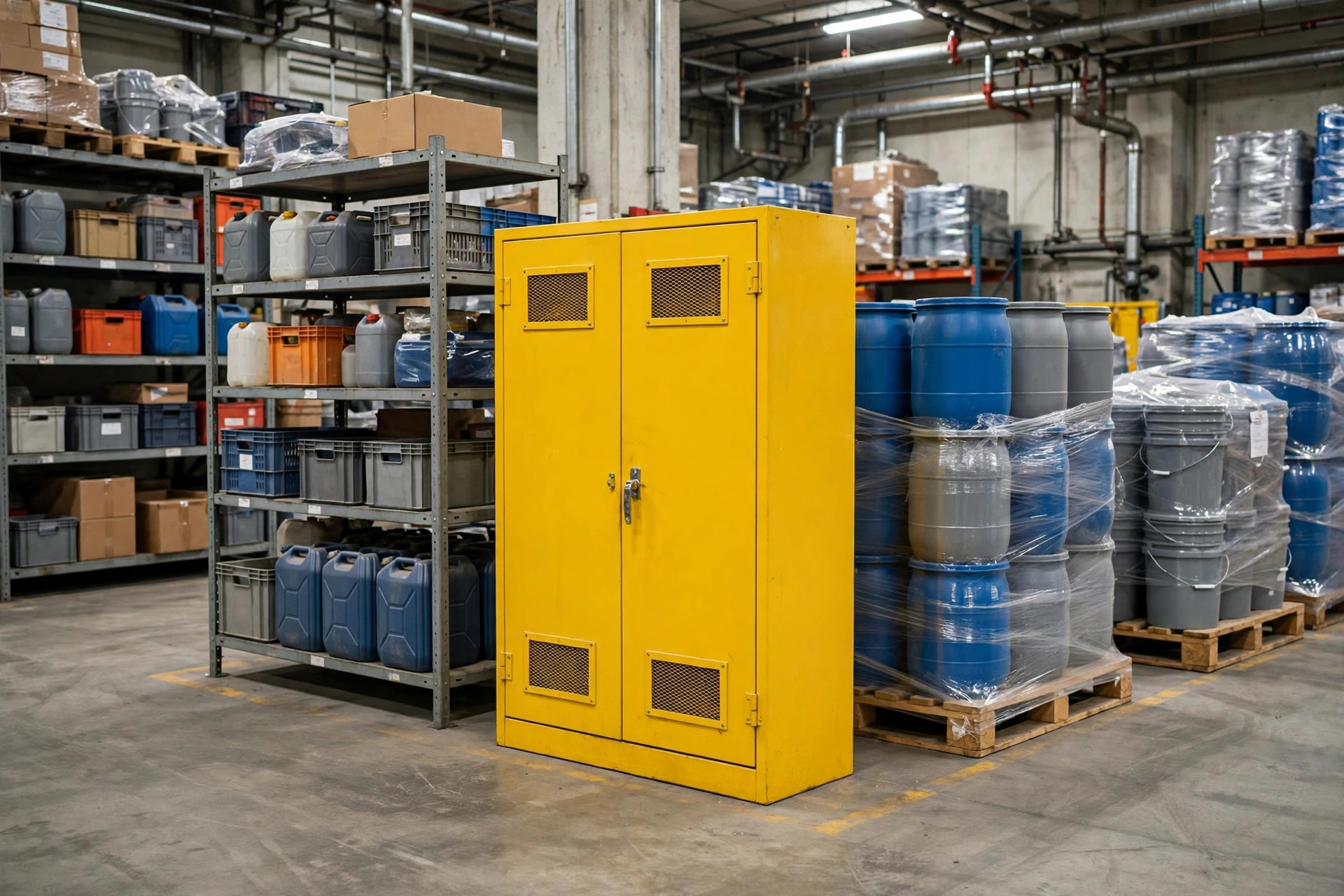
Metal dust we tried for two weeks and quit. A job grinding small aluminum alloy parts left dust that was fine and shiny. Metal dust is nothing like wood dust — it's reactive, and some of it reacts with water. The dust-collection tech put it bluntly: metal dust collection and cleanup can't just copy the wood-dust playbook. Dry methods and wet methods are different animals, and mixing them up makes things worse. We can't afford that kind of job, so we turned it down. Losing one job beats losing a warehouse.
The Small-Warehouse Playbook: Spend Little, Cover the Basics
We are a small warehouse. We can't afford to burn money on this. A big company installs explosion-proof dust collection and venting systems that cost more than we make in years. My approach: do the free stuff properly first, then spend small money where it counts. The free stuff starts with cleaning frequency. The cutting area gets cleaned at the end of every shift. Every Friday we do a deep clean — beams, light fixtures, rack tops, all wiped. Vacuuming only, never blowing. Then hot work: cutting and welding get approved in advance, the area gets cleaned first, a fire extinguisher stands next to the job, and someone watches the spot for half an hour after the work ends. And smoking is banned across the whole warehouse, no exceptions.
The small money goes to three things: a secondhand dust collector hooked up right at the dust source, so dust gets captured before it ever floats; explosion-proof lights and switches in the dust-producing area, starting with the worst spots; and a grounding check in any metal-dust area. None of that costs a fortune, but together That is the whole secret of warehouse dust explosion prevention in a small building: keep dust down, keep it out of the air, and keep sparks away from it.
Two things are easy to miss. First, the dust collector itself needs maintenance. A clogged filter kills suction, dust floats anyway, and the equipment might as well not be there. Put filter changes on a weekly inspection sheet with a signature, not on somebody's memory. Second, train new hires on day one. Show them the dust on the beams, explain the cleaning rules and the smoking ban, and only then put them to work. Rules explained up front beat fines handed out after the fact.
| Measure | Cost | What it controls | Priority |
|---|---|---|---|
| Clean every shift, vacuum only | Almost nothing | Dust buildup and dust clouds | Do first |
| Hot-work approval + no smoking | Nothing | Ignition sources | Do first |
| Dust collection at the source | Small | Keeps dust from spreading | Do second |
| Explosion-proof electrics + grounding | Small | Removes ignition sources | Do third |
| Weekly deep clean, check beams | Nothing | No blind spots | Every week |
What an OSHA Inspector Looks At
Here is the part that surprised me: the United States currently has no dedicated federal standard for combustible dust. Enforcement generally runs through the General Duty Clause plus industry standards such as NFPA 652 and NFPA 664. Check the official sources for the latest requirements. When an inspector walks in, they usually look at three things first: dust accumulation on beams, light fixtures, and equipment tops; ignition sources — hot-work management, electrics, smoking rules; and how you clean — whether anyone is still blowing dust around with compressed air. Get those three right and you are halfway to passing. Get them wrong and even the fanciest dust collector won't save your first impression.
Dust explosion prevention isn't a contest over who spends the most. It's about who actually does the basics. Tomorrow morning, look up at your own beams. That layer of dust up there is the cheapest inspection checklist you'll ever get. Small warehouses have their own way of surviving.
By Xiao Ma, Small Warehouse Owner