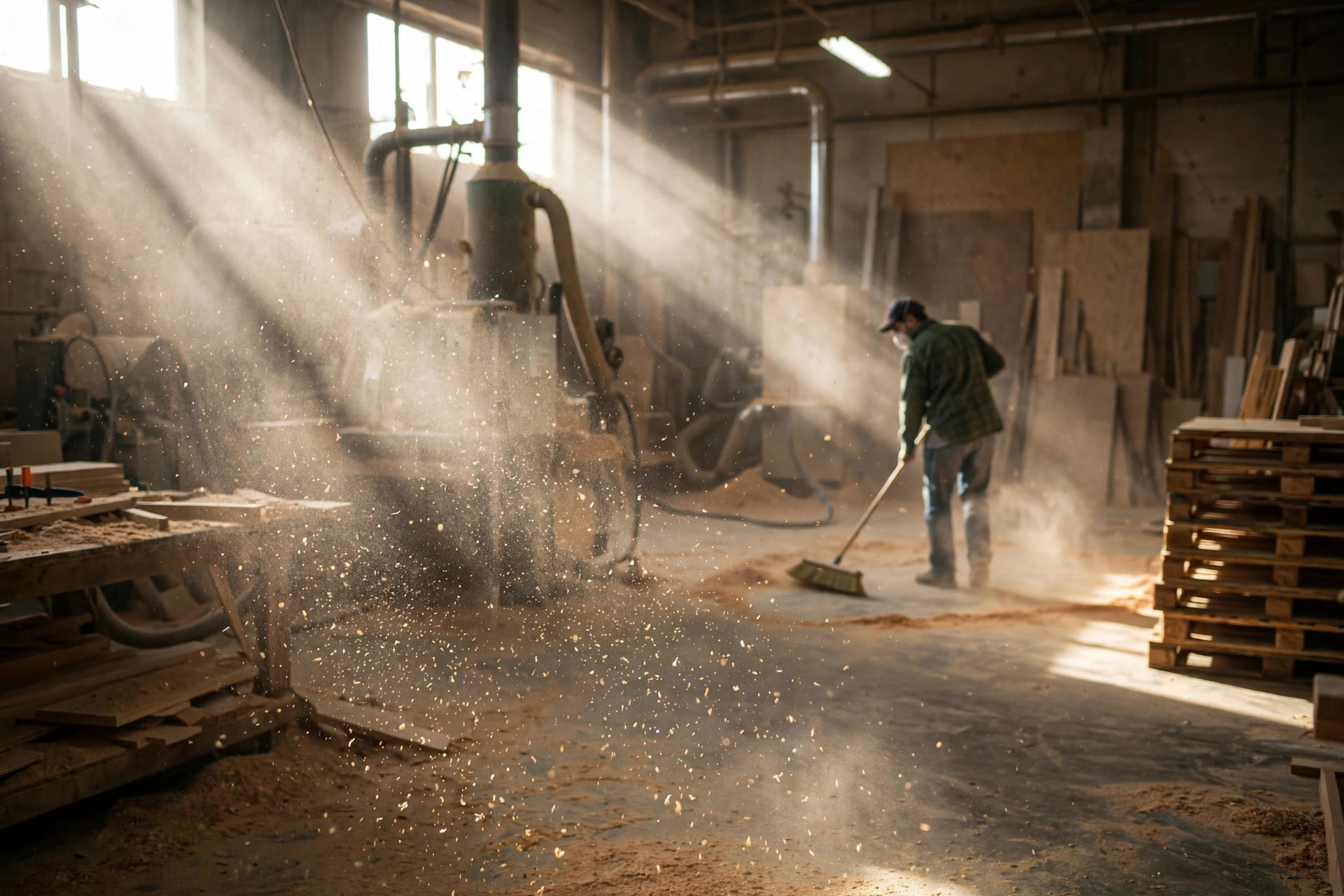
Let me give you the verdict first: the most underestimated safety risk in an American warehouse isn't forklifts. It isn't rack collapse. It's dust. Combustible dust.
The U.S. Chemical Safety Board published a study in 2006 that I still remember the numbers from: between 1980 and 2005, the United States saw 281 combustible dust fires and explosions. 119 workers died. 718 were injured. And here is the part that should stop you cold — to this day, there is no comprehensive federal OSHA standard for combustible dust in general industry. This stuff keeps exploding, and the dedicated regulation still hasn't arrived. OSHA started rulemaking back in 2009, then quietly dropped combustible dust from its regulatory agenda in 2017, citing a lack of resources.
Now, this cuts two ways. On one side, I've seen too many warehouse owners wave it off: "We're just storing and shipping. We're not a chemical plant. Dust is a factory problem." On the other side is OSHA's actual posture: no dedicated standard does not mean no enforcement. OSHA cites combustible dust hazards under two existing tools — 29 CFR 1910.22, the housekeeping standard, and the General Duty Clause, Section 5(a)(1), which obligates employers to keep the workplace free of recognized hazards. Put plainly: OSHA doesn't need a dust-specific rule to fine you. And when it fines, it fines hard.
The Sugar Dust Explosion That Drew a $8.78 Million OSHA Fine
On February 7, 2008, a series of sugar dust explosions ripped through the Imperial Sugar refinery in Port Wentworth, Georgia. Fourteen workers died. Thirty-eight were injured, many with life-altering burns. OSHA's response: proposed penalties of $8,777,500 — at the time, the third-largest fine in the agency's history. The company settled for $6.05 million in 2010 without admitting wrongdoing.
The CSB spent 19 months investigating. Its conclusion stuck with me: the explosion was "entirely preventable." The trigger wasn't a boiler or a chemical process. It was years of sugar dust accumulated on equipment, motors, and every horizontal surface in the packaging buildings. The pressure wave from an initial blast lofted all that settled dust into the air, touching off a chain of secondary explosions that leveled the packing buildings. The first explosion rarely kills. The secondary ones do.
Here's another one. In 2003, a polyethylene dust explosion at the West Pharmaceutical plant in Kinston, North Carolina killed six workers and injured dozens. Where was the dust? Above the suspended ceiling — completely out of sight. When the ceiling failed, the dust cloud dropped into the work area, found an ignition source, and the building was gone. That year saw three catastrophic dust explosions in the U.S. — West, CTA Acoustics, and Hayes Lemmerz — 14 deaths total. Those 14 deaths are what forced the CSB to write its 2006 study.
The common thread is always the same: the dust was there the whole time, nobody took it seriously, and then it exploded.
The Counterintuitive Truth: Your Cleanest Food Warehouse May Be the Riskiest
This might be the most counterintuitive line in the whole piece: the place you least expect to explode is often the most dangerous.
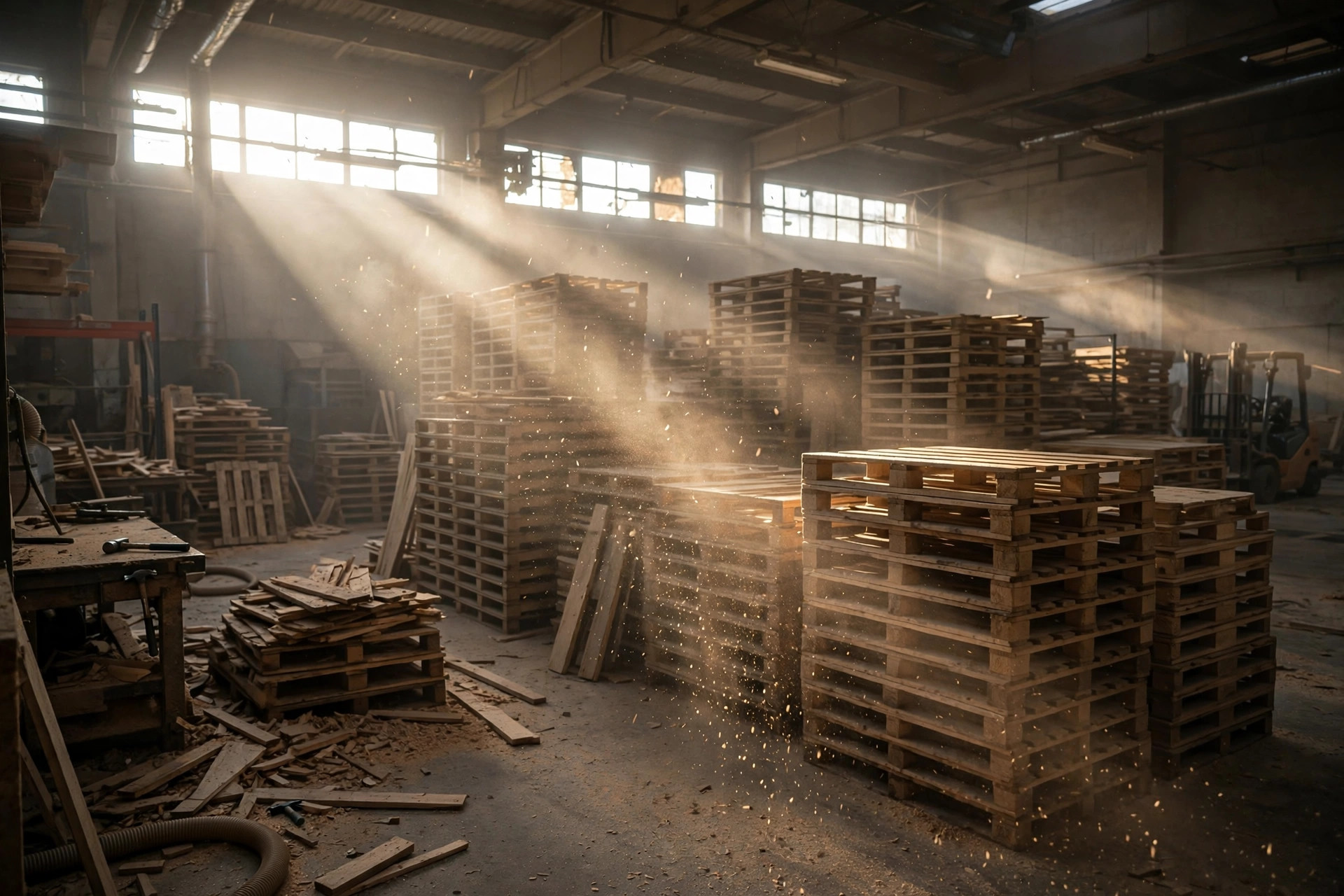
Flour, sugar, corn starch, pet food, grain and feed — these organic dusts are all combustible, and the finer the particle, the worse it gets. A spotless-looking food-ingredients warehouse can carry a higher dust explosion risk than a greasy auto-parts operation. Wood dust from pallet repair areas, paper dust from carton converting, aluminum dust from metal grinding — same story, different material. Aluminum dust is especially violent; the 2003 Hayes Lemmerz aluminum dust explosion in Indiana killed one worker and injured six.
OSHA's Combustible Dust National Emphasis Program draws a practical red line: dust accumulation thicker than 1/32 of an inch — roughly the thickness of a paperclip wire — covering more than 5 percent of the floor area is already a hazard signal. Run your finger along a rack beam. If it comes back dirty, you're probably over the line.
And the real killer is never the floor. It's the places you never look: beams, light fixtures, ductwork, conveyor enclosures, above suspended ceilings. Dust settles there undisturbed for years, and a single pressure wave can loft all of it into a secondary explosion cloud. That's exactly how Imperial Sugar was destroyed.
Does Your Warehouse Need to Worry? A Five-Question Self-Check
Don't guess. Walk your facility with these five questions:
- Do you have any dust-generating operations? Cutting, grinding, repackaging, conveying, pallet repair — one "yes" counts.
- Is there visible dust accumulation overhead? Beams, lights, pipes, ductwork — look up.
- Does anyone blow down equipment or floors with compressed air? This is the number-one dangerous habit, and I'll explain why below.
- Is your dust collection system actually maintained? Clogged ducts, unchanged filters — does anyone own this?
- Has your dust ever been tested for combustibility? NFPA 652 is explicit: any facility handling potentially combustible dust must have it tested and must complete a Dust Hazard Analysis (DHA). If you've never tested, you don't even know what you're dealing with.
If you answered "yes" to two or more, take this seriously. And a practical note: when OSHA inspectors walk into a warehouse, the first two things they look at are overhead dust accumulation and whether anyone is blowing dust around with an air hose. Get caught on either, and the citation writes itself.
The Fix: Start by Taking Away the Air Hose
My habit is cost first, benefit second. Getting dust risk under control costs real money in three places: explosion-proof vacuum equipment, dust collection system maintenance, and dust testing plus a hazard analysis. None of it is cheap. But stack it against an $8.78 million OSHA penalty, 14 funerals, a leveled building, and 44 victim lawsuits — which is what Imperial Sugar faced. You can do that math yourself.
Here are the fixes, in priority order:
First, stop cleaning combustible dust with compressed air. Immediately. This is the trade-off in its purest form: an air hose is fast and satisfying — ten minutes and everything looks clean. But what you're blowing into the air isn't "dust," it's a suspended combustible dust cloud — the single most critical element of the dust explosion pentagon, and you're creating it by hand. Both NFPA and OSHA explicitly prohibit using compressed air to clean combustible dust. Switch to explosion-proof vacuums. Slower. But slower and alive beats fast and dead.
Second, put overhead dust into your routine inspection cycle. The floor gets cleaned daily; the beams and light fixtures may not have been touched in years. Set a schedule, clean them with explosion-proof vacuum equipment, and keep the records. When OSHA shows up, those records are your evidence of diligence.
Third, get your dust tested and complete a DHA. NFPA 652's requirement is unambiguous: test first, analyze second. The cost of testing is a rounding error next to a single OSHA penalty.
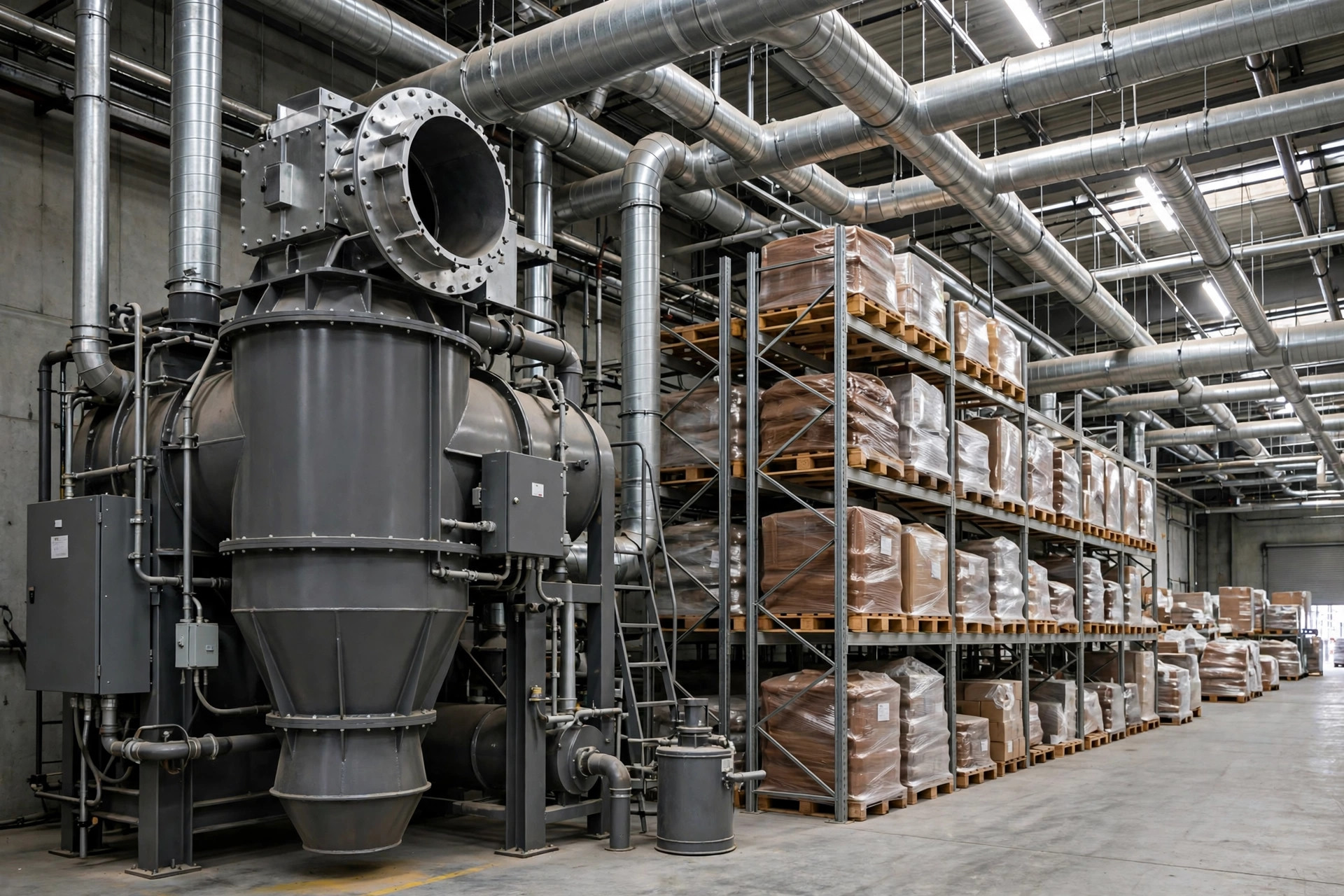
Fourth, don't install a dust collection system and forget it. Imperial Sugar's collector was undersized and poorly maintained. Clogged ducts and neglected filters can turn the collector itself into the first thing that explodes.
Fifth, train your people. Every employee should know two things: dust can explode, and overhead accumulation gets reported. Many of the 14 workers who died in 2008 never knew sugar dust could kill them. Ignorance was the most expensive part of that entire disaster.
So here's my parting advice: next time you walk your warehouse, don't just check whether the floor is clean. Look up — at the beams, the lights, the ductwork. If you can write your name in the dust up there, your dust problem stopped being a housekeeping issue a long time ago.
By Lao Mi, Supply Chain Veteran (20 yrs)