The day I signed my warehouse lease, I brought a calculator and left the tape measure at home. That was the most expensive mistake I made in 2025 — all because I never bothered to learn the warehouse dock height standard in inches. In the US, warehouse docks commonly come in two heights: 48 inches and 52 inches. Four inches of difference. Enough to strand a full truck at your dock.
Our building sits outside Ontario, California — about 32,000 square feet, signed in March 2025. During the walkthrough I spent all my energy haggling rent: got it down five cents a square foot and walked out feeling like a negotiation genius. The landlord said the dock was "standard height." I nodded like I understood. I did not understand.
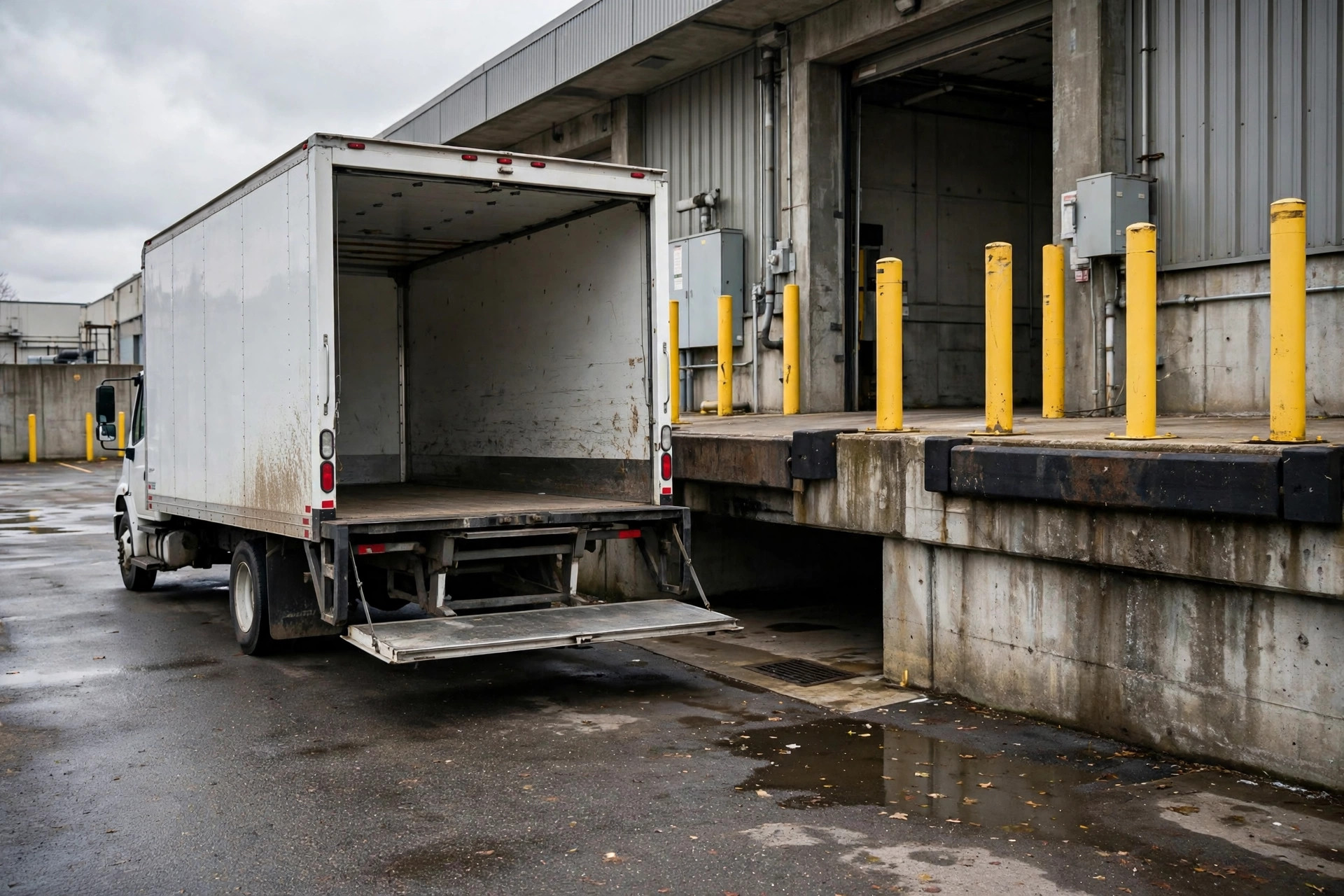
Three weeks after we opened, on the morning of April 17, 2025, a 26-foot box truck with a liftgate backed into our dock. The driver leaned out and said the words that still make my stomach drop: "Buddy, your dock's too tall for my gate."
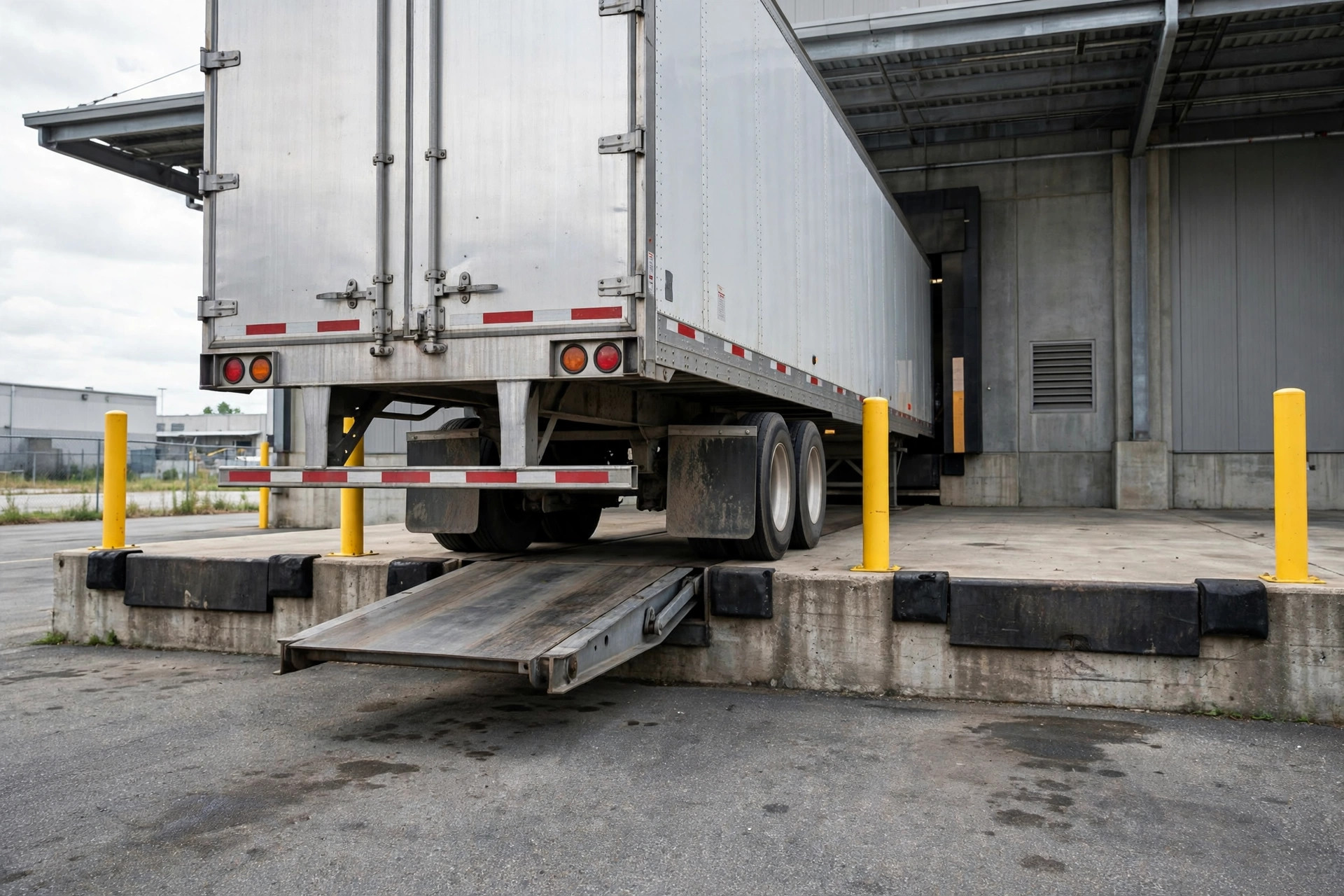
Our dock is 52 inches. The edge-of-dock leveler — the cheapest kind — is rated for 6 inches of travel up and down, which means it can serve truck beds between 46 and 58 inches. That box truck's bed sat at 44 inches. The leveler bottomed out at 46. Two inches short. A forklift carrying a pallet will not hop a two-inch ledge — the load tips, the pallet breaks, somebody gets hurt. So all twelve pallets came off the hard way: the driver lowered the liftgate to the ground, and four of us hand-carried everything up onto a 52-inch dock. From 10 a.m. to 3 p.m. The driver waited five hours — the industry gives you two free, then detention runs roughly $75 to $100 an hour, and while he didn't bill us that day, his face said plenty. We also called in two temp workers at $25 an hour for five hours: $250, gone. I stood on that dock watching boxes go up one by one, thinking exactly one thought: what if I'd brought a tape measure to the signing?
Where the 48 vs 52 Warehouse Dock Height Standard Comes From
Afterward I asked a friend in industrial real estate where these two numbers come from. Short answer: there is no national standard. Forty-eight and 52 are just "what everybody builds," and which one you get depends on where you are and when the building went up.
Forty-eight inches is the old standard. Warehouses built in the '70s and '80s were designed around dry van trailers, whose floors traditionally sit at 48 to 50 inches. Local box trucks ride lower, 42 to 48 inches, and a 48-inch dock with a leveler can fudge both directions. So older buildings — especially in inland industrial areas — are 48 inches almost without exception.
Fifty-two inches is the newcomer. Warehouses built after about 2010, especially near ports like LA/Long Beach or Savannah, were designed for ocean containers. Drop a 40-foot box on a chassis and the floor sits around 52 to 56 inches — a 48-inch dock plus a leveler can't reach it, so developers just built the dock at 52. Our building went up in 2019, and the landlord was clearly chasing "the new standard."
So the two numbers are really two fleets: 48 serves dry vans and local box trucks; 52 serves ocean containers. The real warehouse dock height standard isn't a number at all — it's whatever your trucks need. No universal answer. Your fleet decides.
My Buddy's Story: "Rated Range" Is Not "Usable Range"
In November 2024, my friend Chen leased an older building near the Port of Long Beach: 48-inch dock, pit leveler from the '90s, nameplate says 12 inches of travel each way. After thirty years of hydraulics, the real range was more like 8. Peak season brought a 40-foot container with a 54-inch floor. The leveler cranked all the way up to 56 — technically tall enough — but the slope was over 10 percent, and the forklift carrying 2,000 pounds just spun its wheels going up. The driver refused. They ended up dragging the container to a public transload yard next door: $600 in handling fees and a full day of outbound shipments lost.
Chen's lesson cost more than mine, and it taught two things: first, derate old equipment — a nameplate that says 12 inches delivers maybe 8 after two decades. Second, "theoretically in range" is not "practically usable." A leveler pinned at its maximum travel makes a ramp too steep for a loaded forklift, and safety isn't negotiable.
Warehouse Dock Height Mismatch: 5 Fixes and Their Price Tags
When your dock height is wrong, here are the five fixes I priced out. Costs are ballpark ranges I collected on the US West Coast in 2025–2026 — order-of-magnitude only, get real quotes before spending:
| Fix | Rough cost (USD) | Height gap it covers | Pros | Cons |
|---|---|---|---|---|
| Higher-travel edge-of-dock leveler | $1,500–$4,000 per door | Within 6 inches | Cheap, installed in half a day | Limited travel, a bandage |
| Hydraulic pit leveler (concrete retrofit) | $8,000–$15,000 per door | About 12 inches | Handles nearly everything | Cuts concrete, 2–3 days of work, landlord will probably say no |
| Portable yard ramp | $5,000–$15,000 each | 10+ inches | No construction, movable | Eats yard space, needs forklift run-up room |
| Scissor lift table | $4,000–$10,000 each | Adjustable | Any height you want | Slow, one pallet at a time |
| Redneck fix: steel plate + wood cribbing | A few hundred bucks | 2–3 inches | Fast emergency patch | Not compliant, temporary only |
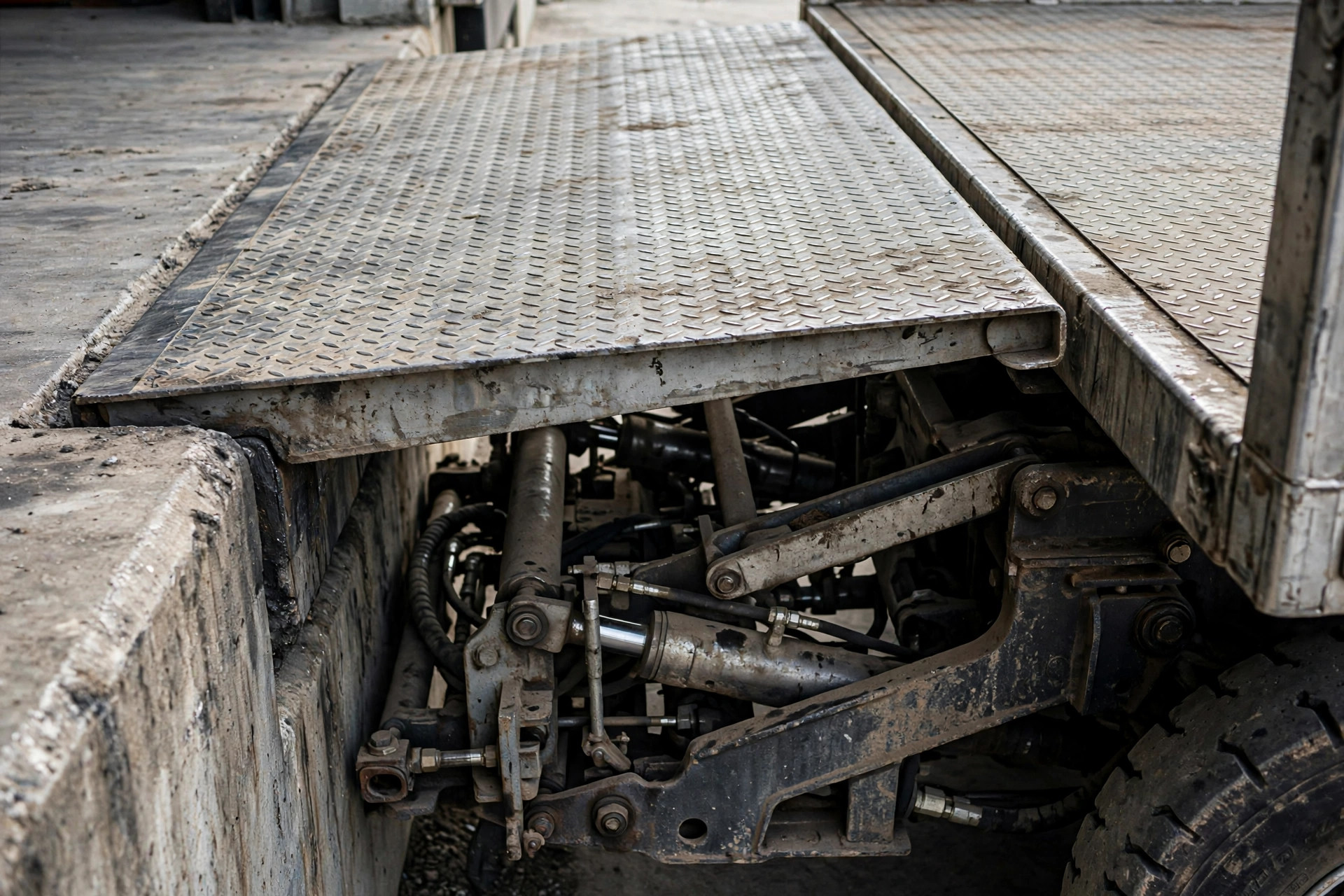
What did we actually do? First, the $600 emergency patch: a used steel plate plus two wood blocks to bridge the two-inch gap — I drove the forklift myself, dead slow, and I'd never ask an employee to do it. The permanent fix came from negotiating with the landlord: we split the cost of a higher-travel edge-of-dock leveler, and he agreed because it "adds asset value." $2,200 total, installed. From disaster to done for under $3,000 — far cheaper than cutting concrete. That's small-warehouse math: not perfect, just good enough.
The 5-Minute Tape-Measure Checklist Before You Sign
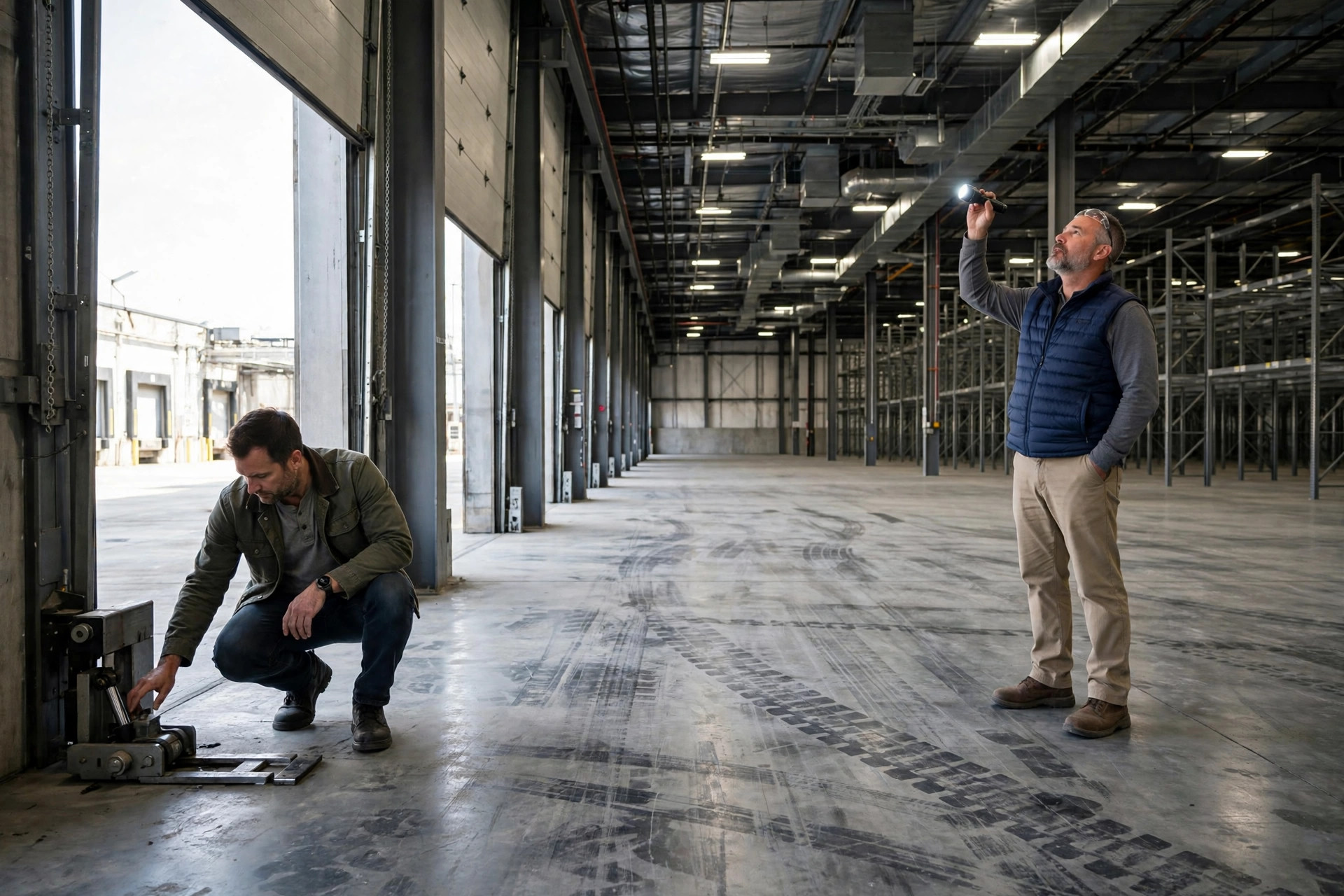
I've learned my lesson. Now a tape measure lives in my bag at every warehouse tour. Five minutes, five checks:
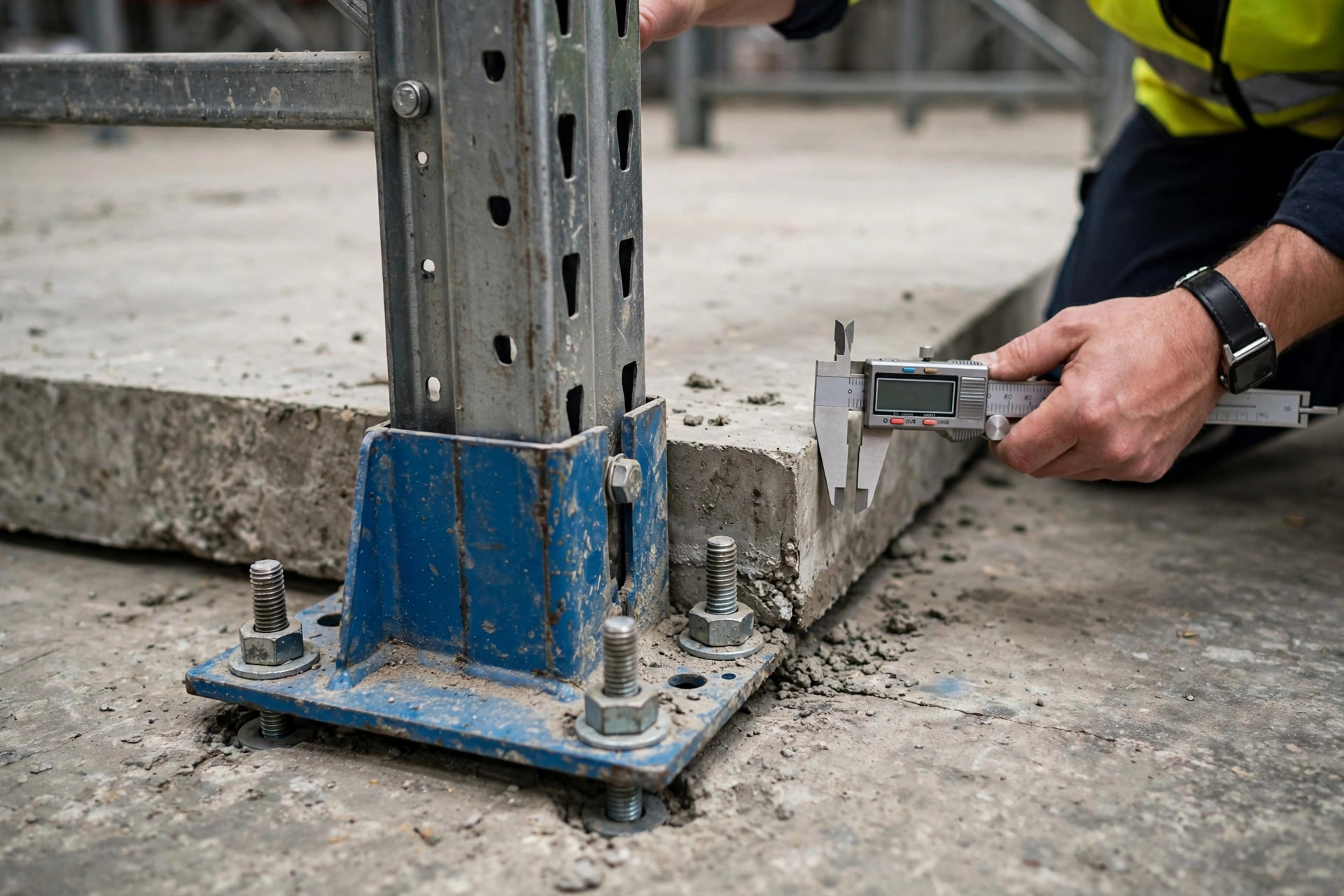
- Measure the dock height — ground to dock surface, every door. Old buildings settle; doors can differ by an inch or two. Use the lowest one.
- Read the leveler nameplate. Edge-of-dock or pit? What's the rated working range? Derate old equipment to about 70 percent.
- List your three most common truck types, look up their bed heights, and run the math against the leveler's range. Liftgate truck, ocean container, dry van — miss none.
- Check the door height: 8 feet or 9 feet? A 9'6" high-cube container needs a 9-foot door, or the right dock height won't save you.
- Eyeball the pavement in front of the dock. If it slopes, that slope changes your effective height difference.
Counterintuitive Take: Taller Isn't Better
Here's the contrarian conclusion. Plenty of people — past me included — assume 52 inches is "the new standard," that taller means more modern, that you should always lease the taller dock. Wrong. For a small warehouse, the humble 48-inch dock is the friendlier choice: it covers the widest range of trucks — box trucks at 42–48, dry vans at 48–50 — with a single leveler. The modern 52-inch dock is great for ocean containers and terrible for the local delivery trucks that make up most of a small warehouse's traffic. Big companies can afford a dedicated 52-inch building for their container volume. We can't burn money like that — what we need isn't "tall," it's "every truck that shows up can unload."
So the next time someone tells you "we've got the new 52-inch standard dock," don't nod along. Ask one question first: how tall are my trucks' beds?
Big companies have their containers and their shiny 52-inch docks. We've got our tape measures, our steel plates, and our gift for haggling with landlords. Four inches of dock height, five minutes with a tape measure, a few thousand dollars saved — that's a trade I'll take any day. Small warehouses have their own way of surviving, and sometimes the cheapest tool in the building is the one that keeps the freight moving.
By Xiao Ma, Small Warehouse Owner