A warehouse site visit checklist is not a formality. Problems found before signing are leverage; problems found after are your bill. Twelve details I verify in person before any lease — what to check, how, and what fixes cost.
The broker shows you the selling points. I tell every client: your job on a site visit is to price the retrofit, not admire the brochure. The same building can be a great deal for pure storage and a money pit for e-commerce fulfillment. Your business model decides everything — settle that before you walk through the door.
The Expensive Lesson I Learned in Fontana
In 2019, an auto parts client leased 75,000 square feet in Fontana, California's Inland Empire. The brochure said 30-foot clear height, the rent was right, signing went smoothly. On racking installation day, the installer called: the lowest sprinkler branch line sat at 26 feet 6 inches. Fire code requires at least 18 inches of clearance between stored product and sprinkler heads, so five levels of racking at roughly 6 feet per level would not fit. They dropped to four.
Twenty percent of pallet positions, gone overnight. At $1.20 per square foot per month, the client was paying roughly $216,000 a year in rent for height they could never use. The landlord just flipped open the brochure: "It says 30-foot building clear height. That's accurate." There wasn't even a lawsuit to file.
I have seen too many versions of this story. So here is my rule, earned the hard way: on a warehouse site visit, the tape measure matters more than your eyes. The 12 details below are grouped into dealbreakers, equipment, and operations. If any dealbreaker fails, walk away — don't waste your time.
Start Every Warehouse Site Visit With the Dealbreakers
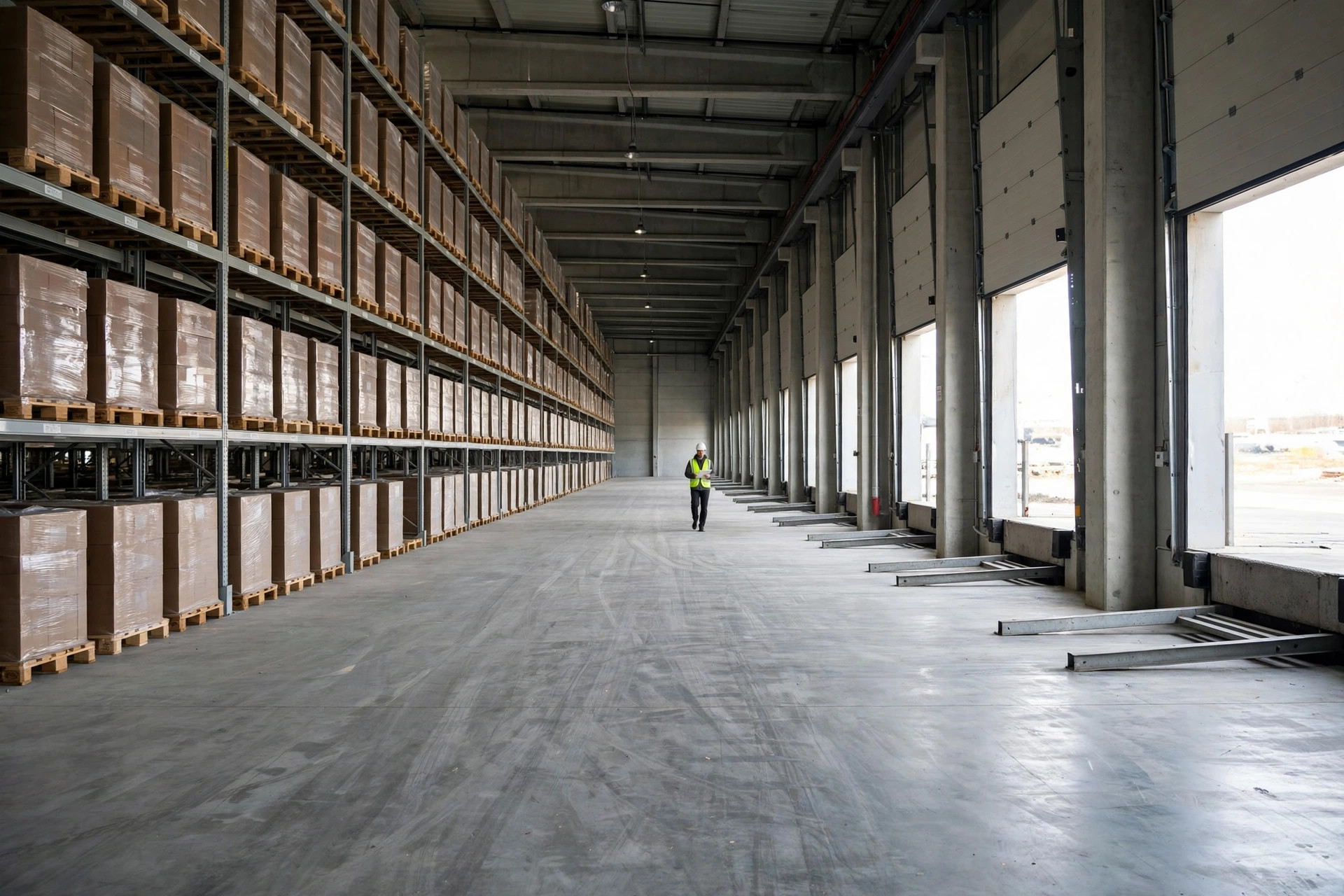
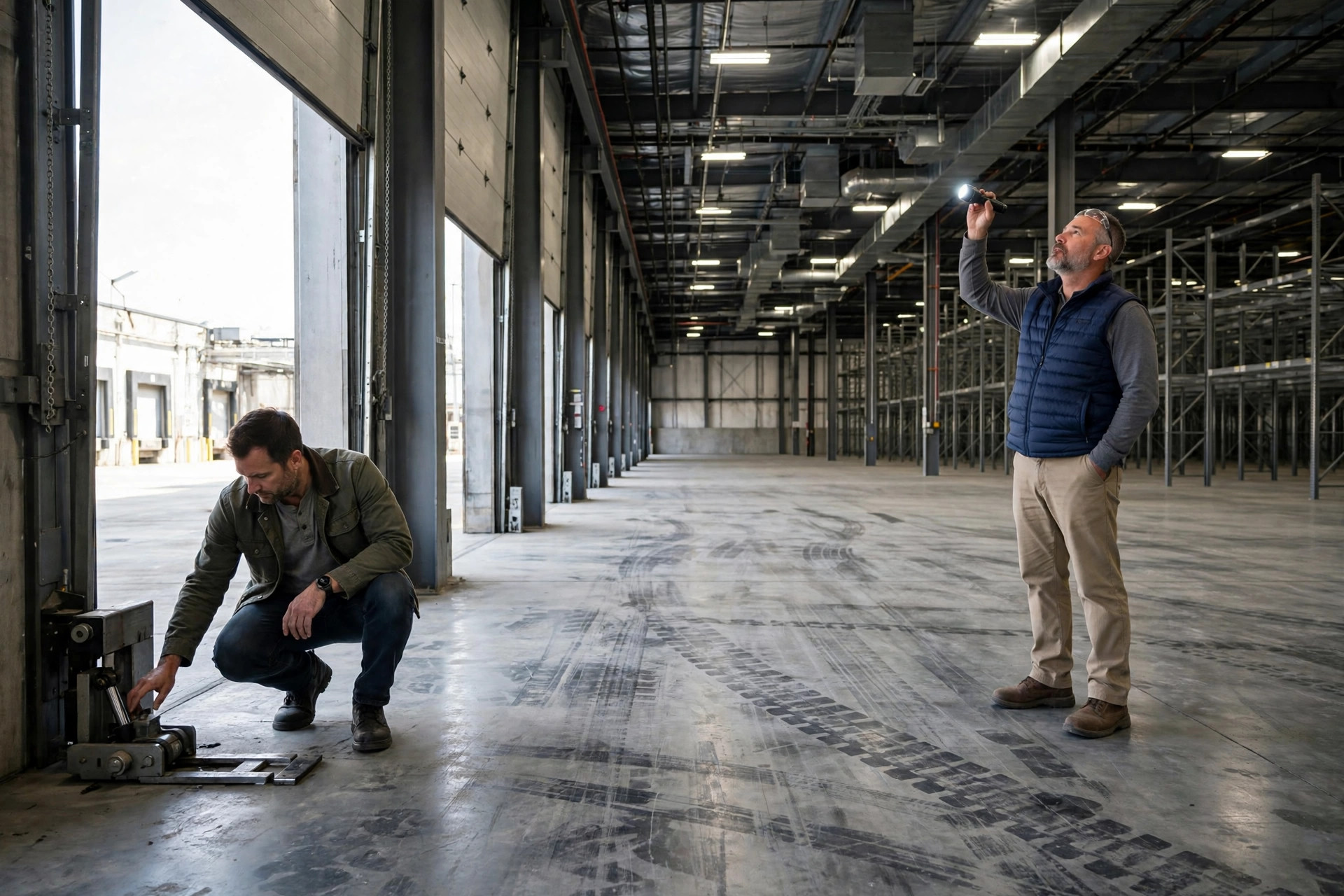
1. Verify the clear height yourself. The brochure measures floor to roof steel. Usable height is measured to the sprinklers, the lowest beam, the lowest pipe. Bring a laser measure, shoot three points across the middle and both ends, take the lowest. Two feet of difference can cost you an entire rack level.
2. Make sure the sprinklers match your product. The most expensive item here. Standard wet system versus ESFR (Early Suppression, Fast Response) is not just a name difference. Plastics, furniture, anything with lithium batteries — high commodity classification means your insurer and the fire marshal may demand ESFR. I always send the sprinkler report to my client's insurance broker before signing — he fears fire more than any of us. Retrofitting an older building routinely starts in the low six figures. Who pays gets decided before signing, not after.
3. Confirm zoning allows your operation. 24-hour shifts, truck trip frequency, outdoor storage — some cities regulate these hard. Don't take the broker's "should be fine." Check with city planning or have your attorney confirm in writing. I have seen a tenant discover after signing that the street out front had a weight limit a 53-foot trailer couldn't legally meet.
4. Column spacing. 50-by-50 versus 60-by-60 feet decides your racking layout and aisle design. More columns, more dead corners, more wasted footage. Measure it on the visit, sketch a layout when you're back, and you'll know exactly what you're working with.
Equipment and Operations: The Other 8 Details, Where Broken Means Money
5. Test every dock door and leveler, one by one. The easiest item to skip on a visit, the most painful one later.
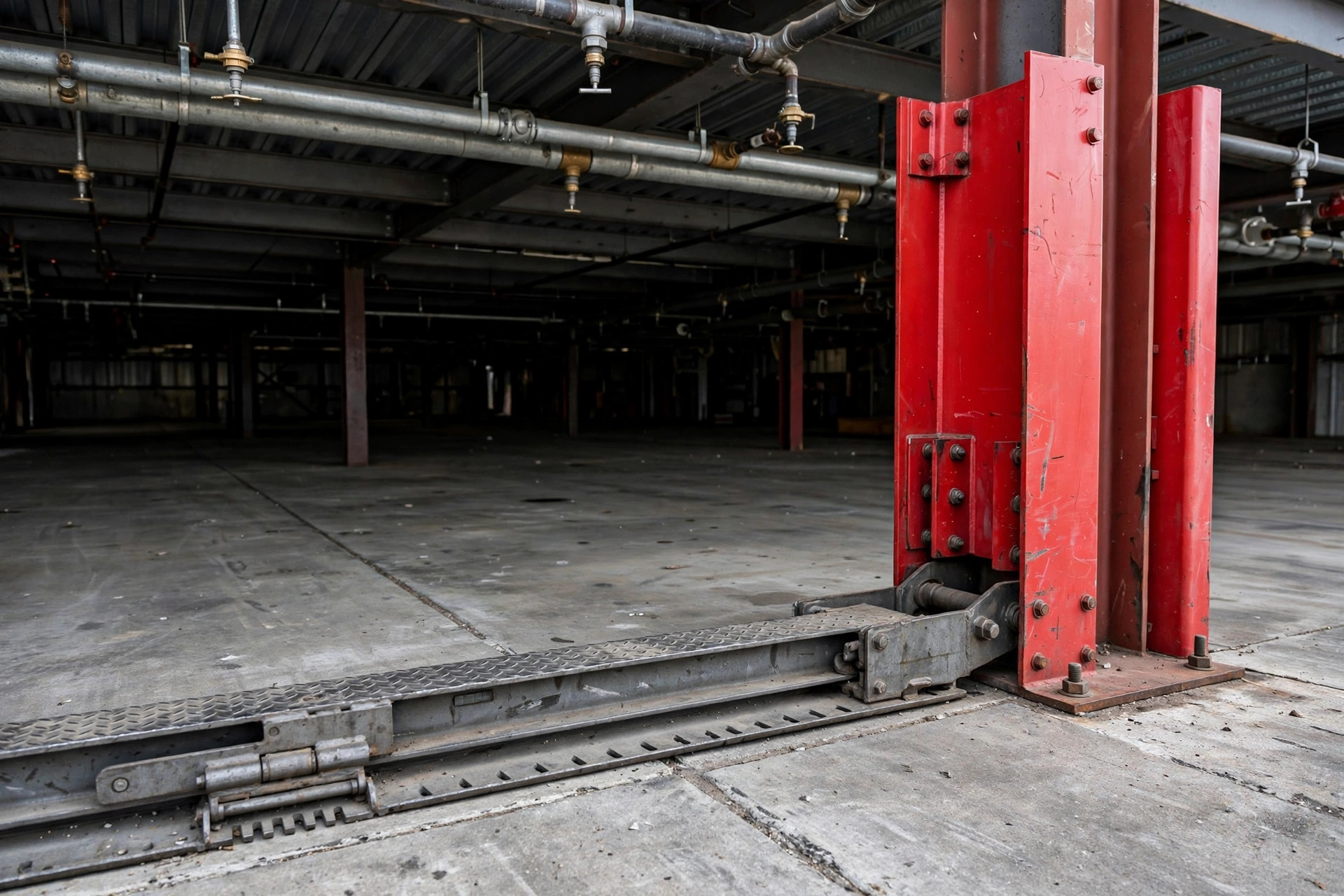
In 2021, a friend running a 3PL in Riverside leased a building with 24 dock doors. I told him to test every single door. He trusted the broker instead. After move-in, six levelers were rusted solid with rotted seals. The landlord pointed at the lease: "routine maintenance is the tenant's." One leveler repair — parts plus labor — runs roughly $2,000 to $5,000. Six of them cost him nearly twenty grand. Thirty extra minutes on visit day, raising and lowering each door, would have caught everything.
How to check: raise each leveler and lower it, listen for grinding, inspect seals and locks. Log what's broken and make the landlord fix it before handover, in a lease exhibit.
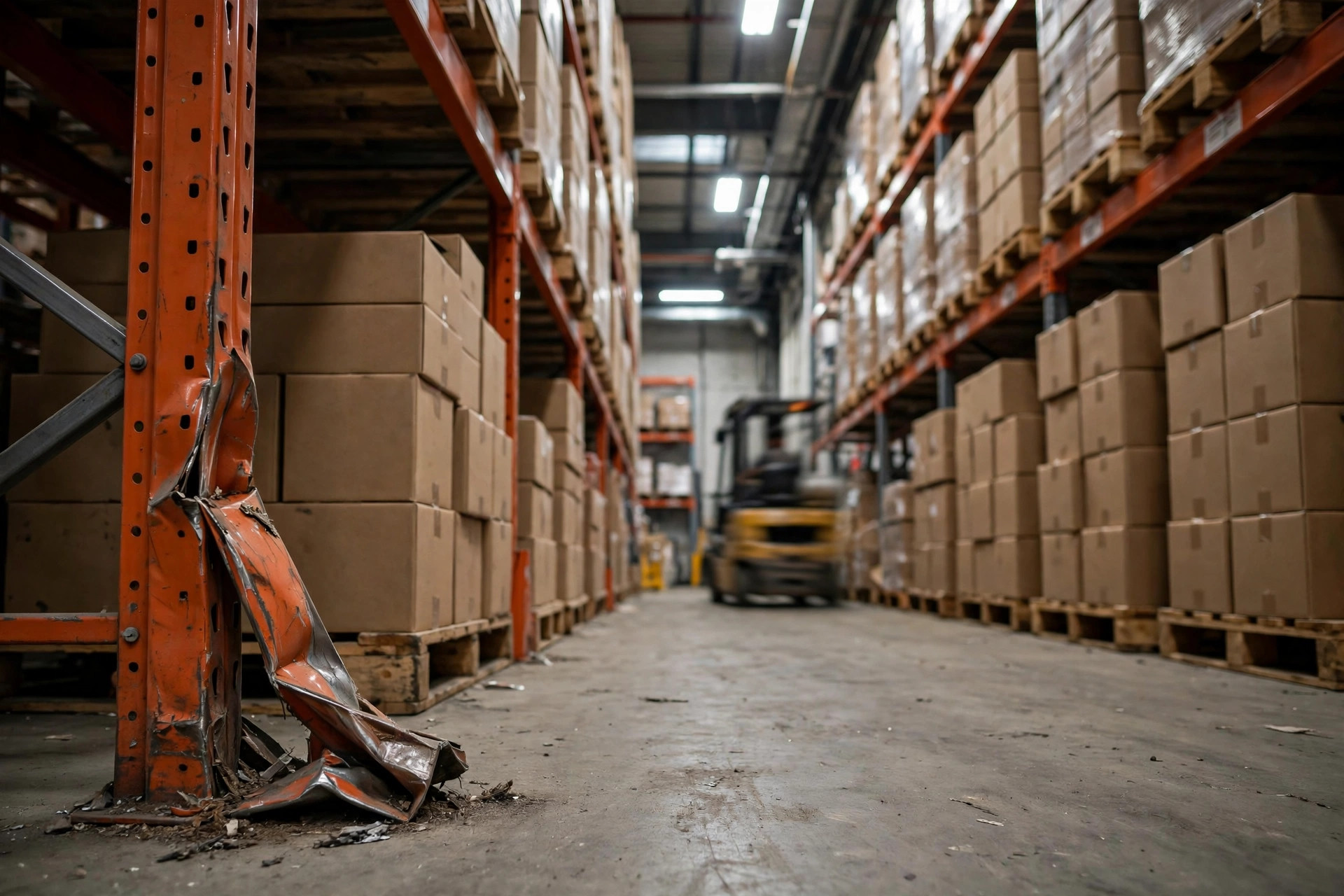
6. The floor: cracks, settlement, flatness. Push a manual pallet jack around the building — one lap tells you everything. Large cracks or settled slabs punish forklift tires and rack anchors daily. A full slab replacement runs into the hundreds of thousands, so the strategy is simple: small issues go on the landlord's fix list, big ones mean you move to the next building.
7. Roof and drainage. Visit once on a rainy day if you can. Look for ceiling water stains and corner mildew. If the roof leaks, the lease must spell out who pays for damaged goods and who handles repairs. On older buildings, ask for the last major roof work records — and how much roof life remains.
8. Electrical capacity. Open the panel: main breaker amperage, three-phase or not. You may not need it today, but charging electric forklifts, conveyors, and future automation all draw serious power. A utility service upgrade means joining the power company's queue — six months minimum, plus cost. Confirm capacity before signing, not two years from now when your equipment has nowhere to plug in.
9. Truck court depth. Under about 120 feet, turning a 53-foot trailer gets painful. At peak hours a few trucks in line and the queue spills onto the street — neighbor complaints, police tickets, your problem. Stand at the gate 20 minutes during rush hour and watch. More revealing than any spec sheet.
10. Lighting. Old metal halide fixtures are dim and hungry. Relighting with LED — fixtures plus labor — easily hits the tens of thousands. Check light levels on the visit, and ask who pays the electric bill and how it's split. Some older properties share one meter across the whole site — that's how you end up subsidizing your neighbor.
11. Office, restrooms, parking. Thirty workers and two restrooms gets you crew complaints first, regulator complaints second. Figure one stall per 1,000 square feet — double it for multiple shifts. Minor on paper, decisive when you can't hire or retain people.
12. The landlord and property management — the softest item, the most dangerous. Why did the last tenant leave? How fast is maintenance response? How much have CAM (common area maintenance) charges risen in three years? The broker won't volunteer any of this. The tenant next door will — stop by during your visit and ask. What you hear there is the truth.
Do the Math: Cheap Rent Can Be the Most Expensive Rent
Two sides to this. Two 50,000-square-foot options in the Inland Empire:
| Building A (built 1980s) | Building B (built 2020) | |
|---|---|---|
| Monthly rent | ~$1.05/sq ft | ~$1.35/sq ft |
| 5-year rent total | ~$3.15M | ~$4.05M |
| Sprinkler upgrade | ~$150K–$250K | $0 (ESFR ready) |
| Partial slab repair | ~$80K | $0 |
| 8 leveler replacements | ~$20K–$40K | $0 |
| LED retrofit | ~$30K–$50K | $0 |
| 5-year true cost | ~$3.43M–$3.51M | ~$4.05M |
Building A still saves roughly $500K–$600K over five years. But the table hides two things: two to three months of construction during which you pay rent on a building you can't use while your opening date slips, and every retrofit surprise burning your time. My call: if your team has engineering muscle and schedule flexibility, Building A wins. If you need to be operational within three months, Building B is actually cheaper. No universally better choice — only what fits your stage.
Turn Your Warehouse Site Visit Checklist Into Negotiating Leverage
That is what a warehouse site visit checklist is really for. After the 12 items, I sort everything into three buckets:
- Red (dealbreakers): sprinkler class too low, clear height too short, zoning blocks your use — one red and you walk, no negotiation.
- Yellow (negotiable): dead levelers, cracked slab sections, outdated lighting — list them, make the landlord fix them, or convert them into free rent or a lower rate. Every yellow found before signing is a chip on the negotiating table.
- Green (acceptable): small office, tight parking — absorb it and move on.
The counterintuitive part: most people tour buildings to find one they like. The pros tour buildings to find what's wrong with them. Finding faults isn't about squeezing the price — it's about knowing your true cost of occupancy. Rent is just the tip of the iceberg. The retrofit, schedule, and argument costs below the waterline can exceed the rent itself.
Next time you tour a warehouse, don't just bring your eyes. Bring a tape measure, a flashlight, and your insurance broker. Because once you've signed, the landlord's smile gets wider — and now you know exactly what that smile is worth.
By Lao Mi, Supply Chain Veteran (20 yrs)