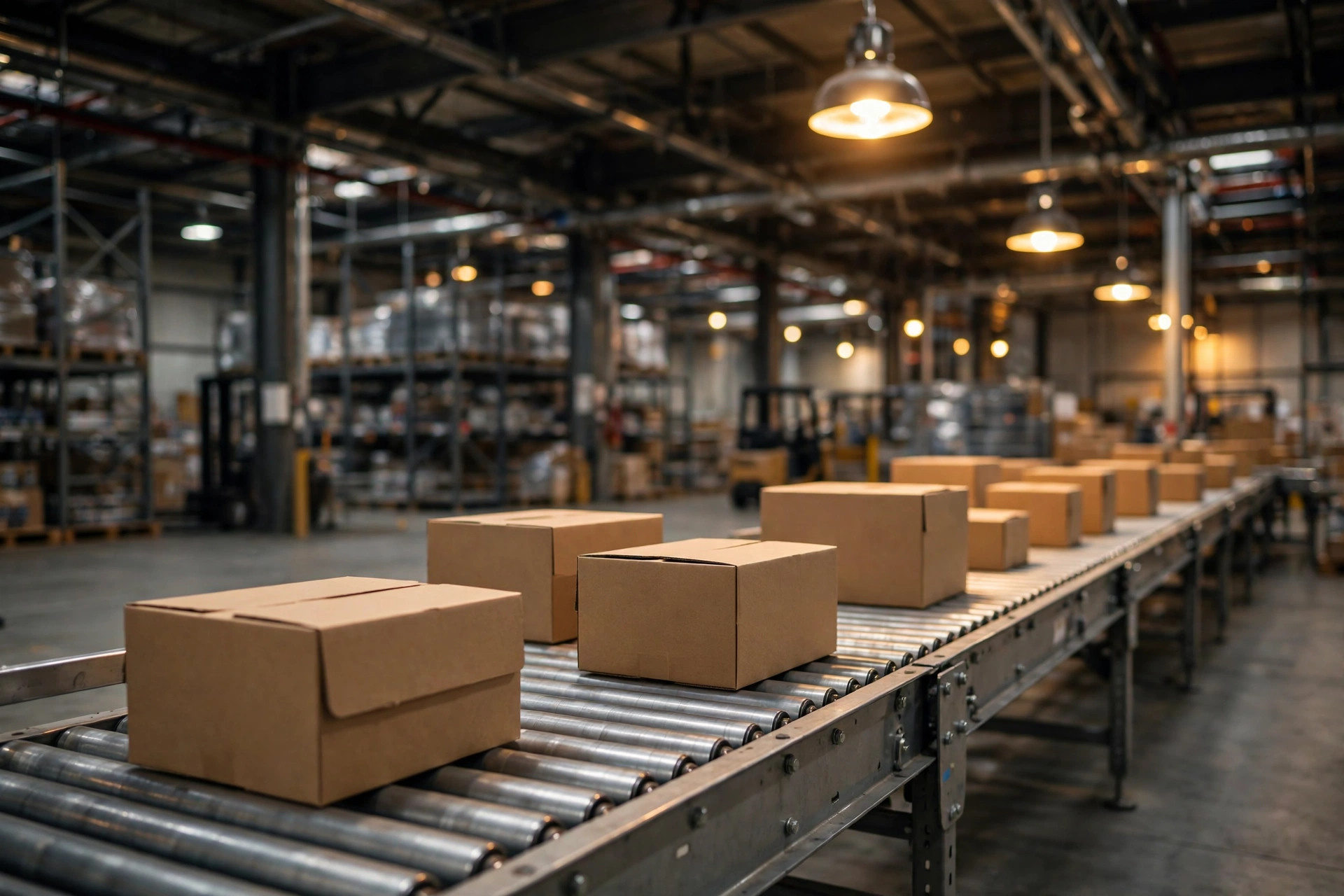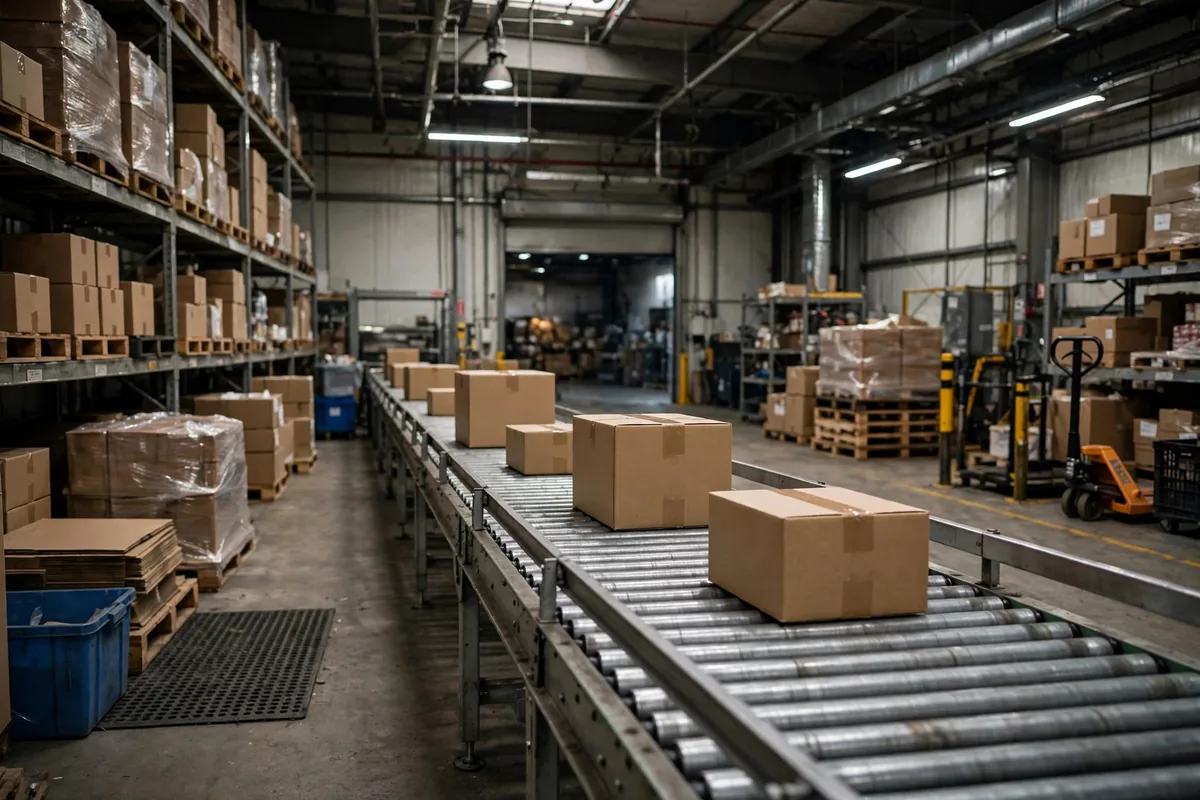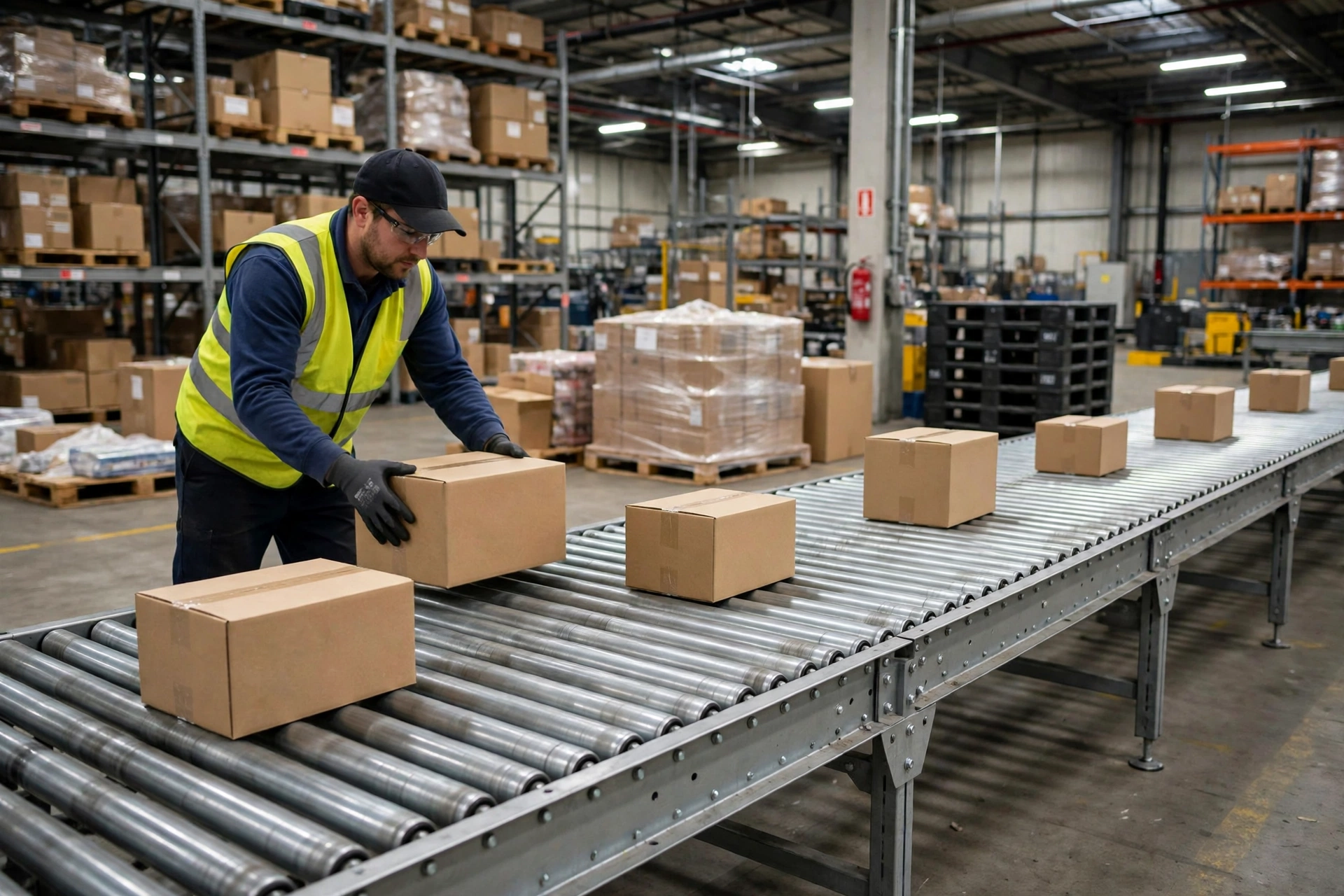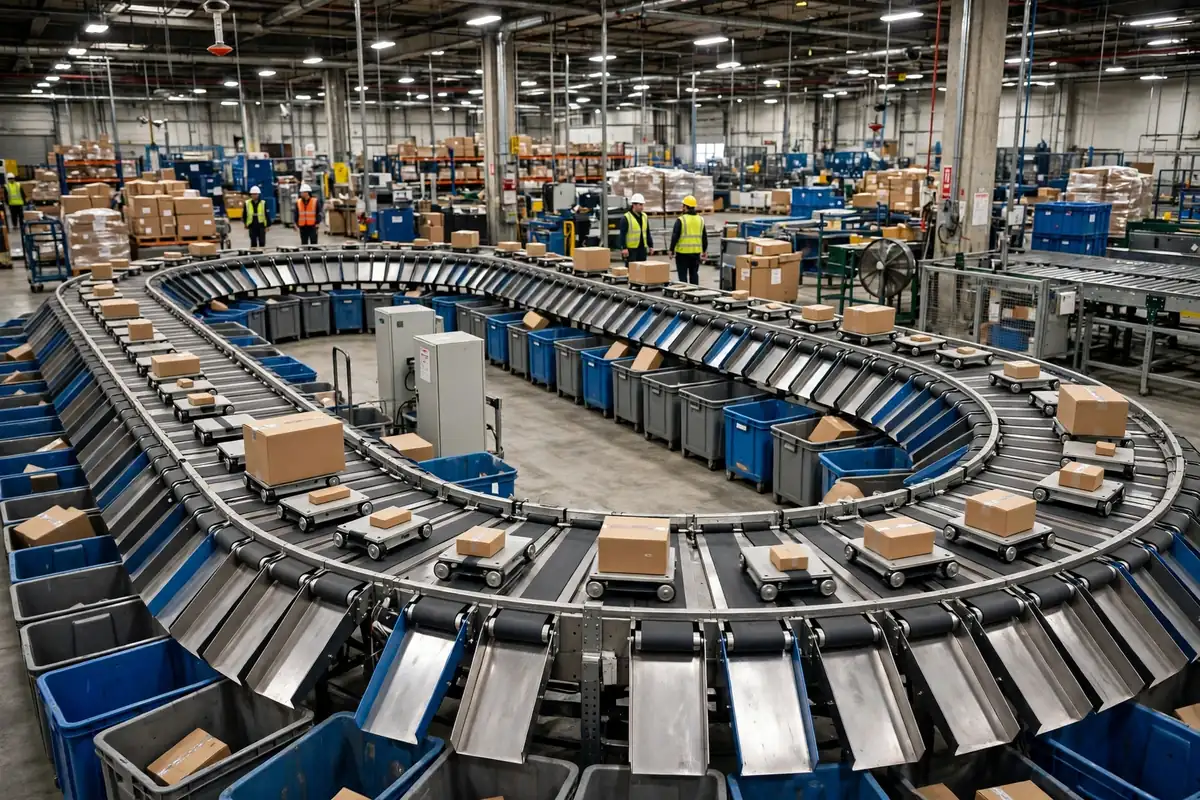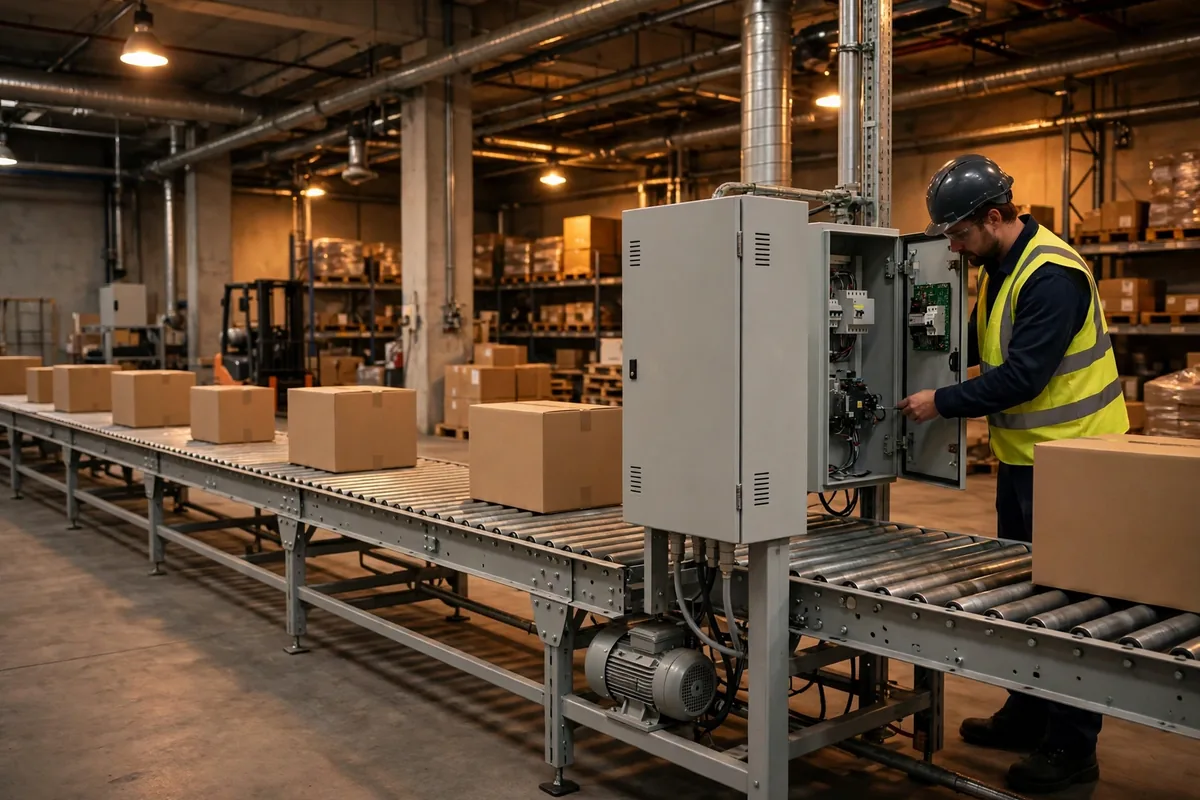
It was 6:30 in the morning, and the first thing I did when I walked into the warehouse was check the night shift's handover sheet — and take a look at the main line we had just fitted with a conveyor VFD energy saving retrofit. Guys, from 2 a.m. to 5:30 a.m. that line had been running at full speed with nothing on it. The pick zone was empty. No cartons, no freight, just the belt running and the meter spinning. I stood there for half a minute, and all I could think was: who is paying for those three and a half hours?
The night shift lead, Ah Qiang, told me he left it running because he was afraid restarting it would hold up the first outbound wave in the morning. I told him I was afraid of the electricity bill. We argued about it for five minutes right there beside the conveyor. Lao Wang, our electrician, was listening, and he said the line spends more hours running empty at night than it does moving freight. That was the sentence that stuck with me. The electricity bill for an empty line running at full speed gets burned one minute at a time.
To be honest, I did not believe in conveyor VFD energy saving at first either. A vendor came by, thumped his chest, and promised we would cut our power use in half. I asked him how he got to half. He mumbled something about the cube law and changed the subject. I went home and looked it up, and that is when I learned the math in the sales pitch does not apply to us.
Where conveyor VFD energy saving actually comes from
Let me get the biggest trap out of the way first. On fans and pumps, power drops with the cube of speed — slow down 20 percent and power roughly halves. That is the affinity law, and it holds for fans and pumps. A conveyor is different. A conveyor is a constant-torque load, so power falls roughly in proportion to speed. Slow down 20 percent and power falls by about 20 percent, not half. Anyone who quotes you fan math for a conveyor is selling you numbers that will not survive the first meter reading.
So is a VFD on a conveyor still worth it? Yes — but the savings come from somewhere else. The first place is idle and light-load time. Our lines spend less than half the day truly loaded. The rest of the time they are waiting — waiting for picks, waiting for checks, waiting for the next wave — and the belt keeps running while it waits. A drive lets the line slow down or stop when there is no freight, then ramp back up when the cartons arrive. The second place is starting. A motor started direct-on-line can draw six to eight times its rated current at start-up. Started through a VFD, that inrush drops to about 100 to 150 percent of rated current, so the belt does not jerk, and the couplings and gearbox take less punishment. The third place is pace: run fast in peak season, slow in the quiet weeks, instead of having someone stand by the switch all day.
Across the industry, the usual range quoted for conveyor VFD energy saving on constant-torque loads is 10 to 25 percent. A number below that range is nothing to be ashamed of. A number above it deserves one question: under what load was that measured?
Which line to retrofit first, and which to leave alone
The first two lines we retrofitted taught us the whole lesson. One was the long line from packing to case sealing, more than 40 meters, in three sections, with freight arriving in bursts and long empty gaps in between. The other was the short line at the inbound dock, loaded non-stop all day. The second one barely moved the electricity bill after the retrofit. That money was wasted. The rule I took away is simple: look at the idle rate before you touch anything.
These days I rank retrofit candidates on three things only. The line with the highest idle rate goes first. The line that runs in bursts goes first. The long line goes first. A line that runs loaded all day gets a VFD and gains little more than a soft start, so it goes last. And the inclined line at the outbound dock — leave it for later. A heavy load on a slope at low speed will slip, and before you retrofit that one, make the vendor put the torque numbers in writing.
I always work out an illustrative example before I spend anything, and I want to be straight with you: every number in the table below is an assumption, a scenario to show the shape of the payback, not a promise for your warehouse. Suppose a line draws 12 kW on average at full speed, runs 16 hours a day, 300 days a year. That is 57,600 kWh a year. At a 15 percent saving, you save 8,640 kWh a year. At an assumed price of 0.8 yuan per kWh, that is 6,912 yuan a year. One vendor quoted us around 25,000 yuan to retrofit one line. On electricity alone, payback takes about 3.6 years.
| Item | Before (illustrative example) | After (illustrative example) |
|---|---|---|
| Annual consumption | 57,600 kWh | 48,960 kWh |
| Annual electricity cost | 46,080 yuan | 39,168 yuan |
| Annual saving | — | 6,912 yuan |
| Retrofit cost | — | About 25,000 yuan |
| Simple payback | — | About 3.6 years |
That looks dull, and it is — until you add the rest. The soft start saves belts, couplings, and gearbox repairs, and the night hours no longer burn power on an empty belt. Add those in and payback moves earlier. It works the other way too: if your lines run loaded all day with a low idle rate, the same math tells you not to retrofit at all. Spend that money elsewhere.
The failures that show up after a conveyor VFD retrofit
The first week after the retrofit, we hit the first failure: belt slip at low speed. At night, with little freight, the line slowed down, and cartons started sliding back on the inclined section and piling up. The checker at the verification station had to stop the line. I went down and saw it myself — the speed was too low for the belt to grip the rollers. The fix was a minimum frequency setting on the drive: the line is not allowed below about 60 percent of full speed. Below that, we stop the line and wait for freight instead of crawling.
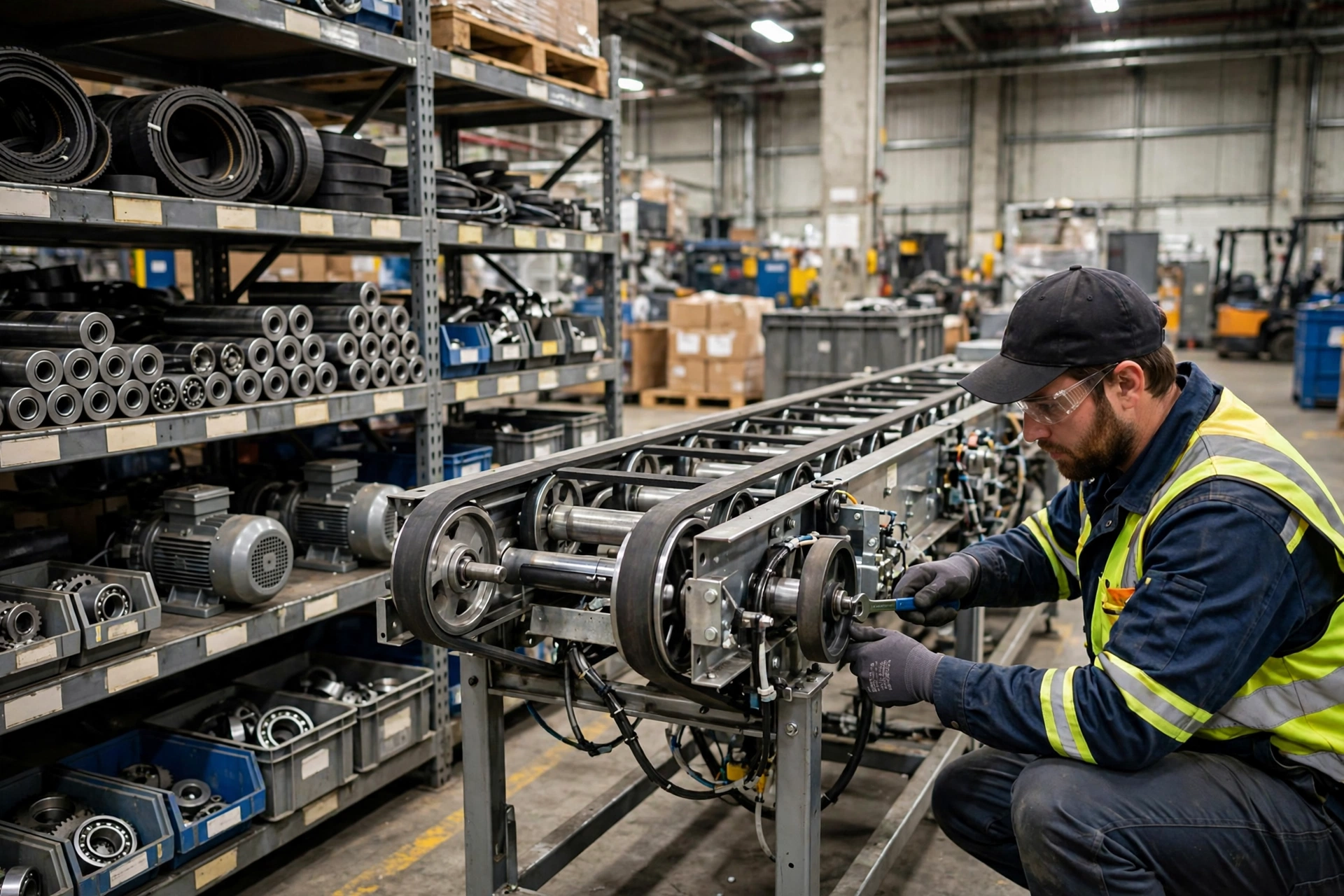
The second failure was motor heating. A standard motor cools itself with a fan mounted on its own shaft. Slow the motor down and the fan slows with it, so cooling drops. But a conveyor is a constant-torque load — at low speed it still needs nearly full torque, so the current stays high and the heat has nowhere to go. The motor frame got hot enough to burn your hand. The common guidance from motor makers is that a standard self-cooled motor has a safe speed range of about 4:1, and running below that for long stretches needs an independent fan or a motor rated for low-speed duty. We fitted a separate fan for a few hundred yuan, and the temperature came back down.
The third failure was too many starts and stops. Once the line could stop on demand, some crews stopped it every time there was no freight for two minutes, then started it again when a carton arrived — a hundred starts a night. The motor, the gearbox, and the belt joints all paid for it. So we set a rule: the line only stops after ten minutes with no freight. Under ten minutes, it idles at low speed. No more stop-start every two minutes.
What we do now, every time
Our rules today are four lines long. First, measure the idle rate for a week before any retrofit. No measurement, no retrofit. Second, retrofit the long lines and the intermittent lines first; the loaded lines and the heavy inclined lines wait. Third, lock the minimum frequency on the drive — a line that slips at low speed gets stopped, never forced to crawl. Fourth, feel the motor temperature every week, and any line that spends a lot of time at low speed gets an independent fan. If a motor runs hot, stop the line and find out why before you run it again.
One more warning for anyone sitting across the table from a vendor: when they quote you a saving percentage, ask what load it was measured at. Fan math pasted onto a conveyor looks beautiful on a slide and falls apart on the first meter reading. Measure your own idle rate for a week. That will tell you more than ten sales presentations.
By Chen Feng, Warehouse Operations Manager