Last winter I stood for three minutes at the dock of a frozen-food warehouse outside Chicago. Minus 18 degrees Celsius inside the freezer, and wind was cutting straight through the zipper of my jacket. The warehouse manager pointed at the loading dock seals and said they'd been replaced two years ago, still looked fine. I ran an infrared thermometer along the door frame. The steel near the gap measured almost 9 degrees warmer than the wall inside. Cold air was pouring out of that crack, 24 hours a day, and nobody had put a number on it until then.
Whether loading dock seals of the inflatable kind are worth buying has nothing to do with the product brochure. It comes down to the air-leakage math at your own dock doors.
What Loading Dock Seals Actually Seal: Count the Leak Before You Shop
Here's the mechanism. A standard foam compression seal works by the trailer backing in and squashing the foam pads, which spring back against the truck body. When the fleet is uniform and the drivers back in straight, this is cheap and durable. But mix refrigerated trailers, box trucks, and high and low decks, and sooner or later a trailer parks crooked and leaves a gap.
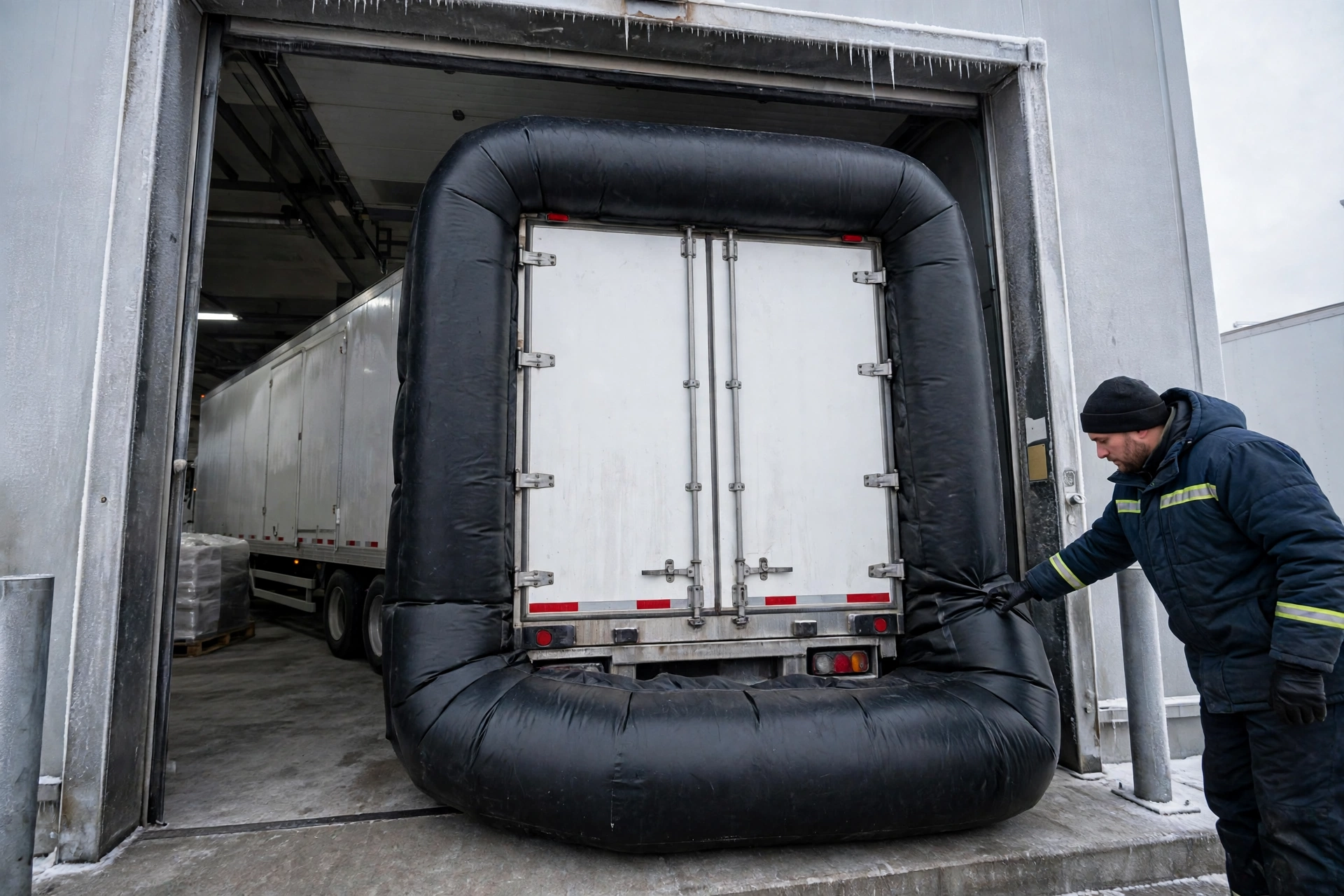
An inflatable seal works the other way around. The truck parks and stops. Then a blower inflates air bags along the top and both sides, and the bags wrap themselves around the trailer like a hand closing around an oddly shaped object. Think of it this way: a compression seal is a tailored suit, and an inflatable seal is a stretch-fit cover. The more irregular your fleet, the more the stretch-fit is worth. That is the whole value proposition, and it is also the limit of it.
Vendor brochures often claim 99% airtightness for inflatable bags. That is a lab number under ideal conditions. In the field, what you actually get depends on three things: how flat the trailer sides are, how straight the driver backs in, and how old the bags are. Never buy on the headline number. The number that matters for your business case is leakage area. Every extra square centimeter of gap between a minus 18-degree freezer and a 5-degree dock is refrigerated air escaping and warm air coming in, and your compressors pay for every bit of it.
Industry write-ups have put dock heat leakage at up to 30 percent of operating cost in refrigerated warehouses. Treat that as a directional warning, not a quote for your site — every building leaks differently. But it tells you the right way to think about the purchase: in a cold store, the dock seal is part of the refrigeration system, not a consumable.
Are Inflatable Seals Worth It in Cold Storage? Three Dividing Lines
The first line is temperature difference. Freezer at minus 18, summer outside at 35 — a 50-degree-plus spread means every leak is expensive, and the premium for an inflatable seal pays back fastest. In an ambient warehouse where inside and outside differ by a few degrees, a leak mostly means the crew is cold, and the inflatable premium is money down the drain. My rule of thumb: if the indoor-outdoor difference runs above 25 degrees most of the year, inflatable seals are on the table. Below that, replace the compression seals, fix the seal under the leveler, and you get the same result for half the money.
The second line is fleet variety. A published case from Valencia, Spain, makes the point well: a fruit and vegetable exporter receiving refrigerated trucks from more than a dozen different carriers, with trailer heights, widths, and side-panel conditions all over the place. Their old foam seals always left a corner unsealed, internal temperatures swung, and spoilage followed. After switching to inflatable seals, the fit improved, temperatures stabilized, and losses fell. The lesson is not "inflatable beats foam." It is "when the fleet is so mixed that foam cannot seal it, that is when inflatable earns its keep." If your fleet is your own trucks, uniform in size, and the foam already sits tight, paying three times more for inflatable bags is a textbook pseudo-need.
The third line is throughput. An inflatable seal runs a full cycle on every load: inflate, hold pressure, deflate. The blowers are typically 110V or 220V twin-motor units, and inflation takes tens of seconds. At four trucks a day per door, that time is nothing. At fifteen or more, an extra half-minute per truck adds up to a quarter-hour of dock occupancy a day, plus the electricity for holding pressure the whole time. On a high-frequency door, the working time you lose can eat half the cold air you saved. Run this on your own truck counts; never copy someone else's conclusion.
Before you spec anything, draw those three lines for your own site, and compare them with the broader dock seals vs dock shelters selection guide, which lays out how seals and shelters divide the job. An inflatable seal solves sealing strength; a shelter solves vehicle compatibility. Different problems, different buying logic — don't mash them together.
The Energy Math for Loading Dock Seals: A Worked Example
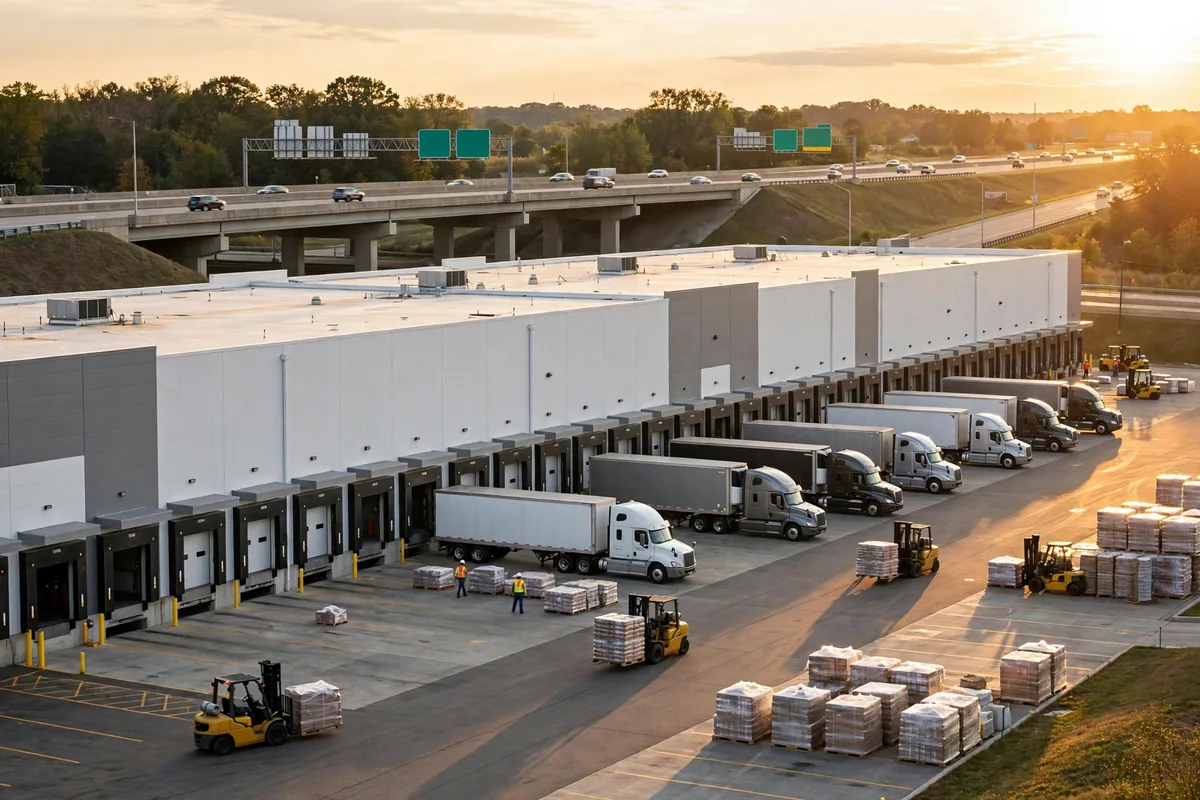
The numbers below are a stated example to show the method, not a quotation. Take an eight-door freezer warehouse at minus 18 degrees, six trucks per door per day, 40 minutes of open-door work per truck. By industry rule of thumb, the cold lost through a worn seal runs roughly 1 to 1.50 US dollars of refrigeration electricity per visit. That is about 2,200 to 3,200 dollars a year per door in wasted electricity, or 17,000 to 26,000 dollars a year across eight doors.
Supply and install runs 4,000 to 7,000 dollars per door in the US market, so 32,000 to 56,000 dollars for eight doors. Add blower electricity and bag replacement amortized at roughly 400 to 700 dollars per door per year. On those assumptions, simple payback lands around 1.5 to 2.5 years — which is where the vendor claim of 18 to 24 months comes from. But that payback only holds if your leakage is really as bad as the example assumes. In a warehouse that leaks less, payback stretches past four years without anyone lying to you.
Here's the counterintuitive part: the tighter the seal, the worse the frost at the door can get. Moisture gets trapped inside the doorway, condenses on cold steel, and freezes; ice builds up, the bags stop sitting flat, and the seal degrades again. A cold-store inflatable seal needs door drainage and a heated door frame, or the winter will undo the whole investment. Skip those two items and the energy math falls apart.
Before you sign anything, measure it yourself. Walk the door frame with an infrared thermometer — anywhere the temperature jumps more than 5 degrees is a leak. Slip a stiff card between the inflated bag and the trailer body; if it pulls out easily, that spot isn't sealing. Then log the compressors' electricity for three days before and after the change. Three home-grown tests, half a day's work, and they beat any brochure.
The Maintenance Traps: Three Things That Kill Air Bags
Forklifts kill air bags. A loader in a hurry drags a pallet across the edge of a bag, one cut, and the seal is finished. The fabric is PVC-coated cloth — temperature is not the problem, abrasion is. The fix is a steel guard angle on the outside of the bag, plus a rule in the loading crew's contract that a torn bag costs them money.
The second killer is the driver who pulls away early, before the bags have deflated, and the side panel drags the bag off its mount — torn fabric at best, ripped blower ducting at worst. Good control logic interlocks the door and the bags: the dock door cannot open until the bags are inflated, and the bags cannot deflate until the truck has left. Ask the vendor whether that interlock exists. If it doesn't, you are buying a bag with no seatbelt.
The third is the blower filter. The blower holds pressure for the entire loading cycle, and a clogged filter means slow inflation and weak pressure — the seal goes from "wrapped tight" to "barely touching." Filters are consumables: inspect monthly, replace quarterly, cost close to nothing — yet nobody inspects them, and they are the most common failure point I see. I once walked a site where three doors had "stopped sealing" at the same time — all three blower filters were blocked solid. New filters cost under thirty dollars.
So is the money worth it? Look at one number: the refrigeration electricity one door saves per month, minus blower power and annualized bag replacement. Positive, buy it. Negative, replace the compression seals and move on. Until you can calculate that number, don't sign.
By Da Liu, Automation Engineer