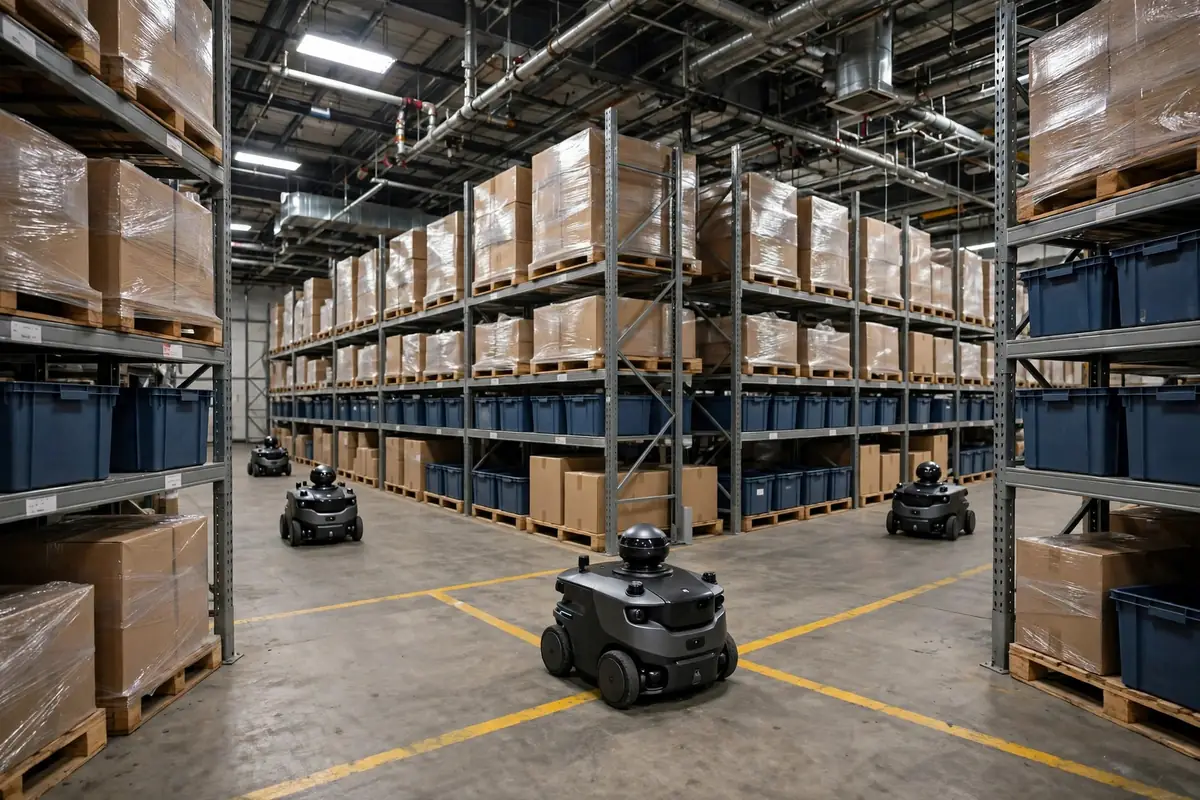
Last October, a 3PL warehouse in Dongguan that ships small home appliances called me about a letter from the neighboring industrial park. After 11 p.m., every time their conveyor line started up, the dormitory building next door could hear the humming. The warehouse supervisor had measured around 88 decibels at the line with a phone app — he knew perfectly well a phone app is not a real measurement, but the complaint letter was already sitting on his desk, and doing nothing was not an option. I get two or three calls like this every year, and the pattern is always the same: first somebody complains, then somebody panics, then somebody signs off on spending money in the wrong place.
Think of conveyor noise as a washing machine running with its casing removed. It is not one part making noise; the whole line is vibrating together. Rollers turn, belts rub, motors shake, and the steel frame shakes along with them. The sound piles up into one continuous hum. If you want real warehouse conveyor noise reduction, the first step is not buying anything. It is figuring out exactly where the sound comes from. Spend money in the wrong place and you will not buy yourself a single decibel.
Where the Noise Comes From: Listen in Three Sections
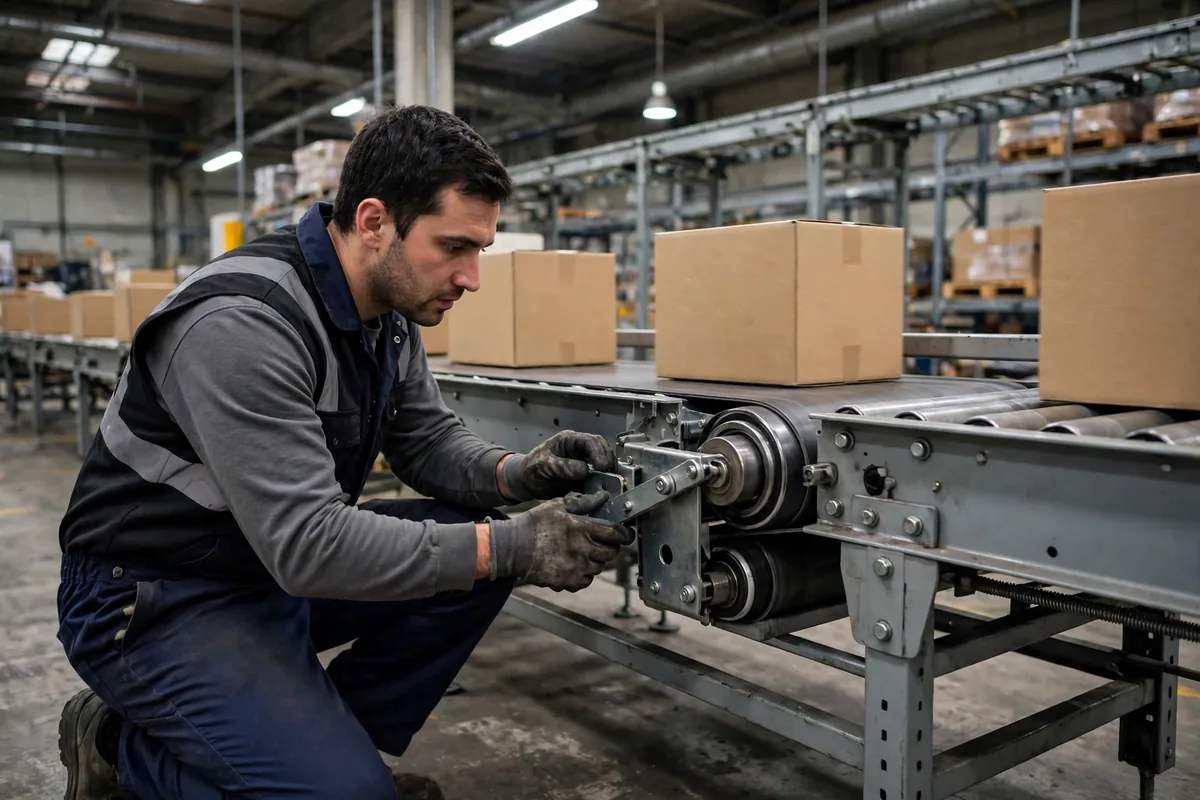
When I walk into a warehouse with this problem, the first thing I do is stop the line and start it back up one section at a time. Run the motor empty and listen to the drive section. Send a few empty pallets through and listen to the roller section. Then run it fully loaded and listen to the whole line. In Dongguan, the line was already loud running empty, which pointed straight at the drive section. Two anchor bolts on the motor base had worked loose, and the gearbox oil was overdue for a change. Two bolts and a drum of oil, half a day of work, and the noise at the line dropped noticeably on the spot.
The second common source is the roller section. In 2023, an auto parts warehouse in Kunshan had a line that had been running for seven or eight years, and the complaint was that it kept getting louder. When I got there, the roller bearings were worn out — a dozen rollers turned stiffly, and the belt was slipping. Bearings do not just get "a little louder" once they wear past a point; they get louder, which wears them faster, which makes them louder still. We replaced the worn bearings and re-tensioned the belt, and the line sounded the way it did when it was first installed.
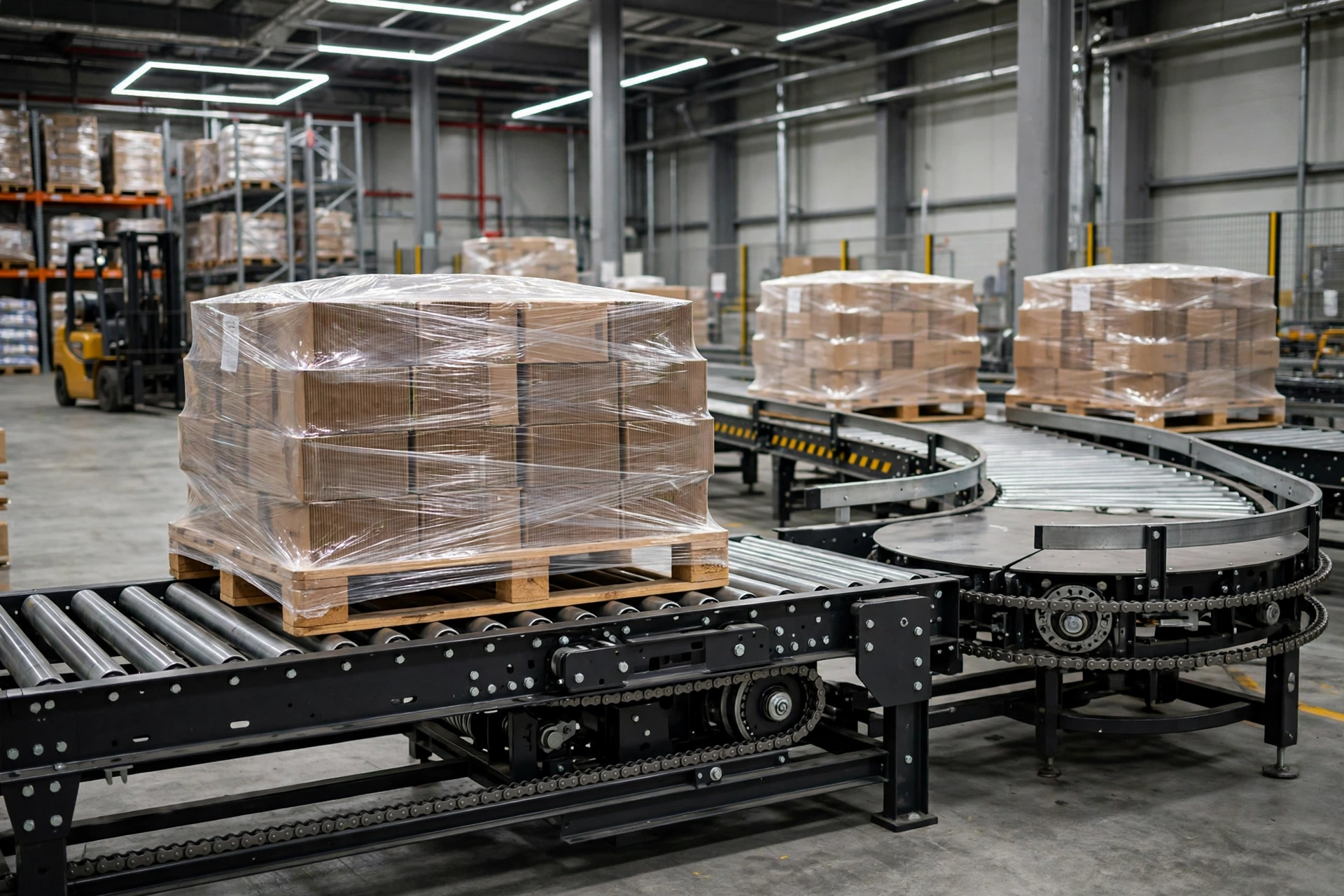
The third source is the one people miss most often: the steel frame resonating. The line itself is fine, but the supports are welded straight onto the floor plate, and vibration travels through the floor slab until the whole building hums along. Replacing parts will not fix that. You need damping pads under the supports, or a flexible connection between the drive section and the line body. Sound behaves like water — it takes the easiest path it can find, and unless you block that path, it will always find a way out.
Three tiers of conveyor noise reduction, and the money mistake in each
Fixes come in three tiers, and picking the wrong tier is how money gets wasted. Tier one is parts replacement: bearings, belts, bolts, lubrication. It costs a few thousand, takes half a day of downtime, and fits a line that is still solid but has local wear. Tier two is retrofit: an acoustic cover on the drive section, damping pads under the supports, a variable-frequency soft start on the motor. It costs tens of thousands, takes a weekend, and fits a line where one section is the problem and the structure is sound. Tier three is rebuild: reselecting and relaying out the whole line. It starts in the six figures, takes days of downtime, and only makes sense when the line was wrong from the start — the drive section facing the dormitory windows, for example, or a line speed chosen too high for a line that runs at full load all day.
| Fix tier | Cost scale | Downtime | When it fits |
|---|---|---|---|
| Parts replacement | A few thousand | Half a day | Local wear, structure still solid |
| Retrofit | Tens of thousands | A weekend | One section is loud, structure is fine |
| Rebuild | Six figures and up | Several days | Wrong selection or layout from day one |
How to use that table: listen in three sections first, then match what you heard to a tier. The Dongguan warehouse landed in tier one and the problem was solved for a few thousand. The Kunshan warehouse needed tier one plus a bit of tier two — new bearings, and damping pads added to the drive section while we were at it. What I push back on every time is a proposal that jumps straight to tier three before anyone has listened to the line. If the quote hits six figures before the inspection is done, that proposal is selling equipment, not solving a problem.
Here is the counterintuitive part: a complaint at night does not mean the line is louder at night. During the day, forklifts, trucks, and loading noise drown the conveyor hum out completely. At night, when the background goes quiet, the exact same sound suddenly stands out. And another one: an acoustic cover is not a cure-all. Cover the drive motor and the sound drops, but so does the airflow — a motor running hot for months will die early. Noise reduction and heat dissipation fight each other. A cover needs ventilation, and ventilation leaks sound. There is no perfect answer here, only a balance you can live with.
Three traps that waste money on conveyor noise
The first trap is measuring once and deciding. Noise is like body temperature: the same spot gives you different numbers morning, noon, and night. Measure four ways — empty, fully loaded, daytime, nighttime — and put all four numbers on the table before deciding anything. Anyone who quotes a fix off a single reading is gambling.
The second trap is spending money on the loudest spot. The loudest spot is usually not the source; it is the resonance point. It is like hearing your window rattle when the real problem is the air conditioner unit downstairs. Find the source first, then spend. The order cannot be reversed.
The third trap is skipping the retest after the fix. Plenty of warehouses fix the problem and call it done, and three months later the complaint comes back. Bearings are consumables, belts loosen, bolts shake free — the noise you brought down today can climb right back up in six months. A noise fix is not a one-time project; it is part of maintenance. My routine is to measure on the day of the fix, then measure again three months later, and keep both numbers on file. The next time someone complains, you answer with data, not with a shrug.
So is the money worth it? Look at one number: whether the retest at the line stays below complaint level, and whether it is still there three months later. A drop on the day of the fix means nothing if it does not hold. Conveyor noise is not complicated in principle. The hard part is not letting urgency push you into spending money blind — listen in sections, pick the right tier, and keep the records. Do those three things, and the complaint letter is usually the last one you will get.
By Da Liu, Automation Engineer