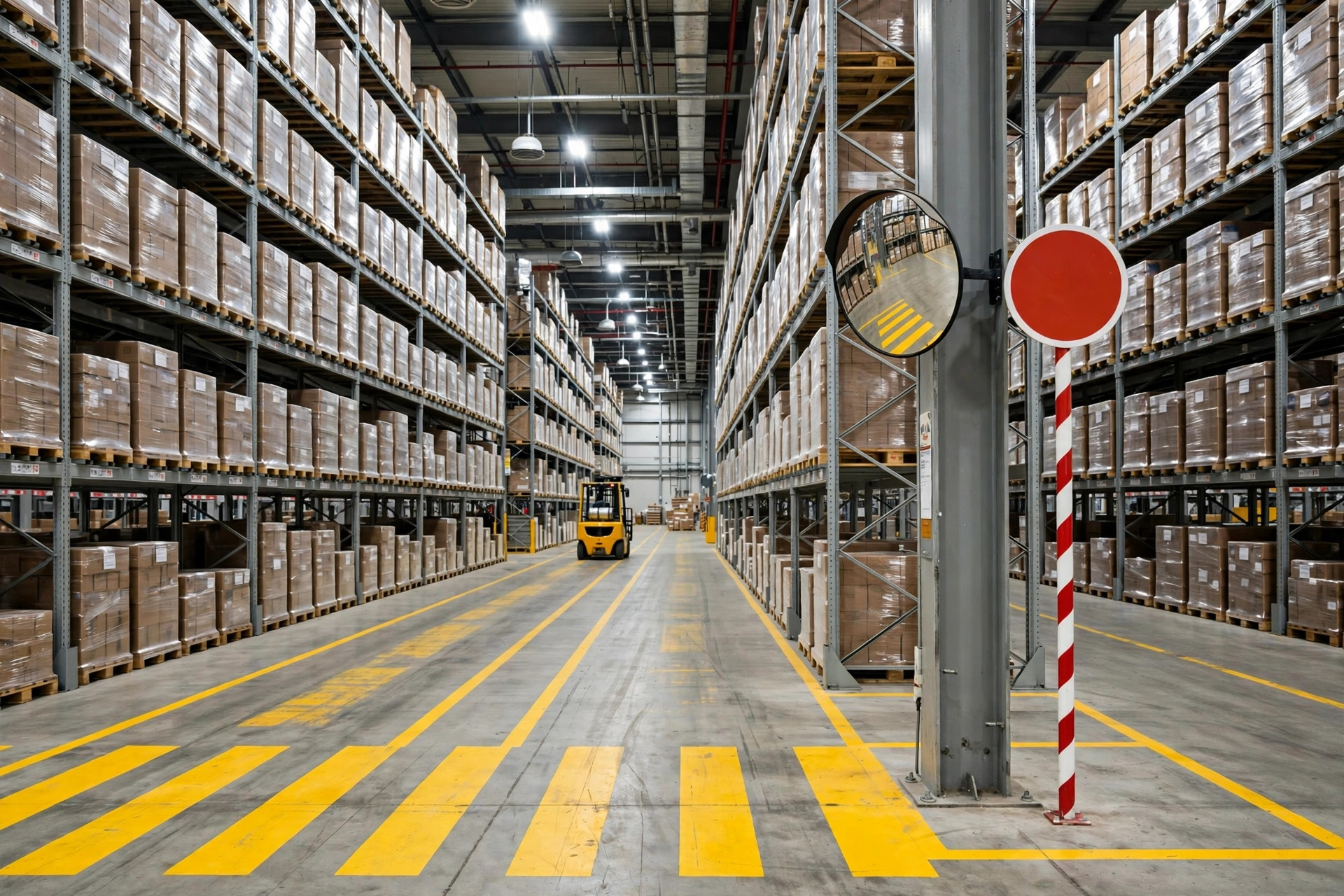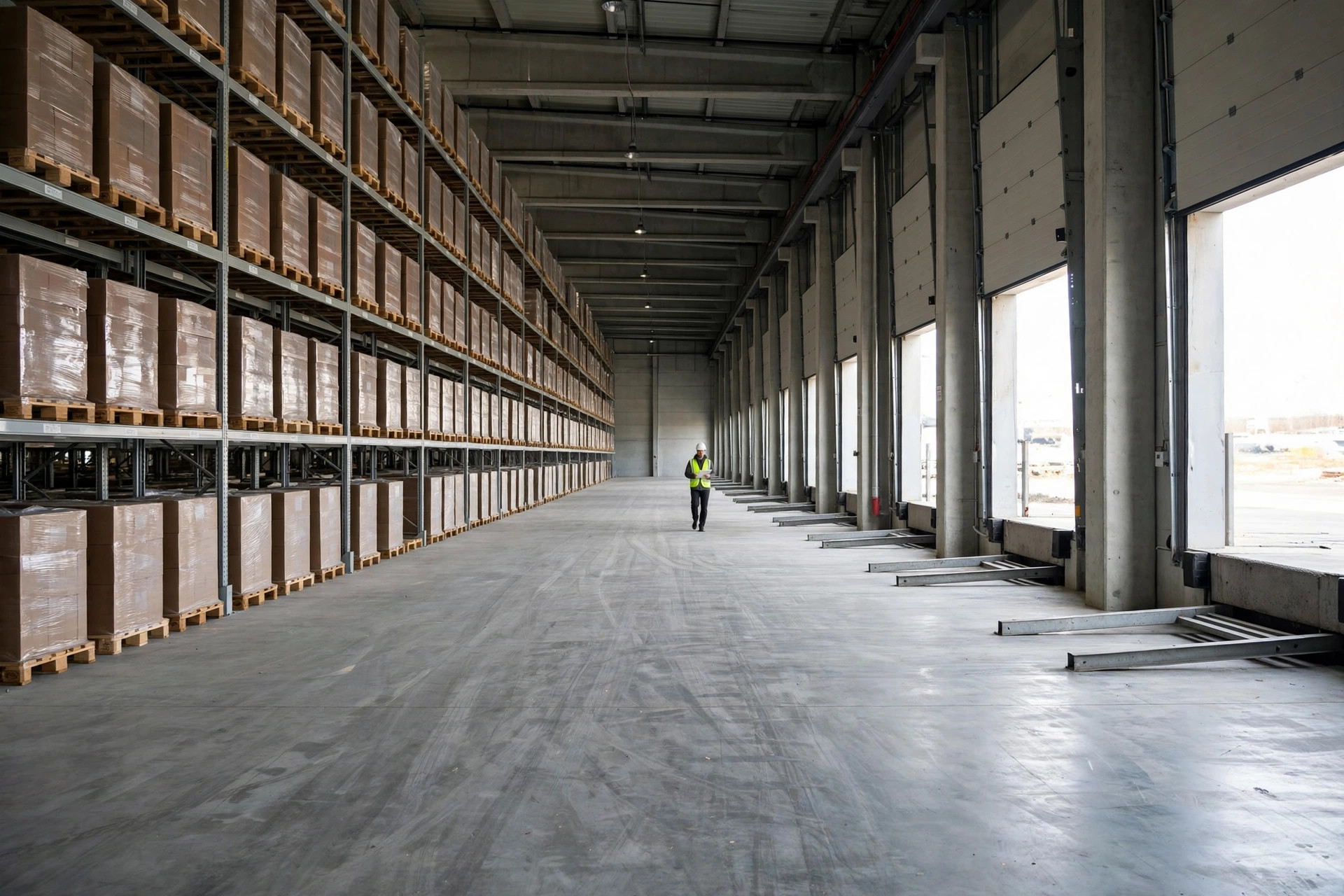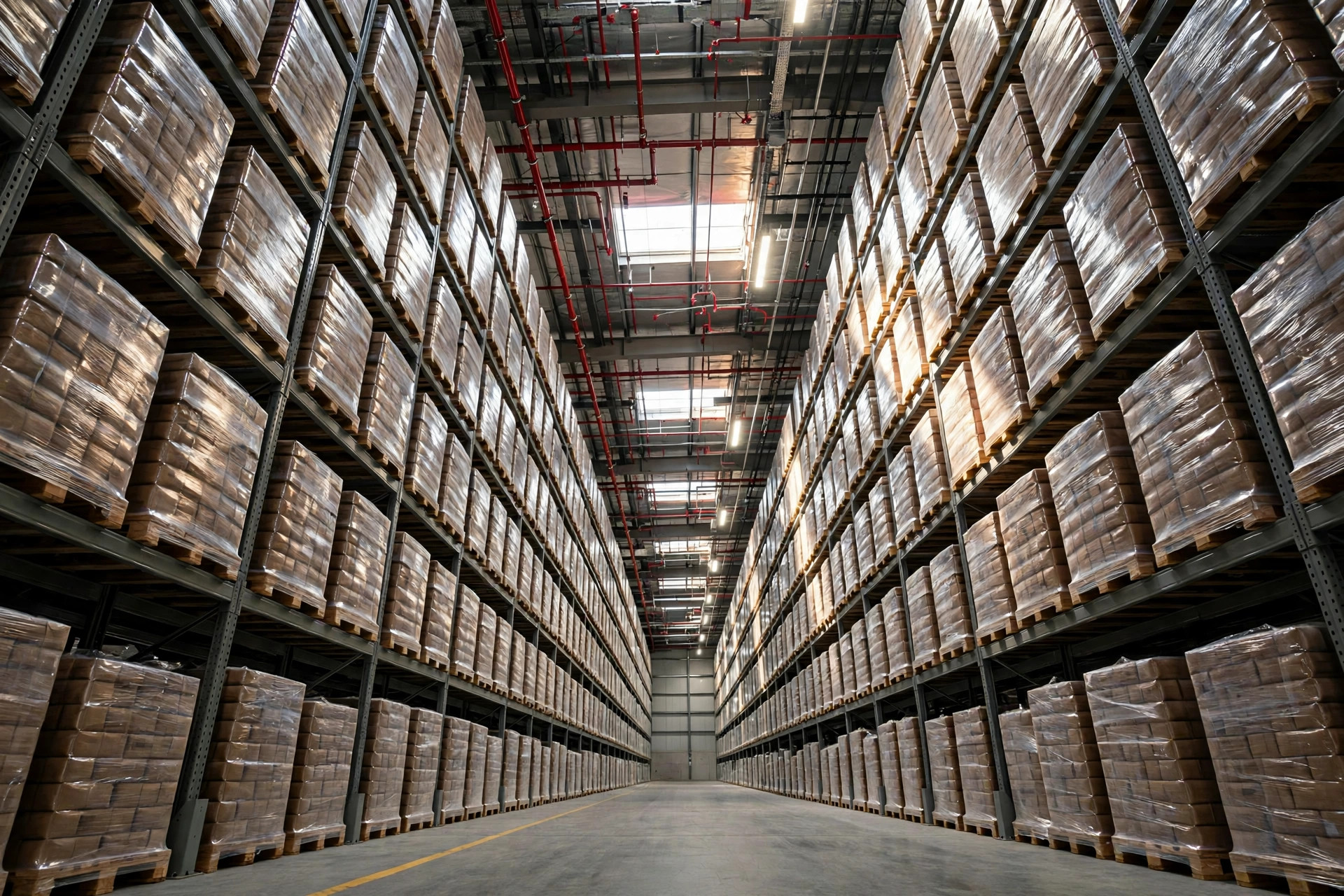
Let me give you the verdict first: higher isn't better. The right height is better. A 32-foot clear warehouse sounds impressive, but if you can't use the top eight feet, you're paying Class-A rent for the most expensive air in American logistics — premium rent up top, racking that only dares to go four levels high.
The Pitfall I've Seen Too Many Times
In 2019, a client selling home storage goods leased a 100,000-square-foot new building in Ontario, California — 32-foot clear height. Before signing, he showed me his spreadsheet: five levels of selective racking, 28% more pallet positions than his old 24-foot building, cost per pallet position per year down 10%. The math was right. The logic was right. He just never read the sprinkler report.
At fire inspection, the local fire department killed it in one sentence: this building has ordinary sprinklers, not ESFR. Ceiling-only protection tops out around 25 feet of storage height — under NFPA 13, ordinary ceiling-only coverage generally caps at about 25 feet depending on commodity (verify against your local fire code) — and his fifth level put the top of storage at 29 feet. Two options: retrofit in-rack sprinklers, or drop to four levels.
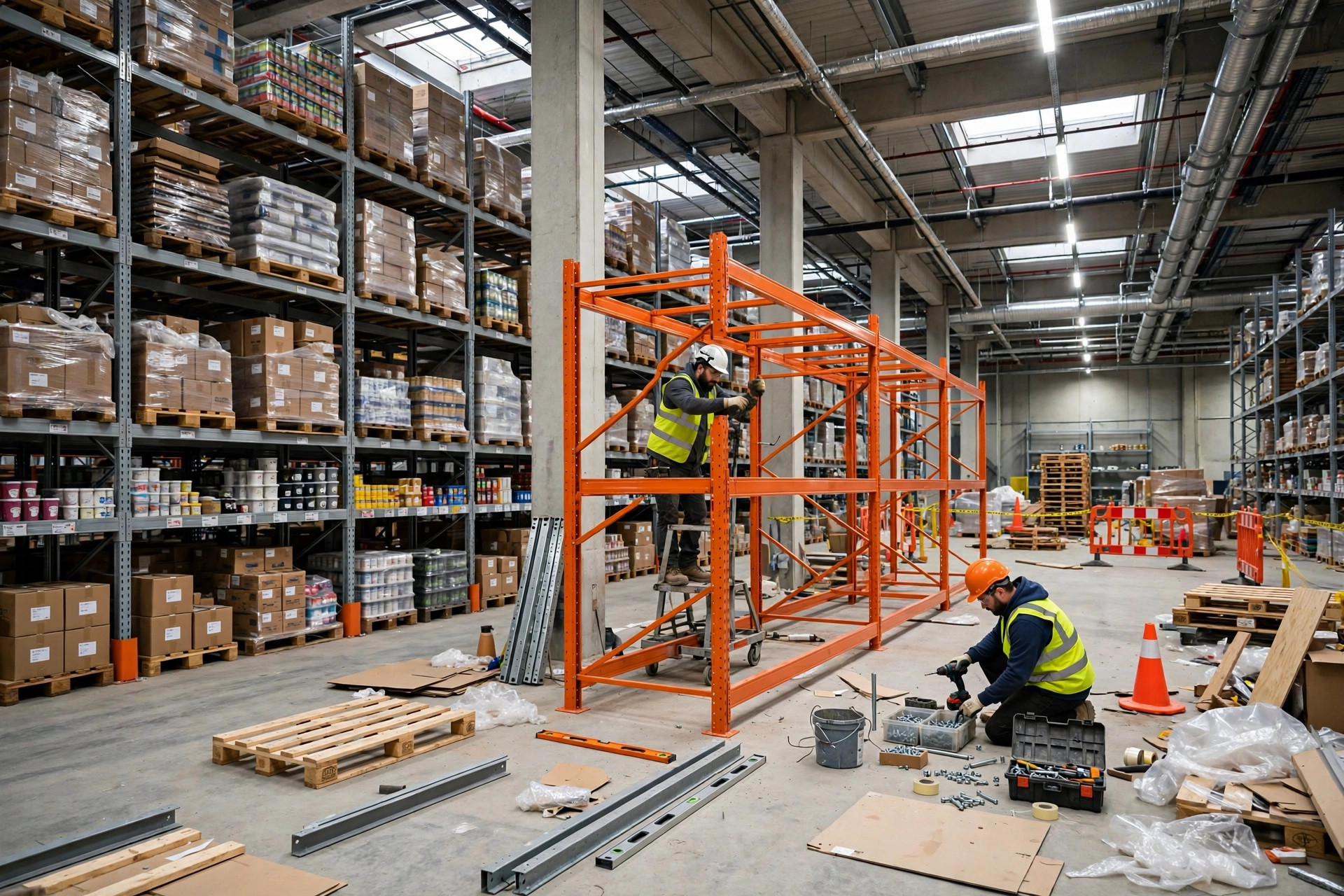
The in-rack retrofit quote — new risers plus branch lines on every level — came in at several hundred thousand dollars (get local quotes; that's the order of magnitude). Enough to cover years of rent differential. He gritted his teeth and dropped to four levels.
Three years he ran it that way. Three years of paying Class-A rent for eight feet of air he'd never use, while the 24-foot building next door rented for much less and held the same four levels of rack. The building was fine. The mismatch was his: his product, his sprinklers, and his forklifts were none of them worthy of 32 feet.
Clear Height vs. Rack Levels: What One Level Really Costs in Height
Here's math anyone can reuse. Standard 48×40-inch pallet, load plus pallet at 60 inches (5 feet), 6 inches of operating clearance per level, 4-inch beam — one level eats 70 inches, roughly 5.8 feet.
- 24 feet = 288 inches → 4 levels
- 32 feet = 384 inches → 5 levels
- 36 feet = 432 inches → 6 levels (the new standard e-commerce developers are chasing)
So 32 vs. 24 isn't "a little taller." It's one full rack level — roughly 25–28% more pallet positions. But NFPA 13 adds a catch: 36 inches of clearance below ESFR deflectors. A 32-foot building minus 36 inches leaves 348 usable inches, and 5 × 70 = 350 — right at the line. Want six levels? You need a 36-foot building. That's exactly why 32 feet became the standard answer for US big-box warehouses: ESFR just barely reaches it, and not one level more.
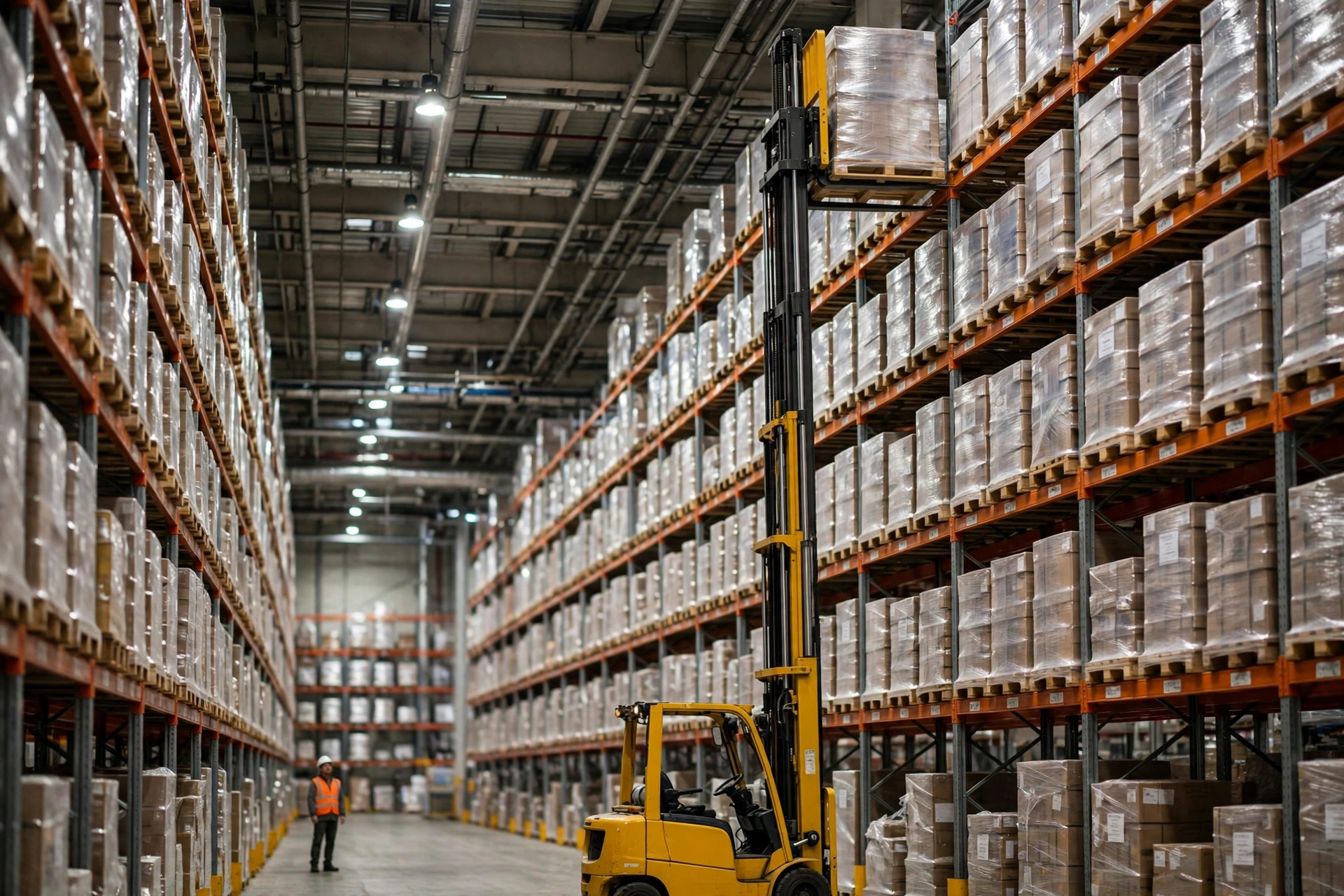
Sprinklers: ESFR Is the Admission Ticket for 32-Foot Clear Height
Two sides to this. NFPA 13's logic: ordinary sprinklers with ceiling-only protection generally top out around 25 feet of storage (it varies by commodity class — your local fire code and the fire department's approval have the final word). Above that, if you want to stay ceiling-only, you need ESFR — Early Suppression Fast Response.
ESFR comes in tiers by K-factor, and the public data sheets tell the story: K14 ESFR under current NFPA 13 tops out at 35-foot ceilings; the K16.8/K17 tier covers 35-foot storage in 40-foot buildings; K22.4/K25.2 reaches 40-foot storage in 45-foot buildings — all with no in-rack sprinklers. Which tier applies depends on your commodity and your local fire approval.
Here's the counterintuitive part: plenty of 32-foot buildings erected before 2000 have ordinary sprinklers. Signing a lease without reading the sprinkler report is like buying a gym membership in another city. Two retrofit paths:
- Swap ceiling heads to ESFR: racking untouched, relatively cheaper — but only if the existing water supply delivers enough pressure.
- Add in-rack sprinklers: pipe every level, far more expensive, and it handcuffs every future rack reconfiguration. Your layout flexibility dies the day those pipes go in.
Get local quotes, but the order of magnitude is "several years of rent differential." Ask the broker for the sprinkler report before you sign — that one sentence can save you six figures in tuition.
The Rent Math: Is the Premium for 8 Extra Feet Worth It?
Class-A boxes (32-foot clear, ESFR, big truck courts) rent above same-market 24-foot buildings as a rule — check local quotes for the spread. But do the math on annual rent per pallet position, not per square foot. Per square foot is the broker's metric. Per position is yours.
Take a 100,000-square-foot building: say 60,000 square feet of rack footprint, about 13 square feet per pallet position including aisle share. At 24 feet and 4 levels, that's roughly 18,000 positions; at 32 feet and 5 levels, roughly 23,000 — 28% more.
| 24-foot building | 32-foot Class-A | |
|---|---|---|
| Rack levels | 4 | 5 |
| Pallet positions | ~18,000 | ~23,000 |
| Rent level | Baseline | 10–20% higher (check local quotes) |
| Annual rent per position | Baseline | ~5–10% lower |
That's the math of going tall: rent up 15%, positions up 28%, unit cost down. But it rests on three conditions: all five levels actually used (sprinklers allow), usable in practice (forklifts reach), and worth using (the product fits). Miss one, and that 15% is pure tax — the tax my client paid for three years.
The Real Tax on a Tall Building: Forklifts and Labor
Bluntly: a 32-foot building's tax is paid in forklifts and labor, not rent. A very-narrow-aisle truck reaching 30 feet costs far more than a standard sit-down (check local quotes), takes longer to train operators for, and a high-bay putaway runs 1.5–2x the time of a low-level one. Tall buildings save rent and tax every single touch. Plenty of tenants skip this math at signing and finally understand it three years in — with seven years left on the lease.
Which Products Deserve the Height, and Which Don't
Two more scenes from the field. A paper-goods client — paper towels, toilet paper, the definition of light and bulky — took a 32-foot ESFR building, used all five levels, and drove per-position cost about 12% below his old building. Three years of savings bought him two new forklifts. Then the opposite: a bottled-water distributor in Texas in 2022 wanted 32 feet because it "looked serious." I talked him out of it — a pallet of bottled water pushes toward a ton, and the beam capacity plus lifting that weight to 30 feet would have doubled his equipment bill before he stored a single extra pallet. He stayed at 24 feet and four levels, and the rent he didn't pay covers two extra drivers.
| Product profile | Recommendation | Why |
|---|---|---|
| Light & bulky: paper goods, home goods, e-commerce parcels | Go tall — 32 or even 36 feet | Low weight per cube, minimal beam-load stress, lowest cost per position |
| Heavy: beverages, building materials, chemicals | 24 feet is plenty | Beam capacity and lift trucks max out first; height is wasted |
| High-velocity consumer SKUs | Lower levels, wider aisles | Height equals slowness; velocity wants speed, not density |
| Slow movers, seasonal stock | Tall building, high bays | For freight that sits still, density is money |
| Unclear SKU profile | Don't chase height yet | Take 24 feet and spend the money on systems and process |
One piece of advice to close: next time a broker tells you "32-foot clear is the standard," ask three questions — is the sprinkler system ESFR? What truck will pull pallets off level five? Is more than half your product light and bulky? If you can't answer one of them, that Class-A box isn't yours.
By Lao Mi, Supply Chain Veteran (20 yrs)