Let me start with the math.
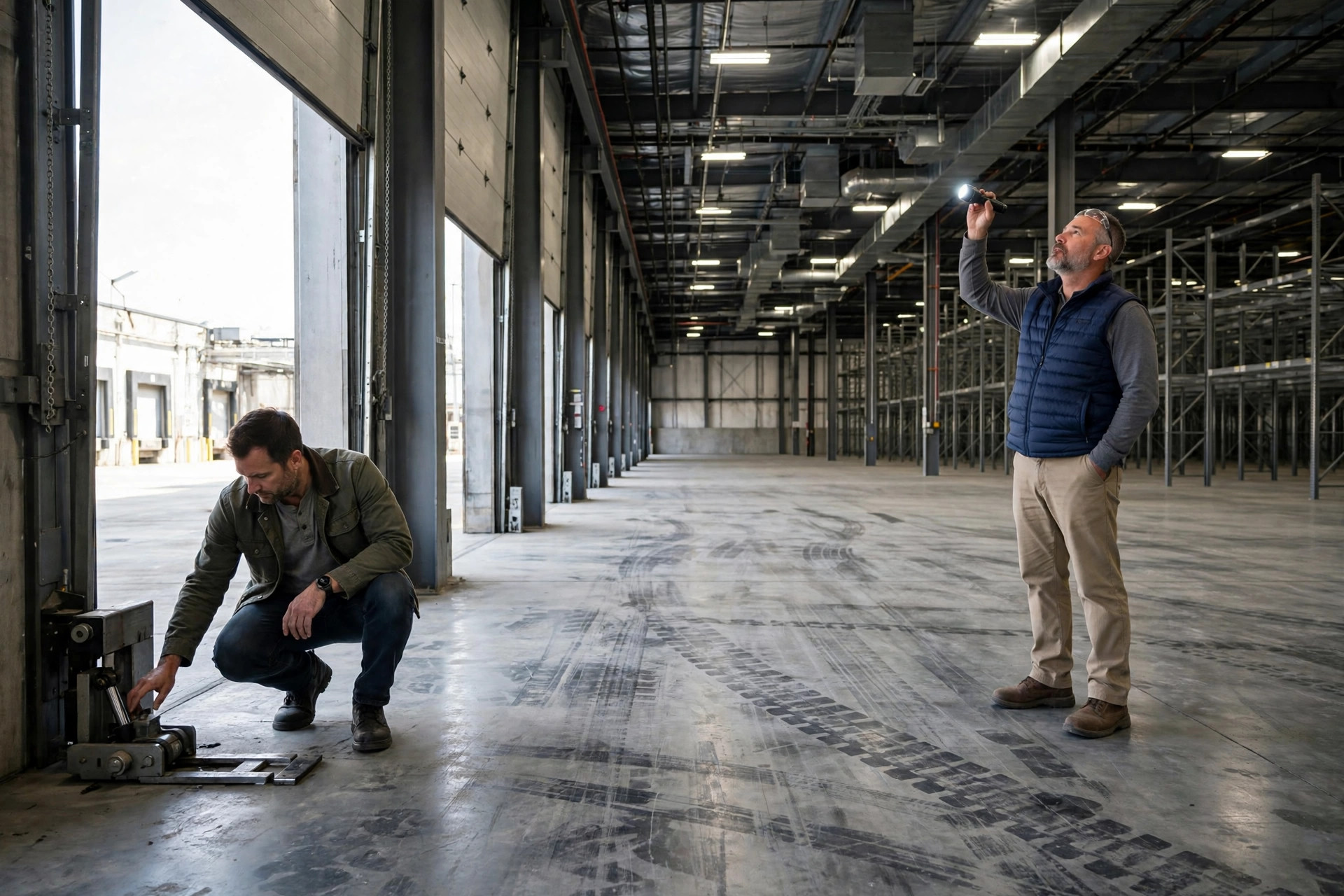
Two warehouses, same market. Warehouse A quotes 8% less per square foot than Warehouse B. Both 50,000 square feet, three-year term. On paper, A saves a handsome sum — until I walked the site with my client, priced out the fixes for the 12 inspection points below, and re-ran the numbers. A's effective rent came out 20% higher than B's. The client tore up the letter of intent on the spot.
This is not an edge case. Most tenants evaluate a warehouse on two numbers: rent per square foot and square footage. Landlords and brokers are delighted when you do, because the real money hides in the 12 checkpoints below. In warehouse selection, whatever you don't inspect before signing, you pay for after signing — out of your own pocket.
The 12-point site-visit checklist: what to look at, how, and what it costs to miss
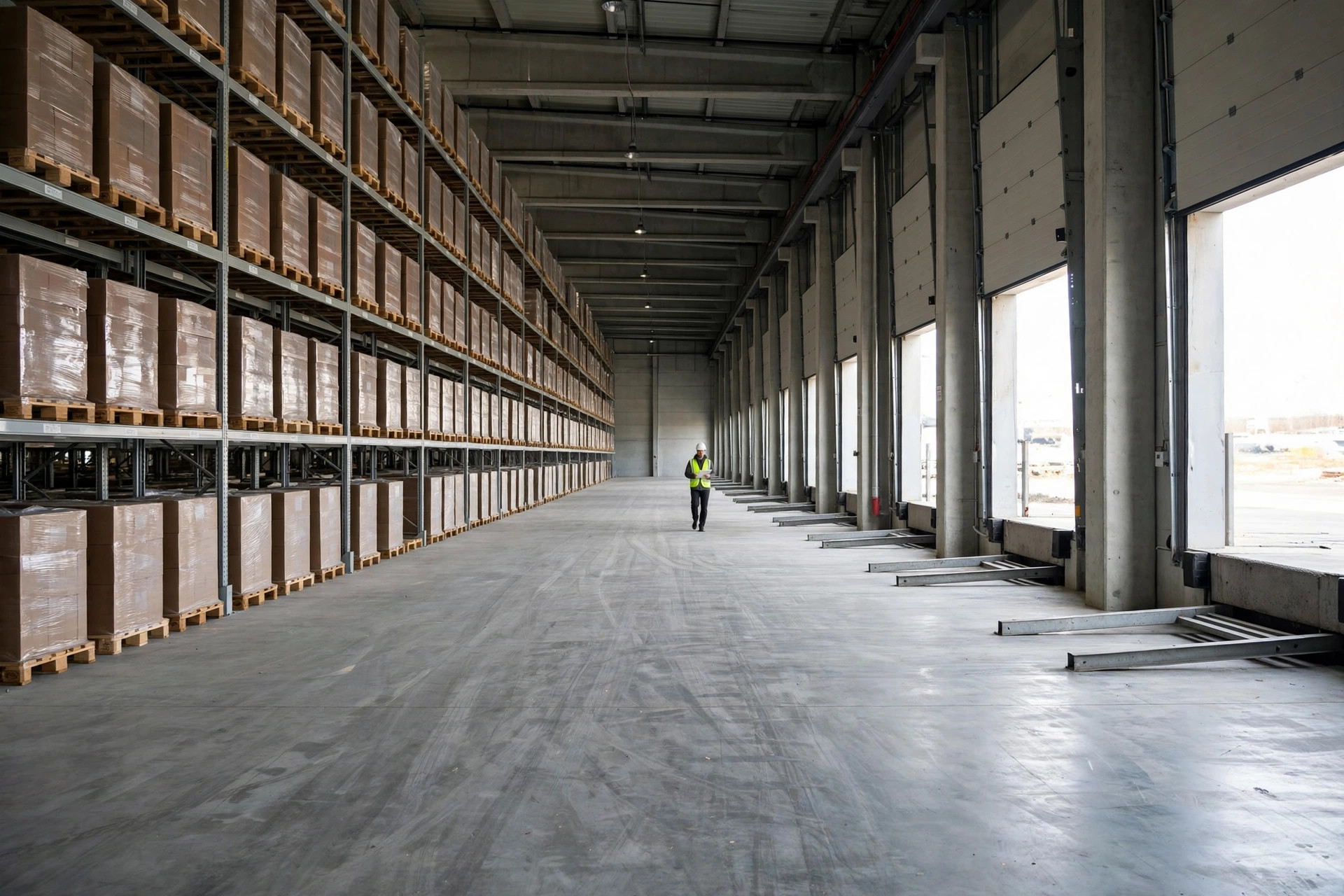
1. Number of dock doors. What: do the doors match your daily inbound/outbound truck volume? How: count the doors, then ask the landlord how many trucks work the peak window simultaneously. Cost of missing: too few doors means trucks queue at the gate during peak — driver detention burns by the hour, your unload crew stands around on payroll. None of that shows up in the rent quote; all of it comes out of your margin, monthly, on schedule.
2. Dock height vs. your fleet. What: the gap between dock face height and your trailers' floor height. How: bring a tape measure. Within about 4 inches, a dock leveler covers it; beyond that, forklifts climb a ramp every cycle. Cost of missing: retrofitted levelers or switching trailer types — a capital hit plus a permanent efficiency tax.
3. Floor load capacity. What: the slab's designed load rating. How: ask for the structural drawings. A verbal "it's fine" is worth nothing. Cost of missing: underrated floor means derating your racking — fewer levels or lighter loads. You leased 50,000 square feet but can only use it like 30,000. Your effective rent per usable foot just jumped 40%.
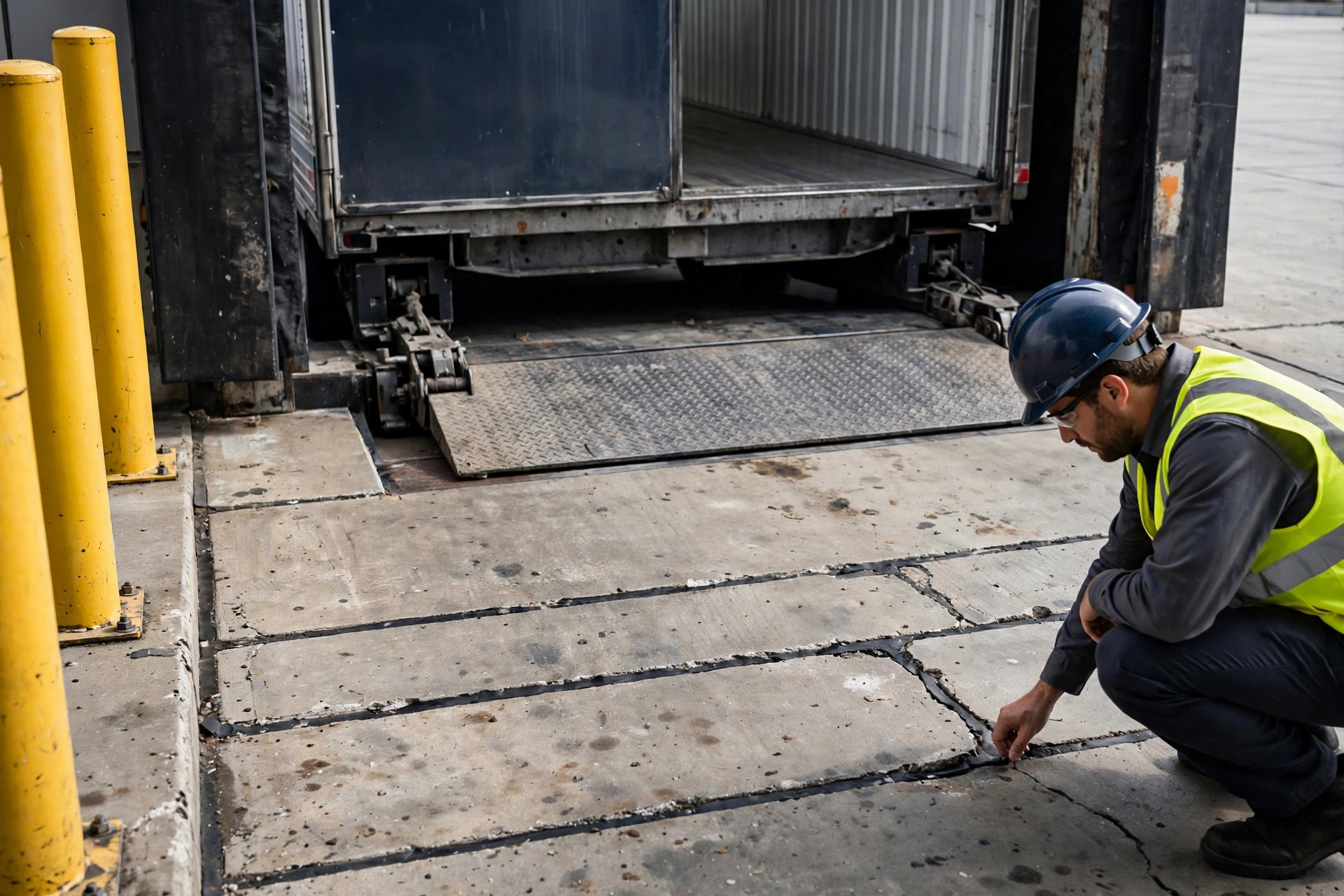
4. Floor flatness. What: settlement, cracks, potholes. How: drive it slowly; your forklift operators are the best inspectors. Focus on dock approaches and main aisles. Cost of missing: uneven floors eat tires and damage product; serious cases need slab repair — which the landlord almost never pays for.
5. Clear height. What: the lowest clear point — under sprinklers, ducts, lights — not the average. How: measure the lowest point. Cost of missing: one meter less clear height can mean one fewer rack level, and storage density drops with it. Rent is priced by area; storage capacity is priced by volume. Low clear height means you overpaid.
6. Sprinkler system type. What: standard spray vs. ESFR (early suppression fast response), and whether it matches your commodity class — lithium batteries and high-value goods have strict requirements. How: demand the fire acceptance documents. Cost of missing: a sprinkler retrofit is the single most expensive item on this list, typically a six-figure project for a mid-size building (get local quotes; authority requirements vary), with lead times measured in months.
7. Electrical capacity. What: transformer capacity and distribution headroom — enough for charging fleets, refrigeration, and future automation? How: read the nameplates, check the utility's upgrade records. Cost of missing: a capacity upgrade means applications, queues, and construction — half a year is optimistic. Until then, you run derated, and equipment utilization takes the hit.
8. Roof leaks and drainage. What: patch marks on the roof membrane, ponding, gutter condition. How: visit after rain; if it's dry, read the ceiling stains. Cost of missing: water-damaged inventory, and insurance disputes measured in quarters. Worse: the damage happens after you signed, and "as-is delivery" ends the conversation.
9. Road restrictions and turning radius. What: height bars, weight-limited bridges, and whether a 53-footer can make the turns on your only access route. How: drive the route yourself — in a truck mindset, not a sedan. Don't trust the map. Cost of missing: if the big rigs can't reach the dock, you're transloading outside or downsizing trucks — every extra touch doubles cost and damage risk.
10. Cellular and network coverage. What: signal strength deep inside the building, at the docks, and up in the rack aisles. How: walk it with a phone, testing the bands your scanners and handhelds actually use. Cost of missing: dead zones mean scanners drop offline and work stops. Who pays for a distributed antenna system — landlord or tenant — is a question for before signing, not after.
11. Site history. What: what this land was used for before, and whether there's a contamination record. How: pull the Phase I environmental report; if the landlord can't produce one, commission it yourself. Cost of missing: remediation costs have no ceiling, and tenants can get dragged into liability. Low probability, catastrophic severity.
12. Maintenance responsibility and restoration clauses. What: who owns the roof, structure, sprinklers, and power in the lease — and what "restore to original condition" means at move-out. How: read the lease word by word; verbal promises don't count. Cost of missing: vague language lets the landlord hand you a five-figure restoration bill at exit. That money was committed the day you signed — you just didn't read it.
What 3 misses cost you in a year
You don't need to miss all 12. Take three medium-severity misses and do conservative math:
| The miss | Annual cost (order of magnitude) |
|---|---|
| Too few docks: 2 extra hours of daily waiting at peak | Labor + detention — roughly the cost of half an extra headcount |
| Weak floor: rack derating loses 20% of usable capacity | Effective rent per usable foot rises ~25%, or you're forced to lease overflow space |
| Dead zones: in-building coverage install + ongoing stoppages | One-time capex plus a monthly efficiency drag |
Combined, three misses easily burn several months' worth of rent per year — while that "8% cheaper" headline rate saves a fraction of one miss. That's the formula from my opening story: effective monthly rent = quoted rent + (total remediation and efficiency losses ÷ lease months). Run this site-visit math before signing, then compare candidates.
The uncomfortable truth: the cheapest rent is often the most expensive warehouse
Landlords aren't charities. A building priced well below market is usually hiding something in these 12 points — old bones, weak infrastructure, bad access, or a fire-protection problem. The cheap rent is the bait; the 12 checkpoints are the hooks.
Do it backwards instead: score each candidate on the 12 points, estimate remediation costs, amortize them over the lease term, and compare effective rents. The expensive quote often turns out cheaper — because its price is printed on the label, while the cheap building's price is financed over three years, with interest.
One line to remember when you're out doing warehouse site visits: rent is the quote; total cost is the price. Walk all 12 points, run the effective-rent math, and only then pick up the pen. The inspection costs you half a day. Skipping it costs you three years.
By Lao Zhou, Logistics Cost Analyst