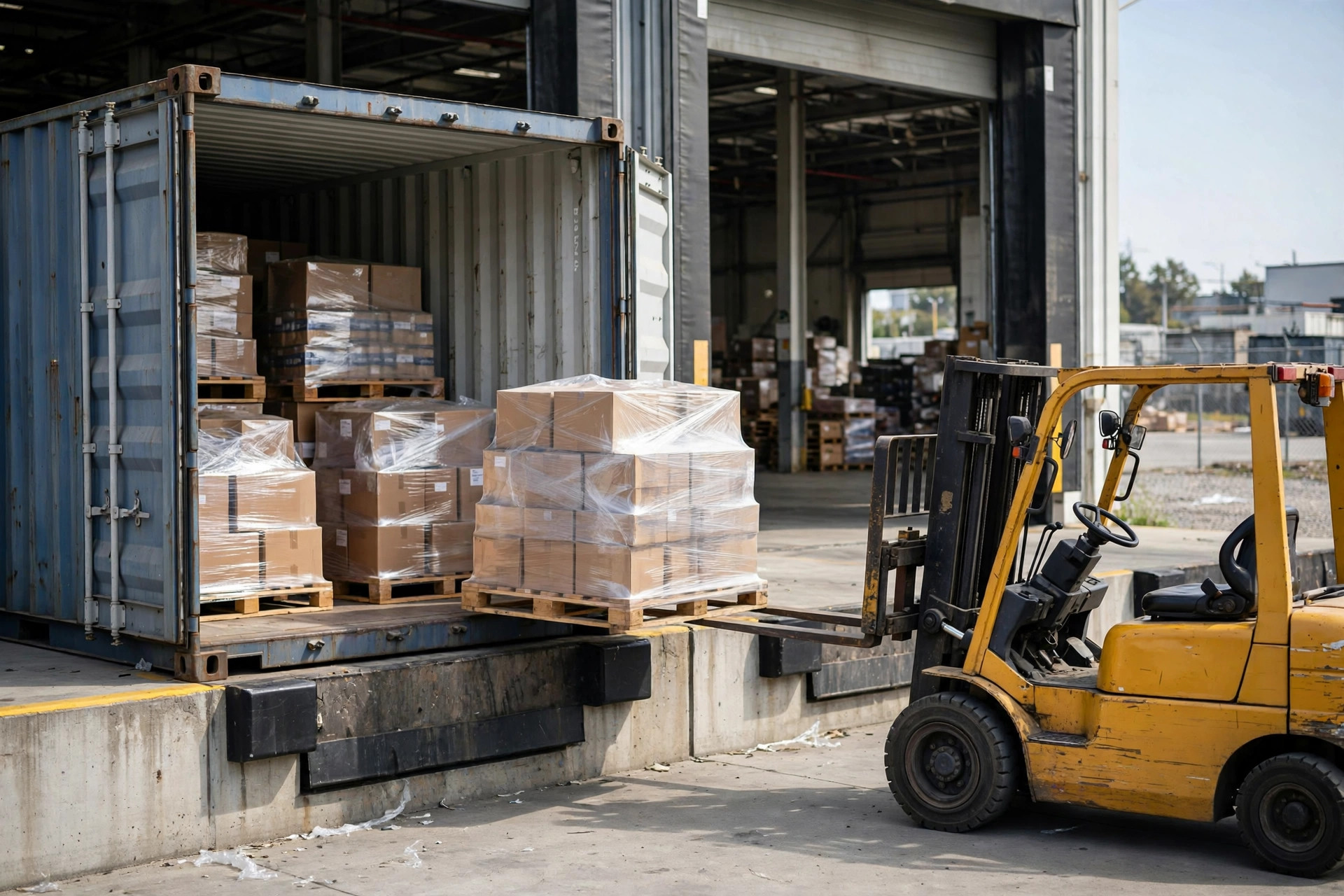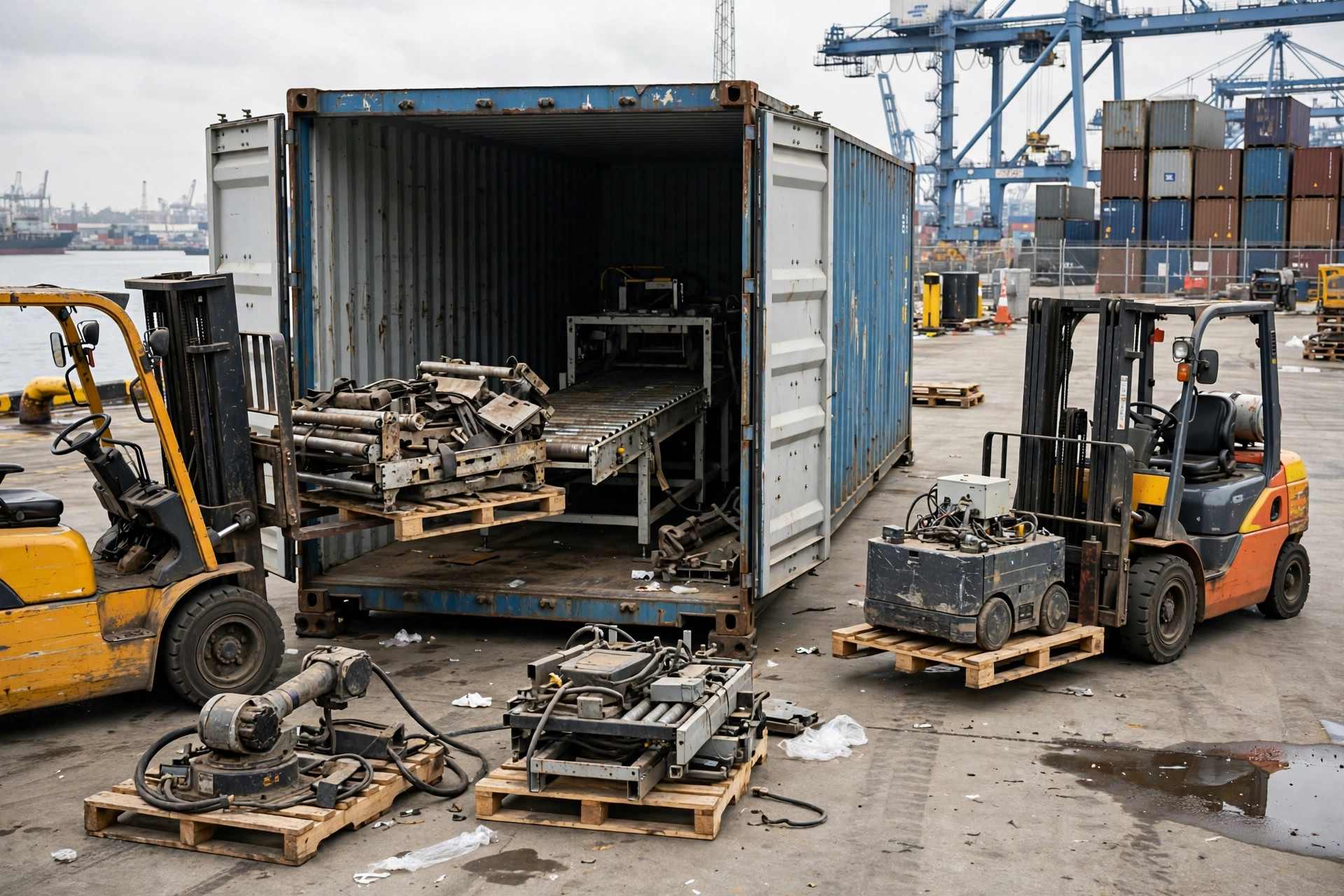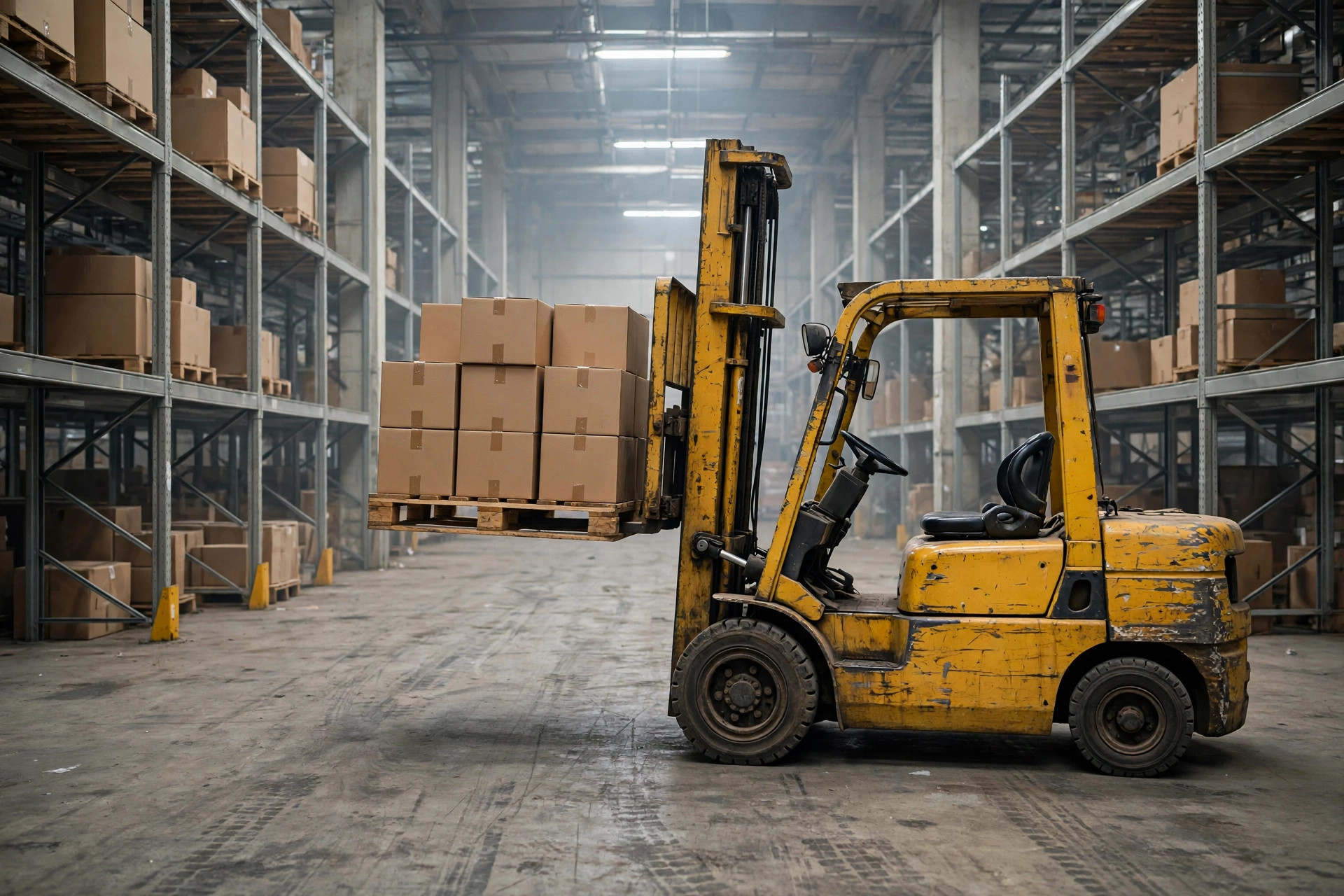
Last year I did something that sounded brilliant: I decided to import used machinery into China for my own warehouse — five second-hand forklifts from an American auction house at 40% of what new ones cost back home. I even bragged to my wife that this one deal would save enough to buy a delivery van.
The forklifts did arrive, and they're running in my warehouse today. But between the winning bid and the first pallet moved, three gates nearly killed the deal: used-machinery filing plus CCIC pre-shipment inspection, customs valuation, and CCC certification. Together they clawed back nearly half of my "savings." Here's the full ledger — consider it a cure for anyone else feeling tempted by cheap American iron.
Fair warning: every number below comes from my own books. Your mileage will vary. Tax rates and policy details change — check the official websites for the latest before you act on any of this.
The predicament: five forklifts I couldn't afford new.
I run a 3,000-square-meter warehouse — small by any standard. Before last year's peak season I needed five more forklifts, and the quotes for new domestic 3-ton diesel units came in around ¥135,000 each. Five of them: ¥675,000. We small warehouses can't burn money like that. The big 3PLs just sign a purchase order; I had to get creative.
Then a freight-forwarder friend sent me a link: a Ritchie Bros. auction in Texas, 2016 Toyota 8FD30s in decent shape, going for about $4,800 a unit. At the exchange rate then, under ¥35,000 each — a fraction of new. I did the mental math, figured I'd save enough for a van with change to spare, and in May 2024 I won five of them.
That's when the obstacle course started.
Gate one: CCIC pre-shipment inspection — the checkup before the ship sails
Here's the first thing nobody tells you: for anyone planning to import used machinery into China, the first gate isn't at your home port — it's at the origin. China requires used machinery to be filed for import first, then inspected before shipment by CCIC (China Certification & Inspection Group) on foreign soil. They're checking: is this disguised e-waste, are the nameplates legible, does the stated year match reality, any safety hazards. Fail, and the shipment gets returned at your expense.
My five passed on the first try, but only because I spent two months prepping like it was a medical exam. First, I had the US agent wash all five units inside and out and wipe every hydraulic seep clean — oil grime is the most common reason inspections fail; a good machine covered in sludge still looks like scrap. Second, every nameplate was photographed and sent to me, model, year of manufacture, and serial number matched one by one, blurry ones cleaned and re-shot. Third, I assembled the auction settlement slips, factory manuals (PDFs found online), and maintenance records to prove these were normally retired machines, not junkyard pickings.
On inspection day the engineer spent half a day at the Texas yard. All five passed. Inspection plus the engineer's travel came to about ¥12,000. Cheap in money, expensive in time: three full weeks from booking the inspection to receiving the report.
The cautionary tale is my friend Lao Zhao. In October 2023 he bought three used electric stackers from a Japanese second-hand dealer and skipped the wash to save a few bucks. The nameplates were caked in grease. Failed. Re-clean, re-book, another month gone, nearly ¥20,000 in extra costs. More expensive than my inspection — and embarrassing.
Gate two: customs valuation — where import used machinery into China gets expensive
The container reached Shanghai at the end of August 2024. I declared the honest auction price: $4,800 per unit. Three days later my broker called — the customs valuation desk thought the declared price was too low and wanted supporting evidence.
Here's the logic I never saw coming: customs doesn't care about your bargain. They assess used machines against depreciated new-machine prices. My five forklifts were revalued at $7,200 each — 50% above my declaration.
That single stroke cost me three things: duty at 9% and VAT at 13%, both levied on the reassessed value (check the customs website for current rates); back taxes on the difference, about ¥20,000 across the five units; and late-declaration fees — 12 days at 0.5‰ per day on the dutiable value, another couple thousand yuan.
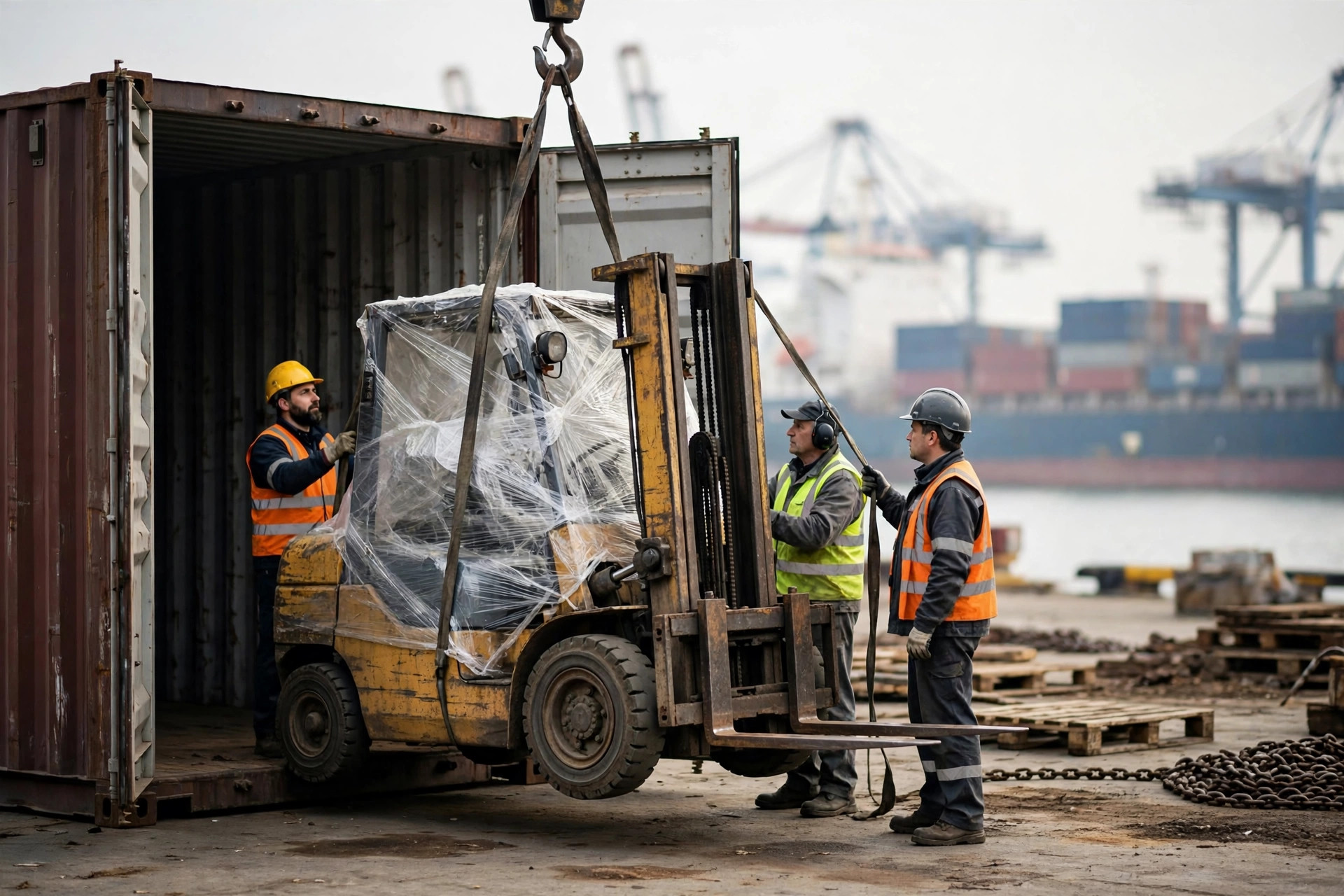
The lesson is exactly one sentence long: prepare your auction records, payment slips, and new-equipment price references BEFORE you declare, and hand them over proactively. You cannot hide a lowball on valuation — getting caught costs more than declaring honestly, in both money and time.
Gate three: CCC certification — anything with a plug gets no free pass
Mine were diesel, so I dodged the nastiest gate. Lao Zhao's electric stackers walked straight into it.
Rule of thumb for anything electric: check the CCC catalog first. Electric forklifts and chargers listed in the catalog must hold CCC certification before import. Outside the catalog, you can apply for a CCC exemption certificate — but the documentation bar is high and the timeline is long. Lao Zhao tried the exemption route; his application was bounced twice, the machines sat at the port for 47 days, storage fees alone topped ¥20,000, and he ended up doing the testing and certification anyway — more than a month lost.
So before you bid, ask one question: does it have a plug? If yes, check the catalog first, and don't believe any agent who says "we'll take care of it, guaranteed." The smarter and more automated the equipment — the more powered components it carries — the more lead time this gate needs.
The full math: is importing used machinery into China worth it?
Per-unit ledger (at roughly ¥7.2 to the dollar back then):
| Item | RMB per unit |
|---|---|
| US auction hammer price | ~34,600 |
| US-side trucking + stuffing | ~3,600 |
| Ocean freight + insurance (shared) | ~5,800 |
| CCIC pre-shipment inspection (shared) | ~2,400 |
| Duty + VAT (on reassessed value) | ~11,900 |
| Back taxes + late fees (shared) | ~4,300 |
| Port charges + domestic transport | ~4,500 |
| Refurbishment after arrival (tires, fluids, minor repairs) | ~8,000 |
| Total | ~75,100 |
The dealer's quote for an equivalent new domestic diesel forklift was ¥135,000. Five units: about ¥375,000 landed for the used ones versus ¥675,000 new — a ¥300,000 saving, over 40%.
But look at the table again: the machines themselves cost ¥173,000 for all five — just 46% of the total. The other 54% is duties, inspection, freight, and refurbishment. Against the "naked" price gap of ¥502,000 (¥675,000 new minus ¥173,000 hammer price), compliance, logistics, and refurbishment ate ¥202,000 — roughly 40% of the difference. And the whole thing took four months; we nearly missed peak season.
The counterintuitive truth: the used machine is cheap, but compliance and time are expensive. If you can't do the full math, you're not buying a bargain — you're buying trouble.
Three honest tips for fellow small-warehouse owners.
First, do the total math before you bid. Add up duties, inspection, port-delay risk — only pull the trigger if you're still saving 30% or more. If the math says ten or twenty percent, just buy new domestic and sleep well.
Second, prep for inspection like you'll only get one shot. Wash-down, nameplates, year-of-manufacture proof, transaction records — have all four ready before you book. A re-inspection costs far more in money and time than the prep ever will.
Third, don't play games with valuation. Submit your evidence proactively. Customs' depreciation models are sharper than you think, and the penalty for a lowball beats the cost of an honest declaration every time.
Small warehouses have their own way of surviving. We can't outspend the big players, but we can out-account them, yuan by yuan. Import used machinery into China can work for a small warehouse — but only if you price all three gates before the first bid. Those five used forklifts are humming in my warehouse every day now — worth it. But if I did it again, I'd pin the three-gate flowchart on the wall before placing the first bid.
By Xiao Ma, Small Warehouse Owner