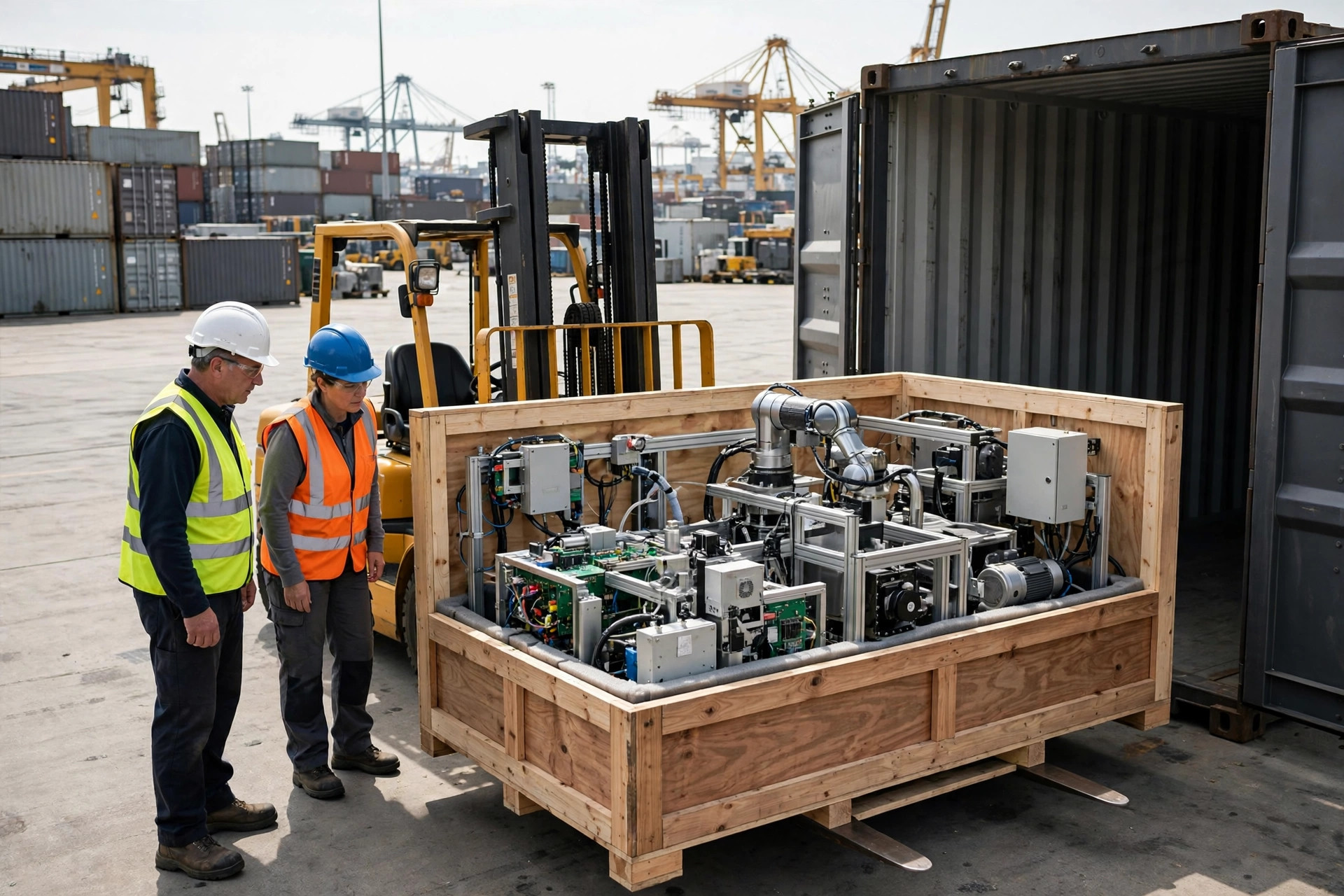
In August 2023, I stood at the dock at 7:40 AM waiting on a shipment of automation equipment from China. The forwarder said 10 o'clock. I waited until 3 in the afternoon. The container never showed. Five installers sat around in the warehouse doing nothing while the hotel and flight money burned.
That was the first equipment import I ever ran. I learned my lesson that day: for equipment imports, the warehouse has to plan backwards from receiving. Here is our full timeline, guys — take a look.
The automation equipment import timeline: nine stages from PO to receiving
Our shipment was a conveyor line plus sorters. From factory order in China to the equipment being bolted down in our warehouse, the whole thing ran over half a year. Here are the stages with their time magnitudes, and what the warehouse side needs to prepare:
| Stage | Time magnitude | Warehouse prep |
|---|---|---|
| Production | 60–90 days | Confirm packing dimensions, send to forwarder |
| Booking | 1–2 weeks | Flag oversize pieces early |
| Ocean freight (US West Coast) | 12–15 days | Build buffer for peak-season space crunches |
| Port arrival | 3–7 days | Pre-book drayage, mind the free-time window |
| Customs clearance | 2–5 days | Have ISF and docs ready up front |
| Container pickup | 1–3 days | Lock in the truck a week ahead |
| Arrival at warehouse | 1 day | Clear the staging area, reserve dock time |
| Unboxing inspection | 1–2 days | Open and photograph against the packing list |
| Installation | 5–10 days | Lock down forklift and electrician slots |
To be honest, every line of this table was paid for in cash. Nine pitfalls below, one per stage — all real money we lost.
The first three: while the cargo is still at sea, the warehouse already moves
Pitfall one: production. After the order went to the factory, we figured there was nothing to do for two months. Big mistake. We skipped pre-shipment inspection, and only discovered a missing sensor bracket when we unboxed at the port. The truth is, your closest point of leverage is the first week after the order: either send a third-party inspector or schedule a video inspection with the factory. Once the goods are on the ship, it is too late.
Pitfall two: booking. One section of our conveyor was oversized — a standard container simply could not take it. We only found out at booking time and had to switch to an open-top container, losing two weeks. Now the rule at our warehouse: the day the order goes out, packing dimensions go to the forwarder and the container type gets locked.
Pitfall three: ocean freight. That was peak season, space was tight, and our sailing slipped a week. Twelve to fifteen days to the US West Coast is the fair-weather math — in peak season, plan for twenty or more. Staffing schedules and installer bookings all get planned against the worst case. Never bet on the sailing date.
The middle three: around port arrival, the most expensive stretch
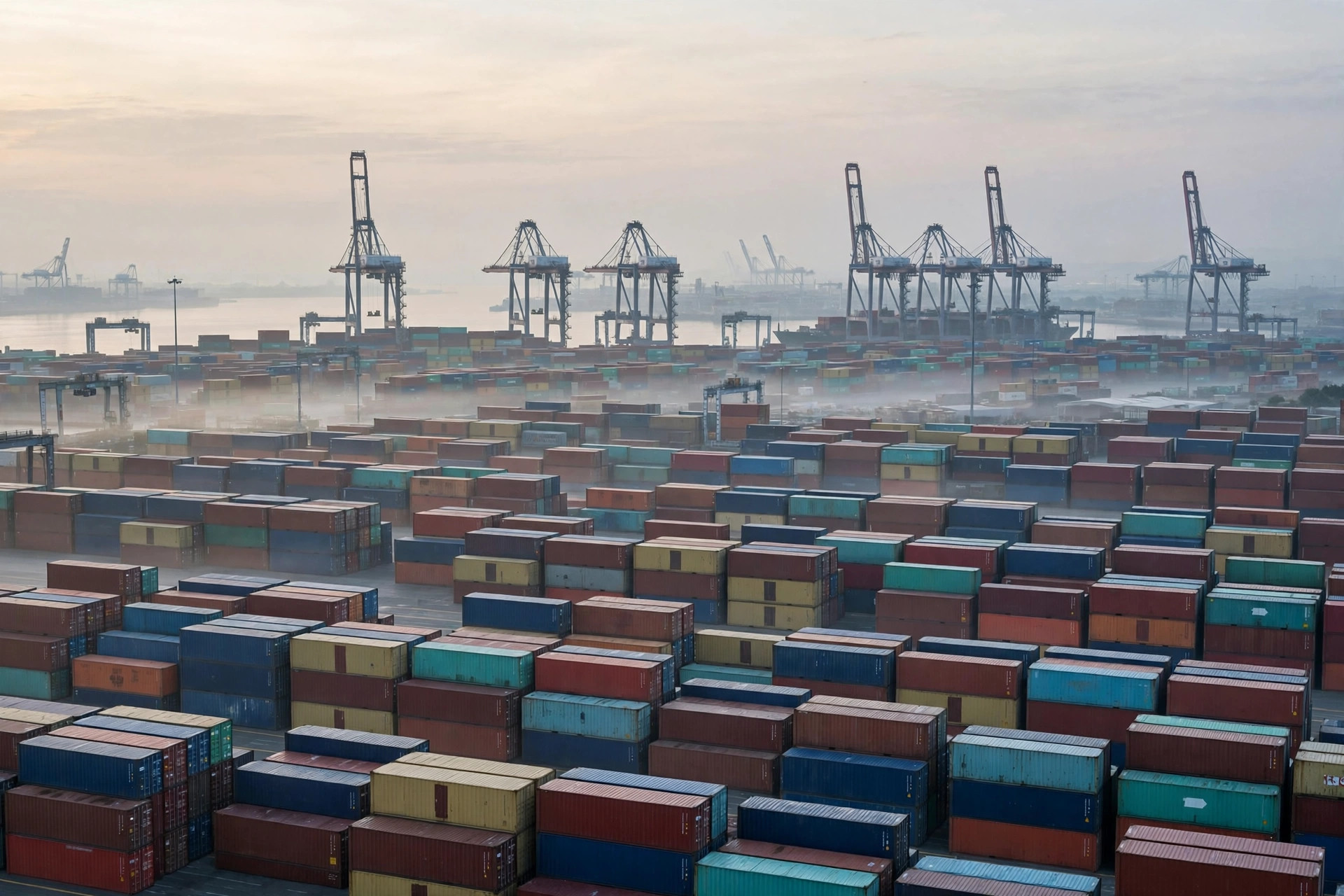
Pitfall four: port arrival. Congestion meant the container sat at the port, and the free container window is only a few days — every extra day burns hundreds of dollars. Our demurrage alone cost us over two grand. Now the drayage is booked before the ship even docks.
Pitfall five: clearance. For imported automation equipment, ISF and related filings must be ready in advance — some filings are required 24 hours before vessel loading, and late filings mean fines. (Check the latest official requirements; rules change.) Our lesson: bring the customs broker in at the ordering stage, not when the cargo is already at the port.
Pitfall six: pickup. We once had clearance released and no truck for three days — the box sat at the yard, still burning money. Now we lock the drayage a full week ahead, with the driver's number saved in the phone.
Final three pitfalls: the automation equipment is here — the real test begins
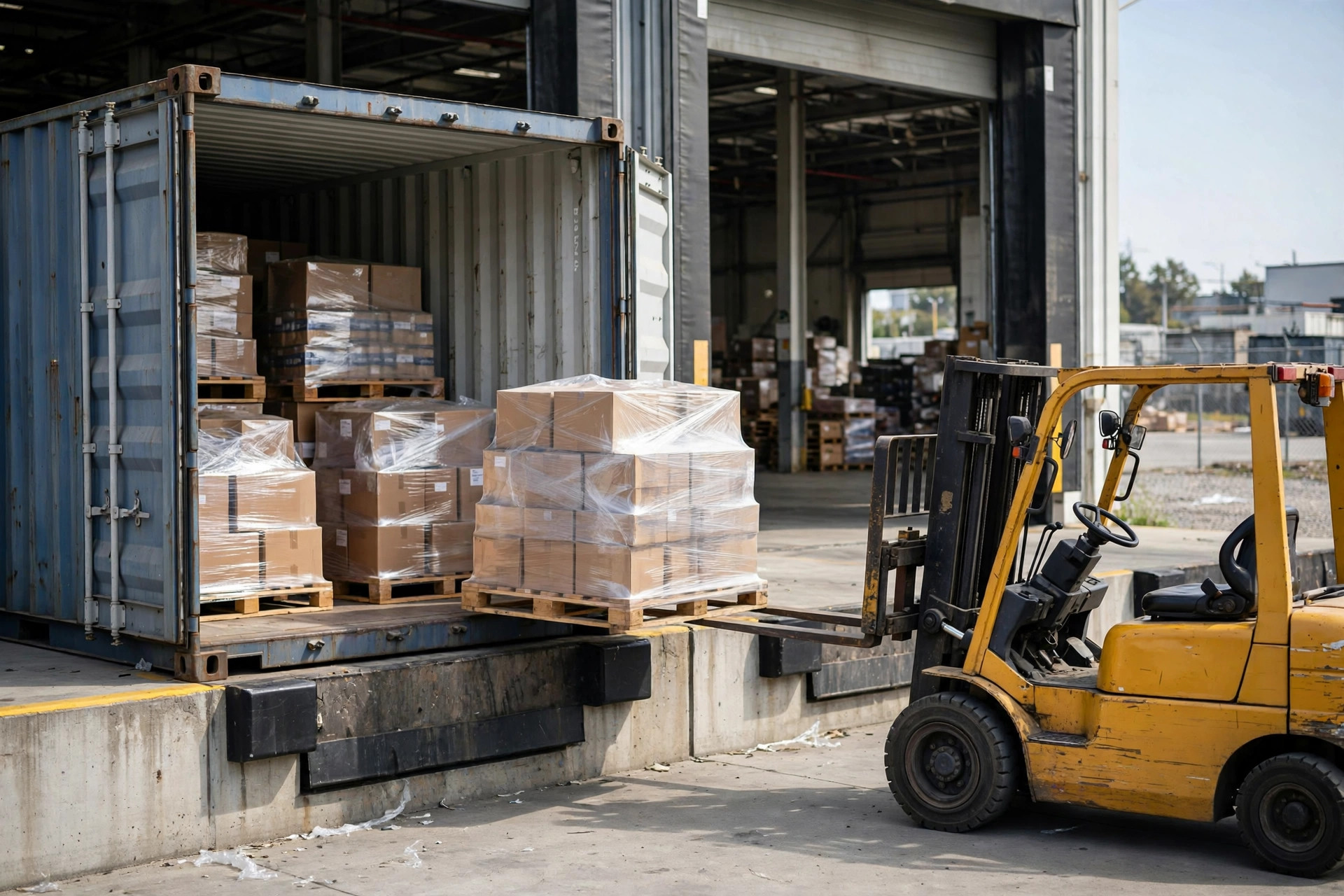
Pitfall seven: arrival at the warehouse. The day the container finally rolled in, the dock was jammed with regular inbound and the 40-foot box had nowhere to unload. The forklift driver circled the building twice with no spot to drop it. Guys — three days before equipment arrival, the staging area gets cleared and the dock slot gets reserved. That is the warehouse manager's job. Nobody does it for you.
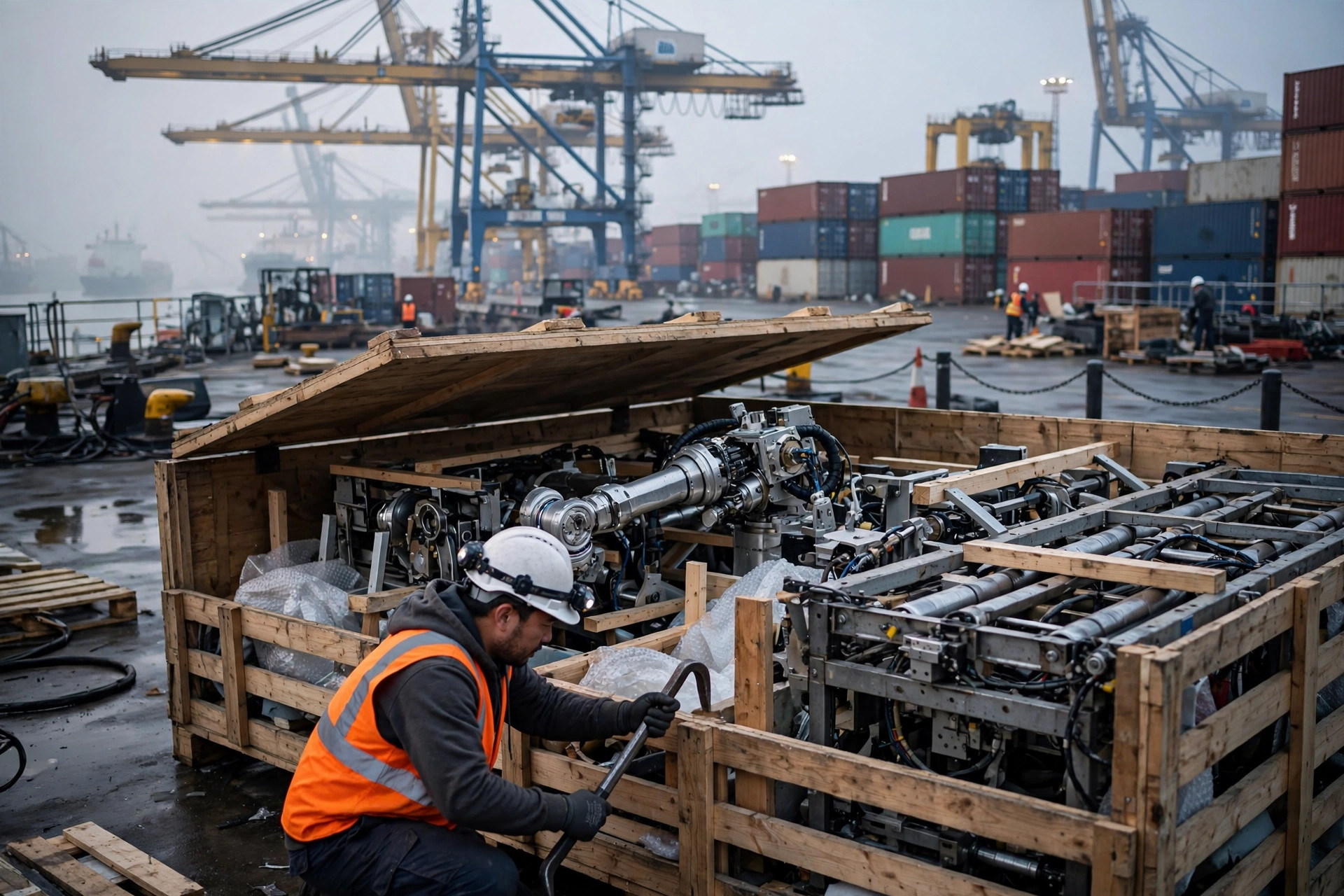
Pitfall eight: unboxing inspection. On our second shipment we wised up and opened every box against the packing list, photographing each one. Good thing — one carton was intact on the outside, with a broken motor bracket inside. Photos on record, claim filed with the supplier, zero argument. Unboxing without photos is the same as not inspecting.
Pitfall nine: installation. The install team arrived, the forklift had been borrowed by another shift, and the electrician was never booked. The engineers stood around all morning. Now, a week before install day, we lock three things: forklift, electrician, and the staging-lane access. Flights and hotels for the installers cost real money — letting them idle burns your own budget.
How we run it at our warehouse now
The first import cost us plenty of tuition. But from the second shipment on, the warehouse side runs a fixed playbook: the day the order goes out, we build a backwards schedule from install day — owner, deadline, and prep item for every stage, line by line, posted on the office wall.
Real talk, guys: the biggest pitfall in importing automation equipment is not on the ocean. It is at your own dock. A late sailing is money you can calculate; an unprepared warehouse scrambles the whole shift plan and the peak-season rhythm. For your first import, pull this table out three months early and plug the holes one by one.
By Chen Feng, Warehouse Operations Manager