"Our little warehouse can't afford to burn money like that." I say it eight hundred times a year — never more often than when I'm staring at a pallet quote, torn between used vs new pallets.
My warehouse is 3,000 square meters. Small. Pallets look like nothing, but outfitting the place takes seven or eight hundred of them. New wooden pallets run 50 to 60 yuan apiece — do the math and your hand shakes, because that's two months' rent. So I did what every cash-strapped small operator does: I went for used pallets. Fifteen, twenty yuan each. A third of the price. What a deal.
The deal lasted about a month. Then I started paying back every yuan I'd saved, with interest. Two years and a pile of tuition fees later, here's my blood-and-tears guide to buying pallets on a small-warehouse budget: where the traps are, and how to dodge them with methods that cost next to nothing.
Trap 1: Used pallets come in random sizes — your forklift and racking won't have it
In the fall of 2021, I bought 300 used pallets in Guangzhou at 18 yuan each. The seller swore they were "90% new, guaranteed good." When the truck arrived, I wanted to cry: three different sizes mixed together, fork openings at different heights. Our forklift tines slid fine into the tall ones and jammed on the short ones. Every other lift was a wrestling match, and our keeper was rolling his eyes so hard I thought they'd get stuck.
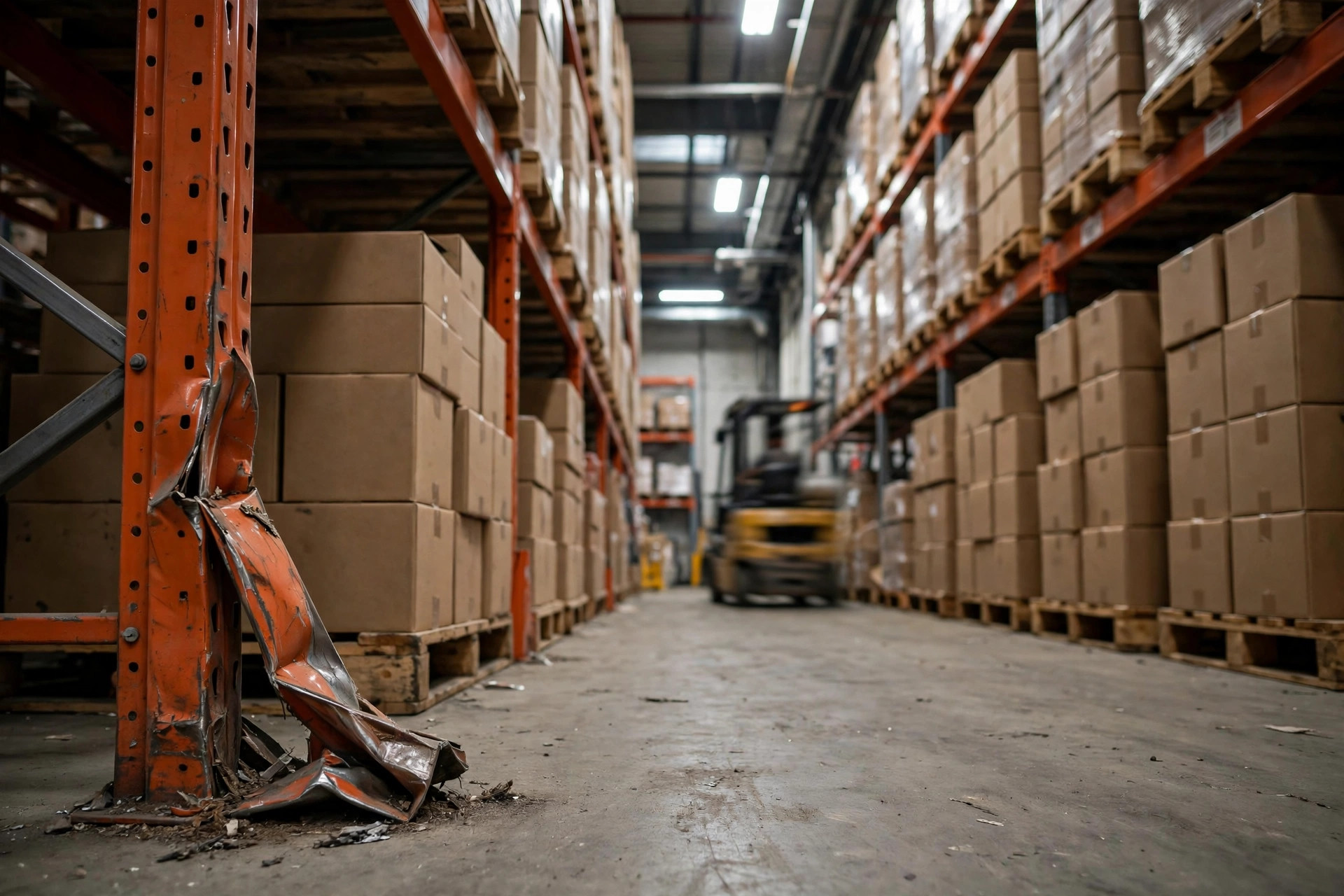
Racking was worse. Our beam racking needs consistent pallet depth — two or three centimeters off and the pallet wobbles on the beams. One morning our keeper found a loaded stack leaning a good fifteen centimeters sideways. That stack was a customer's shampoo and body wash. If it had come down, the damage claim alone could have shut my little warehouse for good.
The cleanup: out of 300 pallets, I kept 120 that happened to share one size for floor stacking, and sold the other 180 back to a recycler at 9 yuan each. Lost nearly two thousand yuan, plus three weekends of labor re-stacking everything by hand.
Lesson carved into my wallet: when buying used pallets, don't negotiate price first — bring a tape measure. Length, width, fork-opening height: all three must match. One centimeter off, walk away.
Trap 2: Hidden cracks — fine on the surface, snapping under load at 2 a.m.
The nastiest thing about used pallets is what you can't see. The surface looks solid; inside, the wood may be rotted, or stressed from a past overload.
In the spring of 2022, we had a stack of cartons sitting on a used pallet for half a month. Looked rock solid. Then one night — crack. The pallet snapped in the middle, the whole stack dropped, and the bottom two layers of cartons were crushed flat. Baby products. The customer rejected the two crushed layers and docked us over 4,000 yuan.
After that I picked up a dirt-cheap inspection routine from an old scrap dealer. I call it the three-check method:
First, check the nails. Rusted, loose, or missing nails — reject the pallet. Nails are the pallet's skeleton; if the skeleton's shot, nothing else matters.
Second, listen. Tap each pallet with a stick (we use a mop handle). A crisp knock means solid wood; a dull thud means rot inside. Sounds like voodoo. Works every time.
Third, stand on it. Spot-check by putting two people on a pallet and bouncing. I'm 140 jin (about 70 kg); our keeper is 180 jin. If it holds both of us, it's good enough. Laugh all you want — it's cheaper than a collapsed stack.
Trap 3: Mold and bugs — food clients will walk out on the spot
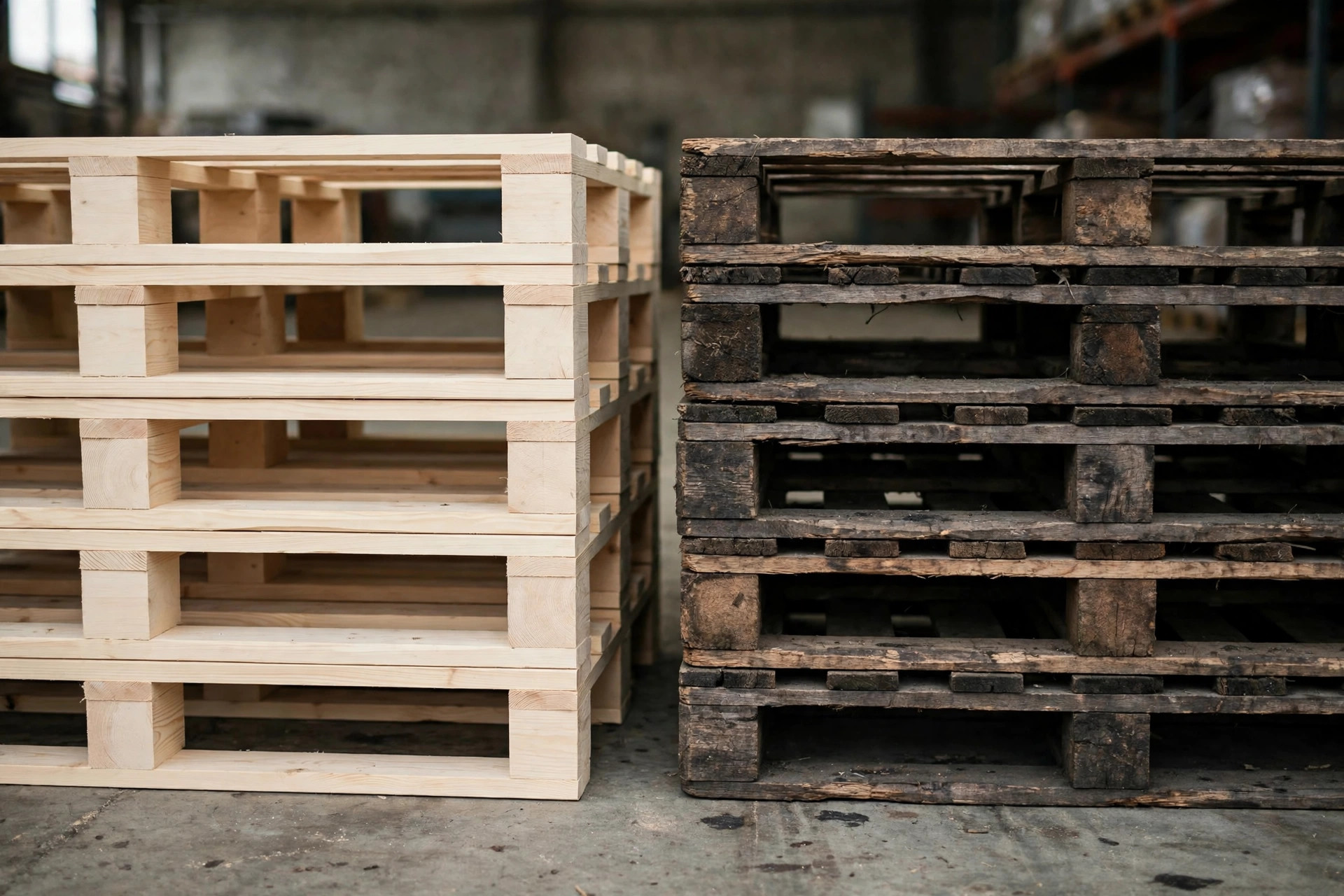
In the summer of 2023, we finally landed a seasoning manufacturer — 8,000 yuan a month in storage fees, a huge deal for a small warehouse. The client came to inspect, walked the floor, crouched down, flipped over a few pallets — and his face went dark. Several used pallets had gotten damp at some point: mold spots, wormholes.
"You're going to put our goods on these?" He killed the deal on the spot and found another warehouse.
Eight thousand a month. Nearly a hundred thousand a year. Gone. It still hurts to think about.
Since then I've had one iron rule: anything food, baby, or pharma-related — don't even think about used pallets. New only. That's a red line, not a place to save money. We can't afford the big-corporation playbook of all-new pallets everywhere, but new pallets for food clients? Even a small warehouse can afford that.
Trap 4: Fake fumigation certificates — your export container gets stuck at the port
This one I learned secondhand, watching a friend pay the tuition. He bought a batch of used pallets "with fumigation certificates" for export. The paperwork looked convincing. At the port, customs checked — fake. The whole container was held, demurrage piling up by the day. He was pulling his hair out for a week.
Wood packaging for export needs fumigation — that's the international rule, and the certificate has to be verifiable in the official system. In the used-pallet market, plenty of sellers will say "certified" with a straight face; few can actually back it up. Before you buy, ask one question: can we verify the certificate number right now? If they hedge, walk away.
Trap 5: Protruding nails and splinters — they rip packaging (and hands)
A smaller trap, but an annoying one. Old pallets work their nails loose and grow splinters. We once shipped apparel and the customer complained: three garments snagged and torn by nails. We paid for the clothes — and our keeper had already had two splinters dug out of his hands that month. Band-aids were becoming standard safety equipment.
Now one person's side job is "pallet repair": hammer down every raised nail, sand off the splinters, five minutes a pallet. Labor is a cost too. Add it up, and used pallets aren't quite the bargain they looked like.
Used vs new pallets: the comparison table
| Used pallets | New pallets | |
|---|---|---|
| Price | 15–20 yuan each | 50–60+ yuan each |
| Lifespan | Luck of the draw, 1–2 years | 3–5 years with normal use |
| Biggest risk | Random sizes, hidden cracks, mold | Basically worry-free |
| Best for | Floor stacking, fast turnover, short-term | Racking, cold storage, food, export |
The counterintuitive truth: money saved on pallets gets repaid with interest on collapse day
Most people only compare the sticker price: 18 for used, 60 for new — save 42, what a deal. But a pallet's real cost = purchase price + collapse risk + rework labor + customer claims.
My 300 used pallets saved me under 10,000 yuan. The re-stacking labor, the resale loss, and one near-collapse that took five years off my life — that already wiped out the savings. Never mind the food client worth nearly 100,000 a year.
So my math changed: floor-stacked, fast-turnover goods get carefully inspected used pallets. Anything going on racking, into cold storage, touching food, or heading for export — new pallets, no debate. That's not waste. That's cheap insurance.
When new pallets are non-negotiable: four red lines
- Going on racking: sizes must be uniform. You can't hand-pick uniform specs out of the used market — don't torture yourself.
- Going into cold storage: wood absorbs moisture, and freeze-thaw cycles kill old pallets fast. For cold storage, go straight to new plastic pallets.
- Food, baby, or pharma: zero tolerance for mold and bugs. Don't gamble with a client's trust.
- Export: fumigation certificates must be real and verifiable. A fake certificate costs you a held container.
Three tips for fellow small-warehouse owners
First, skip the middlemen. Find a local pallet recycler and pick through the yard yourself. Pallets retired from big operations — courier hubs, big-box stores — tend to have consistent sizes and decent quality. The honor students of the used market.
Second, don't skip inspection. Three checks — nails, sound, stand-on-it — on at least ten percent of every batch. A seller who complains you're too picky is usually hiding something.
Third, count total cost, not unit price. Add up the labor, the risk, the possible claims, then ask how much cheaper used really is. Most of the time the answer is: not that much.
We small warehouses can't out-automate the big corporations, and we can't burn money on all-new everything. But small warehouses have their own way of surviving: spend where it counts, hack where you can, and never cheap out on the things that can kill you. Get pallets right and it's profit; get them wrong and it's tuition — I hope this saves you some of the latter.
By Xiao Ma, Small Warehouse Owner