
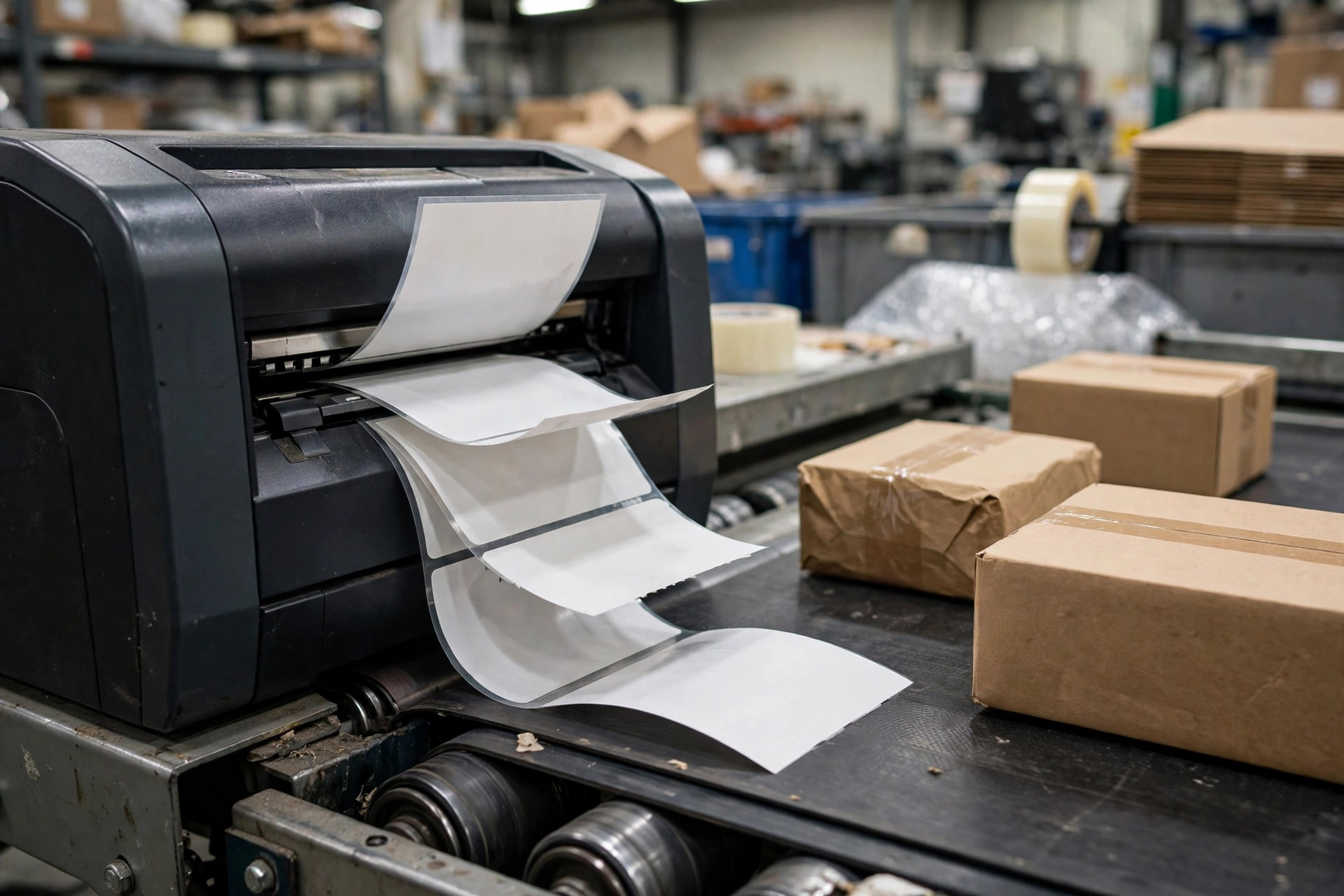
Let me start with our predicament. We're a 3,000-square-meter small warehouse shipping about 1,500 orders a day, with 4 label printers running nonstop. Last year, our "brilliant" purchasing guy (me) noticed that triple-resistant thermal paper cost 4 yuan more per roll than the regular stuff. Big wave of the hand: switch to regular paper, save nearly 10,000 yuan a year.
What happened? Three months later, our customer service girl showed up with a stack of complaints: 20+ parcels with labels so faded they were unrecognizable. The sort centers couldn't scan them, parcels sat at transit hubs for three days, customers left one-star reviews. Reshipped freight, replacement goods, lost customers — nearly 20,000 yuan down the drain. Saved 10K, lost 20K. I wanted to award myself "Strategist of the Year."
So today we're talking thermal label paper selection. It's just a roll of paper, but there's enough to it to keep a small warehouse busy.
What "Triple-Resistant" Actually Resists
Quick primer, so nobody ends up like past-me thinking "paper is paper as long as it prints."
Regular thermal paper: thin coating, heat-developed print. Afraid of light, heat, oil, water, and abrasion — basically a five-event scaredy-cat. Leave it in a warehouse through a hot summer and the print starts yellowing and fading.
Triple-resistant thermal paper: resists oil, water, and abrasion (some versions also resist plasticizers). An extra protective coating extends print legibility from a few months to a year or two. It costs 30%–50% more, but what you buy is a label that stays readable through the journey.
We ran a gloriously unscientific experiment: 100 labels on each paper type, half stuck on cartons in a warehouse corner, half left out in direct sun. Two weeks later — half the sun-baked regular labels were so faint the scanner needed three tries; the triple-resistant ones looked basically unchanged. That experiment converted me completely.
Thermal Label Paper Selection Comes Down to: Where Is Your Freight Going?
Time for the anti-big-company take. Big warehouses have money; they buy triple-resistant with eyes closed. Small warehouses like us have to be strategic. Thermal label paper selection really comes down to one question: how many days does your parcel spend outside?
Here's my down-home method, shared with fellow small warehouses:
- Same-city / in-province, 1–2 days transit: regular thermal paper is fine. From print to signature is 48 hours — fading doesn't have time to happen before the parcel arrives. We use regular paper for in-province orders now, saving thousands a year, zero issues.
- Cross-province, 3–5 days in transit: go triple-resistant, no debate. Transit hub conditions — sun-baked docks, rain, rough handling — will kill regular paper. Since we switched all cross-province to triple-resistant, label complaints went straight to zero.
- Special freight: cold chain (low temp + moisture), auto parts/hardware (oil contamination), overseas-warehouse first-leg (15–30 days in transit) — triple-resistant, don't think twice. After 20+ days on the ocean, regular paper arrives at the destination port blank, and customs clearance becomes a problem.
See? It's not either-or. Our current approach is a mix: regular for in-province, triple-resistant for cross-province. A little note taped next to the printers — which routes get which paper — and the label clerk just glances at it. We save 6,000+ yuan a year versus all-triple-resistant, and avoid 20K in losses versus all-regular. That's the small-warehouse way: save where you can, spend where you must.
Three Scrappy Tricks to Spend Paper Money Wisely
Trick one: don't overstock. Thermal paper has a shelf life — typically 2 years — and it yellows before you ever print on it if stored too long. We once stocked six months' worth; the west wall of our warehouse gets afternoon sun hot enough to fry an egg, and the outer rolls all yellowed. Painful lesson: stock 1–2 months at a time, store it somewhere cool, stand rolls upright instead of stacking flat.
Trick two: don't mess with printer heat settings blindly. When labels print unclear, most people's first instinct is to blame the paper — it's usually the printhead temperature. Too hot: dark print but brittle coating that flakes off. Too cool: grayish print the scanner struggles with. Each of our 4 printers has a little "temperature setting card" taped to it; when we change paper types, we adjust per the card. Five minutes of work, saves endless headaches.
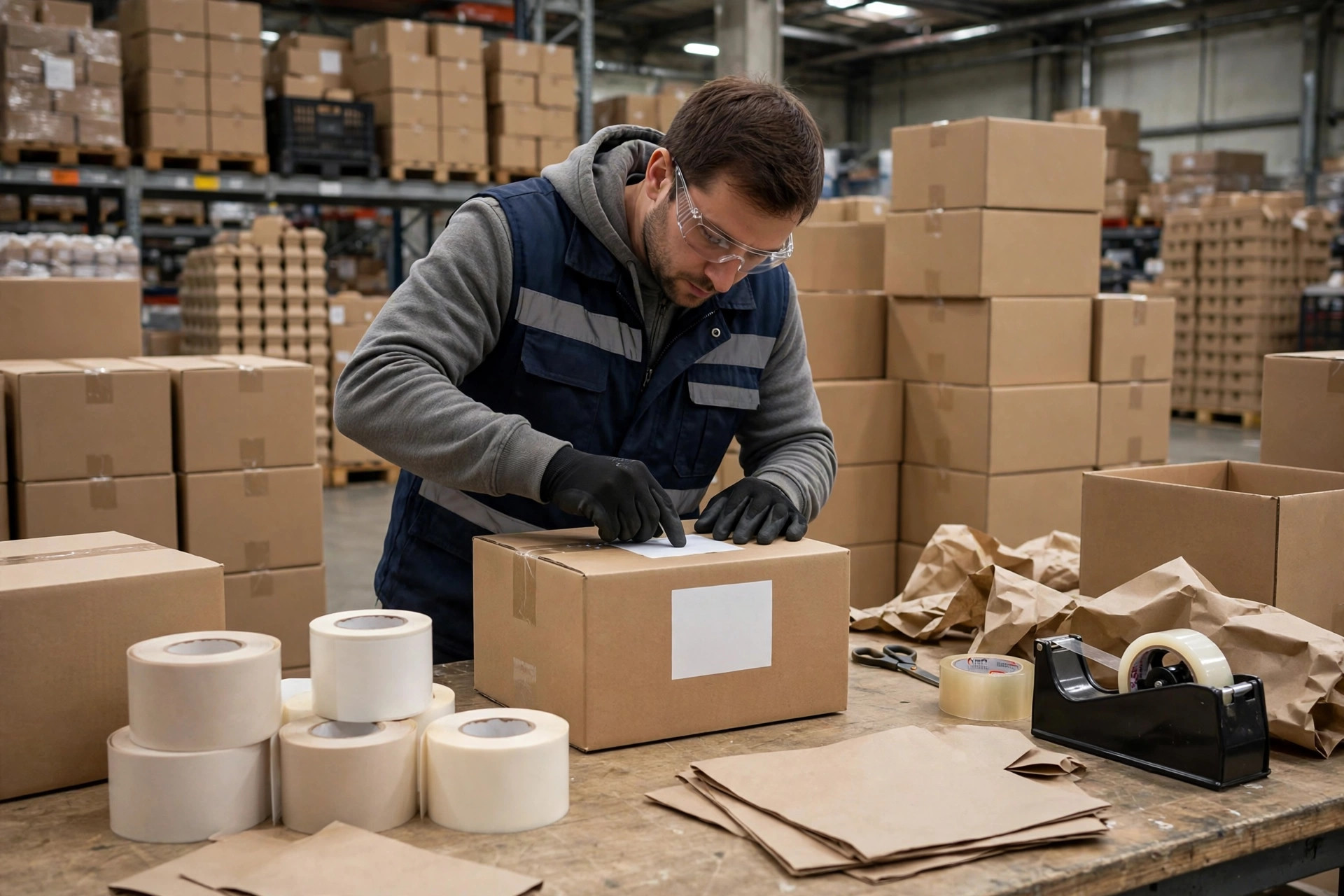
Trick three: don't stick labels on packing tape. A rookie mistake, but I've seen more than one small warehouse make it. Tape plasticizers react with the thermal coating and blur the print within hours. The right way: stick the label on the flat carton surface, away from tape and seams. One tiny detail, far fewer "illegible label" complaints.
The Bottom Line
Our warehouse math: 1,500 orders/day, one triple-resistant roll prints ~400 labels, so ~4 rolls a day, 120 a month. At 4 yuan more per roll, that's 480 extra a month, 5,760 a year.
During those three months on regular paper: 20+ label incidents. Direct losses: reship freight averaging 15 yuan per parcel (300+), 2 lost-parcel claims (800+), plus unquantifiable customer churn. Nearly 20K in three months — 80K annualized.
5,760 versus 80,000. A schoolkid can do that math. In thermal label paper selection, those extra few yuan buy you uneventfulness. For a small warehouse, uneventful is the biggest money-saver there is.
Small warehouses have their own way of surviving: don't blindly copy the big players' top-shelf everything, but never skimp where it counts. The shipping label is the parcel's ID card. Smudge the ID, and your freight becomes undocumented. This is money we're happy to spend.
By Xiao Ma, Small Warehouse Owner





