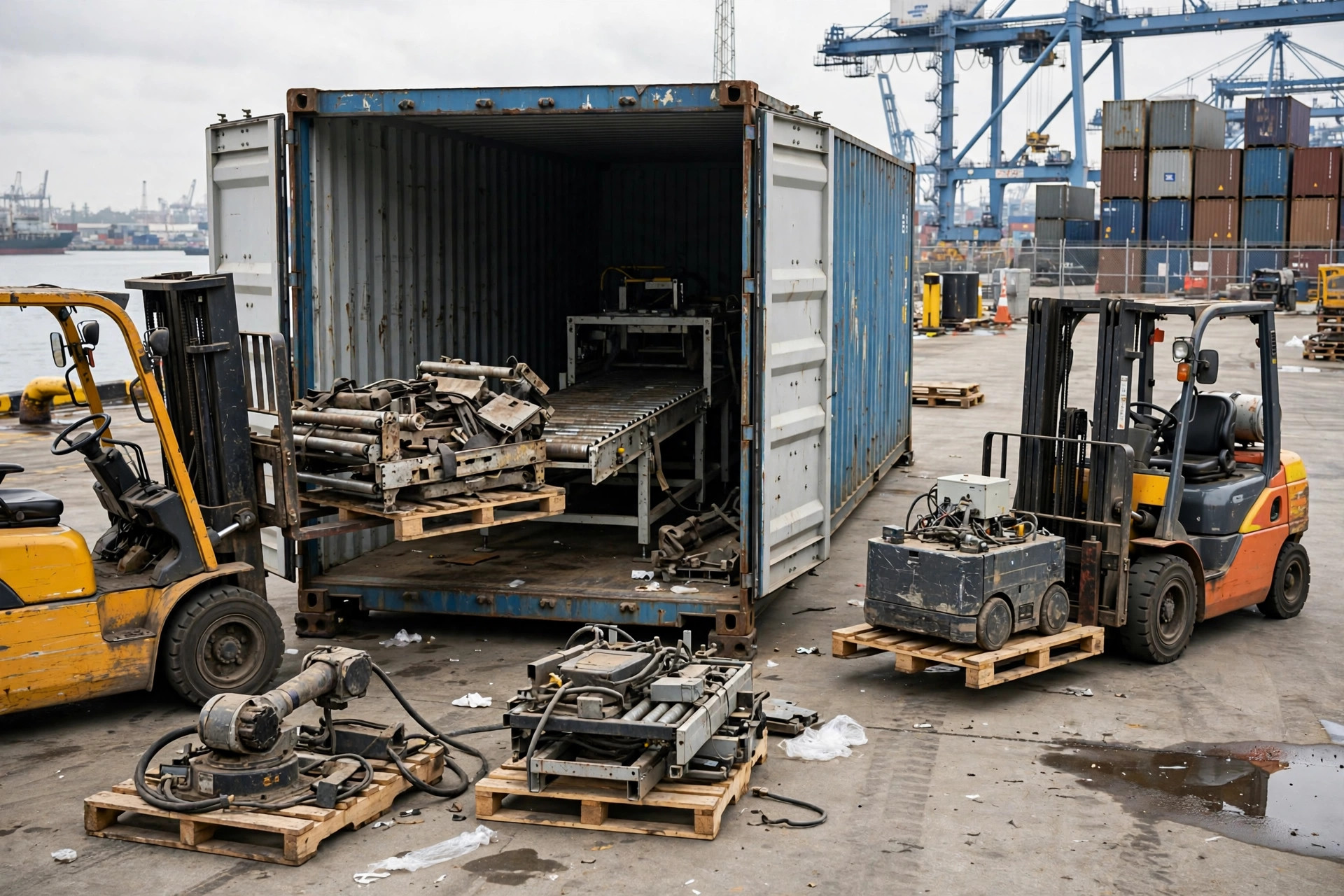
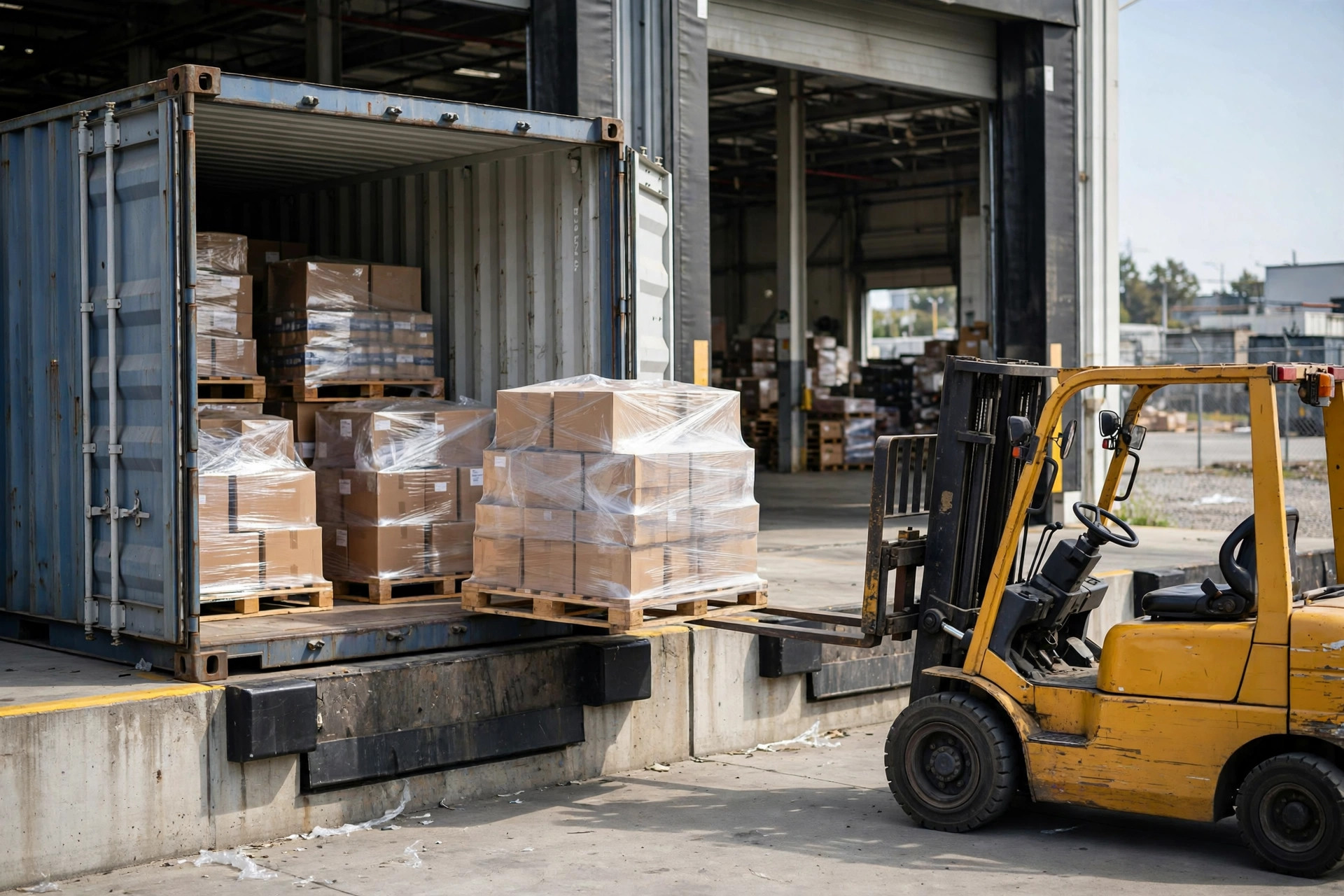
Let me give you the verdict first: used conveyor lines are usually a buy; used electrical control cabinets deserve a long pause; and a bundled deal on used vertical lifts or AMRs only makes sense if you budget properly for the two line items most buyers forget — certification and residual value. Over the years I've watched plenty of American 3PL operators and mid-size manufacturers source secondhand automation from China. The steel is a genuine bargain. But nearly everyone who got burned got burned in the same place: they thought a cheap machine was a win, and forgot the machine has to clear three gates after it lands in the US — refurbishment, certification, and residual value.
A quick story. In 2022, an e-commerce fulfillment 3PL in San Bernardino, California bought a used pallet conveyor line plus a vertical reciprocating conveyor for $110,000 CIF Long Beach. The Chinese seller handled refurbishment and repainting; the photos looked immaculate. Three weeks after installation, a legacy PLC inside the control cabinet fried — the refurb shop had never replaced it, the model was discontinued, and it took two weeks to source a secondhand replacement. Downtime alone cost over $40,000. Then the local electrical inspector showed up for sign-off and asked where the NRTL listing label on the control cabinet was. The owner went pale: the refurb shop had painted right over the original nameplate. The system ended up needing an NRTL field evaluation costing nearly $30,000, plus breaker and e-stop circuit rework, before it got its label. Add it all up, and most of the savings evaporated.
Spend Refurbishment Money Where It Counts
Refurbishment comes in two kinds. Never price them together.
The first is structural steel: conveyor frames, legs, guarding, lift shafts. No electrical risk. Refurbishing these in China is where the real savings live — sandblasting, rust removal, recoating, new bearings and belts. The same work done in the US costs two to three times as much, mostly labor. My rule: refurbish steel in China whenever possible, and document it — paint-thickness readings and a replaced-parts list go into the contract as an appendix.
The second is anything with electricity: control cabinets, PLCs, VFDs, motors, sensors, safety light curtains. My advice is to handle these stateside — or at most, have the Chinese side do "dismantle and protect" only, saving the actual refurb work for a US shop. Three reasons. First, the lifespan of electrical components is invisible. The most common refurb trick is "wipe it down and spray it" — aging capacitors and pitted contactors never get touched. You can't see it in photos; it blows up three months after power-on. Second, discontinued models: PLCs and drives in used equipment are often a decade old. The Chinese seller may have a channel for pulled used parts that work fine today, but where do you get spares for long-term operation in the US? Third, and most decisive: touch the cabinet, and you kill the certification. More on that below.
Watch for one specific scam: substandard replacement parts passed off as premium. The refurb contract must include a replaced-parts list — consumables like bearings, belts, chains, and cylinders get replaced with new, brand and model written into the appendix. The worst case I saw: a seller installed generic bearings but stamped them with an imported brand name. Two months in, the bearings howled; torn down, the internal clearance was absurd. Two defenses: hire a third-party inspection firm in China (they charge by the day and cost far less than a blown deal), and require the old parts shipped back to you so you can judge the wear yourself.

Where Certification Gets Stuck
This is the gate most buyers underestimate. OSHA's rule is plain: 29 CFR 1910.303(a) requires electrical equipment in the workplace to be approved by an NRTL — a Nationally Recognized Testing Laboratory. In plain English: in an American warehouse, electrical and OSHA inspectors recognize an NRTL listing label — UL, ETL, CSA all count. They recognize the label, not your assurance that "it used to have one."
The problem with used equipment: a factory listing travels with the as-built condition. Once a refurb shop in China rewires the cabinet, swaps breakers, or paints over the nameplate, the original listing is effectively dead. Even more common: the equipment never had a US listing at all — plenty of it was built to European or Chinese standards. Then there's only one path: an NRTL field evaluation. An engineer comes to your warehouse, inspects against standards like UL 508A for industrial control panels, you remediate what fails, and then you get a field label. UL, Intertek (ETL), and CSA all run field-evaluation teams in the US.
When is it mandatory? Run through three checks. First, the equipment has a control cabinet or runs on 480V/208V power — then it's almost unavoidable. Second, your local AHJ demands the label at sign-off — in strict states like California and Texas, this is effectively a given. Third, your insurance and your landlord: many warehouse leases and property policies require electrical equipment to meet code, and after an electrical fire the insurer's first question is about the listing. Cost? It scales with complexity: a single-cabinet evaluation starts in the low thousands of dollars; a full conveyor line with multiple cabinets commonly runs into the tens of thousands — before rework parts. So budget certification as its own line item. Don't bury it under "miscellaneous" and lie to yourself.
One warning worth highlighting: refurbishment and certification work against each other — the more the cabinet is touched, the more the field evaluation costs. Structural refurb doesn't affect certification, but every rewire raises the evaluation workload. My practice: write "clean and moisture-protect only — no replacement, no rewiring" for the cabinet into the contract, do the field evaluation first stateside, and only then make whatever changes the evaluating engineer requires. One round of rework, no wasted money.
Doing the residual-value math honestly. Buying used, most people calculate "how much cheaper than new" and never calculate "what it's worth in five years." The math isn't complicated: straight-line, (total acquisition cost including refurb − scrap value) ÷ design life × remaining life. Structural conveyor equipment is generally rated for 10–12 years of design life; AMRs and lifts per the manufacturer's manual, usually 8–10 years. But count from the year the equipment actually entered service — not the year you bought it. A conveyor commissioned in 2016 and bought by you in 2024 has two to four years of life left; its residual value is basically scrap steel plus a few usable motors.
What holds no value? Three categories. First, consumables: belts, chains, bearings, lagged rollers — treat them as zero at purchase; refurbishment must replace them. Second, discontinued electrical parts: legacy PLCs, drives, HMIs — one failure can force a whole-cabinet generation change, so discount them as risk items in your valuation. Third, custom parts: non-standard frames, special fixtures — nearly unsellable secondhand. What actually holds value is standardized steel and newly installed brand-name motors and gearboxes.
The tariff red line. Section 301 duties are assessed on the transaction value you declare to Customs — I'll skip specific rates here because they've moved repeatedly in recent years, and printing a number would mislead you; go by the latest US tariff schedule per the latest official policy. Three compliant ways to lower the bill: first, get the HTS classification right — used vs. new equipment, complete machines vs. parts can fall under different headings, and misclassification means overpaying at best and a misdeclaration finding at worst. Second, freight and insurance, if separately stated and qualifying, can be excluded from dutiable value — so invoice and contract should break them out. Third, refurbishment performed outside the US and baked into the price is generally dutiable too — don't try to "hide" refurb costs inside a service fee; Customs looks at substance.
The red line is undervaluation. US Customs law requires importers to exercise reasonable care in their declarations. Get caught lowballing and penalties under 19 U.S.C. 1592 can run to multiples of the merchandise value, with criminal exposure in serious cases. Customs is sensitive to undervalued used-equipment declarations — declare $30,000 on a system worth hundreds of thousands on the market and the system flags it automatically. My baseline: contract price, payment records, and declared value all match, with bank slips kept on file. Save on duties through classification and structure, not through nerve.
Pre-purchase checklist
- Split the quote: equipment price, China refurb cost, dismantling/crating, and ocean freight as separate lines, with refurb carrying a replaced-parts list.
- Write "cabinet: clean only, no modifications" into the contract; photograph nameplates and original labels; forbid painting over them.
- Budget the NRTL field evaluation as its own line; get quotes from one or two NRTLs (UL, Intertek, CSA) in advance.
- Get the original commissioning year and maintenance records from the seller; compute remaining life before negotiating price.
- Have a licensed customs broker confirm HTS classification; break out merchandise value, freight, and insurance on the invoice.
- Declared value equals actual transaction value, with payment records kept. Don't get creative here.
One question to leave you with: if you have a conveyor line commissioned in 2018 sitting in your warehouse right now, how would you value it today? Run the numbers and compare notes with me.