Customs changed the rules again. It used to be simple: under $800, samples sailed through duty-free, no questions asked. Now? That road is dead — as of August 29, 2025, every country, not a cent of duty escapes.
Let me get you current, in case you're still living in 2024: the US $800 duty-free break (Section 321 de minimis) went from $200 to $800 back in 2016, and in fiscal 2024 it covered 1.36 billion parcels. Then May 2, 2025 — China and Hong Kong lost it first. August 29, 2025 — the rest of the world followed. June 2026 — CBP wrote the suspension into its own regulations, indefinitely. And Congress went further: full statutory repeal on July 1, 2027. Even the old Type 86 express lane is gone — small shipments now clear exactly like big ones: formal entry. Samples? Samples pay duty too. Free goods still need a declared value.
Three Paths — I've Paid Tuition on All of Them
Five years as a cross-border seller, and I've shipped samples by the hundreds. There are exactly three compliant paths, and each one has cost me a lesson.
Path one: mutilated samples under HTS 9811.00.60. The rule is blunt — samples valued at $1 or less each, OR permanently marked "sample," cut, torn, or perforated so they can't be sold as real merchandise, enter duty-free. How do you actually mark them? Slash apparel under the arm, punch a hole in footwear soles, engrave "SAMPLE - NOT FOR SALE" on electronics, or simply remove one key component. Three things your invoice cannot miss: declared value, quantity, and the line "mutilated samples – 9811.00.60" — skip those words and you get nothing. After use, destroy them or donate them. Selling them is smuggling territory.
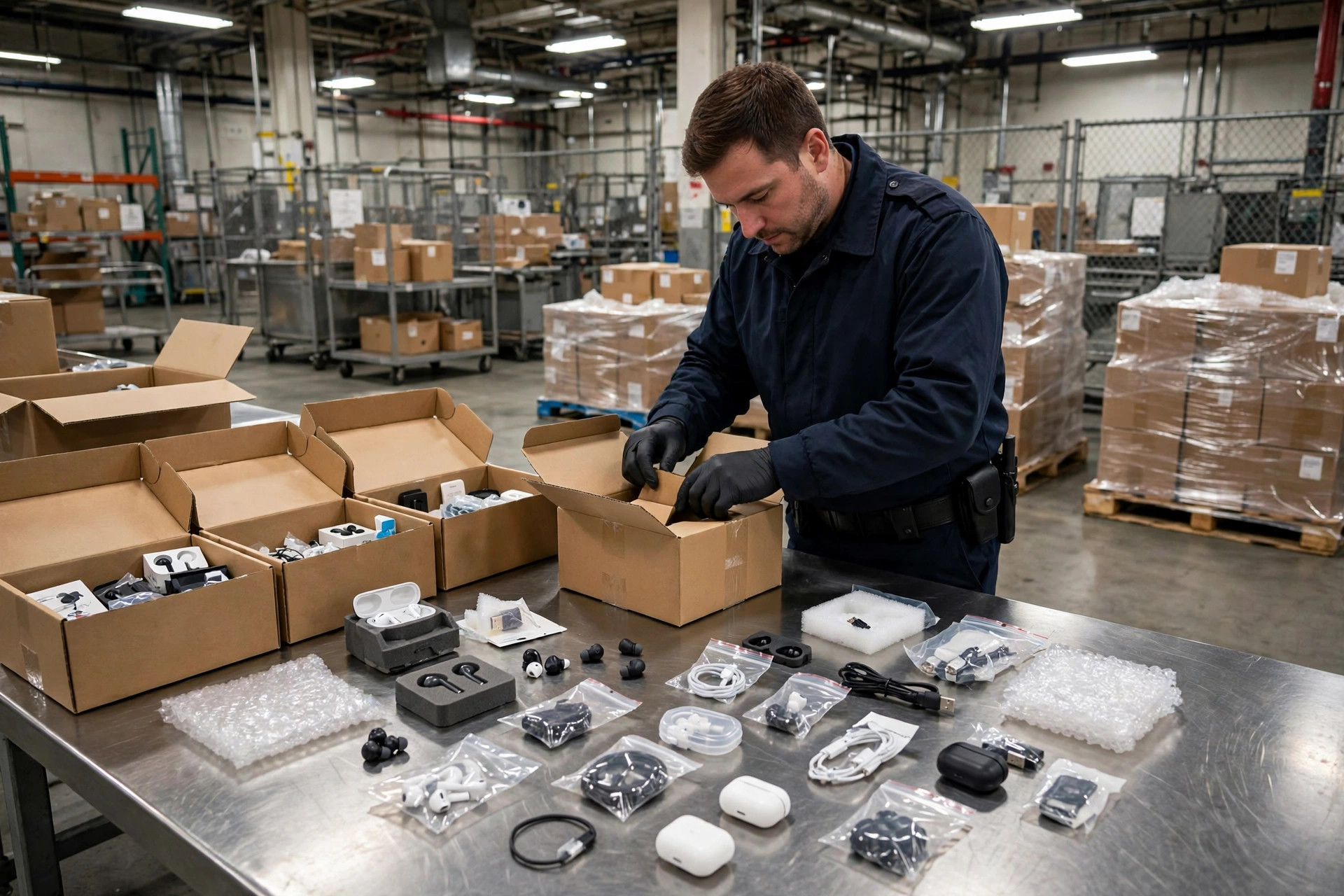
A friend of mine learned this the hard way last year: 20 Bluetooth earbud samples, packaged exactly like the retail product, no markings. Customs opened the box and said: these aren't samples, this is merchandise. Reclassified as commercial goods, back duties plus penalties — the "free" samples ended up costing more than the goods themselves. Lesson in blood: the more your sample looks like the real thing, the faster it dies.
Path two: prototypes under HTS 9817.85.01. Small quantities, non-commercial amounts, brought in for development, testing, or QC — duty-free. Last year I brought in 12 smart-plug prototypes for development testing under this provision and paid zero duty. But here's the catch: keep everything — test reports, tooling records, email threads. CBP can audit your actual use within three years. Where did the units go, what did the testing conclude — fumble the answers and you're paying back duties.
Path three: trade-show and demo samples via ATA carnet or TIB (Temporary Importation under Bond). One core rule: re-export within one year. In the US, carnets are issued by USCIB — one document, good across many countries, perfect if you exhibit worldwide. TIB posts a bond instead, better for one-offs. The year I did the trade-show circuit, a whole case of demo units rode on one ATA carnet through three or four countries — Customs glanced at the booklet and waved me through. Beautiful. And remember: sell goods brought in temporarily, and it's back duties plus a penalty on top.
The Math: Four Ways to Clear One Sample Shipment
| Route | Duty | The catch | Can you sell the samples? |
|---|---|---|---|
| 9811.00.60 mutilated samples | 0 | Mark/deface them, destroy or donate after | No |
| 9817.85.01 prototypes | 0 | Small lots, keep test records for audit | No |
| ATA carnet / TIB | 0 | Bond ties up cash, re-export within 1 year | No |
| Formal entry | Full HTS rate | You pay, but zero headaches | Sell freely |
See the pattern? The first three "duty-free" routes waive the tariff — at the price that samples can never become merchandise. Only formal entry lets you sell samples after use. Want both? Customs says no.
How Serial Samplers Do It
Samples aren't scary one or two at a time. What gets you is shipping them all year long. People who live on samples all run the same playbook:
First, consolidate. Samples from one supplier in one cycle go in one shipment whenever possible. Broker handling fees are per entry — five small filings versus one big one is a several-fold difference in fees.
Second, keep a dedicated sample ledger, separate from your inventory books. Which entry, what goods, which route you used, how you disposed of them — photos of destruction, donation receipts. CBP's three-year audit looks for exactly this. No ledger, and all your earlier work was for nothing.
Third, declare honest values. Don't write $1 to game it — Customs has valuation databases, and an obviously low value gets your shipment pulled for exam. The delay costs more than the duty you tried to save. Write "samples, value $XX." Honestly.
Fourth, go steady with one broker. One-off filings for sample shipments are slow and expensive. I run all my sample entries through my broker's automated classification now, reusing history instead of hand-typing line items — automation matters most at small volumes, because a single manual misclassification costs more than the system ever will.
Five Pitfalls — Memorize These
- Stop counting on the $800 exemption. It's dead, and by 2027 the statute itself is gone.
- Free samples aren't duty-free: free goods still need a declared value. Writing $0 on the invoice tells Customs you're lying.
- The invoice line "mutilated samples – 9811.00.60" — not one word optional.
- If you sample repeatedly, keep the ledger: destruction photos, donation receipts, test reports — ready for inspection for three years.
- Samples entered under 9811 that get resold are a serious matter. Planning to sell? File a formal entry from the start.
Here's the counterintuitive part: with de minimis dead, small sellers are back on equal footing with big ones. The price edge from dodging duty via direct-mail small parcels is gone — competition is back to product and supply chain. For those of us who actually build products, that's good news.
Tried and tested — this one works.
By Ah K, E-commerce Seller (5 yrs)