Ask automation equipment makers exporting to the United States about UL certification cost and timeline, and most will have a story about getting burned: a quotation they couldn't decode, a test slot they couldn't get, a shipment held up on site for missing paperwork. This piece lays out the fee structure, the realistic timeline, and the UL-versus-ETL decision in one place.
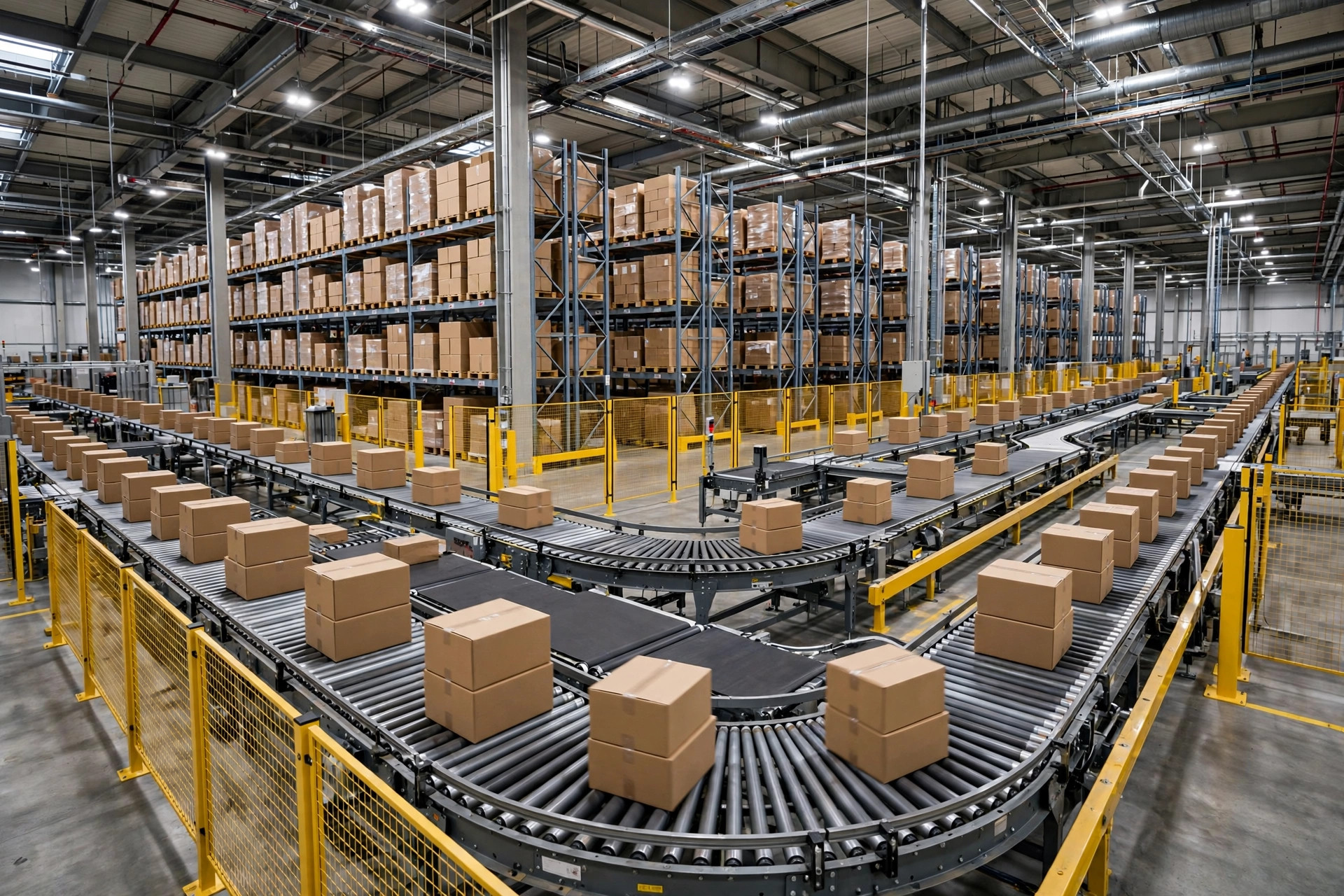
In the fall of 2023, a materials-handling equipment maker in southern China shipped a full sortation line — twelve control cabinets included — to a third-party logistics warehouse in the American Midwest. Installation went smoothly. Then the local electrical inspector, the Authority Having Jurisdiction, opened a cabinet door, saw a CE mark and no listing mark from any US-recognized laboratory, and refused to energize the line. The project froze at the final step. What followed, according to people familiar with the matter, was a field evaluation: an NRTL sent engineers on site, tested and labeled each cabinet one by one, at several thousand dollars per cabinet. Delivery slipped by more than a month.
The instructive part is not the familiar lesson that CE doesn't work in America. It is the decision chain it exposes: when certification should enter the picture, to what standard, and through whom. Most manufacturers treat UL certification as a stamping exercise; in practice it is a quality system that starts at the design desk.
What UL Certification Actually Is: NRTLs, Standards, and Who Has the Final Say
UL — Underwriters Laboratories, today UL Solutions — is not a government agency. It is a private body whose standing comes from OSHA's NRTL program: OSHA recognizes a set of Nationally Recognized Testing Laboratories and authorizes them to test and list electrical equipment, and under provisions such as 29 CFR 1910.303(a), workplace electrical equipment is generally expected to carry NRTL approval. The list runs to more than a dozen names — besides UL: Intertek (behind the ETL mark), CSA, TÜV Rheinland, SGS, FM Approvals, MET Labs.
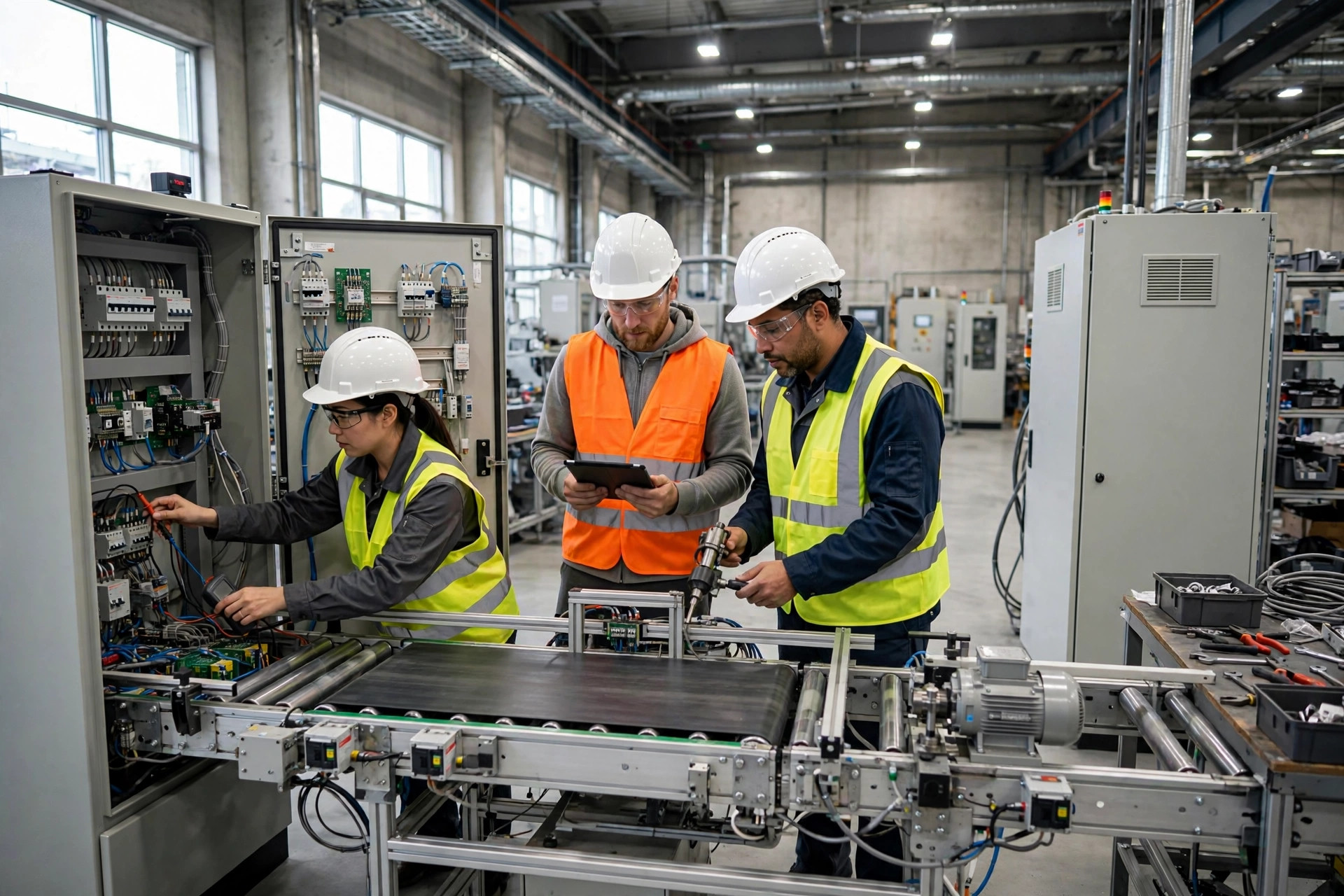
For automation equipment, the workhorse standard is UL 508A, the Standard for Industrial Control Panels — general industrial use, 1,000 volts or less — covering motor control, factory automation, and industrial machinery panels. It is specific about what matters: components traceable to UL Listed or UL Recognized sources, SCCR calculations, wiring methods and spacing, grounding, and marking. A variable-frequency drive inside that cabinet answers to a different standard, such as UL 61800-5-1.
Here is the point most exporters misunderstand: the National Electrical Code, Article 110.3(C), requires that product testing, evaluation, and listing be performed by a recognized qualified testing laboratory — but the person who decides whether your equipment gets powered up is the AHJ on site. The same ETL mark can sail through in one county and draw extra scrutiny in the next. There is no federal law that says "it must be UL." Enforcement sits with the local inspector, which is why the UL mark functions, in practice, as hard currency.
UL Certification Cost and Timeline: Where the Money and the Months Go
The process runs through six stages: project determination (applicable standard, quotation, samples) → documentation (BOM, schematics, construction details, operating environment) → sample testing → test report → initial factory inspection → authorization to use the UL mark. Certification is not the finish line: UL field representatives then visit the factory on a regular cycle, typically quarterly and unannounced, to verify production still matches the certified design.
The fee structure has four parts: application and project fees, testing fees (priced per test item), the initial factory inspection fee, and the annual follow-up service fee covering the quarterly visits. Absolute numbers vary enormously — a single cabinet and a multi-cabinet line with several model variants are not in the same universe. As an order of magnitude, publicly quoted ranges commonly put one industrial control panel's full journey — testing, initial inspection, first year of follow-up — in the low tens of thousands of US dollars; complex systems and retests run higher. Treat that as a magnitude reference and get a current quotation. One caution: never transplant cost figures from LED lighting or small-appliance certifications onto automation equipment; the test scopes are entirely different.
Timelines vary just as much. Counting from complete documentation and sample delivery, three to six months is the figure most commonly cited when things go smoothly: weeks waiting for a test slot, weeks of testing, then the initial factory inspection. "Smoothly" does a lot of work there — documentation going back and forth, non-compliant BOM components forcing substitutions, a failed test requiring retest can each add a month or two.
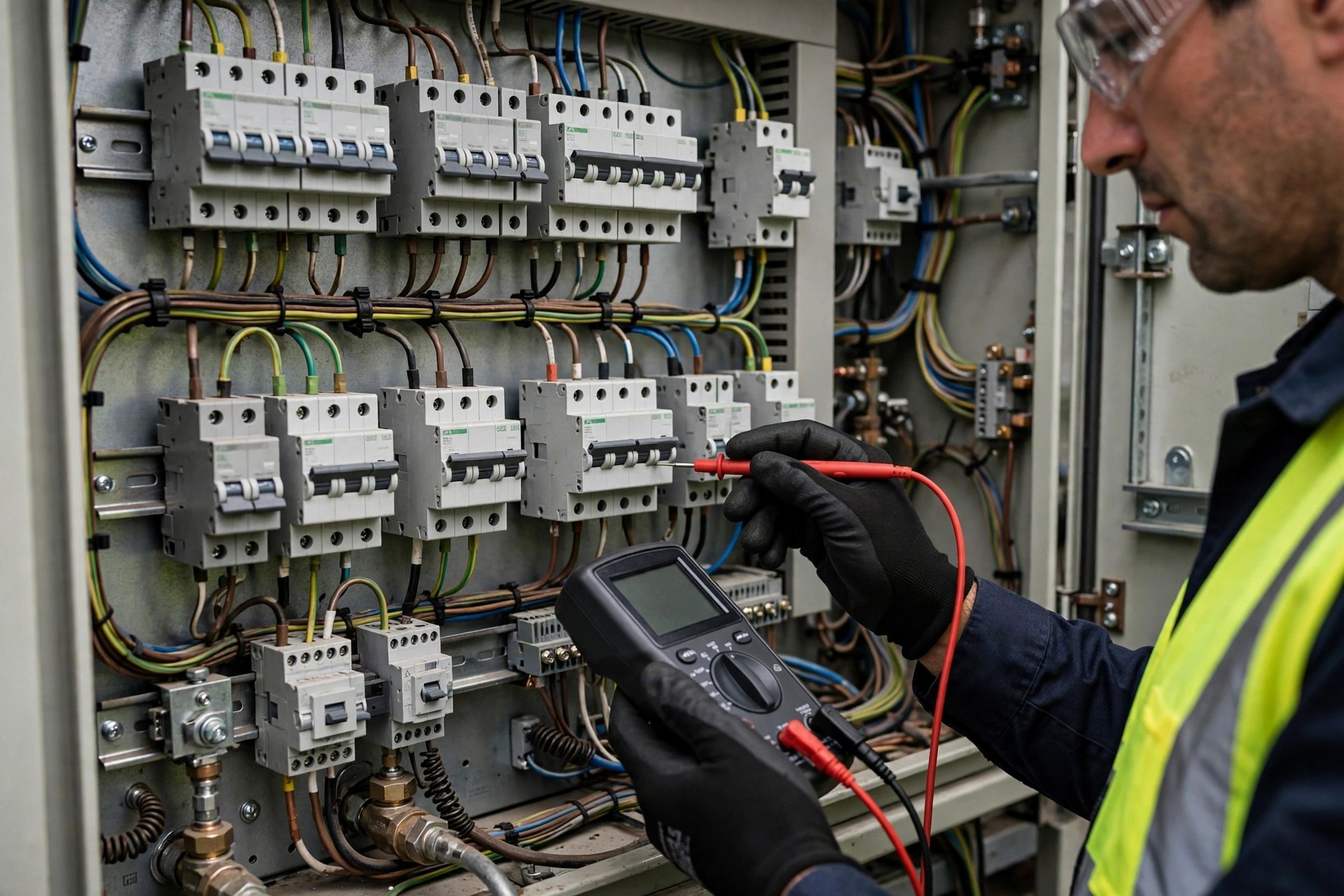
A mobile-robot maker in the Yangtze Delta learned this in 2024. Its prototype went in for UL 508A testing, and the BOM review flagged the breakers and contactors: reputable European brands, but CE-only, with no UL listing or recognition. Everything had to be swapped, the cabinet rewired, the tests rerun — two extra months and a meaningfully larger bill. The testing itself was a fraction of the timeline; the BOM and the paperwork are where schedules go to die.
UL vs ETL: Trading Off Cost, Speed, and Acceptance
This is the question manufacturers ask most. The short answer first: in legal terms, there is no difference between UL and ETL. Both are OSHA-recognized NRTLs; Intertek tests to safety standards published by UL, and a product carrying the ETL mark meets exactly the same requirements as one carrying the UL mark. The differences are only four:
| UL | ETL (Intertek) | |
|---|---|---|
| Legal standing | OSHA-recognized NRTL | OSHA-recognized NRTL, fully equivalent |
| Cost | Relatively higher | Generally lower |
| Timeline | Longer queues, slower overall | Generally faster |
| Market recognition | Highest, the industry default | Lower; some AHJs and owners unfamiliar |
| Follow-up | Quarterly factory inspections | Follow-up inspection regime as well |
The trade-off is not technical; it is about who signs off. If your customer is a large owner-operator, an EPC contractor, or the project sits where the AHJ has historically insisted on UL, the money saved on certification can turn into downtime on site — field electricians report AHJs pushing back on anything but the UL mark, even where ETL is fully equivalent. Where the acceptance side explicitly takes ETL, its value proposition is real. The first step is not comparing quotes; it is asking two questions: does the contract name a mark, and does the local AHJ accept alternatives?
Where Exporters Trip Up
The CE-as-passport fallacy is the most common. CE is fundamentally a manufacturer's self-declaration; it is not recognized as third-party certification in the United States, and the NEC calls for listed or labeled equipment. The twelve cabinets in the opening story were rescued by field evaluation — legitimate, billed per cabinet in the low thousands of dollars, completable in weeks. As an emergency measure it works; as a standing export strategy, the arithmetic never closes.
Second, the "European habits" in the BOM. Manufacturers built around the European market carry bills of materials full of European-brand components, many CE-only with no UL listing. UL 508A has hard requirements on component sourcing; discovering this at the testing stage means starting over. The fix belongs at the design stage: select components against UL 508A sourcing rules from day one.
Third, treating certification as a stamp applied before shipment. Follow-up service is continuous — the factory's quality system, incoming materials, and production consistency must survive unannounced quarterly inspections. Cramming for the certificate and reverting afterward risks suspension or withdrawal of the listing.
Fourth, the SCCR number: miscalculated or missing. Available fault current exceeding a panel's marked SCCR is a classic reason for AHJ rejection, and fixing it late means touching the main power devices, at significant cost.
Which brings up a counter-intuitive observation: most manufacturers assume the certification fee is the biggest cost, but in real projects the money usually burns on waiting and rework — the delivery window missed while queuing for a test slot, the line stopped to swap a BOM, the emergency field evaluation after a site rejection. Any one of these can exceed the fee itself. The UL–ETL price gap is typically a rounding error against total project cost; but the wrong choice in a jurisdiction whose AHJ doesn't recognize it can cost the project's entire cash flow. Certification decisions are not procurement decisions. They are risk-pricing decisions.
Looking further out: as more manufacturing projects land in the United States, front-loaded compliance review by owners, insurers, and EPC contractors is tightening, and the "ship first, fix it on site" playbook is getting harder to run. Within two to three years, UL or equivalent NRTL listing is likely to move from differentiator to bid qualifier for most industrial projects. For Chinese manufacturers, certification has to move upstream — from a sales-support task to a product-planning decision made at kickoff, not three months before shipment.
Which raises the question: when compliance cost shifts from variable to fixed, is price still what gets competed on — or do the manufacturers that build the compliance apparatus first end up eating the latecomers' market? The answer will probably take another project cycle to see.
By Dr. Chen, Supply Chain Researcher