A tugger train is the simplest fix I have seen for forklifts running wild in the aisles.
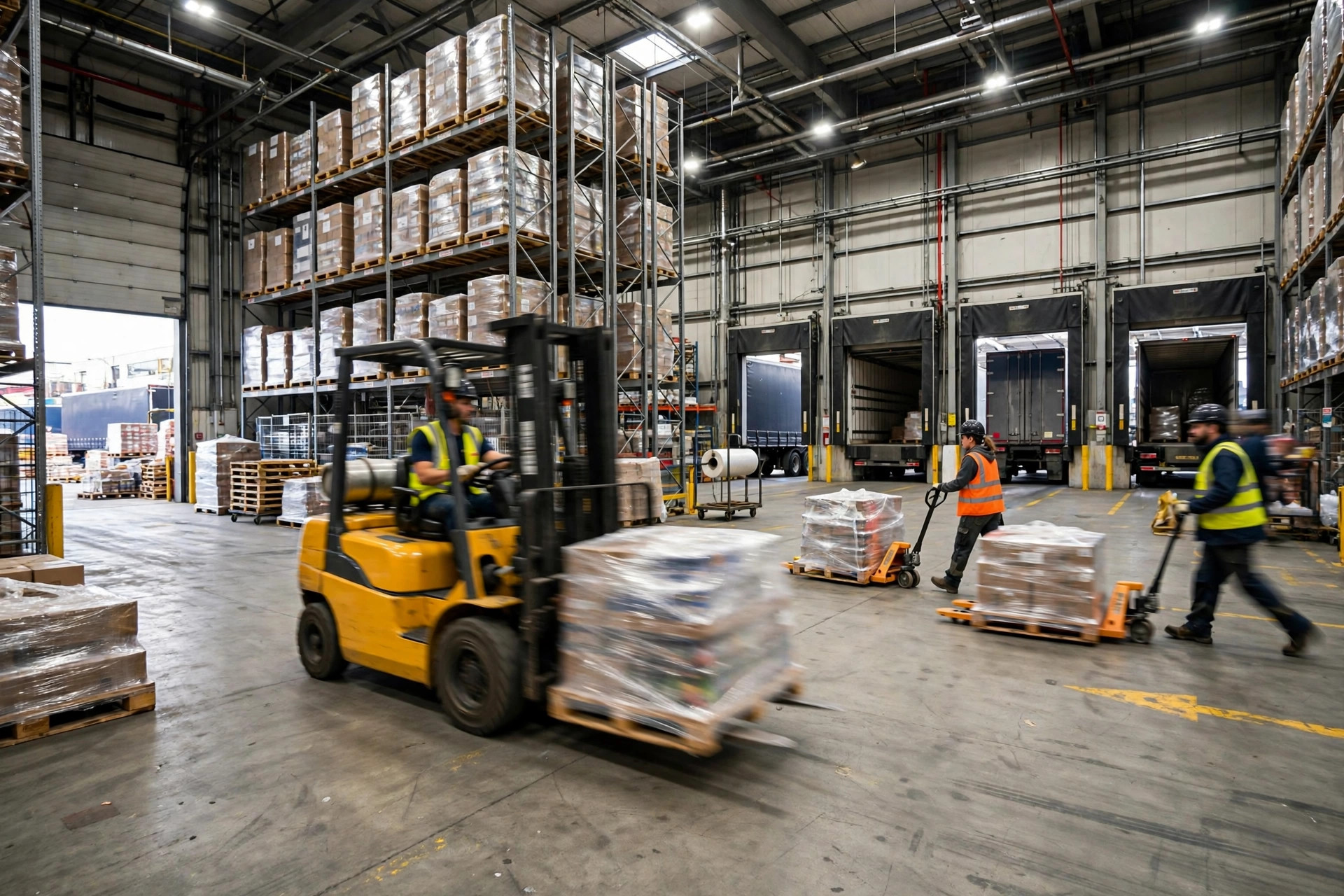
I will tell you what I saw last fall at an auto parts warehouse in eastern China. I had pulled my truck into the receiving area and was waiting to get unloaded, so I had time to watch. Three forklifts were going back and forth in one main aisle. One had just carried a couple of pallets inward, another was racing back out empty, and a third was stuck at the crossing waiting for somebody to give way. Pallets kept piling up by the dock door, and people inside were calling out that the line-side racks were about to run dry.
I have been driving for fifteen years, and I have spent a good part of that time dealing with warehouses. I have seen this scene more than once. When a warehouse gets busy, the first instinct is to add forklifts. More forklifts mean a more crowded aisle, and a crowded aisle means slower moves. That day, the supervisor there shared a smoke with me and sighed. It was not that people were not trying. The work itself was scattered: a couple of pallets here, one pallet there, and the forklifts could only chase one order at a time.
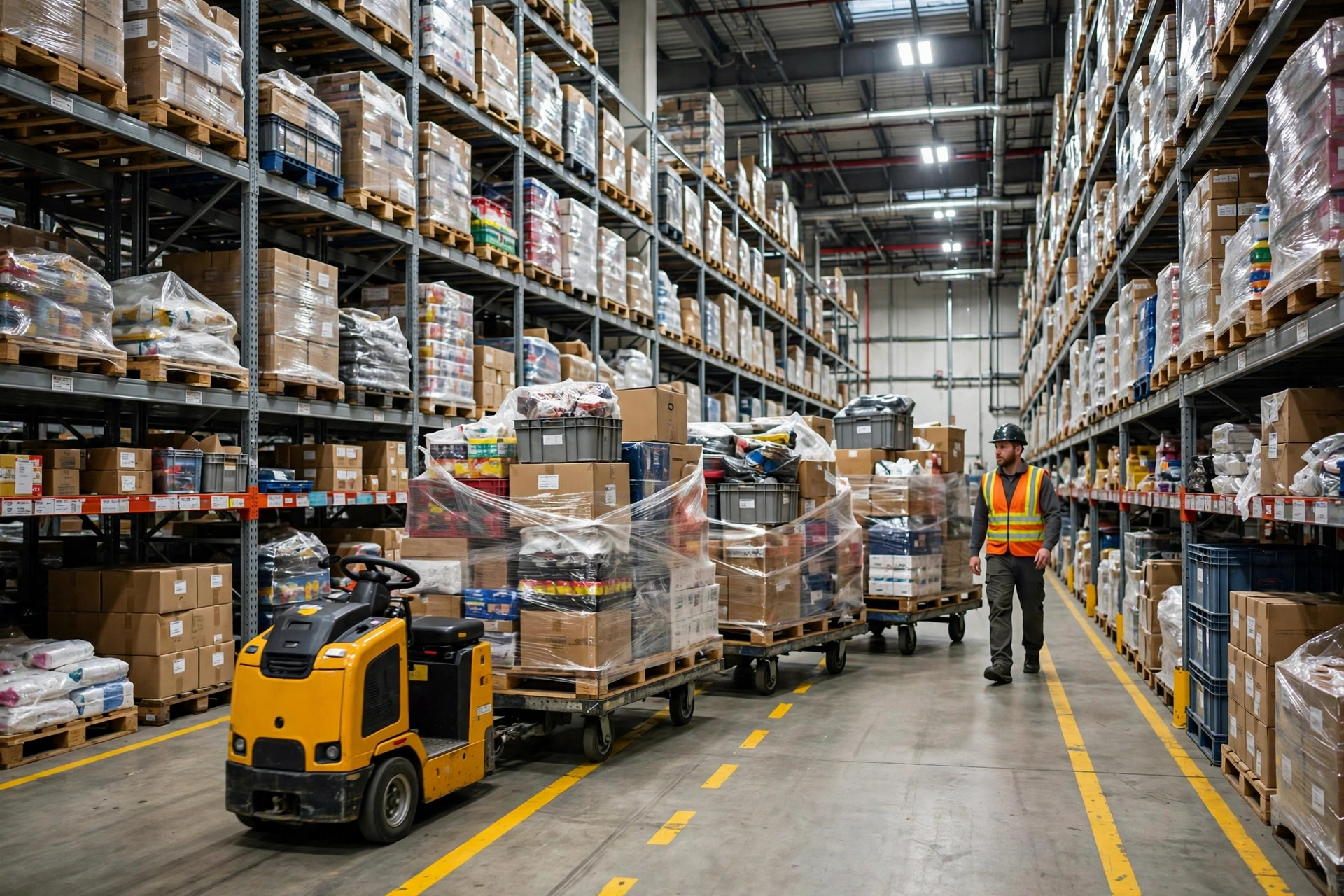
I went back to that same warehouse later, and it looked like a different place. A little train was running down the main aisle: a tugger up front pulling a few carts behind it, stopping station by station — receiving, putaway, picking, line-side — dropping off and picking up at every stop, then looping back. The forklifts were still there, but they were no longer crowding the main aisle. They handled short shuttles near each station. The dock door was clear.
What a Tugger Train Actually Does
Put simply, a tugger train turns scattered trips into a bus route.
A forklift running back and forth works on demand. A zone calls for freight, and a forklift runs it over. When several zones call at once, the forklifts scatter like flies — empty runs, repeat runs, crossing runs, all of it. The train works the other way around. It does not wait for somebody to call. It leaves on schedule, follows a fixed route, and loads and unloads at each stop. The freight waits for the train. The train does not chase the freight.
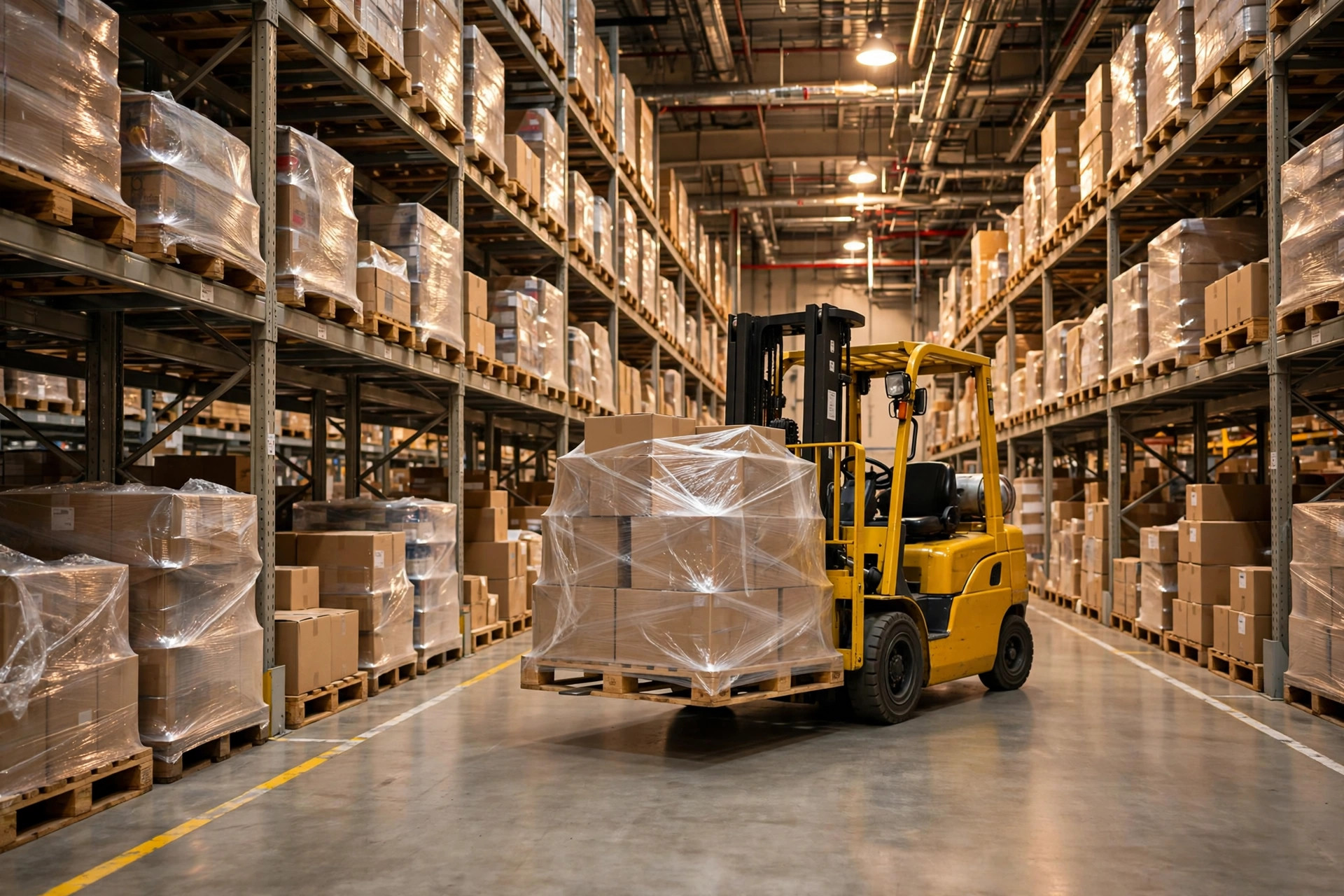
That sounds like a small difference, but on the floor it is a big one. A forklift carries a pallet or two per trip. A tugger train pulls several carts at once, so one run carries what a forklift would need several trips to move. The route is fixed, so everybody knows when the train is coming and where it will pass. The whole floor calms down.
There is one more benefit, and after all these years on the road, it is the one I trust most: a scheduled run gives the receiving area a rhythm. With a tugger train coming on a fixed schedule, the receiving crew knows the drill. One run leaves, the next one comes at a known time, and freight gets staged by run. No panic.
None of this means the train replaces everything. It handles regular, batched transfer work. The rush order and the single stray pallet are still forklift work. Routine batched moves go to the train, scattered urgent moves go to the forklift.
Tugger Route and Takt: The Two Things You Cannot Get Wrong
Route and takt are the lifeblood of the train. Get the route wrong and the train takes long detours or squeezes through narrow lanes. Get the takt wrong and the train shows up with nothing to load, or freight sits waiting while no train comes. I have seen a warehouse where the tugger train made things worse. The route had been copied straight from the old forklift paths, and the schedule had been guessed. The train would arrive at a station and find the freight not staged yet, so the driver just sat there.
So how do you lay out the route? Start with where the freight actually flows. Receiving comes in, putaway, picking, packing, and shipping go out, and the main direction of that flow is the train's main route. Keep the route on wide aisles, cut down on turns, and stay out of the busiest pedestrian areas. Station placement matters too. A station close to the freight loads fast. Stations packed too close together mean the train stops and starts all day. Stations spaced too far apart mean some freight still needs long forklift hauls, and the train loses its point.
Takt is the departure interval, and you set it from the freight volume at each station. Stations with heavy volume get more frequent runs. Stations with light volume get fewer. Takt is not set in stone. When volume changes, the schedule has to change with it. And here is the part people miss: the takt has to match how each station stages freight. When the train pulls in, the freight should already be staged, so the train loads and goes. A train waiting for freight is the clearest sign the takt is wrong.
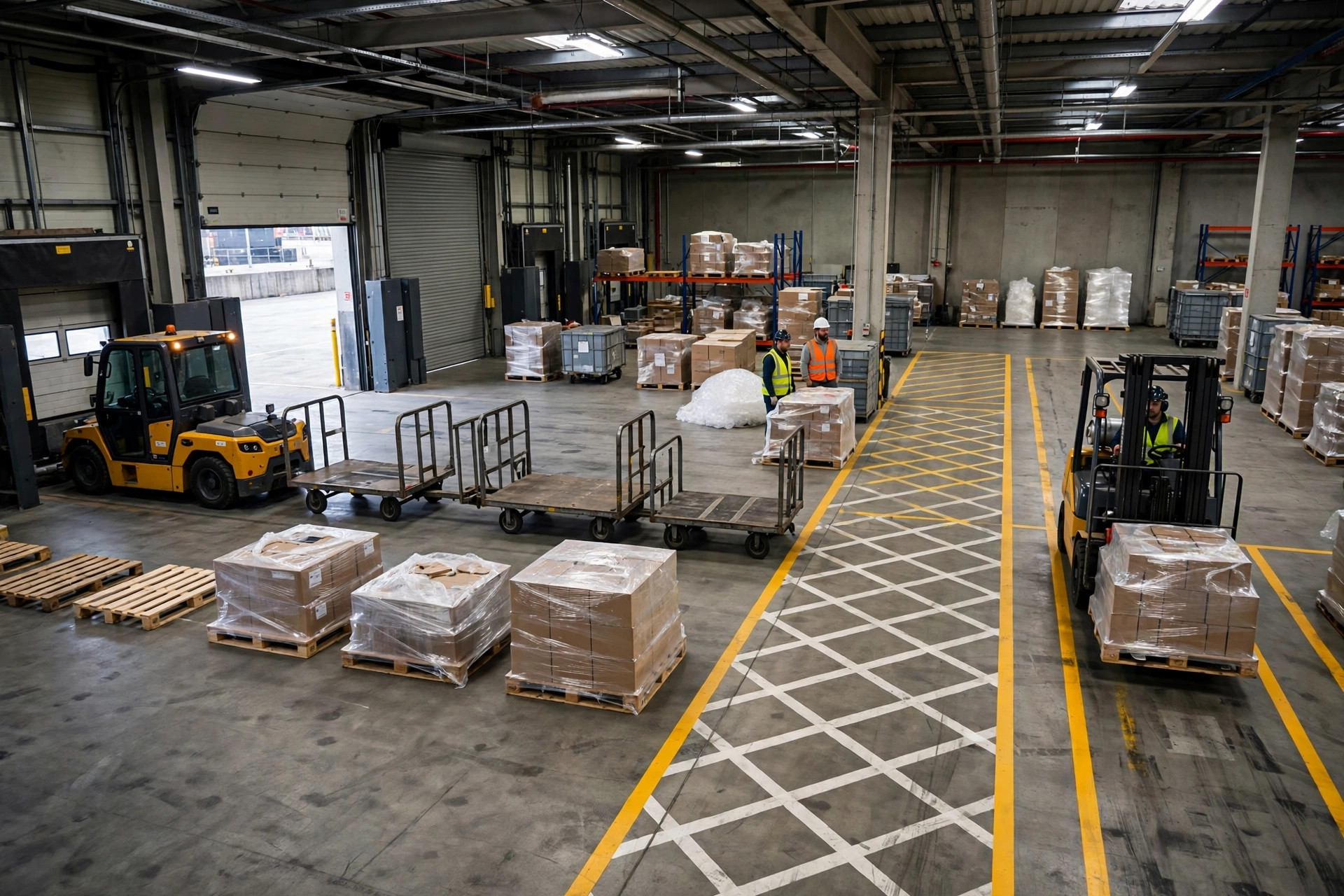
Train makeup matters as well. In the smooth-running warehouses I have seen, the train usually pulls three or four carts, adding one when volume is heavy and dropping one when it is light. Too many carts, and the train struggles through turns and takes forever to load. Too few carts, and each run carries too little, so you need more runs and the aisle gets busy again.
| Comparison | Forklift back-and-forth | Tugger train |
|---|---|---|
| How it runs | On demand, route changes with each order | Fixed stops, fixed route, fixed schedule |
| Load per trip | A pallet or two | Several carts, much more per run |
| Aisle use | Many trucks crossing, worse when busy | One train on the main aisle, forklifts stay on short shuttles |
| Rhythm | Freight pushes the truck around | Train runs on takt, freight gets staged by run |
| Best fit | Rush orders, scattered single pallets | Regular batched transfers |
That table is not a knock on forklifts. Forklifts are flexible. Tugger trains are steady. A warehouse runs right when the two work together. Force a choice between them, and the floor will pay for it.
Which Warehouses Should Run a Tugger Train, and Which Should Not
Before the big promotion season in the middle of this year, I delivered to an e-commerce warehouse in southern China. That building was big. The distance from receiving to picking and packing was long, daily volume was heavy, and the flow barely changed: freight came in through receiving, split out to each zone, and moved on to packing and shipping. That is the kind of warehouse where a tugger train shines. By the time I got there, they had just started running a train. The freight no longer piled up at the dock door, and forklifts and pedestrians were no longer fighting over the main aisle.
Other warehouses should not force it. If volume swings wildly and the flow points east today and west tomorrow, a fixed route and schedule will never line up with the freight. A small warehouse with narrow aisles, tight turns, and no room for stations is another bad fit. And a warehouse that lives entirely on rush orders and freight that changes minute by minute is better served by forklifts chasing orders as they come.
How do you tell whether your own warehouse fits? Ask three questions. First, are the transfers from receiving to each zone happening every day, in real volume, with a mostly fixed direction? Second, is there a main aisle the train can actually run, with turns it can make and stations it can fit? Third, can each station stage freight by run? If you can answer yes to all three, a tugger train is worth running. If any answer is no, fix that weak spot first.
Now here is a judgment that runs against the grain: a tugger train is not better because it goes faster. Some warehouses get a train and the driver flies down the aisle, thinking speed is efficiency. What happens? The train reaches a station and the freight is not staged yet, so it waits. Or the train runs fast through a turn and fights forklifts and pedestrians for space. When the takt does not line up, a faster train only adds to the jam. A train that arrives on time beats a train that arrives fast.
At the end of the day, a tugger train is not fancy technology. It turns in-plant transfer work from scattered runs into a bus route. Put the route on the freight flow, set the takt on the freight volume, and let forklifts and tugger trains each do their own job. An old saying among drivers goes: sharpen the axe before you cut the wood.
By Shifu Zhao, Trucking Veteran (15 yrs)