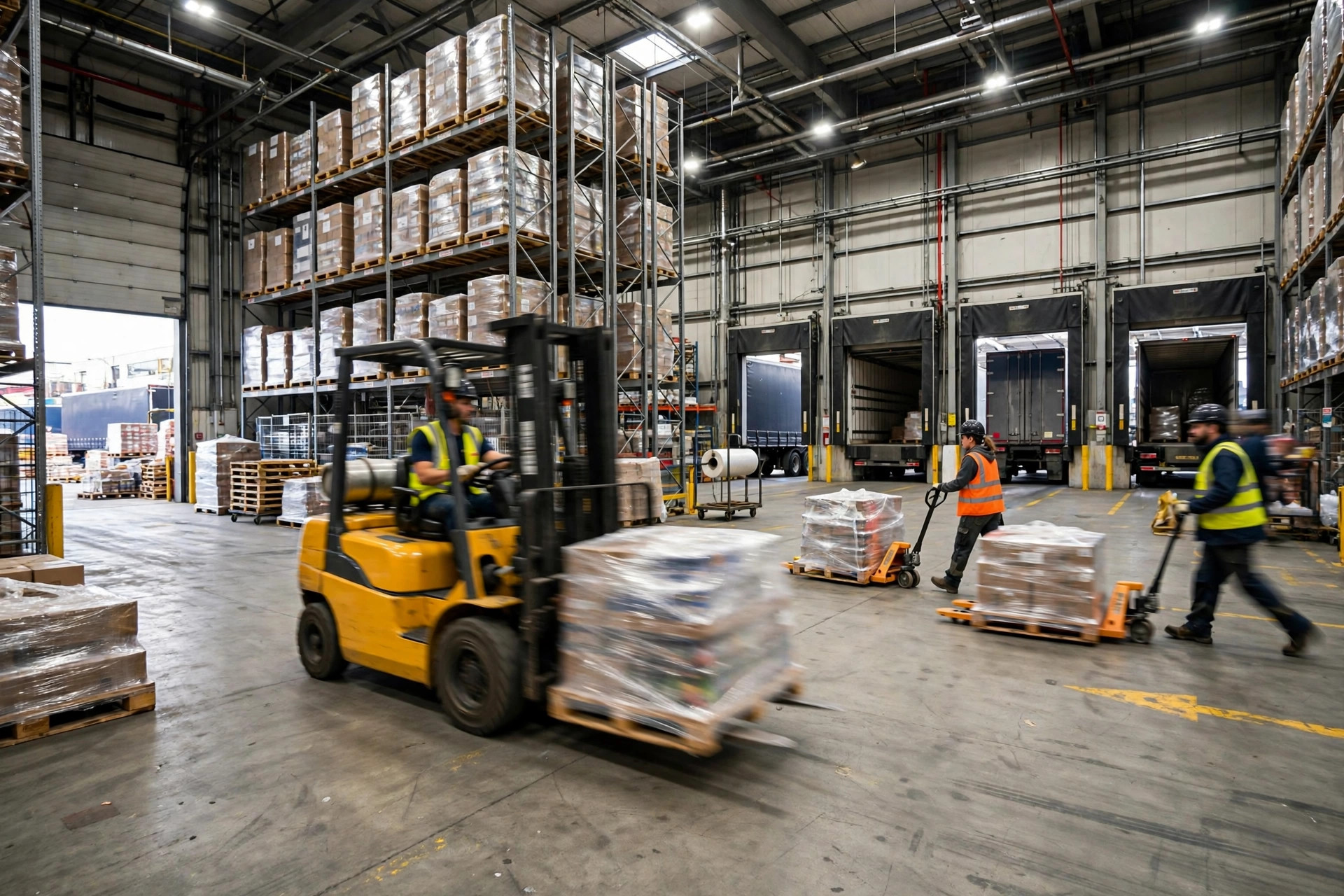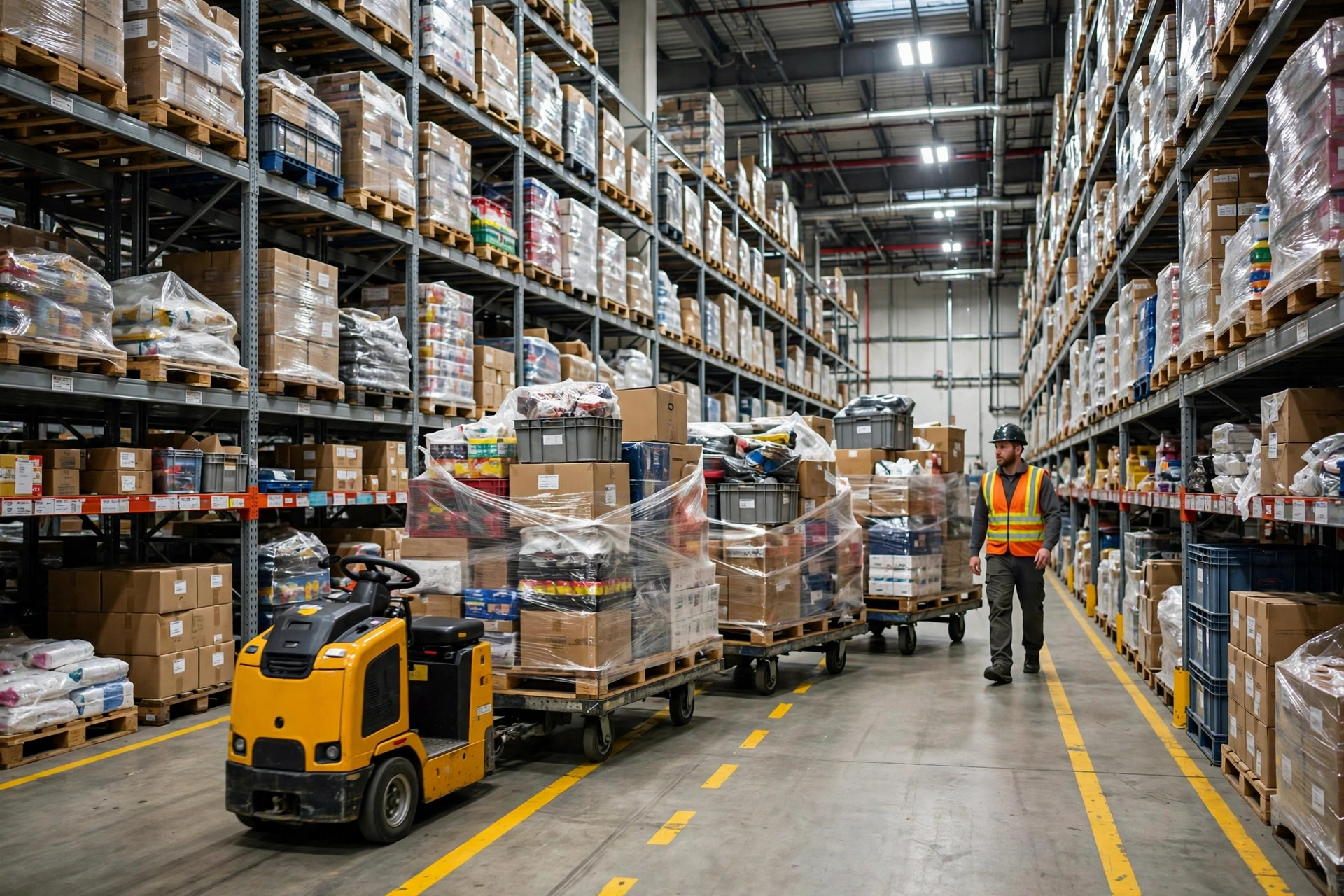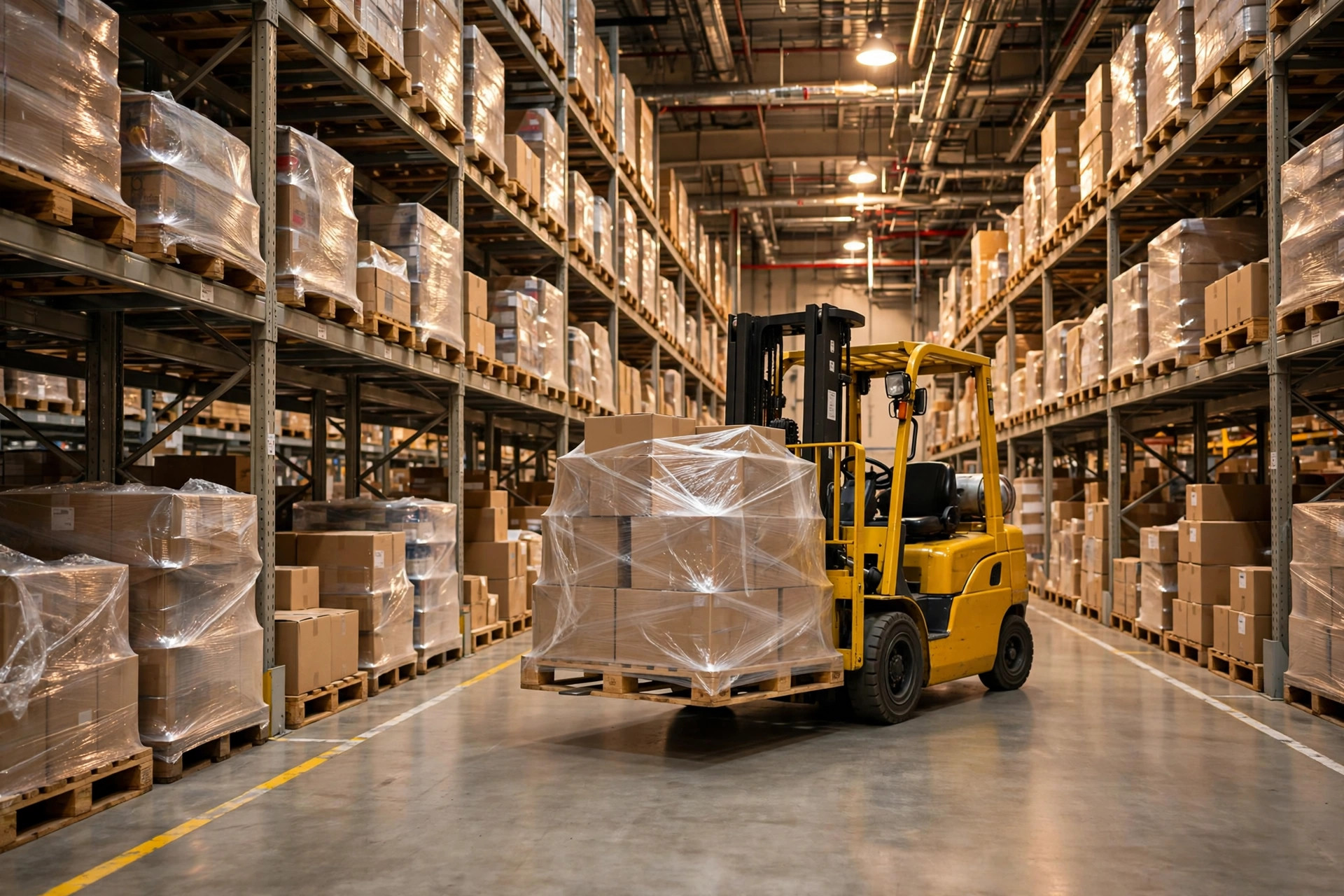
Here's the answer up front: if forklifts and order pickers are sharing the same aisles, no amount of safety posters will fix it. I've seen this exact failure three times — three project managers who swore "everyone will be careful," three near-misses that could have been fatalities. The only thing that actually works is forklift pedestrian traffic separation in order picking areas: split the time, split the zones. Either they use different paths, or they work at different times. If they never physically meet, the accident can't happen.
Why doesn't anything else work? Speed limit signs get ignored when a driver is rushing to clock out. Hi-vis vests come off when pickers get hot. A Monday safety talk is forgotten by Tuesday. Every one of these measures shares the same flaw: they assume people stay alert indefinitely. In repetitive warehouse work, alertness degrades after about two hours. Time-and-zone separation flips the logic — instead of testing human nature, it removes the condition that makes the accident possible.
Two Near-Misses I've Personally Cleaned Up
November 2021, a food distribution center in New Jersey, 4 a.m., two weeks before Thanksgiving. A picker cut across the receiving staging area to grab a carton — a shortcut he'd taken a hundred times. A forklift carrying a double-stacked pallet was backing up; the load blocked half the rear mirror, and the driver never saw him. The forks clipped a rack upright, and three bays went down like dominoes. By sheer luck, the picker walked away with a scrape. The damage that night exceeded $40,000, and the insurer showed up the next morning. When I asked about physical separation between staging and picking, the answer was: "We painted a yellow line." A line painted three years earlier, worn down to half its width.
August 2019, a 3PL warehouse outside Chicago, 60,000+ square feet, 300+ pallets moving daily in peak season. This client had actually done zoning — I supervised the paint, the walkways, the guard rails myself during go-live. But once my project ended, nobody owned the repainting. Three months later I came back for a follow-up visit: the floor was clean, as if nothing had ever been painted, and forklifts and pickers were mixing again. The warehouse manager told me: "Lin, we painted the lines, but when orders pile up, nobody looks at lines." The problem was never knowing what to do. It was nobody maintaining it after day one.
Forklift-Pedestrian Separation in Order Picking Areas: Six Steps
This is the go-live checklist I now run at every implementation. Steal it.
Step 1: Draw a conflict heat map. Don't guess. Take a floor plan and mark three things: mandatory forklift routes (receiving-to-putaway, replenishment-to-pick, pick-to-pack), picker walking routes, and every point where the two cross. If you count more than five crossing points, your warehouse is running without real forklift pedestrian traffic separation in order picking areas. Print it, circle the crossings in red marker, and pin it where everyone can see.
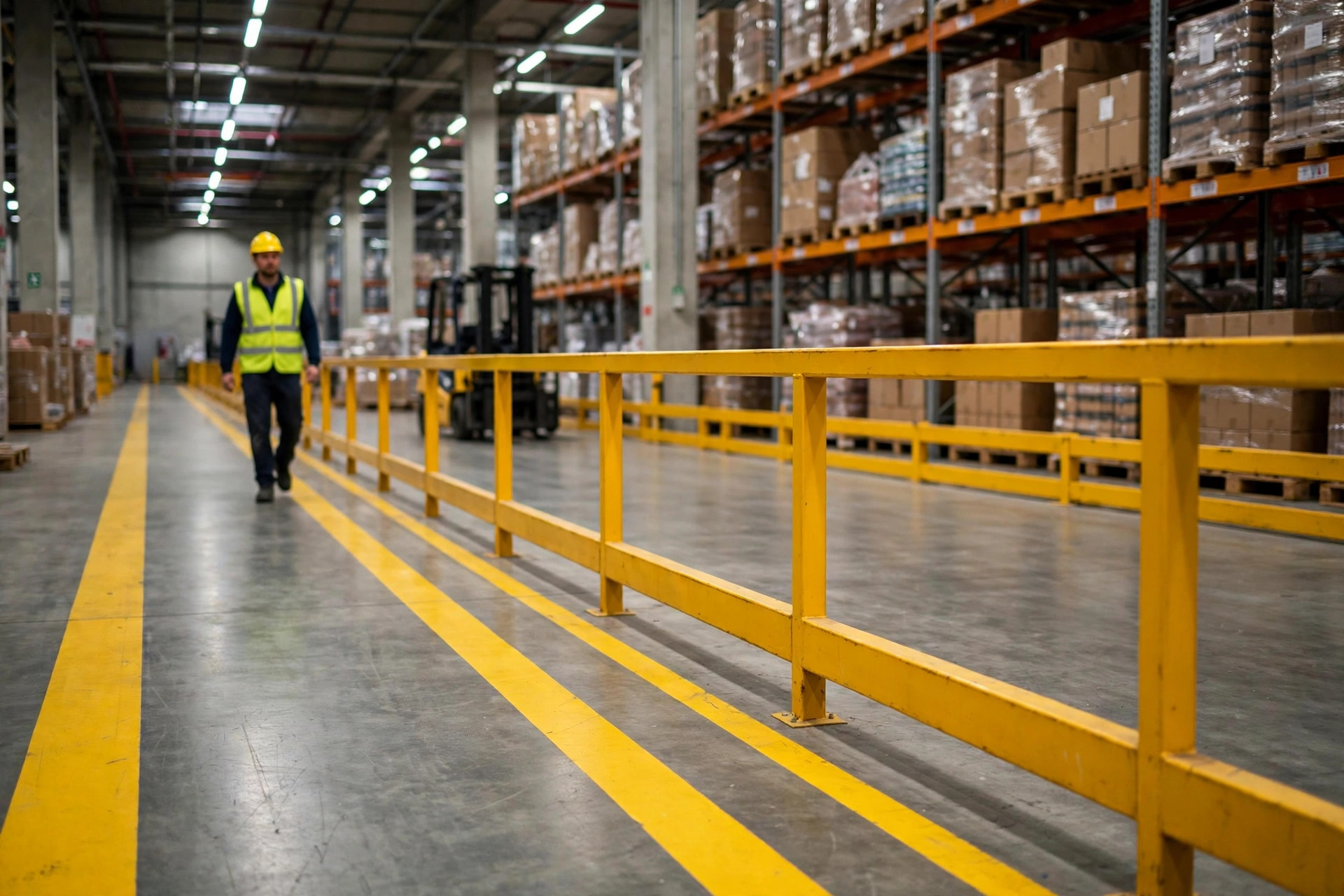
Step 2: Zone it — three colors are enough. Red zones: forklifts only, no pedestrians (high-bay aisles, dock working faces). Yellow zones: shared, with speed limits and right-of-way rules (main travel aisles). Green zones: pedestrians only, no forklifts (pick faces, pack stations, office corridors). Paint the lines, then add physical guard rails at the critical junctions — paint is for people to see, rails are for trucks to hit. Pedestrian walkways at least 1 meter wide; convex mirrors at every blind corner.
Step 3: Split the time when you can't split the space. Many warehouses are simply too small for full zoning. Then trade time for space: replenishment runs only during the 0–15 and 30–45 minute windows each hour, while pickers retreat to green zones to do housekeeping and labeling; the 15 minutes after each hour are pure picking windows with no forklifts in the pick area. Write it into the shift schedule and post it on every team board. Granularity matters — 15-minute windows work; "replenish in the morning, pick in the afternoon" is a wish, not a plan. That's forklift pedestrian traffic separation in order picking areas, applied to time instead of space.
Step 4: Add physical controls, in priority order. ① Speed bumps and convex mirrors at crossings; ② forklift blue-spot lights that project a blue dot on the floor ahead during reversing and turns — pedestrians see it coming two seconds earlier; ③ speed governors, 8 km/h site-wide and 5 km/h in pedestrian zones; ④ hi-vis vests and whistles for pickers in noisy areas. None of this is expensive — a blue light costs tens of dollars — but each item buys back two seconds of "being seen."
Step 5: Write it into the SOP with a named owner. The zone map, the time windows, the inspection frequency — all in the warehouse SOP. Assign one person (usually the shift supervisor) to walk the crossing points for three minutes before each shift: rails in place, lines legible, mirrors unblocked. Three minutes, no exceptions.
Step 6: The night-before-go-live checklist — every box ticked. Zone lines painted and photographed on file? Time windows posted on every team board? All blue-spot lights working? Mirror angles adjusted? New hires and temps trained and signed off? Night-shift supervisor briefed on the time rules? One unchecked box means no go-live tomorrow. This checklist has stopped more than one "good enough" launch.
Which Approach Separates Forklift and Pedestrian Traffic Best?
| Approach | Cost | Efficiency impact | Best for |
|---|---|---|---|
| Zoning only (paint + rails) | Low | Negligible | Large sites where flows already separate naturally |
| Time-splitting only (staggered windows) | Near zero | UPH dips 5–10% short term, recovers in ~2 weeks | Small older buildings where zoning is impossible |
| Zoning + time-splitting | Medium | Negligible | 200+ pallets/day, 5+ forklifts |
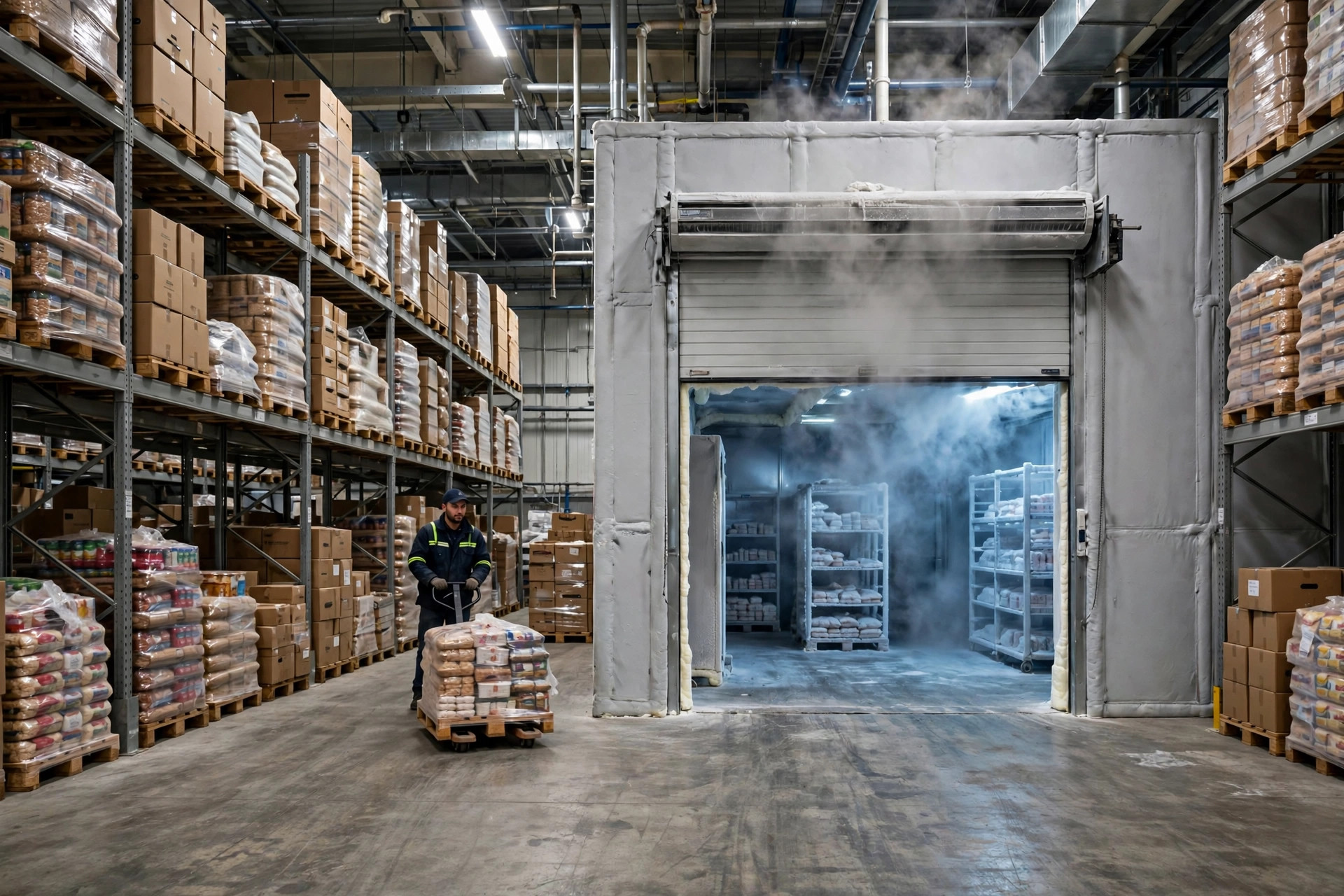
| Hard barriers (fencing + dedicated lanes) | High | Pedestrians detour, slight efficiency cost | Hazmat, cold storage, high-value goods |
My rule of thumb: more than five forklifts, or any temp labor on the floor daily — go straight to zoning plus time-splitting. Don't economize on the first two tiers. The paint you save won't cover one insurance deductible.
The Counterintuitive Part
Most managers resist separation because "pickers detouring kills UPH." I measured it at an apparel e-commerce warehouse in 2022: UPH dipped 6% in the first month after zoning plus time-splitting went live. By month three, UPH was 8% above the original baseline. Why? Before, pickers stopped every few dozen meters to yield to forklifts and look over their shoulders — their attention was shredded. After separation, they could jog a straight line without looking up, and drivers stopped emergency-braking every aisle. The ROI on safety spending is positive; you just have to measure it over three months, not three days. Real forklift pedestrian traffic separation in order picking areas doesn't slow a warehouse down — it removes the interruptions that were slowing it down all along. I've pitched this to three owners. Two didn't believe me. The one who did is now a repeat client.
Five Ways Warehouses Blow It
- Paint wears off in three months; nobody repaints. Fix: quarterly repainting written into the SOP with a sign-off owner.
- The time schedule is posted but unenforced. Fix: for the first two weeks, the shift supervisor enforces it by the clock; one violation gets called out to the whole shift.
- Temps and visitors don't know the rules. Fix: a five-minute safety briefing at entry, signed, with visitors escorted at all times.
- Night shift reverts to old habits unsupervised. Fix: same three-minute supervisor walk; random camera audits weekly.
- You control forklifts but ignore electric pallet jacks. A pallet jack looks slow — it still breaks bones. Put it in the time schedule with the same rules as forklifts.
One thing you can do tonight: before tomorrow's first shift, photograph the three worst forklift-pedestrian crossing points in your building and post them in the team chat, marked in red. That's your zoning starting point. Don't wait for an incident to paint the lines — all three of mine were painted after the fact.
By Lin Xiao, WMS Implementation Consultant