Think of it like choosing a vehicle. A stacker crane is a high-speed train; a four-way shuttle is a fleet of ride-hailing cars all over the city. Both are fast, but they are fast in different ways. The train runs one line end to end at astonishing speed. The cars are everywhere and show up on demand, but no single car is quick. Stacker crane vs four-way shuttle is the same kind of choice — and the cost of choosing wrong is not in the purchase price. It is in every pallet you move for the next five years.
First, get one premise straight: this is not an upgrade path. The four-way shuttle is not the next generation of the stacker crane. They are two different species. One runs a single machine down an aisle for the whole job; the other runs a swarm of small vehicles across rack levels. Different species, different math.
Stacker Crane vs Four-Way Shuttle: What Actually Differs
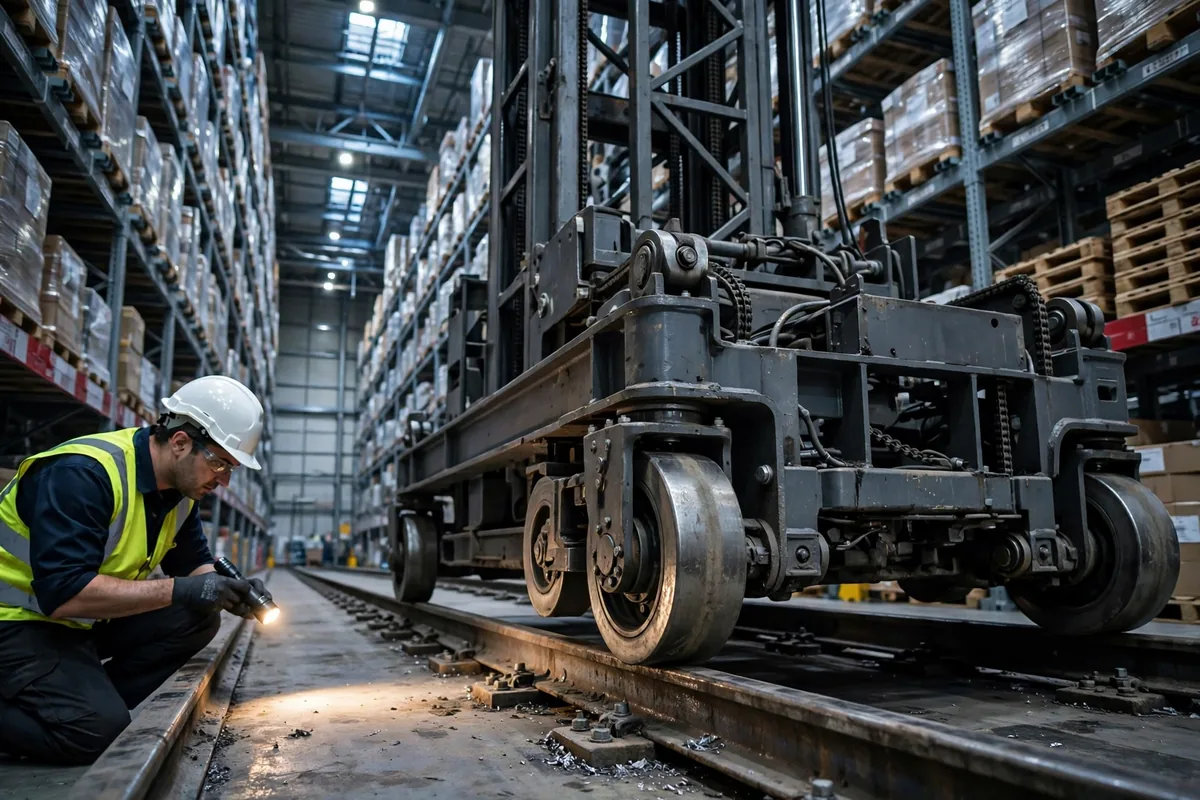
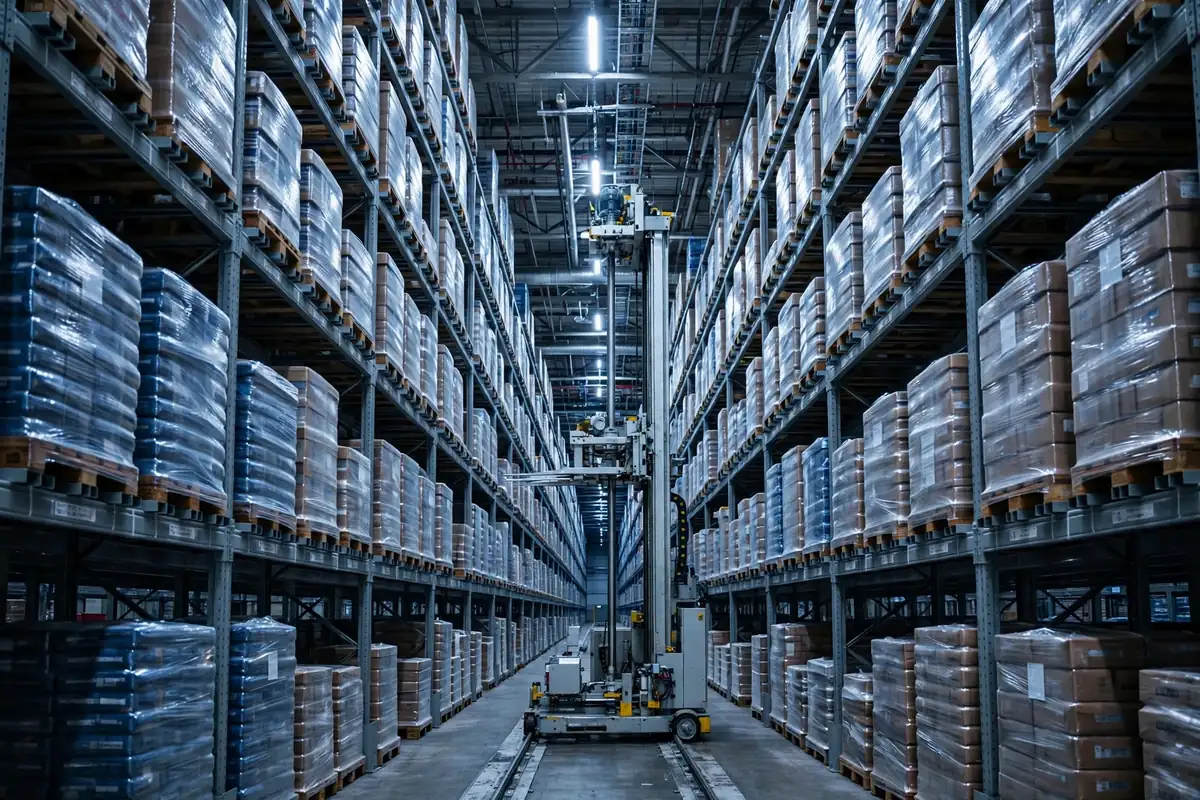
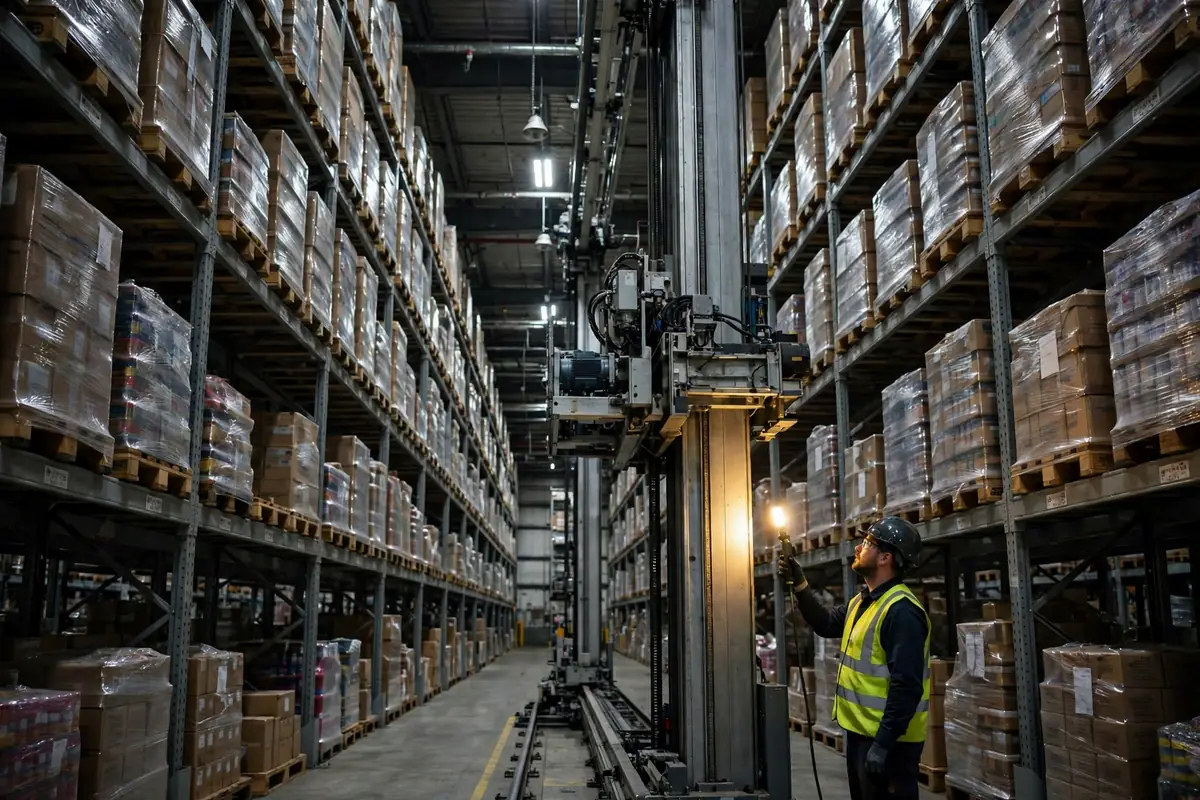
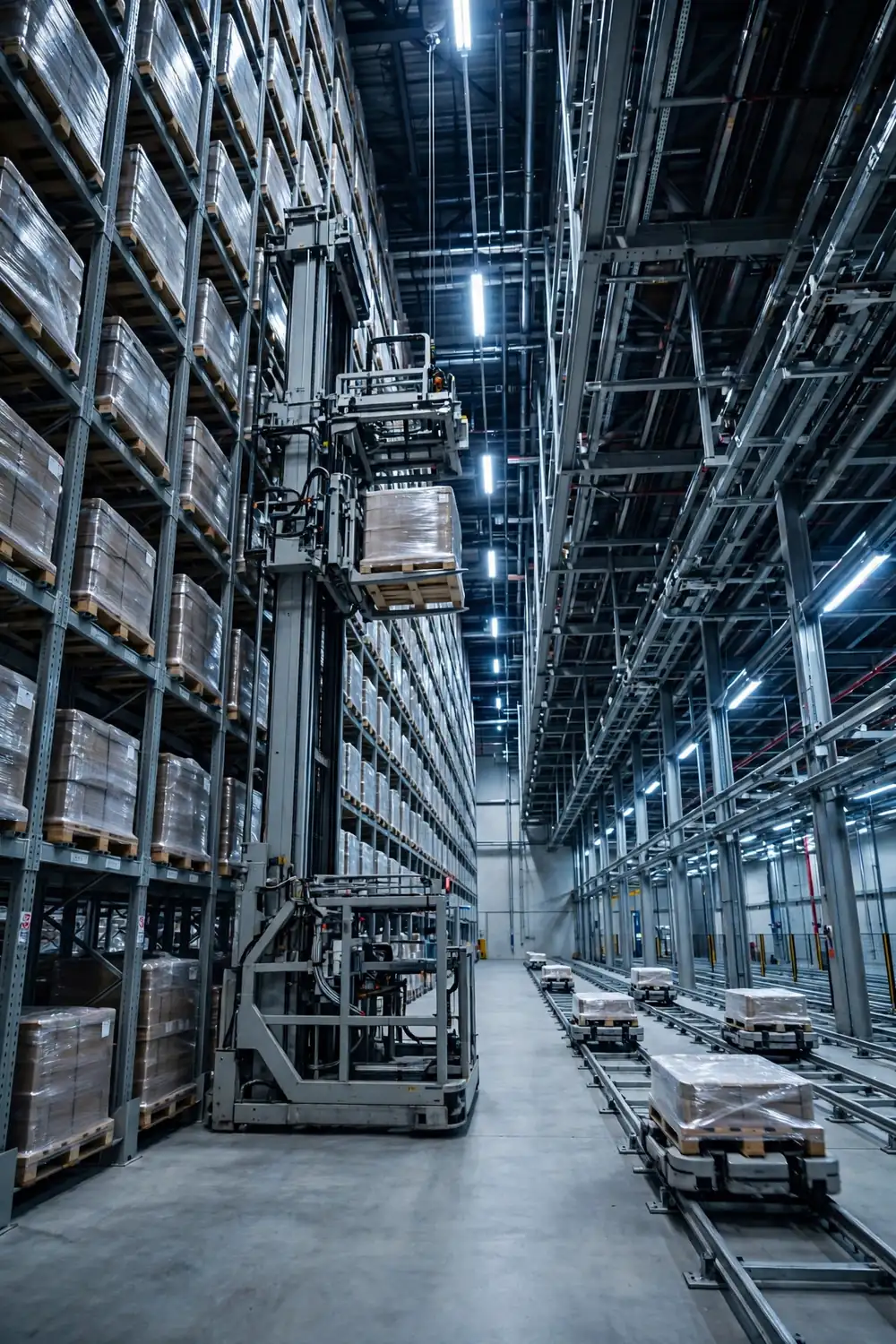
You can think of a stacker crane as a forklift crossed with an elevator: it runs on rails down the aisle, extends its forks to pick a pallet, and rides a lift platform twenty-plus meters up. Typical figures from vendor selection guides — check the vendor's own book for your project — are horizontal travel of 120–200 meters per minute and lifting speed of 30–50 meters per minute. One crane per aisle, and a single aisle in dual-cycle operation handles roughly 25–35 pallets per hour, per vendor ratings and our internal estimate range.
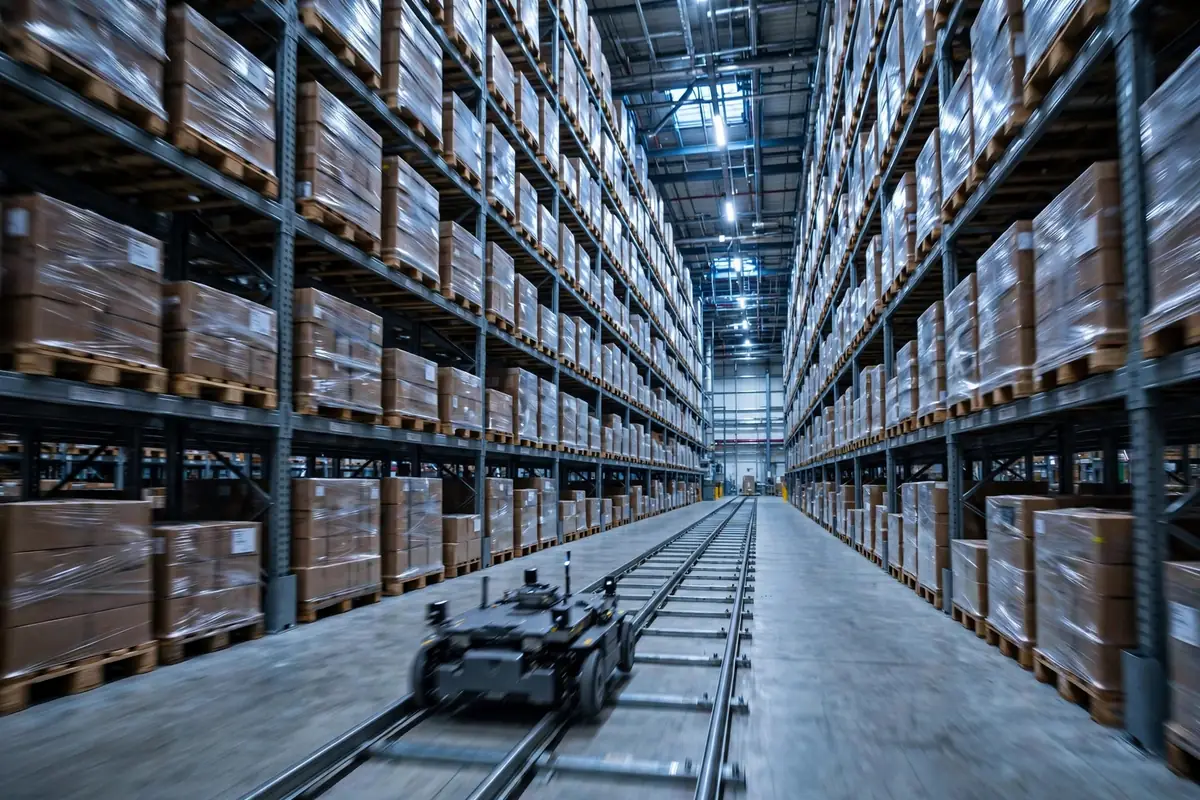
You can think of a four-way shuttle as a swarm of small flatbed carts that drive forward, backward, left, and right inside the rack levels, using a lift to change floors. One cart is not fast — about 3–4 meters per second horizontally — but there are many of them, a dozen or several dozen working at once. Its throughput is not about single-cart speed; it is about how many carts are online at the same time.
| Dimension | Stacker crane | Four-way shuttle | | Aisle height | 20–40 m | Typically 8–20 m | | Throughput per aisle | 25–35 pallets/hour | Scales with cart count | | SKU fit | Few SKUs, large batches | Many SKUs, many waves | | Single-point failure | One crane down, whole aisle down | One cart down, lose one cart's share | | Expansion | Add an aisle — a big project | Add carts — comparatively easy |
Two real warehouses make the contrast concrete. In 2023, a cold-storage site, 24 meters high, 3,200 SKUs, about 600 pallets a day in and out, mostly full pallets, installed four stacker crane aisles. A cold store hates people inside; the crane aisles run with no one in them, at minus 25 degrees Celsius, with staff only at the dock. In 2024, an e-commerce returns warehouse, more than 40,000 SKUs, over 2,000 pallets a day across eight waves, installed four-way shuttles — 42 carts. Returns SKUs are many and scattered; a stacker crane aisle would have queued up and choked. With 42 carts working in parallel, the waves go out together.
Both sites had one more thing in common: they chose on real data. The cold store brought a year of order history — full pallets were 87% of moves, with SKU velocity tiers mapped out. The returns warehouse brought its wave schedule and SKU growth curve. Without those three inputs — order profile, SKU velocity tiers, and a three-year growth forecast — a selection meeting is guesswork. I have sat through too many of those; without data, whoever shouts loudest wins.
One dimension people forget is energy and lighting. A crane aisle runs one big motor, drawing power only while it works. A shuttle system runs dozens of small carts plus lifts, each sipping power, plus a dedicated charging circuit. In a cold store the gap widens: crane aisles run dark except for maintenance lighting, while shuttle levels need lit service walkways. Pennies per pallet, but they add up over a year.
The Five-Dimension Decision Line: Stacker Crane or Four-Way Shuttle?
Order profile: mostly full pallets in and out, stacker crane; broken-case picking, mixed pallets, many waves, shuttle. SKU count: under 8,000, the crane pays; over 20,000, the shuttle. Daily throughput: under 800 pallets, one crane aisle is enough; over 1,500 pallets with many waves, the shuttle. Building height: over 20 meters, crane; under 14 meters, shuttle. Budget and growth: one big investment, stable for five years, crane; add carts in stages as the business grows, shuttle.
In a stacker crane vs four-way shuttle decision, when three of the five dimensions point the same way, the answer is set. If it is three against two, look at the sixth dimension: does your freight hate waiting? Cold chain and full-pallet customers hate waiting — take the crane. E-commerce waves hate congestion — take the shuttle.
There is also a hybrid answer: cranes for the bulk pallet zone, shuttles for the pick zone. Each machine does what it does best. The price is integration — the WMS has to split tasks across two systems, which is real implementation work. For a small, simple warehouse, skip it; for a large site with clearly separated zones, the hybrid is often the lowest total cost.
The maintenance traps deserve honesty too. The crane's trap is the rail and the forks: a few millimeters of rail settlement and the crane shudders as it runs, and the forks miss their position and trip alarms. Inspect the rails at least once a year — do not skip it. Fork chains and wire ropes are consumables; when their replacement cycle comes, do not stretch it — the downtime costs far more than the parts. The shuttle's trap is charging and scheduling: with many carts, charging queues, the dispatch algorithm, and lift bottlenecks are all system-level work. One dead cart is no heartbreak; a dead lift strands a whole level of carts. And the software upgrade window: upgrading a shuttle dispatch system takes the whole floor down, so never touch it before peak season — that is how accidents happen.
Here is the counterintuitive part: the highest-density option is often not the cheapest. A 40-meter crane gives beautiful pallets-per-square-meter numbers, but fire protection, rack steelwork, and foundation loads all climb with it, and the building work can eat everything the equipment saved. When you do the whole-project math, every extra five meters of height should start with one question: how much more does the building cost? Any selection that compares equipment prices only is not a selection at all.
Whether the money was well spent comes down to one number: fully loaded cost per pallet per year. The formula is (annual equipment depreciation + maintenance + energy + related labor) divided by annual pallet moves. By our warehouse's internal estimate, the cold-storage site above runs about $0.90 per pallet and the returns warehouse about $1.40 per pallet. The two numbers cannot be compared directly — different businesses — but run both options through the same formula for the same warehouse, and the lower one is your answer.
By Da Liu, Automation Engineer