ASRS double deep vs single deep rack is the question I get asked most often on automation projects, and most people ask it the wrong way. They ask how much more it stores. The right question is what it costs you in flexibility, because that is where the bill actually lands. A couple of years ago I walked a small-appliance warehouse where two stacker cranes were running fine, yet the warehouse manager kept complaining that the system reported no space while the racks clearly had gaps. I looked, and the single-deep racks were full of SKUs down to their last one or two pallets, with the empty slots all too small or too scattered to take a full pallet. Think of it like a fridge stuffed with small plates: the problem is not that the fridge is small, it is that everything inside is fragmented.
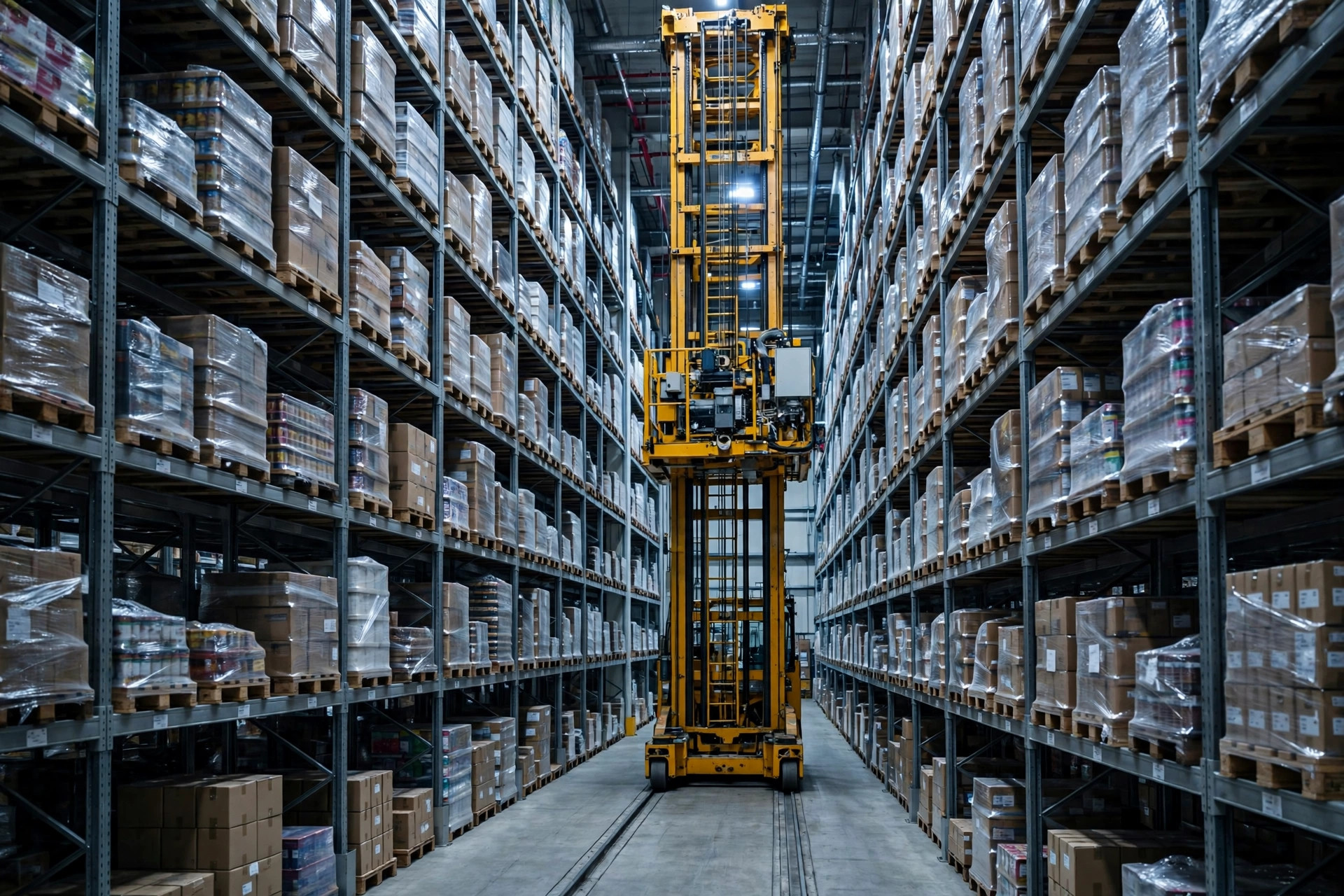
The principle is simple. In a single-deep rack, the fork reaches one pallet deep, and every slot is independently accessible — you take whichever pallet you want. In a double-deep rack, the fork is longer and reaches two pallets deep, so each lane holds one pallet in front and one behind, and the rear pallet is blocked by the front one. You can think of it like parking: single deep is a surface lot where every car drives straight out, while double deep is parking two cars nose to tail, so the inner car cannot leave until the outer one moves. Single deep sells flexibility. Double deep sells density. Nobody gets both.
ASRS double deep vs single deep rack: what double deep really buys you
Start with a hypothetical example. Take one aisle of fixed length: single deep gives you 100 pallet positions along it, double deep gives you 200. That doubling sounds dramatic, but the aisle itself, the crane, and the fire lanes do not shrink by a single inch. On an illustrative scenario basis, total pallet capacity for the building rises by roughly three-tenths; treat the exact figure as subject to the vendor's measured data. That extra capacity is not free: every time you need the rear pallet, you first move the front one out of the way. One extra move means extra time, and extra time means one more chance for something to go wrong.
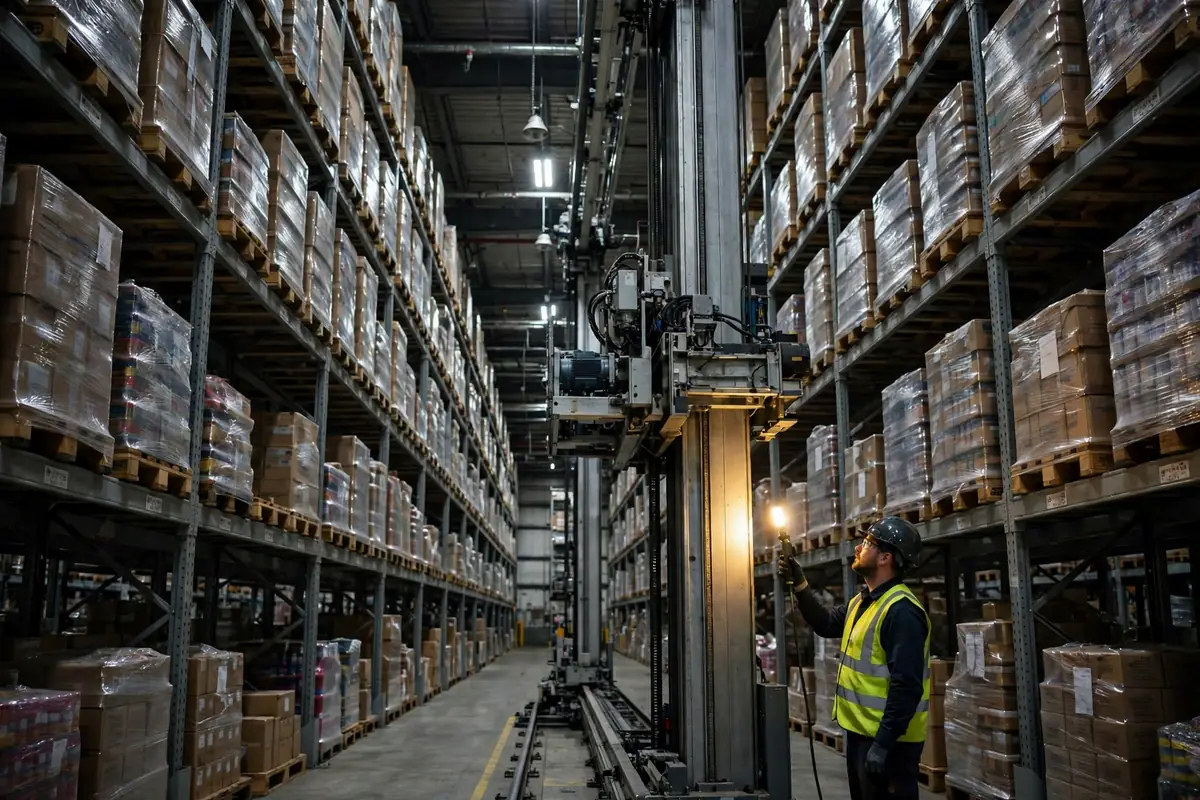
The crane has to change too. A fork that reaches the second position is longer and heavier, it deflects more under load, and the positioning accuracy it demands is actually higher. Double the fork travel and the single-cycle time stretches. In a hypothetical example, the same crane might complete around 40 pallets per cycle-hour in single deep and only a little over 30 in double deep; confirm against the vendor's measured data. More positions, slower moves — both sides of that ledger have to be counted together.
Aisle width is the part people forget. A longer fork needs its sway and safety clearances recalculated, and the aisle can end up wider than the single-deep design. Half the positions you saved on paper get eaten back by the aisle. Any density gain a salesperson quotes from memory should be backed by measured data, and if they cannot produce it, run your business case on the most conservative number.
ASRS double deep vs single deep rack: the dividing line is pallets per SKU
The dividing line is one number: how many pallets does each SKU hold on average?
Illustrative scenario one: a beverage distributor with fewer than 200 SKUs, each one sitting on 20 to 40 pallets year-round. This is where double deep shines. The front and rear pallets are usually the same SKU, moving the front one is no extra trouble, last-in-first-out does not hurt, and the density is a genuine gain. Slotting is easy, too, because pairing is almost automatic.
Illustrative scenario two: an auto-parts warehouse with four or five thousand SKUs, half of them holding only one or two pallets. Keep double deep far away from this building. The rear pallet might be a slow mover untouched for three months, while the front one is a fast mover picked every day. Every retrieval of the rear pallet forces a shuffle of the front one, the crane burns cycles on nothing, and pickers wait at the aisle end. Worse, the system eventually learns to avoid the shuffle and marks the rear positions as unusable — you end up running double deep as single deep, having paid for both.
There is a second dividing line that gets missed: throughput frequency. Double deep suits large batches moved infrequently. It punishes small batches picked frequently, because the shuffling eats back every square meter you saved. It is the same as parking cars two deep: fine when the lot is quiet, miserable at rush hour when everyone is trying to leave at once.
Three questions before you sign
The ASRS double deep vs single deep rack decision comes down to three questions. Answer all three before signing anything:
| Question | Double deep wins | Single deep wins |
|---|---|---|
| Average pallets per SKU | 8 or more | 3 or fewer |
| Outbound frequency | Low frequency, large batches | High frequency, fragmented picking |
| Aisle and fire clearance | Spare room for double lanes | Aisles already tight, strict fire rules |
If any one of the three lands in the right-hand column, slow down. If you sit in the middle, pilot one aisle for three months and let the real data decide — that beats ten review meetings.
Then there is the fire and safety bill. Deeper racks change sprinkler coverage and smoke detector layout, and aisle width cannot be set from the crane's turning radius alone — fire inspection access has to fit too. Some projects look fine on the drawing and then fail fire acceptance, and a whole row of racking comes back down. Treat figures of this kind as subject to the vendor's measured data and the local fire authority's requirements, never as a salesperson's verbal promise.
The maintenance traps nobody prices in
The first trap sits in the WMS slotting strategy. The system must pair the same SKU front and rear, ordered by outbound date. If the strategy is not configured, the system scatters pallets at random and the rear positions fill with dead stock — you paid for double deep and got single-deep behavior. At acceptance, do not just count positions; sample the rear slots and check which SKUs are actually sitting there.
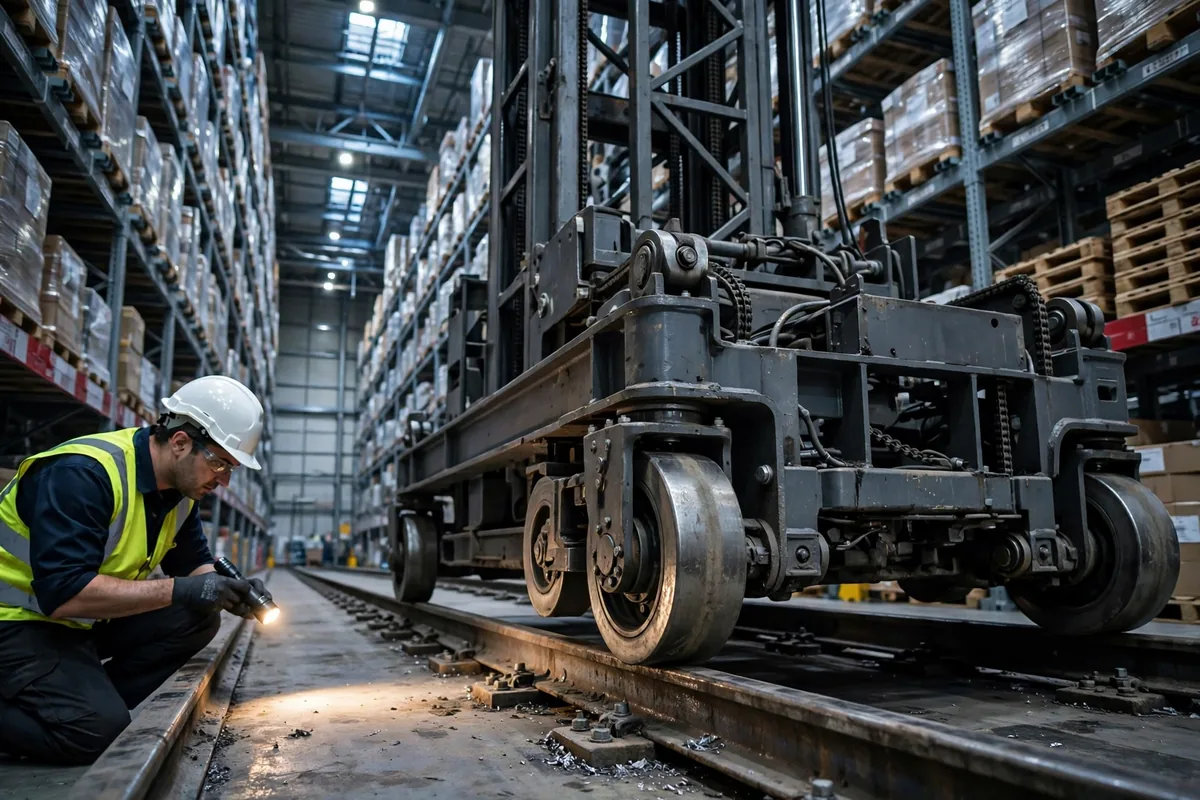
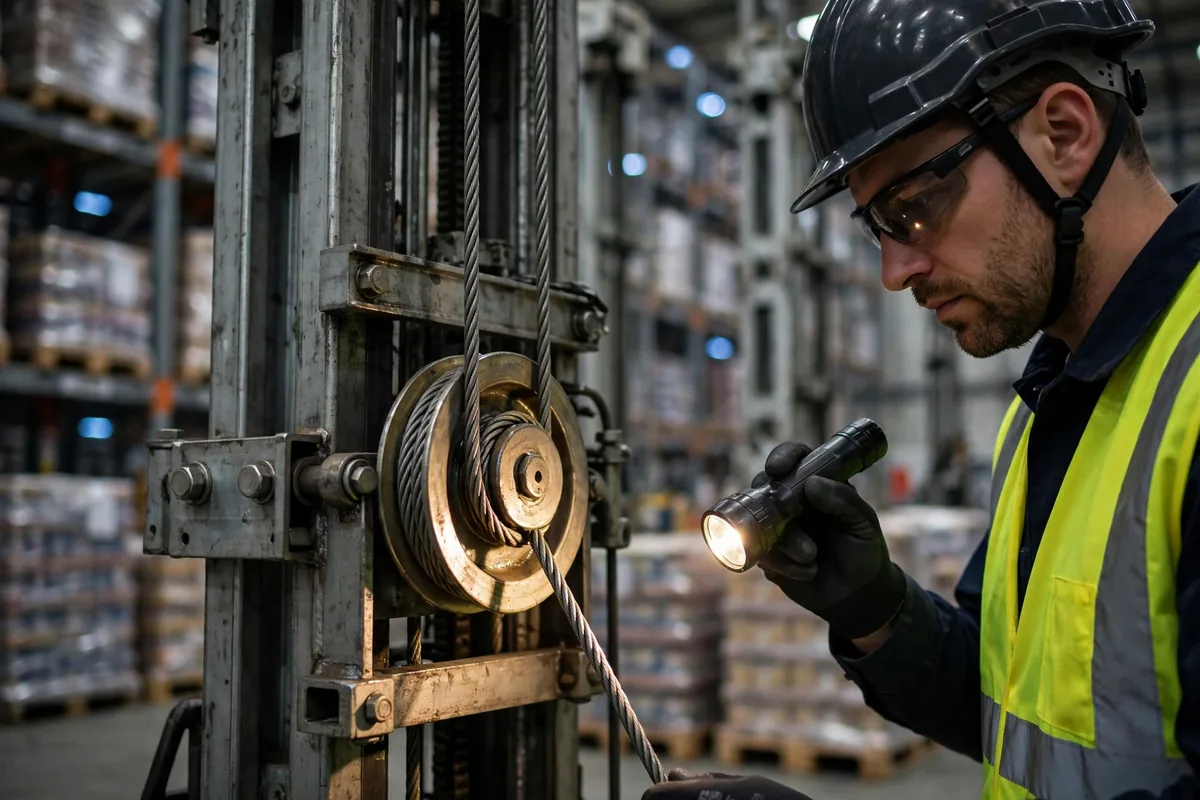
The second trap is maintenance. A longer fork wears its chains, guide rollers, and fork motor faster than a single-deep fork, so get the MTBF figure as a written commitment from the vendor, subject to the vendor's measured data. Once a fork bends, you get positioning alarms at best and a front pallet pushed off the rack at worst. I once saw a warehouse run a fork for two years without calibration until a worker fixed it with a hammer — after that day they calibrated every quarter and never skipped it again.
The third trap is believing you can change your mind later. Converting double deep back to single deep is not a fork swap: beam spacing, crane programs, and WMS strategy all move, and the retrofit can cost half a crane. Get this decision wrong and everything after it is damage control.
Here is the counterintuitive part: a higher utilization rate is not always better. I have seen a warehouse proudly report 92% utilization while half of that was rear-position dead stock and slow movers nobody could reach without a shuffle; the genuinely accessible positions were barely half the rack. Utilization only means something next to the share of positions you can reach directly. One number on its own is self-deception.
So the ASRS double deep vs single deep rack question — whether the money is worth it — comes down to one number: average pallets per SKU. Eight or more, go double deep with confidence. Three or fewer, stay single deep. In between, pilot one aisle for three months and let the data make the call.
By Da Liu, Automation Engineer