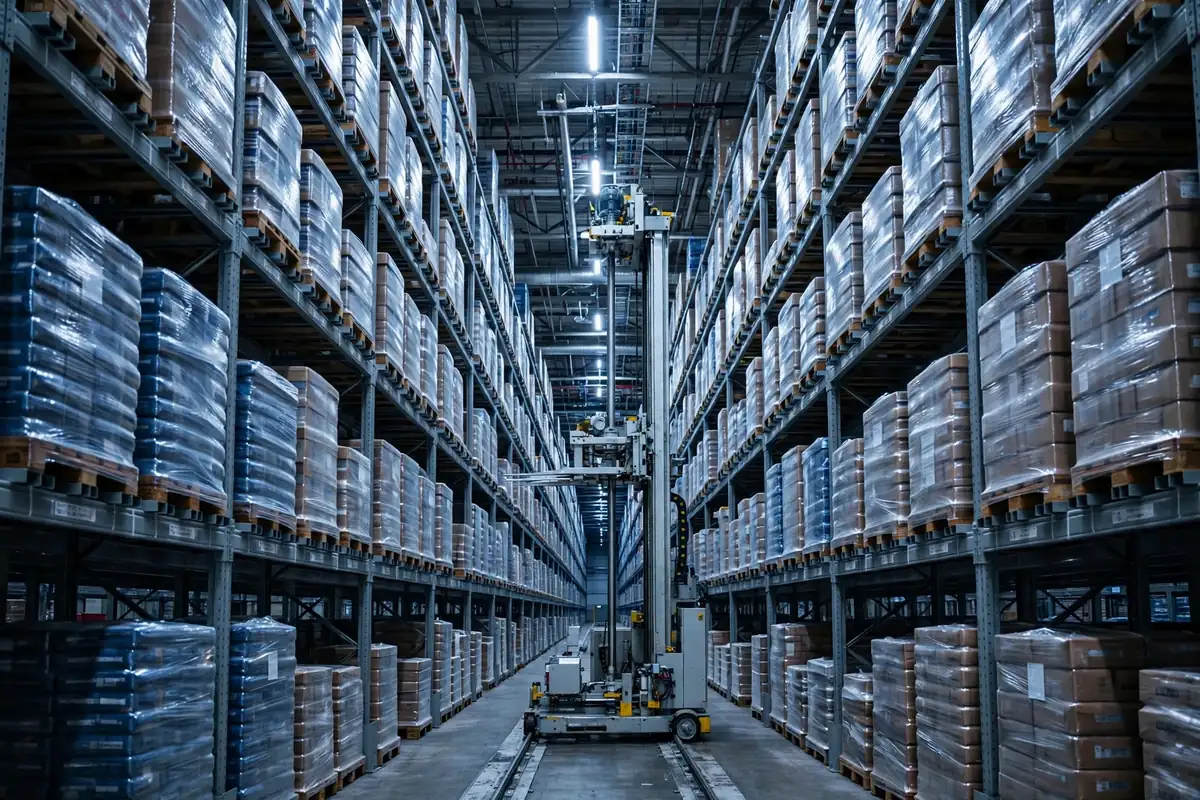
Here's the blunt truth about asrs stacker crane rail wear maintenance: most 3PL automated warehouses have no idea their rails are wearing out — until one morning in peak season, your product is stuck twenty meters up on a rack and nothing will bring it down.
I'm not an equipment engineer. I'm a seller. In September 2024, I was prepping for Black Friday with more than 8,000 units sitting in an ASRS warehouse near Los Angeles. On the morning of September 17, operations told me outbound was running slow — one aisle showed an "equipment fault." I figured it was a reboot-and-go situation. It wasn't. That aisle's stacker crane sat dead for three full days, and the pallets on those racks weren't coming down. The warehouse eventually shuffled stock out through other aisles and got my FBA shipment in five days late. Two of my best listings went out of stock the week before Black Friday. I won't put a number on what that cost me. But ever since, I ask one question before signing any 3PL contract: how do you handle stacker crane rail wear?
The Four Warning Signs of ASRS Stacker Crane Rail Wear
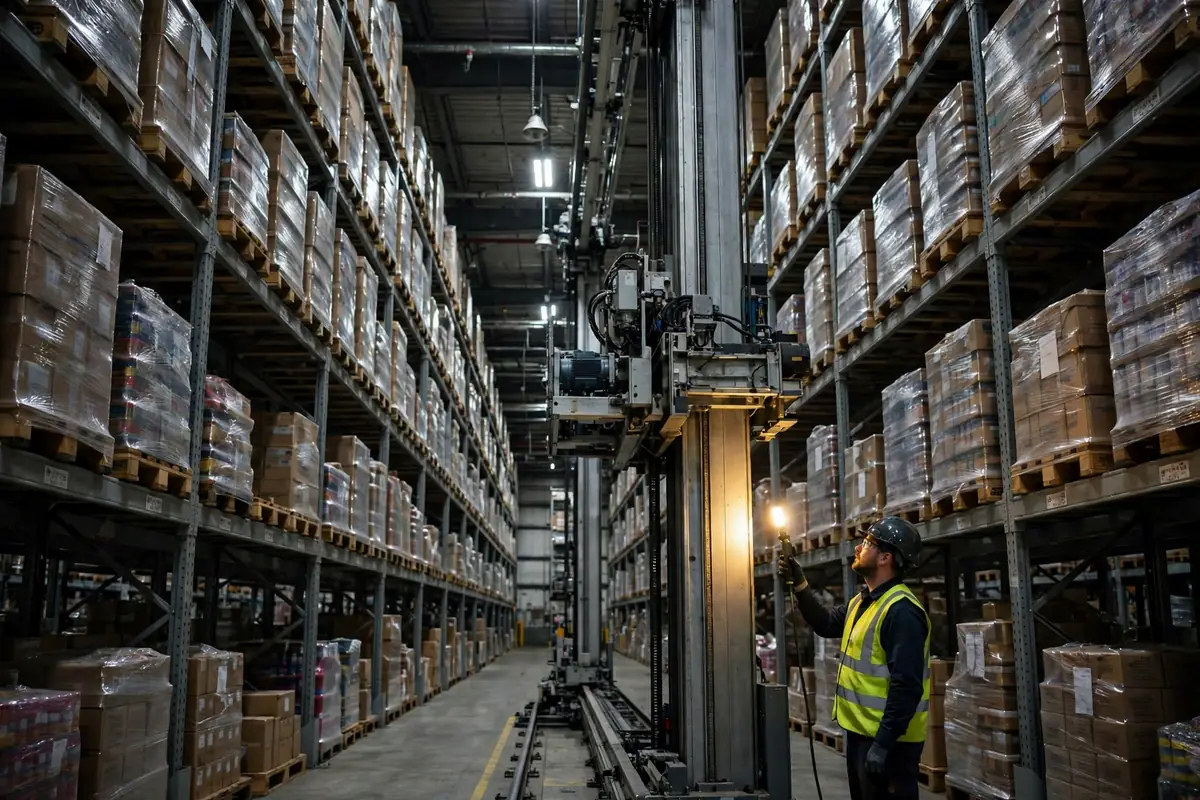
Nobody lies on the floor staring at rails on a normal day. But a rail sends you warning signals long before it fails. Someone just has to translate them.
The first signal is sound. A stacker crane running right makes an even, steady hum. When one stretch of track starts going "clunk, clunk" — and it happens at the same spot every single pass — that's usually a step worn into a rail joint, or a pit ground into the rail surface. In my 2024 case, the warehouse later admitted the noise had been there for nearly two weeks. They "thought it was normal aging." Steel doesn't suddenly change its voice. That's not aging, that's a warning.
The second signal is shake. If the forks shudder when they extend, or pallets keep landing a centimeter or two off their slot, most people blame the positioning system. Check the rail first. When the rail surface wears unevenly, the wheels run at different heights, the whole crane runs tilted, and no amount of software calibration fixes a crooked track.
The third signal is speed. The warehouse management system logs average travel speed and cycle time per aisle. If one aisle has quietly gotten slower over a few months, don't just blame old software. More wear means more rolling resistance, more wheel slip, and the crane derates itself to protect the drive. The data is already there — someone just has to look at it.
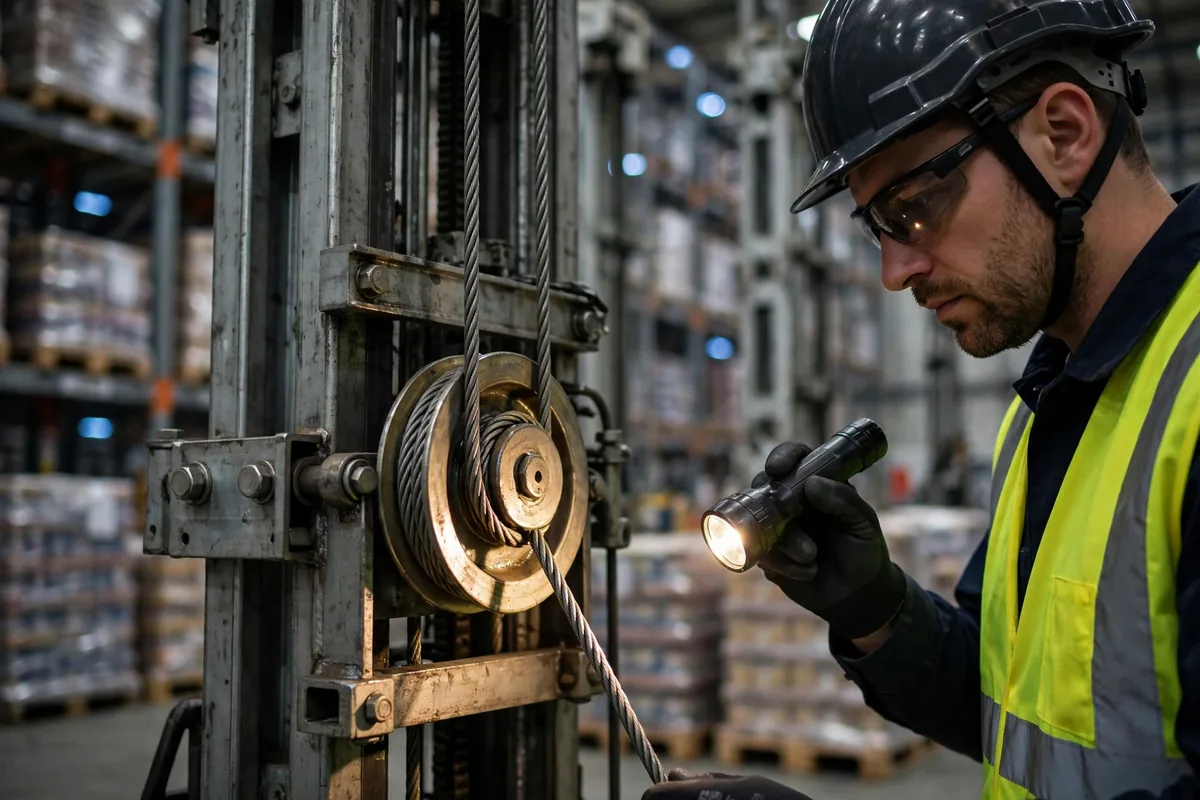
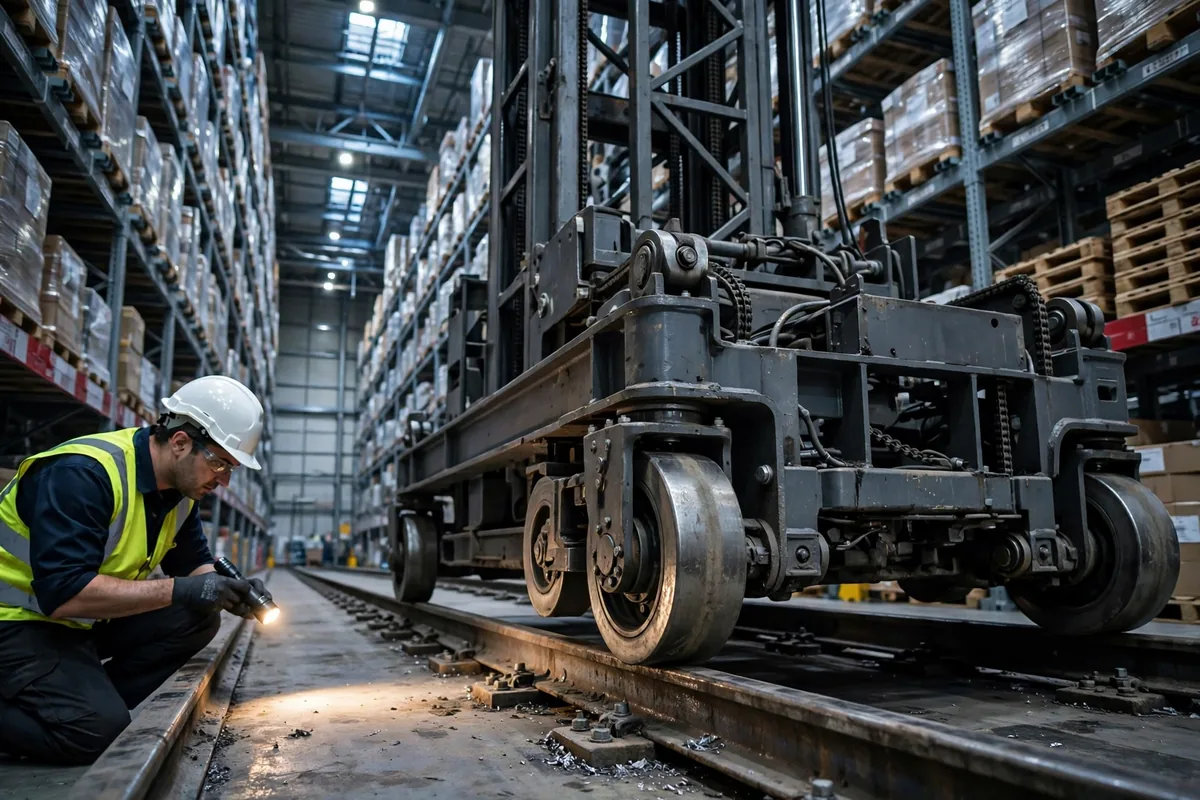
The fourth signal is the most direct one: look at the wheels. The wear pattern on a stacker crane's travel wheels is basically the rail's medical report. One side worn down and the other fine means the rail is no longer level. Spalling or pitting on the wheel surface means the rail face has damage. Next time you tour a warehouse, don't just stare at how tall the racks are. Crouch down and look at the wheels. It tells you more than the sales deck ever will.
What a Shutdown Costs vs. What ASRS Stacker Crane Rail Wear Maintenance Costs
I ran the numbers on this. These are illustrative figures for a mid-size ASRS facility — one crane, one aisle — and your mileage will vary, so treat them as a scenario, not a quote.
| Item | Illustrative scenario (one aisle / one crane) |
|---|---|
| Annual rail inspection + maintenance | Roughly $1,500–$3,000, including inspection, grinding, and fastener replacement |
| Partial rail replacement + 2 days of downtime | Roughly $12,000–$20,000, including parts, labor, and delayed outbound |
| Aisle down 3+ days in peak season | Hard to price: re-warehousing, expedited shipping, stockouts — often ten times the inspection cost |
See the pattern? The inspection isn't a cost. It's insurance. That's why asrs stacker crane rail wear maintenance belongs in the contract, not in a footnote — and the most expensive line is the one that never shows up on a repair quote — lost sales from stockouts, rush freight to move inventory elsewhere, and the trust you lose with customers. That all lands on your P&L, not the warehouse's.
Here's the counterintuitive part: a rail surface should be even and flat, not mirror-polished. People assume shinier is better. It isn't. Over-grinding one section creates a new low spot, the wheels bounce through it, and wear accelerates. Professional maintenance is measured by straightness over the full rail length and the height difference at joints — not by how bright one stretch looks. And here's another one: the worst wear is usually not on the fastest aisle, it's on the busiest one. Your bestsellers live there, the crane runs there all day, and that aisle wears out first. So annual inspections can't be spread evenly. The workhorse aisle deserves the closest look.
Six Questions a Seller Can Actually Ask
You don't need to know how to fix a rail. You need to know how to ask about it. Run through these six before you sign, and again before you renew. The quality of the answers tells you everything about the warehouse:
First, do you do a dedicated annual rail inspection, and what do you measure? A real answer includes straightness, surface wear, and joint height difference. Missing any one of those is a dodge.
Second, do you keep inspection records, and can clients see them? Three years of data laid side by side shows the wear trend at a glance. A warehouse that can't produce history probably isn't really inspecting.
Third, how do you schedule the downtime window? A serious operator puts rail work in the slow season, away from your shipping peaks — not the week before peak. If they can't tell you which days this year, there is no schedule.
Fourth, do you stock critical spares? Rail joints, travel wheels, fasteners — are they on the shelf? If they order after the failure, lead times run two weeks or more, and your inventory waits with them.
Fifth, what's the wear limit, and whose manual sets it? The answer should be a specific number from the equipment maker's manual, not "we judge by experience." Get it in writing, ideally as a contract appendix.
Sixth, what's the contingency plan when an aisle goes down? How does product get out — re-slotting, manual picking, a backup aisle? A warehouse with no plan is betting your inventory on a single rail.
Don't Wait Until Your Stock Is Stuck in Mid-Air
Here's the thing about asrs stacker crane rail wear maintenance from a seller's seat: you don't need to understand the engineering. You need the warehouse to know you're watching. A groove in a rail doesn't appear overnight. It grows a little every day, unnoticed, until one day it matters. Whether a warehouse will show you its inspection data, schedule maintenance in the slow season, and put it in the contract — that is the real test of whether they're reliable.
My routine now: every August, before peak prep, I ask for the rail inspection report and this year's maintenance dates. This works — I tested it myself. After I asked twice, the operations manager started volunteering "rails were just inspected, all good" before I even asked. Funny how that works: one question from a seller, and the warehouse starts paying attention.
Next time you tour a warehouse, don't just look up at the racks. Crouch down, look at the rail, and ask those six questions. This trick works — I tested it myself.
By Ah K, E-commerce Seller (5 yrs)