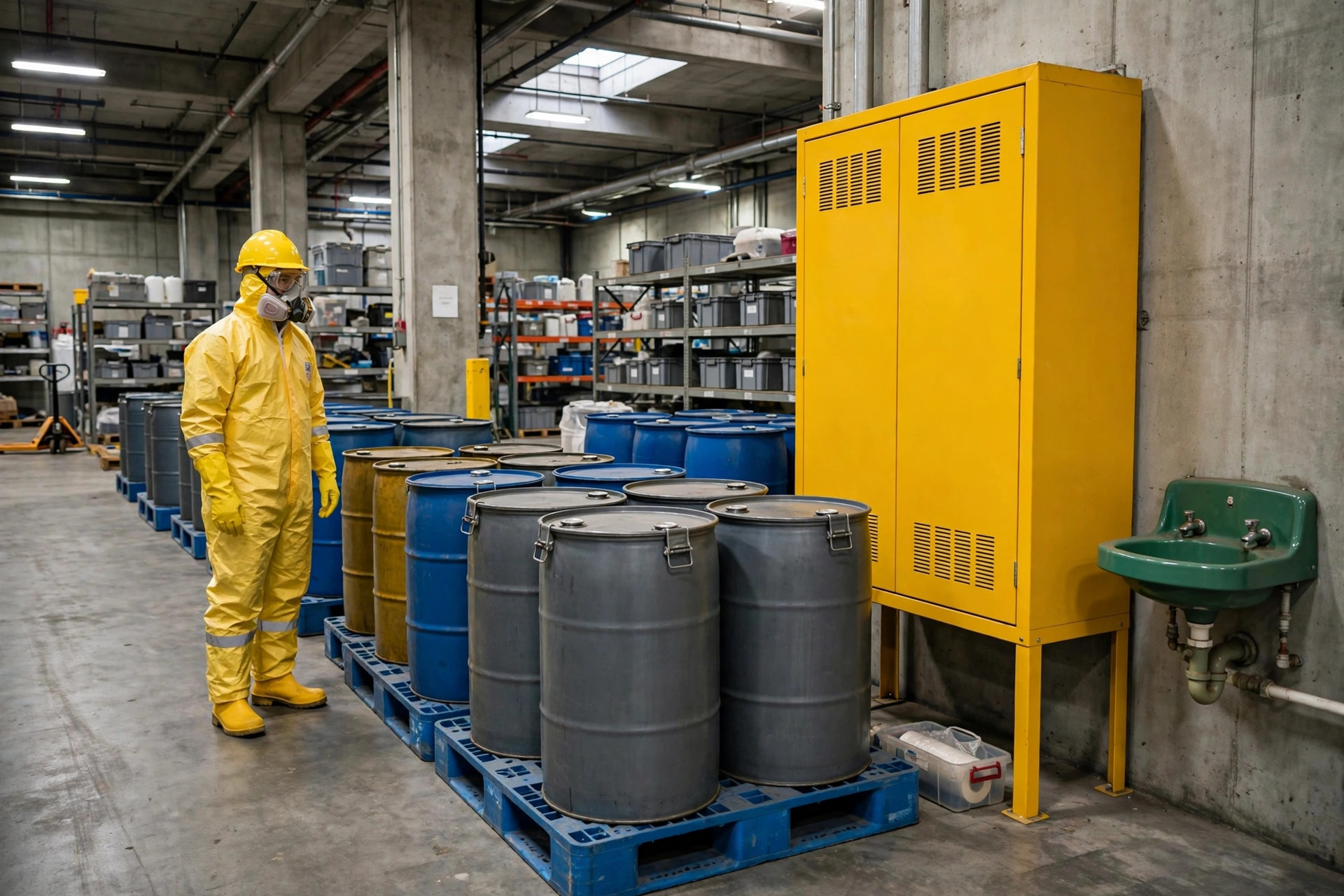
Let's start with the money. In January 2025, OSHA raised its maximum penalties: $16,550 per serious violation, $165,514 per willful or repeated one. The Hazard Communication standard (29 CFR 1910.1200) is the second most-cited standard in the country — more than 2,500 citations in the preliminary 2025 data, with industry figures putting the average HazCom citation at about $1,848.
Translation: one routine inspection that turns up four SDS problems costs you roughly $7,400 on the average math — or up to $66,200 if they stack at the maximum. And SDS management requirements for warehouse operators are only getting stricter: November 20, 2026 is the employer deadline under the revised HazCom standard (updated labels, written programs, and training for substances; mixtures follow on May 19, 2028). A decent SDS system costs a few hundred to a few thousand dollars a year in software, plus a few dozen staff hours. You don't need to run this math twice.
I've seen too many warehouses treat SDS as "a few sheets of paper in a binder" to show the inspector. That's wrong. SDS compliance is subscription work, not filing work — and with the deadline about a month away, inspections are only going to get sharper.
What the SDS management requirements actually demand: three things
Don't let the word "system" scare you. OSHA's demands break down into three items, and missing any one of them is a citable violation.
First, a written program. 29 CFR 1910.1200(e) requires every employer to maintain a written Hazard Communication program: who is responsible, how container labels work, how SDSs are collected and updated, how employees are trained. The most common first citation isn't a missing SDS — it's having no written program at all.
Second, a chemical inventory. List every hazardous chemical actually stored in your warehouse: product name, storage location, corresponding SDS version. The inventory is the index for your SDSs. Without it, your SDSs are a pile of loose paper.
Third, ready access plus training. Paragraph (g) requires SDSs to be readily accessible to employees during every shift, in the GHS-standard 16-section format. Paragraph (h) requires training: workers must know where to find an SDS and how to read the hazard information. Inspectors love stopping three random floor workers and asking, "Where's the SDS for this shipment?" If they can't answer, the citations start.
One thing most people don't know: suppliers are obligated to provide an SDS with the first shipment and to include the updated version with the next shipment after any revision. So if your SDS is expired, half the fault is yours for never asking, and half is yours for having no update calendar.
When you receive an SDS, spend five minutes checking two things: is it in the 16-section GHS format, and do Section 1 (product identification) and Section 14 (transport information) match the goods in your hands? If not, send it back to the supplier. And container labels are tied to the SDS — the pictograms and signal words on the label must match Section 2 of the SDS. A mismatch is its own citation item, and inspectors love tacking it on.
Do you need an SDS for every SKU?
This is the most-asked question. The answer: no. OSHA only requires SDSs for hazardous chemicals actually present in your workplace that employees may be exposed to, and they must be the current versions. Ordinary cardboard boxes and plastic pallets don't need them.
But 3PLs and e-commerce warehouses have a real-world trap: SKUs churn fast, and suppliers reformulate without telling you. Last year, a fulfillment warehouse near Dallas (anonymized) had a forklift driver puncture a drum of cleaning agent. The operator ran to the binder and pulled the SDS — dated 2019. The supplier had reformulated in 2023. When the ER doctor asked for the active ingredients, nobody in the warehouse could answer, so treatment had to assume the worst case. The workers' comp dispute dragged on for months. The fine was the small part of that bill; the medical and legal costs were the big part.
So my rule: gate every new SKU at receiving. Check it against the chemical inventory; if the packaging carries hazard markings or the product name looks suspicious, demand the latest SDS from the supplier before the goods enter the hazmat area. Over-coverage beats under-coverage.
Here's the counterintuitive part: a binder full of expired SDSs is worse than 20 current ones. People assume "having something is better than nothing." Wrong — when an inspector finds an expired version, it proves your system is unmaintained, and "unmaintained" reads worse in enforcement than a simple gap.
What it costs per year: three ways to build it
Put the numbers on the table and pick your own.
| Approach | Upfront | Annual cost | Biggest risk |
|---|---|---|---|
| Paper binder + Excel log | ~$0 | 30–50 staff hours/year | Updates depend entirely on people; you'll miss supplier revisions; highest miss rate |
| SDS management software subscription | ~$0 | A few hundred to a few thousand dollars + ~20 staff hours | Supplier updates push automatically; pick one whose chemical library covers your industry |
| One-time consultant buildout | A few thousand dollars | Ongoing maintenance, similar scale to software | Makes sense for multi-site; overkill for a single small warehouse |
Now look at the penalty column: 3–5 citations per inspection is common, which is $5,500–$9,200 on the average math, or $16,550 times the citation count at the maximum. That doesn't include the indirect costs — production stoppages for remediation, insurance premium hikes.
The decision formula is simple: more than ~20 hazmat SKUs, or suppliers that revise frequently, and software pays for itself. A small warehouse with few, stable SKUs can run on a binder plus Excel — but you must name one owner and fix a quarterly update calendar. A system with no owner is no system.
Run the break-even math one level deeper. At the public average of about $1,848 per HazCom citation, one citation equals 3–4 years of software subscription fees. In other words, if the system helps you avoid a single citation over three years, the software pays for itself. And for a warehouse handling hazmat, what are the odds of going three years without one inspection? If you run 3PL, you already know the answer.
3PLs have one more line item to settle: who pays for compliance. Too many warehouse contracts leave hazmat responsibilities vague, and when something happens the shipper says "I'm not the employer" while the warehouse says "it's your freight." OSHA cares about the employer — whoever's employees are exposed owns the obligation. So split the costs in the contract up front: either the shipper provides current SDSs and commits to update notifications, or the warehouse charges a compliance management fee. Don't wait for the fine to start the argument; every dollar then is pure loss.
The most expensive part of SDS management isn't the software
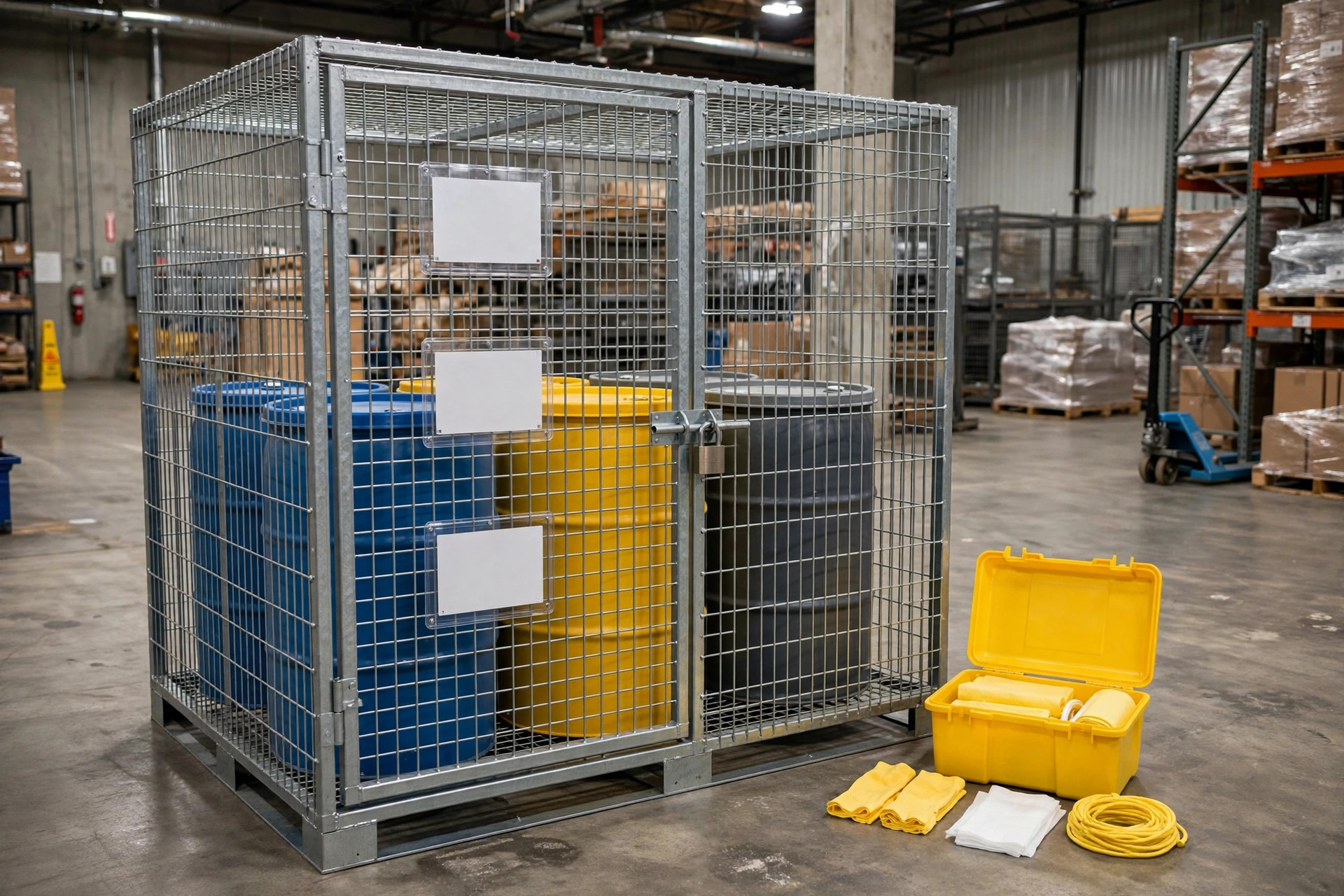
The costliest link in the whole chain is the update step with no owner. The supplier revised the SDS in May; you're still using the old version in November. Those six months, you're effectively unprotected — legally, the sheet in your hand is about the same as nothing.
A 3PL warehouse in Ontario, California (anonymized) learned this in 2024. During a routine OSHA inspection, the inspector asked three workers where the SDSs were and how to look one up; two couldn't answer. Then the binder: two SDSs were expired versions. Several HazCom citations followed — roughly $7,400 on the average-penalty math, with the actual settlement up to the lawyers. But the uglier number was the two weeks of hazmat-area disruption and overtime while they remediated. On the books, that hurt more than the fine.
Money spent the dumb way. A few hundred dollars a year in software, skipped — repaid with thousands in fines plus downtime. In finance terms, that's the classic "save pennies, spend dollars" trade.
Here's the calculable conclusion. Formula: penalty exposure = citation count × $1,848 (average) to $16,550 (per-item maximum); system annual cost = software subscription (hundreds to low thousands) + 20–50 staff hours. If your warehouse holds more than 20 hazmat SKUs, this investment has a positive return — several times over. Remember one thing: an SDS is not a file, it's a subscription. The day you build the archive is just the start; someone reviews updates monthly and spot-checks that workers can actually find an SDS quarterly, and only then is the system alive. Before the November 20, 2026 deadline, do these three things first: write the program, build the chemical inventory, and replace every expired SDS.
By Lao Zhou, Logistics Cost Analyst