Here's my verdict up front: as of today, federal OSHA still has no final heat-specific standard — but that doesn't mean you're off the hook. OSHA is already enforcing heat hazards through the General Duty Clause and its Heat-Illness Prevention National Emphasis Program, and California put a real indoor heat standard into force back in July 2024. Compliance was never about memorizing regulations. It's about doing the cost math.
The Pit I Watched Someone Fall Into
August 2024, a 3PL fulfillment warehouse in Southern California's Inland Empire. Two straight weeks above 100°F. An old metal-clad building, dock doors wide open for container unloading, two roof fans broken and nobody bothering to fix them. Around 3 p.m., a young guy loading containers at the dock went down — heat exhaustion, straight to the ER. OSHA showed up. They didn't cite a heat standard, because there isn't a final one to cite. They cited the General Duty Clause: did you provide water? Rest? Training? An emergency plan? The answer to all four was no.
I won't publish that company's private numbers, but here's how the math works. The ER visit and follow-up care ran through workers' comp, and their premium jumped a tier the following year. One serious OSHA violation runs into the tens of thousands of dollars — check osha.gov for current penalty amounts, they adjust annually. But the real damage wasn't the fine. A client heard about the incident and moved 30% of its volume elsewhere before peak season. Look at it from both sides: on one side there's the fine, on the other there's credibility. You can pay a fine. Losing a client's trust means rebuilding your entire peak-season labor plan from scratch.
I've seen too many owners make the same mistake: treating rest breaks as wasted productivity. Put it plainly — one heat-illness incident, with the downtime, the investigation, and the corrective action, costs more than an entire summer of cooling measures. Rest isn't a cost. It's insurance on production continuity.
Heat Rules for Your Warehouse: Federal vs. California
Two different realities, so let's separate them. At the federal level, OSHA published its Notice of Proposed Rulemaking for "Heat Injury and Illness Prevention in Outdoor and Indoor Work Settings" in August 2024, held public hearings in 2025, and as of 2026 the final rule still isn't out. Press reports suggest a supplemental proposal around December 2026 and final action near October 2027 — so a federal heat standard probably won't land anytime soon. Verify the current status at osha.gov.
But enforcement didn't wait for the rulemaking. Under the Heat NEP, on "heat priority days" — heat index of 80°F or higher — compliance officers can walk in unannounced to inspect heat hazards. The legal hook is the General Duty Clause: employers must keep the workplace free of recognized hazards, and heat illness is a recognized hazard. So stop asking "the federal standard isn't final, so do I have to do anything?" The answer is yes. One side note: some reports say heat-related inspections have dipped in the last couple of years. Doesn't matter. One employee complaint or one ambulance on site is all it takes to trigger a visit. Betting against that is a bad bet.
California is a different animal. Cal/OSHA's indoor heat standard took effect July 23, 2024: at 82°F employers must provide water, cool-down areas, training, and acclimatization procedures. At 87°F — or at 82°F where workers wear heat-retaining clothing or face high radiant heat — additional monitoring and control measures kick in. The outdoor rule is older still, with high-heat procedures above 95°F. If you run a warehouse in California, this is hard law, every line of it.
The Cost Math: What OSHA Heat Illness Compliance Actually Costs a Warehouse
I ran the numbers for a mid-size operation — 50 people, June through September. Order-of-magnitude figures, not quotes:
| Item | Seasonal / one-time cost (ballpark) |
|---|---|
| Water stations: coolers + cups + electrolyte mix, 4–6 points | A few hundred to ~$1–2k |
| Big fans: 2–4 HVLS ceiling fans or dock fans | A few thousand dollars |
| Rest area: A/C for the break room or portable evaporative coolers | ~$1–2k |
| Training + written prevention plan + heat-index monitoring | A few hundred dollars (mostly time) |
| Scheduled cool-down breaks: 20–30 extra minutes per person on hot days | A few percent of peak-season labor |
Now the other side of the ledger: a single serious OSHA violation starts in the tens of thousands of dollars. One heat-exhaustion ER trip brings a workers' comp premium hike, an OSHA inspection, and client audit questions — the hidden costs clear six figures without breaking a sweat. You can do this arithmetic yourself.
Here's the contrarian take most managers miss: they file "rest" under pure cost. But in hot conditions, effective output is already falling — dehydration drives up picking error rates and slows people down. That's physiology, not attitude. OSHA's hydration guidance calls for 4–6 ounces of cool water every 15–20 minutes during heat exposure. Give workers scheduled cool-down breaks and what you get back is stable error rates, nobody collapsing, and a schedule that holds. Two sides to it: the few minutes of "lost" rest time, or the entire line staying up. Your call.
The Four Things That Actually Work: Water, Rest, Shade, Acclimatization
Whatever the final federal rule says, these four work right now, in priority order:
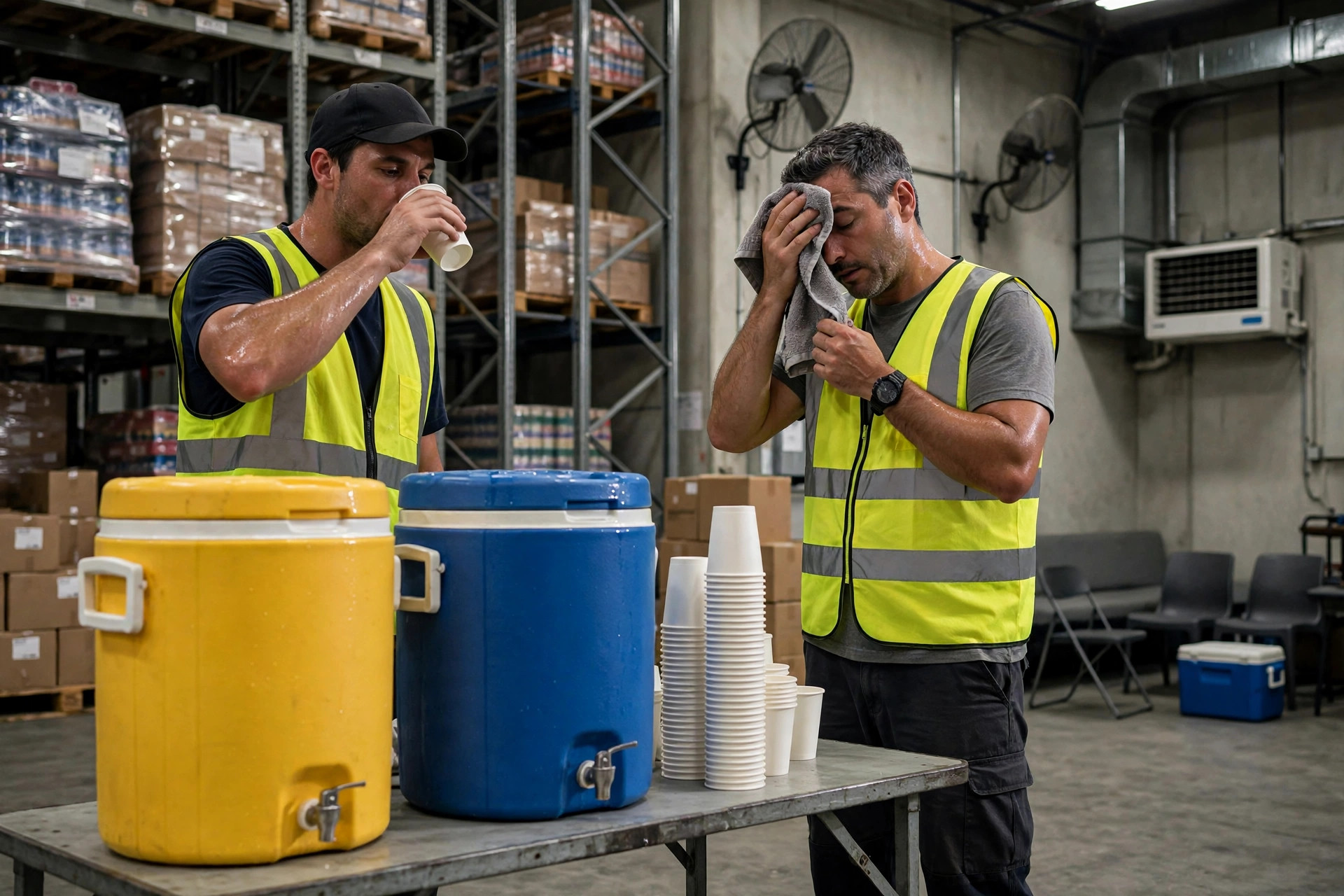
- Water: cool, close, and plentiful. Put water stations where workers can reach them in a few steps — the dock, the pick modules, everywhere. Don't count on people "going to find water when they're thirsty." By the time they're thirsty, it's already late.
- Rest: scheduled and on demand. Write cool-down breaks into the hot-day schedule. Anyone feeling off can step into the cool-down area anytime — no penalty, no questions. Indoors, that's the air-conditioned break room; for outdoor or semi-outdoor work, that's a shade structure.
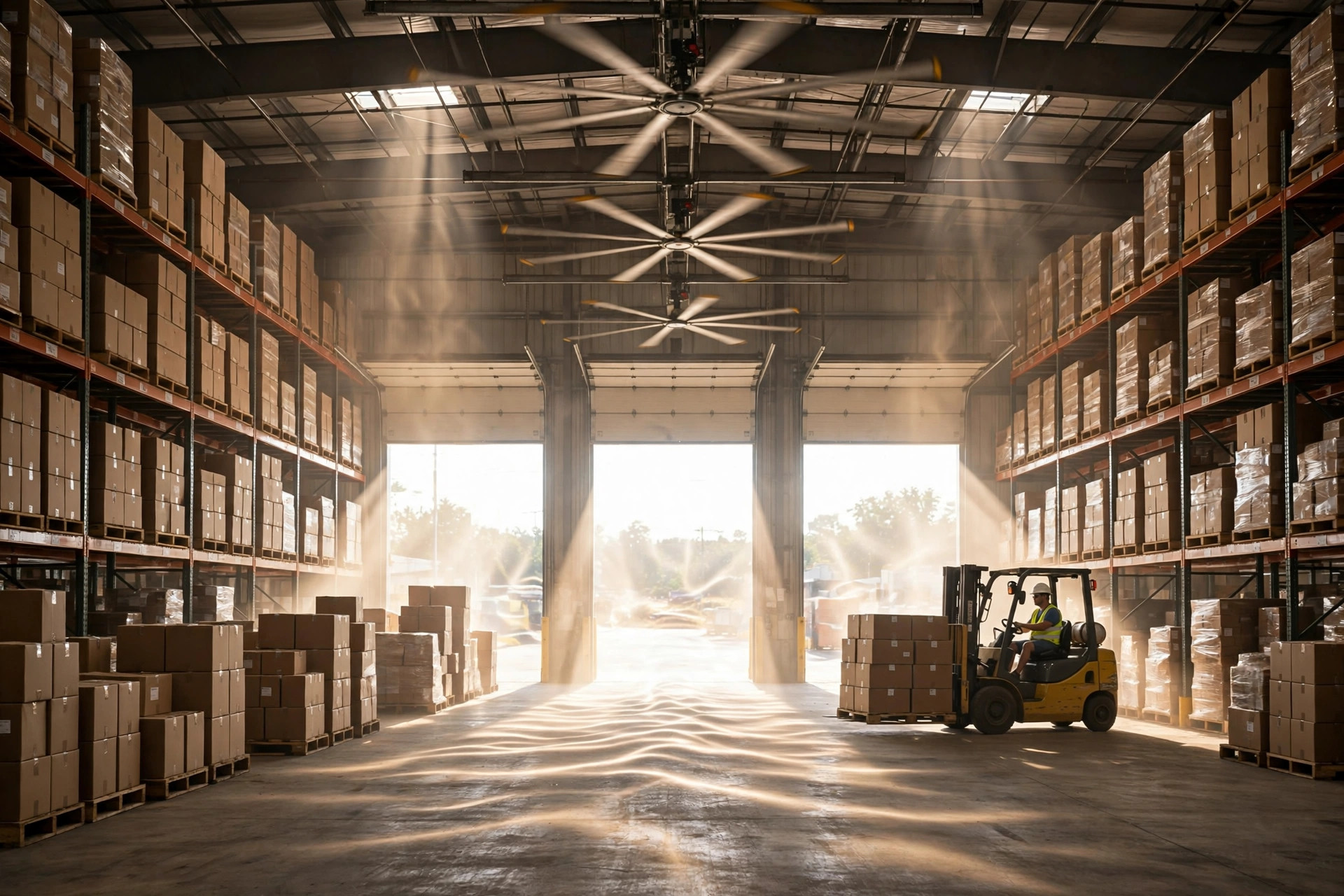
- Shade and cooling. Indoors, it's ventilation plus cool-down zones — HVLS fans, airflow through the dock doors, and temperature monitoring in hot spots like mezzanine pick areas near the roof. None of it is optional.
- Acclimatization. New hires and anyone back after a week-plus absence ramp up over about five days — the proposed rule floated starting at 20% exposure on day one, building to 100%. NIOSH research has long shown new workers account for a disproportionate share of heat-related fatalities. Throwing peak-season temps into full shifts on day one is the most dangerous schedule you can write.
The Question
So it comes down to a choice: spend a few thousand dollars before summer getting water, rest, and cool-down areas in place — or roll the dice that nobody goes down this summer and OSHA doesn't knock.
Win the bet, and you saved a few grand. Lose it?
By Lao Mi, Supply Chain Veteran (20 yrs)