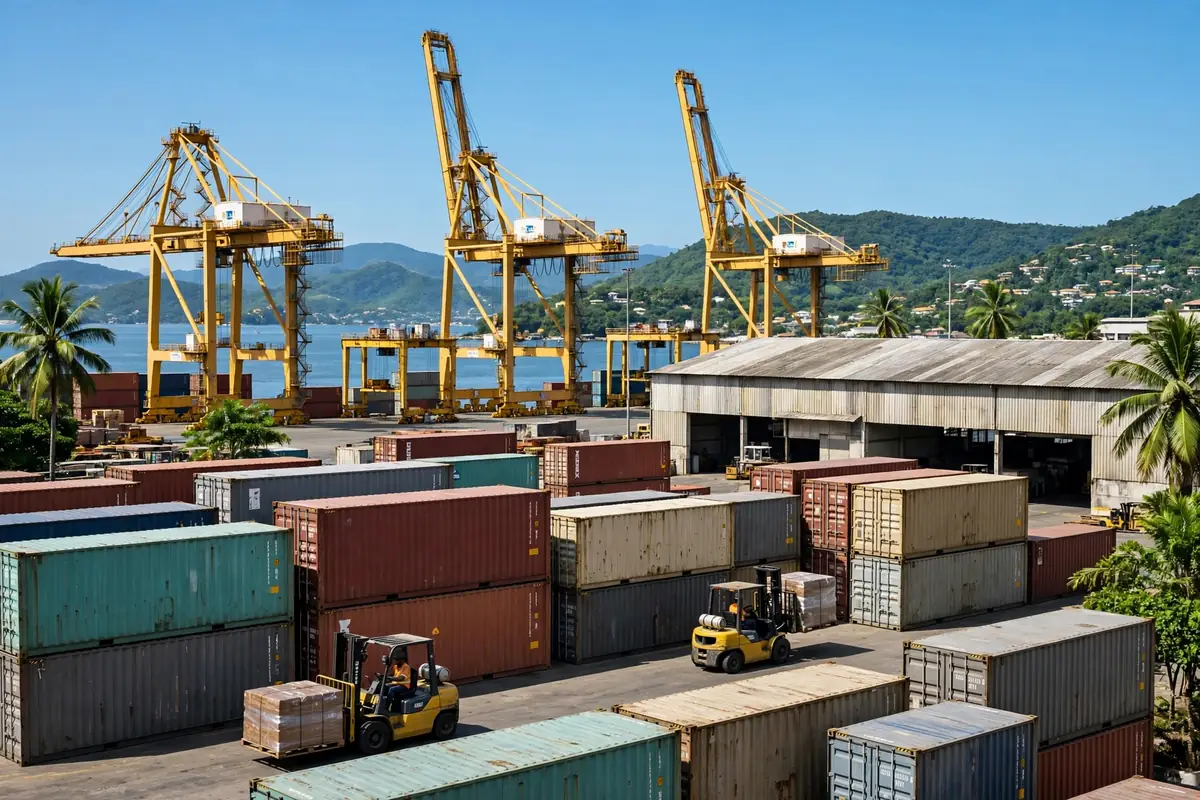
We had a client selling affordable daily chemicals into Brazil. For years his containers landed, cleared, and sat in a warehouse near São Paulo, and everything for the Northeast was re-shipped north on long-haul trucks. Then he came to me with a plan to open his own position in Salvador, and his first question was the one I hear every quarter: "Susan, putting the warehouse right by the port is the cheapest option, right?" I told him that is only half true. With Salvador Bahia Brazil port warehouse logistics, the savings do not come from how close your warehouse sits to the quay. They come from knowing exactly who your cargo is sold to once it leaves the container.
Salvador Bahia Brazil port warehouse logistics starts with one question: where does the freight actually go?
Bahia is one of the biggest consumer states in Brazil's Northeast, and Salvador, its capital, is a gateway market in its own right. Many overseas sellers still picture Brazil as São Paulo plus Rio and treat the Northeast as remote, poor, and not worth a local warehouse. I have walked the wholesale districts and retail chains there with clients, and I will give you the opposite verdict: the Northeast is not the leftover corner of the Brazilian market. It is a fully formed regional market, with its own wholesalers, its own retail chains, and its own buying rhythm. Keep your stock in São Paulo and truck it north order by order, and your freight bill and your lead times will keep paying for that hesitation.
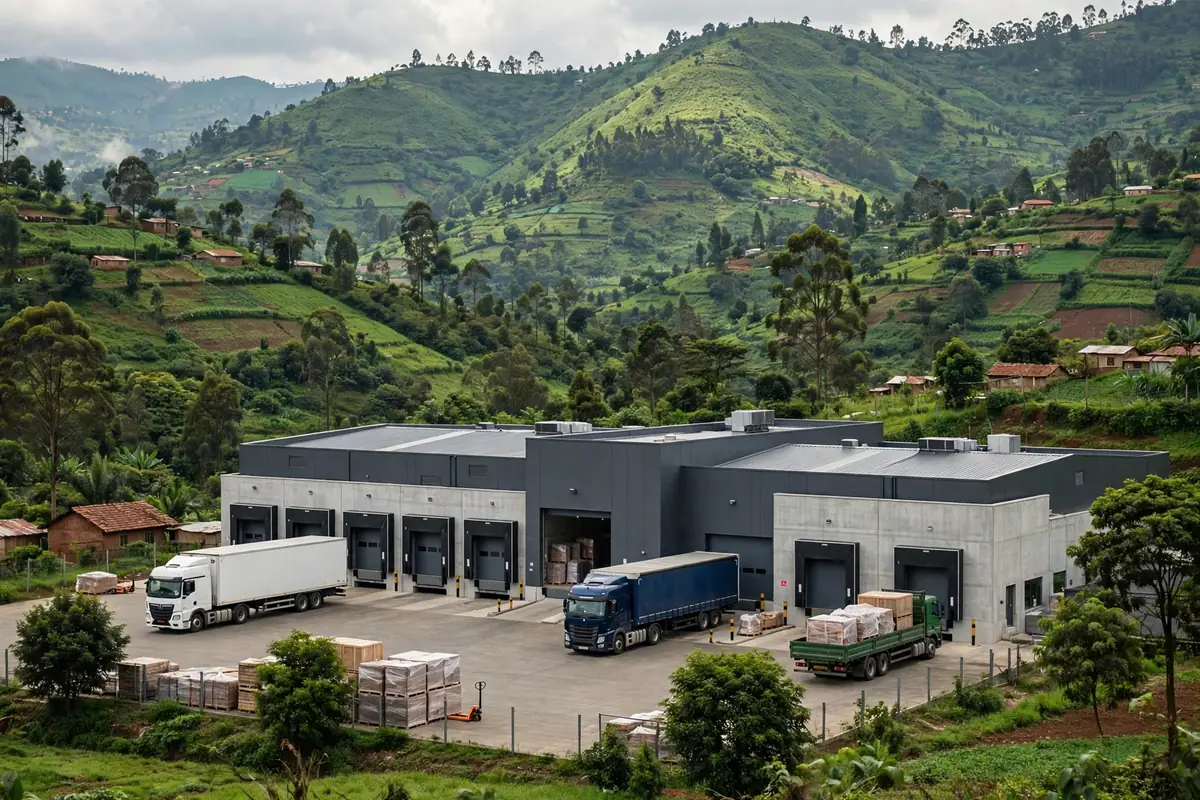
Back to my chemicals client. His volume was serious, his range was narrow — mostly personal care and home cleaning lines that sell by the case — and his buyers were spread across Salvador's metro area and a handful of inland Bahian cities. His own first draft of a plan was a big warehouse near the port zone: cheaper rent, close to the terminal, easy container pickups. It sounded sensible. I asked him not to sign anything and to pull one quarter of orders grouped by delivery city. The spreadsheet ended the argument. More than sixty percent of his orders were delivered inside Salvador and its metro area. Most of the rest went elsewhere within the state. Genuine portside transshipment, full containers moving straight through, was under ten percent. He was about to rent a transshipment warehouse to do a city distribution job.
Portside warehouse or city distribution warehouse: rent is the smallest difference
I ran the numbers with him using the comparison below. I am giving you structure and relative scale, not quoted rates — every operator prices differently and rates move, so verify current local pricing before you sign anything.
| Factor | Portside warehouse | City distribution warehouse |
|---|---|---|
| Rent level | Lower, with larger floor plates and room to expand | Higher per square metre, but small footprints are easy to find |
| Inbound link | Fastest container pickup and devanning, less demurrage pressure | One extra short drayage leg, cheap but needs scheduling |
| Delivery radius | Built for outbound regional freight; city last-mile runs are awkward | Covers the metro area with steadier next-day performance |
| Best-fit cargo | Full-container transshipment, bulk, slow-moving stock | Fast-moving consumer goods, e-commerce parcels, products building distribution |
| Tax note | Cross-state selling triggers state tax mechanics that must be modelled first | Mostly in-state selling keeps the paperwork chain simpler |
Watch the last row, because it is the one that bites. ICMS is a state-level circulation tax in Brazil. Which state your goods are warehoused in, and which state they are sold into, changes how the tax is calculated and credited. That is exactly why experienced sellers often warehouse inside the state they sell into. Rates and incentive schemes differ by state and change over time, so I never let a client rely on a number I quote verbally — check the latest local tax rules, and before signing, have a local accountant model both routings: portside entry with cross-state shipping, versus in-state warehousing with in-state sales. I have signed over a hundred warehousing contracts, and I have seen more than one client pay several times the rent difference in extra tax because nobody modelled this before choosing the site.
My chemicals client ended up in a city warehouse, roughly half the size of his original plan. His rent per square metre went up. His last-mile cost and damage rate went down, and his total cost went down with them. More importantly, once delivery times stabilised, his local distributors were willing to hold more stock. His sell-through came from reliability, not from a cheap warehouse.
The second client got the opposite answer
Another client imports appliance parts and small building materials: high value, slow turning, sold to wholesalers across several Northeastern states who collect by the pallet and the truckload. His problem was a São Paulo warehouse that burst every peak season, and he wanted overflow capacity in the Northeast. My advice to him was the exact opposite: go portside. His freight does no last-mile delivery at all. Wholesalers collect with their own trucks or take full truckloads out of state, so a city warehouse's delivery advantage was worthless to him, while large floor space, low rent, and easy devanning were everything. He signed the portside site, and we fought to get one clause into his contract that most buyers never think to ask for: guaranteed priority space in peak season.
Same port, two clients, opposite answers. That is why I say Salvador Bahia Brazil port warehouse logistics has no standard answer, only a fitted one. And here is the counterintuitive part I make every client sit with: the Northeast being far from São Paulo is not its weakness. It is the entire reason a local warehouse exists. Precisely because the line-haul is long and its lead times wobble, forward-stocking in Salvador pays. If the Northeast were close to São Paulo, nobody would need a warehouse there at all.
Three things your provider will not volunteer
First, the storage rate on the quotation is the small money. Handling, devanning, sorting, labelling, and returns processing are where invoices grow teeth, and if you do not price every line before signing, your monthly bill will keep surprising you. Second, in a Brazilian warehouse contract, nail down the peak-season terms and the minimum billed area: how much space is guaranteed when you need it, how far you can shrink when you do not, in writing. Third, do not lock customs brokerage and warehousing into a single provider if you can avoid it. Bundle them, and you lose your ability to benchmark prices or move warehouses later. Clients usually blink when a provider's own sales director says that out loud. It is still true.
Before you sign a Salvador warehouse contract, ask these three questions
I will close the way I always close. Question one: "Here are my orders mapped by city — will you put your delivery coverage and lead times for them into the contract?" Question two: "Will you sit down with my accountant and model the tax cost of both routings before we choose the site?" Question three: "How do we write the flexibility clause — guaranteed space in peak season, reduced billed area in the low season?" A warehouse that answers all three head-on has earned your cargo. The Salvador market is not waiting for anyone, and with the right warehouse, the Northeast stops being the far end of your network and becomes the closest ground you hold to your competitors.
By Susan, 3PL Sales Director