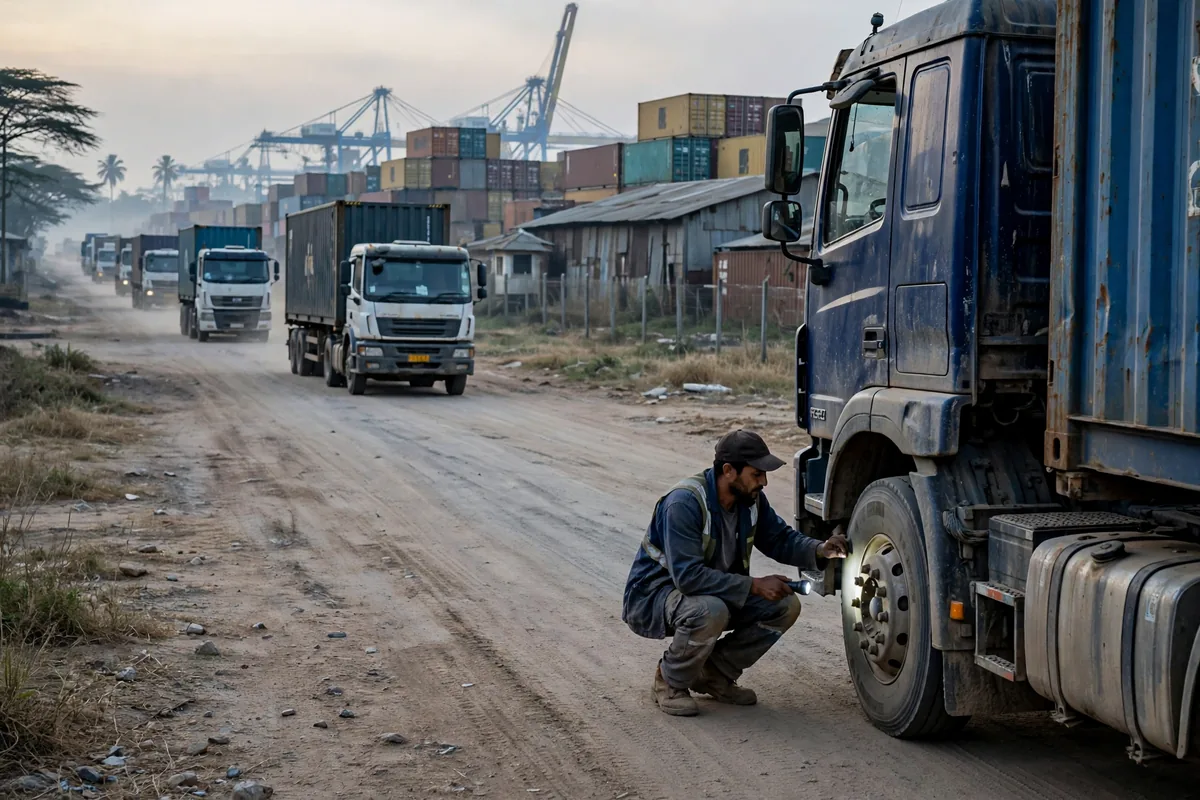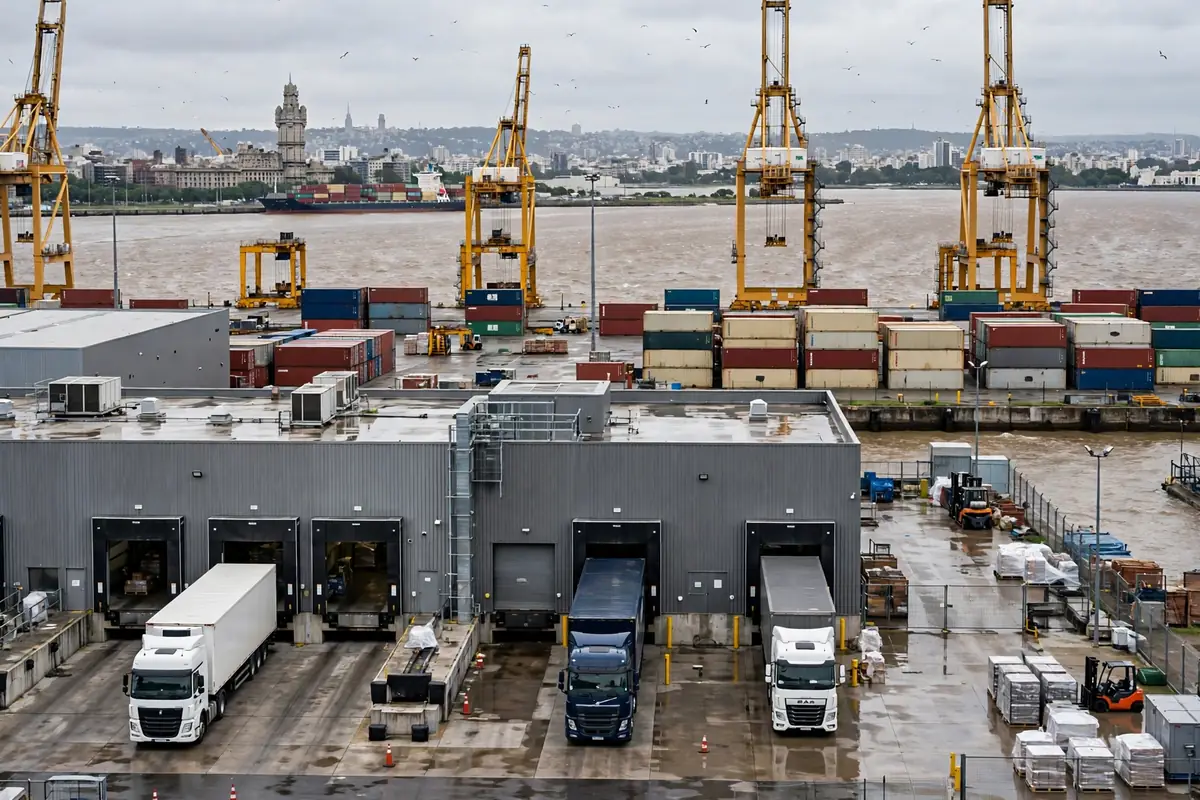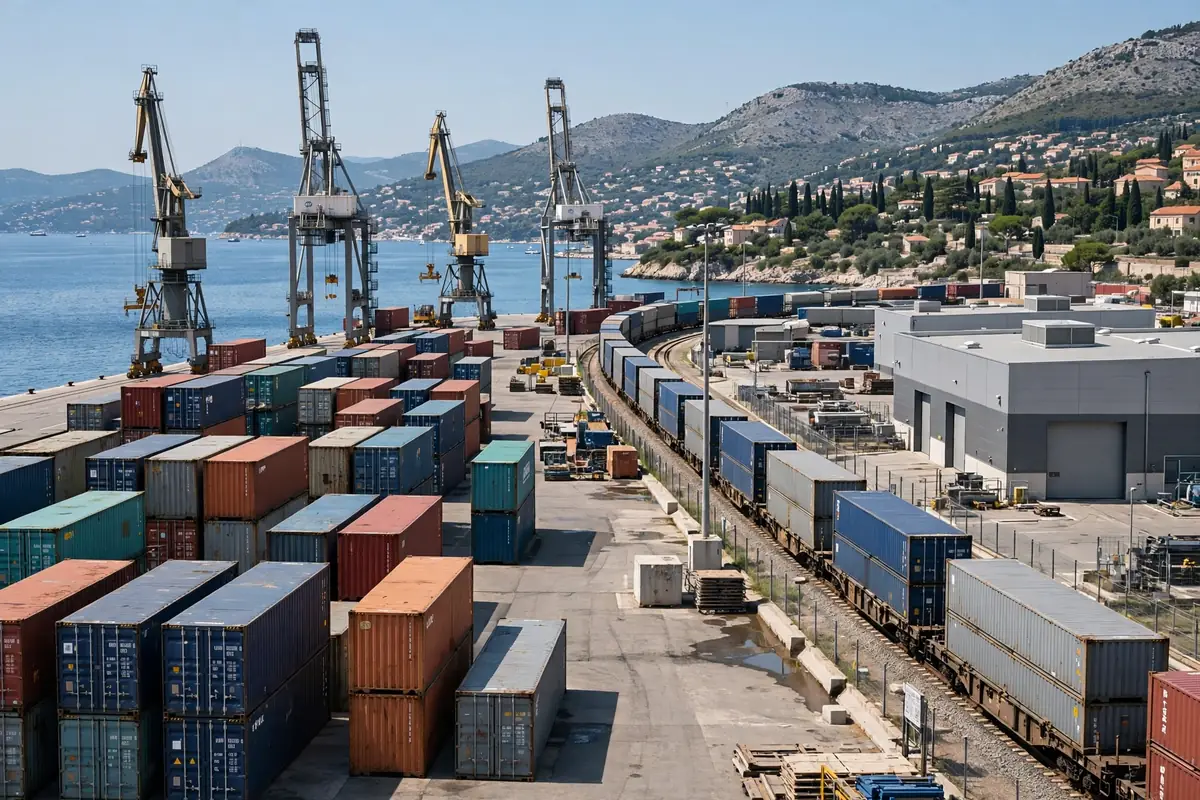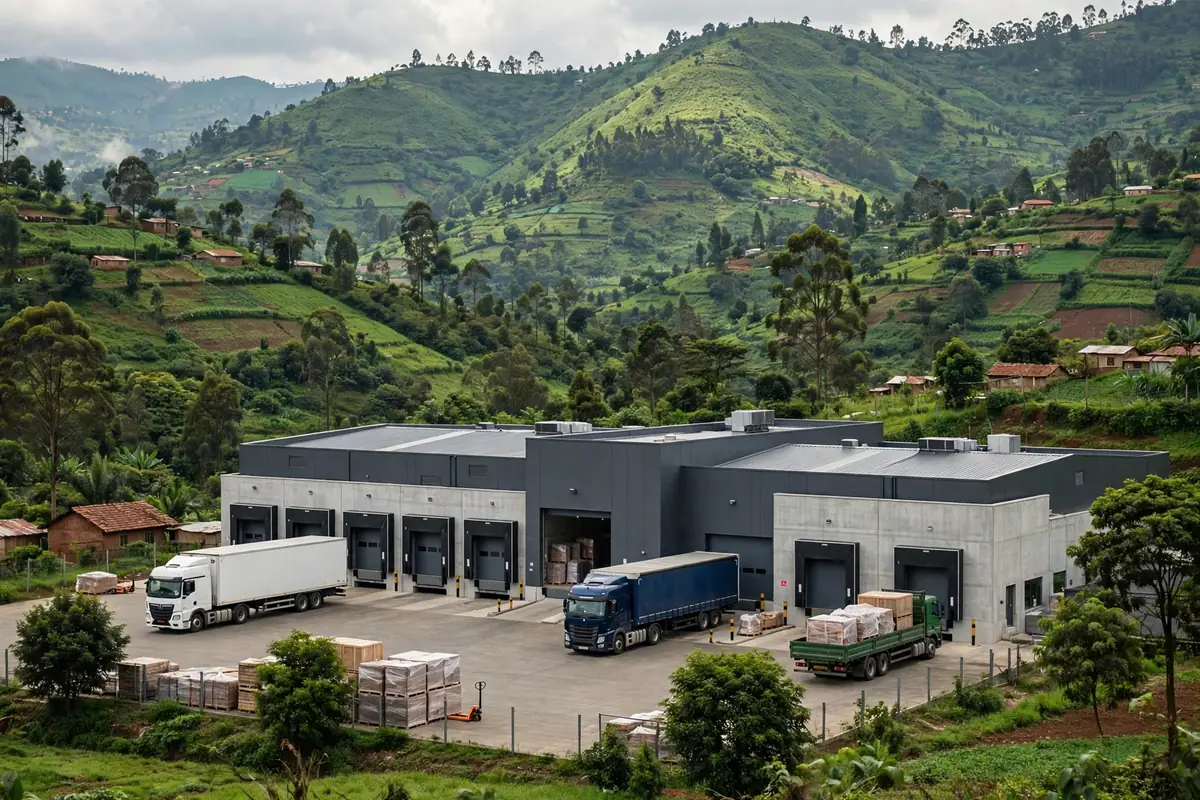
Any serious discussion of kigali rwanda warehouse logistics has to begin with geography. Kigali is a landlocked capital, and its warehousing performance is, first of all, a corridor problem rather than a warehouse problem. According to regional logistics studies and the long-running observations of corridor operators, Rwanda's imports move mainly through two gateways: the port of Dar es Salaam in Tanzania and the port of Mombasa in Kenya. The Dar es Salaam corridor generally carries the larger share, while the Mombasa route retains value for certain cargo types and for shippers who want routing optionality. Both corridors run well over a thousand kilometres to Kigali, crossing border posts, weighbridges, and different national transport systems. In other words, the inventory a company must hold in Kigali is largely a function of corridor uncertainty.
The Phenomenon Behind Kigali Rwanda Warehouse Logistics: Stockouts That Start on the Road
A phenomenon that research on inland distribution networks tends to underestimate is this: many of the stockouts companies experience in Kigali do not originate in local picking or put-away at all. Traced back, they originate in transit-time variability that exceeds what safety stock was designed to absorb. Based on operator interviews and field observation, a routine consumer-goods shipment travelling from port to available stock in Kigali can differ by several days — sometimes considerably more — between a smooth run and a disrupted one. Rainy-season road conditions, border queues, and port congestion all widen that spread. The wider the spread, the deeper the inventory a company is forced to hold in Kigali, and the higher its warehousing cost. That is a verifiable causal chain, not a rhetorical flourish.
A note on data discipline is warranted here. This article does not rely on single-source statistics that cannot be cross-checked. Where distances, lead times, or costs appear, they are given as operational ranges or as explicitly labelled case assumptions. A researcher should prefer a conservative conclusion to an elegant model built on a precise but unverifiable number.
Case One: A Regional Trader on the Dar es Salaam Corridor
The first case is drawn from the published operating experience of a regional distributor of everyday consumer goods, generalised here into a representative scenario. The trader's cargo entered via the Dar es Salaam corridor, was held in a regional warehouse in Kigali, and was then distributed in smaller lots within Rwanda and onward to Burundi and eastern DR Congo. Its early problem was not insufficient space. It was unpredictable arrival rhythm: when containers landed together, the warehouse overflowed; in the gap between arrivals, channels stocked out.
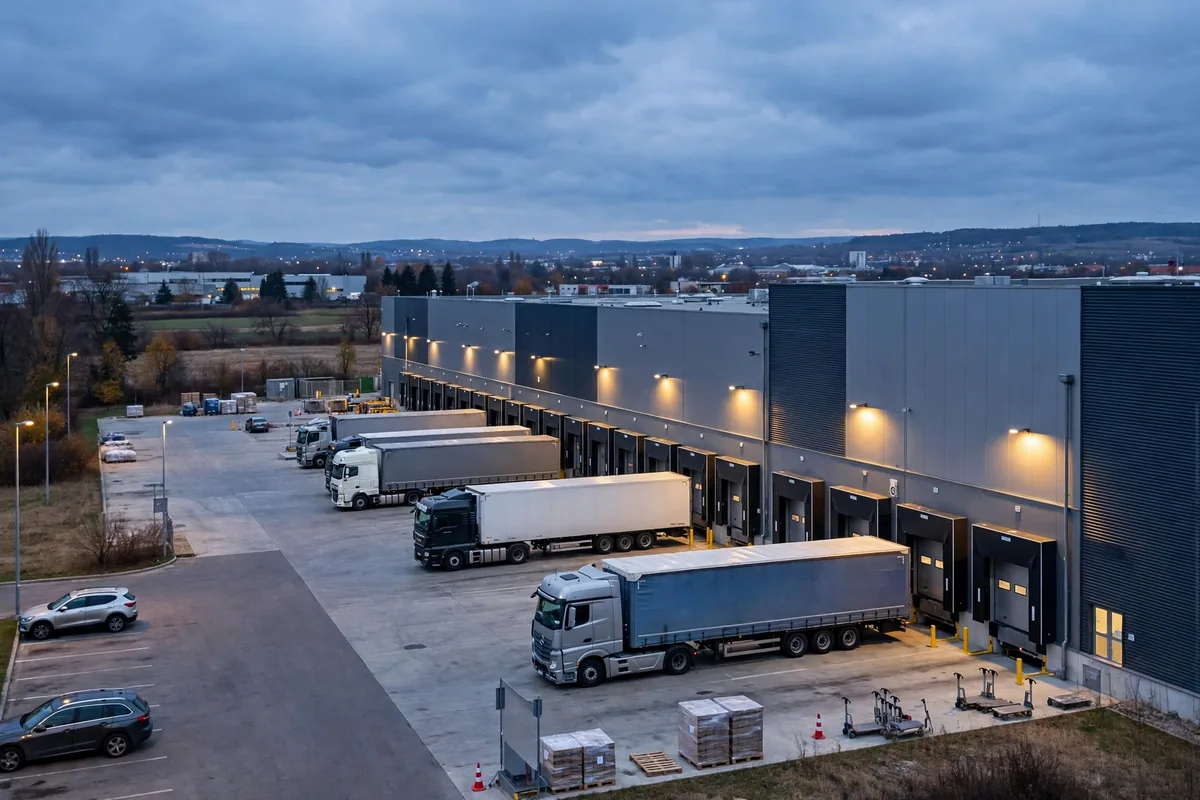
Two adjustments followed. First, the Kigali facility was redefined as a combined bonded and distribution node. Customs status and sellable status were strictly separated in the system: uncleared goods occupied bonded locations only, and stock became distributable only after duty was settled, so that financial and compliance status could not contaminate physical status. Second, the replenishment trigger changed from a simple unit threshold to a formula that included in-transit quantity against a threshold sized for corridor variability. As a case assumption, if a category ships an average of 120 cases per day and transit variability is planned at five days, variability alone requires roughly 600 cases of buffer — before any base safety stock. The point of the arithmetic is not the figure itself. It is that in Kigali, a replenishment model without a corridor variable cannot be rescued by any amount of optimisation inside the four walls.
Case Two: Small-Lot Distribution into Eastern DR Congo and Burundi
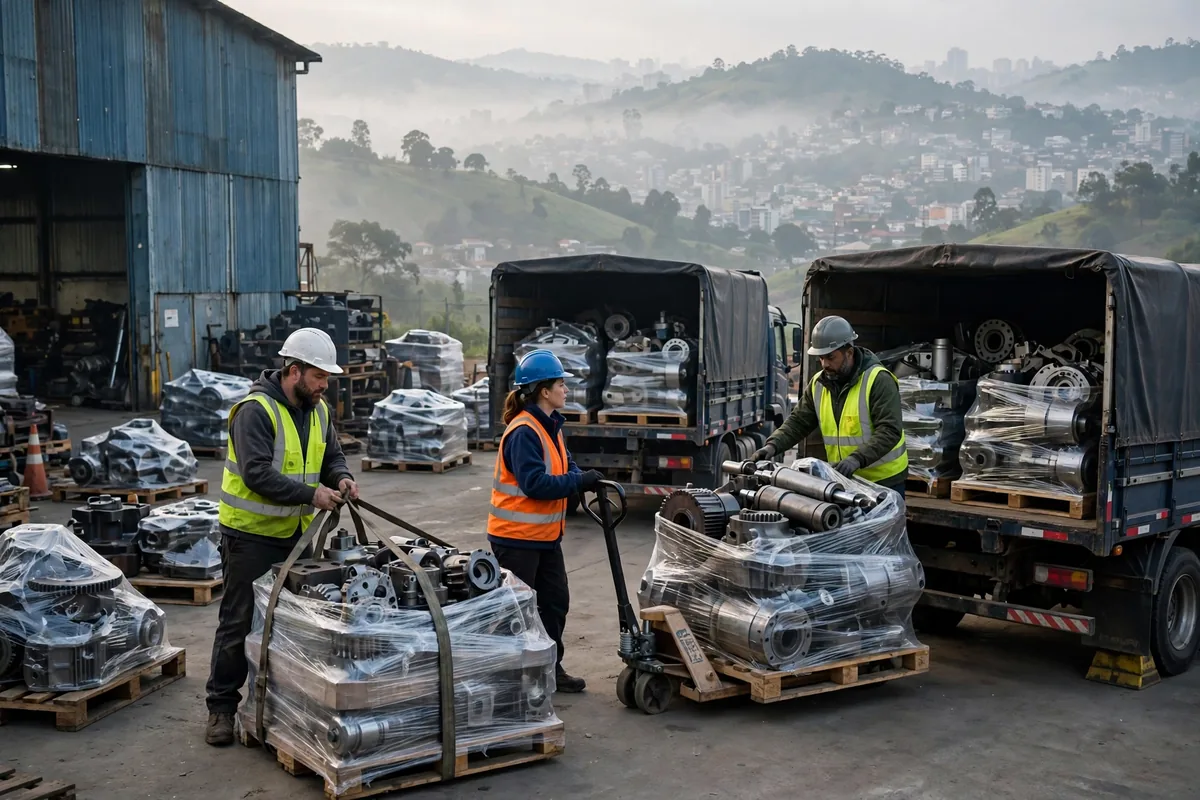
The second case shows the node's value more sharply. A building-materials and hardware distributor did not use Kigali for bulk stockpiling. It used the city as a break-bulk point: full truckloads and containers arrived in Kigali and were split into smaller consignments for border-trade cities in eastern DR Congo and for the Burundian market. The logic is straightforward. Downstream customers order in small quantities across many product lines, with uneven payment rhythms. Shipping full batches directly from the port leaves freight costs unabsorbed and asks customers to absorb inventory they cannot carry.
In this setting, the warehouse's core competence is not floor area. It is the speed and accuracy of splitting, labelling, re-palletising, and documentation. Field observation of such operations suggests a common pattern: a single small-lot order may contain dozens of line items in modest quantities each, and picking errors cluster around similar specifications and look-alike packaging rather than around quantities. The distributor's response was to consolidate departures by destination into weekly shipping windows, and to pre-zone warehouse locations by destination market. The lesson generalises: the value of the Kigali node cannot be measured by rent and labour alone. It must include the working capital and double-handling that downstream buyers avoid because the node exists.
Attribution in Kigali Rwanda Warehouse Logistics: Why Bonded Warehousing Is the Pivotal Variable
Against a backdrop of two corridors and multi-country distribution, bonded warehousing deserves to be understood differently. On the surface it is a duty-deferral instrument. In substance, it is an instrument for postponing inventory decisions. Goods can be positioned in Kigali under bond, and the company can decide — once real downstream demand is visible — whether to clear them into the Rwandan market or move them onward under a transit or re-export arrangement. The firm no longer has to bet on the final market while the cargo is still at the port.
| Decision dimension | Direct shipment from port | Bonded holding plus break-bulk in Kigali | What to test |
|---|---|---|---|
| Inventory commitment | Locked in at dispatch | Can be re-routed after arrival | The more uncertain demand is, the more postponement is worth |
| Consignment size | Full container or truckload | Can be split and consolidated | Small downstream orders raise the value of splitting |
| Cash flow | Duty and freight paid up front | Duty can follow the clearance rhythm | Confirm current rules with a licensed broker |
| Risk exposure | Full exposure to corridor and border variability | Variability partly absorbed by buffer stock | Buffer depth depends on in-transit data quality |
The same framework yields a counter-judgment. If volumes are large, the destination is single, and the downstream buyer can accept full batches, an additional break-bulk node in Kigali is simply extra handling. A node's value is always relative to the structure of the freight flow; there is no scenario-free sense in which a regional hub is automatically superior.
A Trend Judgment, With Conditions Attached
Pulling the threads together, I would frame Kigali's warehousing outlook over the next several years as follows. First, any improvement in corridor infrastructure or border clearance will show up initially as narrower transit-time variability, and only later as lower inventories; the transmission takes time and will not be immediate. Second, competition among Kigali facilities is likely to shift from the mere availability of space toward integrated capability — bonded handling, break-bulk, documentation, and regional delivery in one service — while plain space rental commands less and less premium. Third, small-lot demand toward eastern DR Congo and Burundi appears structurally resilient, because it rests on real wholesale and retail structures rather than short-term arbitrage.
Each of these judgments carries conditions. Corridor policy, border arrangements, and market access in neighbouring countries can all change, and with them the freight structure that makes the node work. The indicators worth tracking, therefore, are not quarterly volumes but three more basic variables: the variability band of transit times on both corridors, the turnover structure of bonded inventory, and the line-item density of small-lot orders. Track those three over a longer horizon, and the question of whether Kigali is a transitional node or a durable regional distribution centre may become answerable. For now, the evidence supports cautious confidence — and continued observation.
By Dr. Chen, Supply Chain Researcher