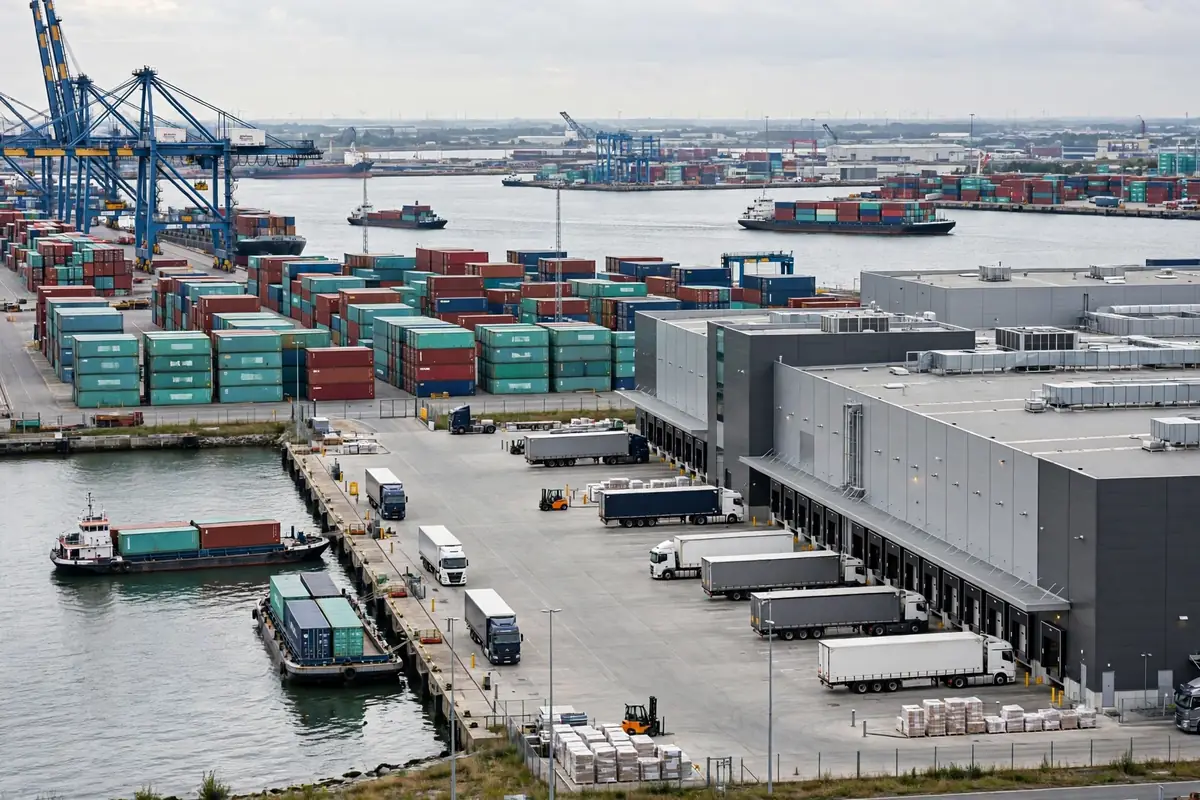
Let me give you the conclusion first on rotterdam warehouse distribution netherlands: the warehouse next to the port is not the default answer. I have seen too many sellers land in the Netherlands, drive straight to the port area, and fall in love with a clean dock and a short dray. What they are buying is convenience and a fast inbound leg. What they are paying is a rent premium, every month, whether they use that convenience or not. This cuts both ways, so let me talk about the cost before I talk about the benefit.
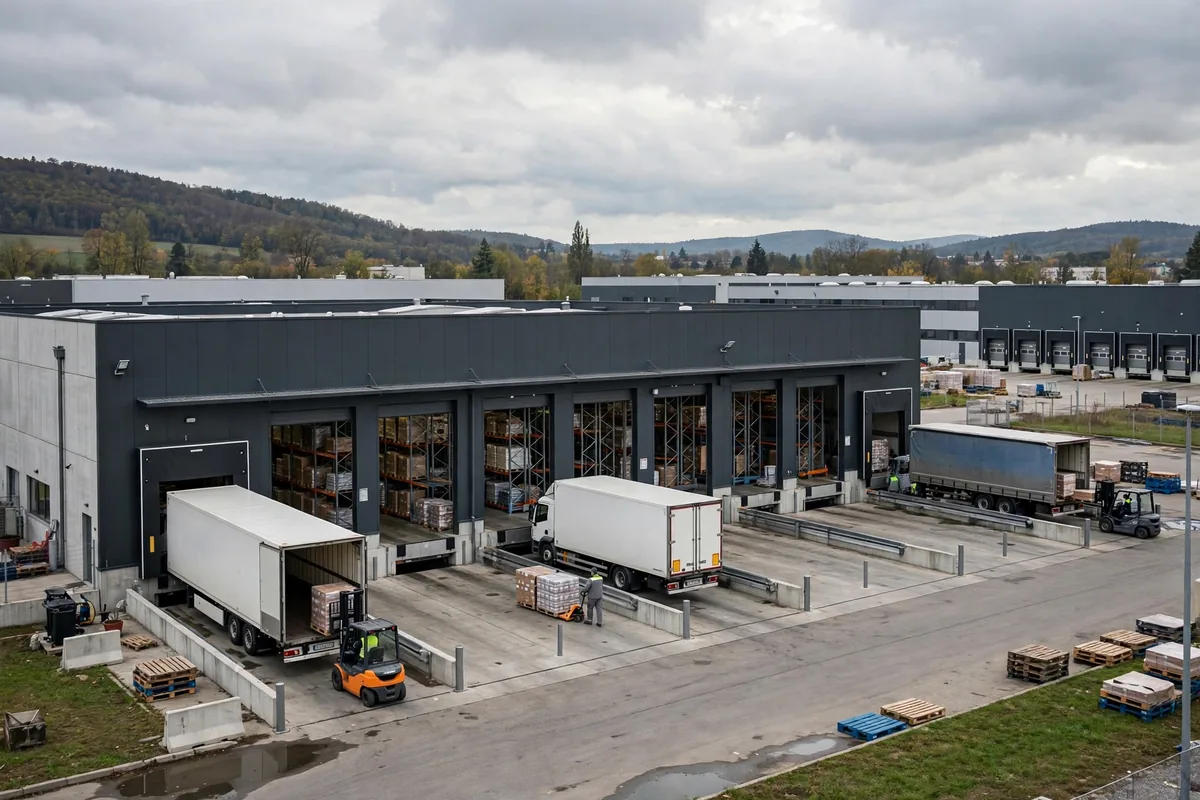
In 2022 I walked two warehouses with a home-goods seller, one in the Rotterdam port area a few kilometres from the terminals and one inland at Venlo, near the German border. The port building was newer and prettier. It was also priced at a clear premium, with a larger minimum footprint and a longer lease than the seller needed. Venlo looked ordinary. But when we mapped three months of orders, the pattern was obvious: most volume was headed into western Germany, around Düsseldorf and Cologne, where truck lanes out of Venlo are dense and cheap. The inbound container could move from Rotterdam to Venlo in bulk by barge or rail, spreading that inland leg across a full load. The port warehouse would have saved half a day on inbound and then taxed every single outbound order on the way back inland. They took Venlo. The rent saving alone covered the bulk inbound move with room to spare.
The first bill in rotterdam warehouse distribution netherlands: what the rent premium has to buy back
Port land is tight, and that shows up in more than the headline rent. Port-area buildings tend to come in larger units, on longer terms, with less willingness to carve space for a growing seller. Rent space you cannot fill and you are paying for air. Inland locations such as Venlo, Tilburg, and Breda offer a wider spread: large sheds, divisible units, and landlords who negotiate. Do not compare rent per square metre and stop. Compare the whole picture:
| Factor | Rotterdam port-adjacent | Inland (Venlo and similar) |
|---|---|---|
| Rent and entry terms | Premium, larger units, longer terms | Lower, more divisible, more flexible |
| Inbound speed | Short dray from terminal | Extra barge, rail, or truck leg to plan |
| Shipments to western Germany | Backtracks inland | Geographically closer, denser lanes |
| Shipments within the Netherlands and coastal Belgium | Advantage | Small time gap, check against order mix |
| Peak-season expansion | Hard when port space tightens | Wider choice of overflow space |
There is no universal winner in that table. There is only a method: pull your last three months of orders by destination postcode and see where sixty percent of the volume really goes. If it goes to Dutch and coastal Belgian addresses, the port case may hold. If it goes into Germany, the inland case usually wins, and it is not close. Signing a long port lease without that postcode map is the most common wasted money I see in European distribution.
A second case makes the point from the outbound side. In 2024 a small-appliance client staged a full peak-season push in a port-adjacent warehouse because inbound felt fast and safe. When European truck capacity tightened, every order for southern Germany became a long haul out of the port, and the outbound transport bill grew faster than the rent ever had. The following year they kept only a small fast-turn buffer near the port and put the main stock inland. Peak season got calmer, not slower. The lesson is one line: fast inbound is not fast outbound. You site a distribution warehouse for the direction goods leave, not the direction they arrive.
The second bill in rotterdam warehouse distribution netherlands: barge and rail are not slow, they are scheduled
The usual objection to inland warehousing is one word: slow. A barge up the river is not a same-day tool, and it was never meant to be. It is a bulk and stability tool. Rail sits between barge and truck, with more predictable timing. Trucks are the most flexible and the most volatile in price and capacity when the market tightens. The right answer is rarely one mode. It is layers. Move large, time-tolerant replenishment by barge or rail and feed the inland warehouse ahead of need. Ship urgent and fragmented orders by truck from the warehouse closest to the customer. Plan the replenishment three to five days earlier and most of the supposed inland time penalty disappears into the schedule.
Here is a quick illustrative calculation. Take a seller moving 10 containers a month. If holding stock at the port saves a modest amount on each inbound dray but adds even a small extra linehaul cost to, say, 3,000 outbound parcels and pallets a month headed into Germany, the outbound penalty only needs to be a few euros per shipment to erase the inbound saving entirely, before you count the rent gap at all. Run your own numbers in that shape: monthly rent difference, plus inbound difference, against outbound difference multiplied by real order volume. Outbound repeats every day. That is why it wins arguments.
That leads to the counter-intuitive judgement I give every client: for most EU distribution, a warehouse farther from the port is closer to the customer. Europe's demand sits inland, not at the quay. Nail your stock to the port and every dispatch starts with a long leg. The real trade-off is not cheap rent versus dear rent. It is money spent once a month on a lease versus money spent on every order, forever, in linehaul. The second one quietly eats margin while nobody watches it.
None of this means never choose the port. I seriously consider port-adjacent space for three kinds of operation. First, goods that need inspection, labelling, or repacking right after arrival, where doing the work at the port before an inland move keeps handling clean. Second, small or unproven volume with scattered destinations, where a flexible small port unit is a sensible test before signing anything long inland. Third, categories with brutal delivery promises where a day late costs real money, where inbound speed and lane density earn their premium. All three still have to survive the monthly total-cost test. Proximity is a feature, not a business case.
So here is the action for tomorrow. Take three months of postcode data, your container count, and your outbound transport invoices, and run them through the table above before you talk to another landlord. If sixty percent of your orders are not Dutch, ask yourself honestly: what exactly are those few kilometres next to the terminal buying you?
By Lao Mi, Supply Chain Veteran (20 yrs)