We had a client in the soybean trade who learned Rosario the hard way. His spreadsheet back home was beautiful: buy the grain, put it in a warehouse, wait for the vessel, load, done. Then he landed in Argentina and discovered that rosario argentina grain warehouse logistics is mostly a queueing business. Trucks queue to get in. Barges queue to berth. Inspections queue to clear. In peak season, whoever gets in line first gets paid first. Everyone else watches storage charges tick up while the vessel window slides away.
I have signed a lot of warehouse contracts as a 3PL sales director, and grain is a different animal from a carton warehouse. A carton warehouse manages units and locations. A grain terminal manages moisture, grade, and turnover speed. If you negotiate a bulk terminal in Rosario with the language you use for an e-commerce warehouse, the locals will know within five minutes that you have never worked a river port.
Rosario Argentina grain warehouse logistics starts with the river
Rosario sits on the Parana River. Upstream is Argentina's farm belt. Downstream is the ocean. The Greater Rosario port corridor handles a very large share of the country's agricultural exports — the exact share moves year to year, so check the latest port and industry association figures rather than trusting any fixed number, including mine. The point that does not change is this: warehouses here do not run on square meters. They run on the rhythm of the river.
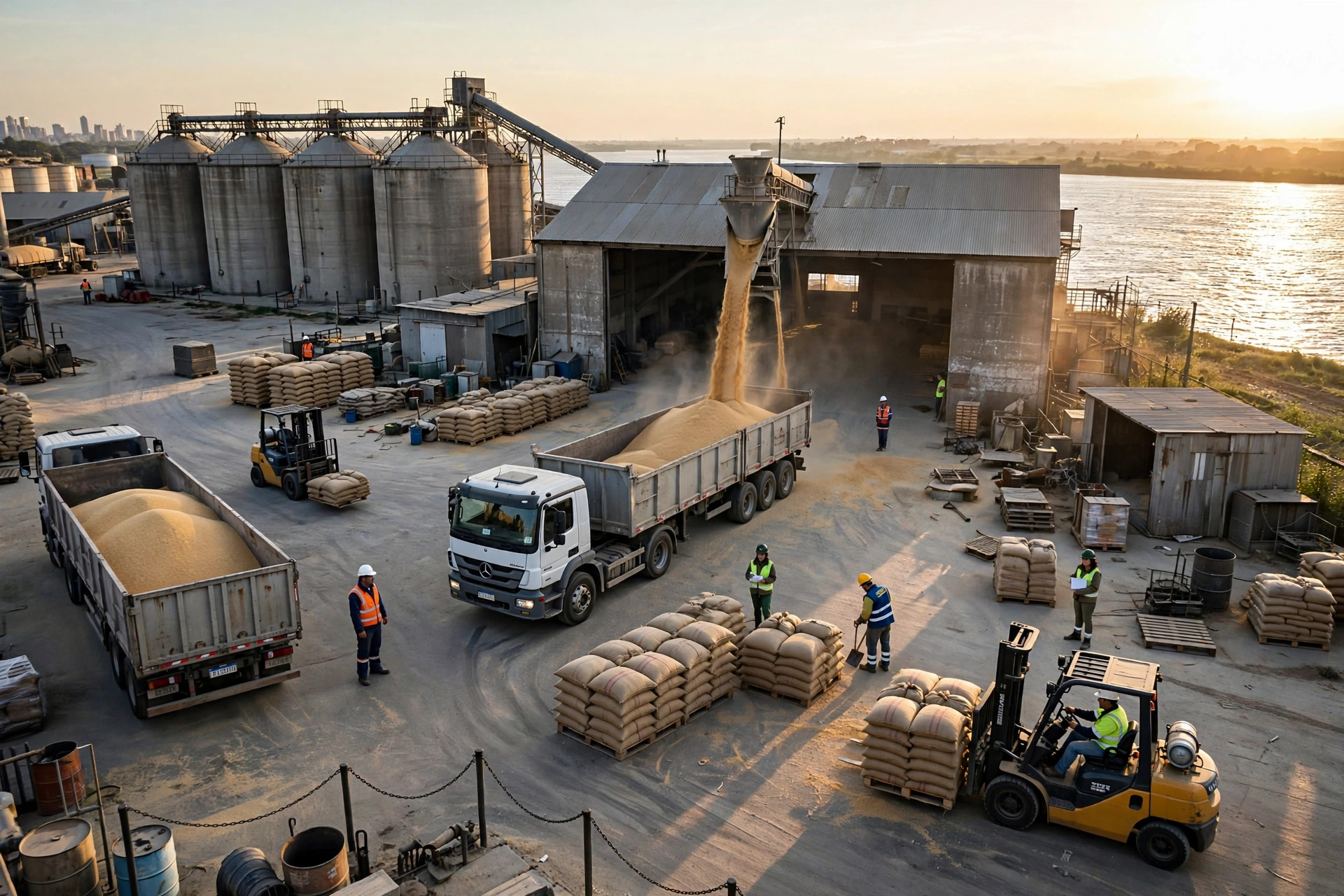
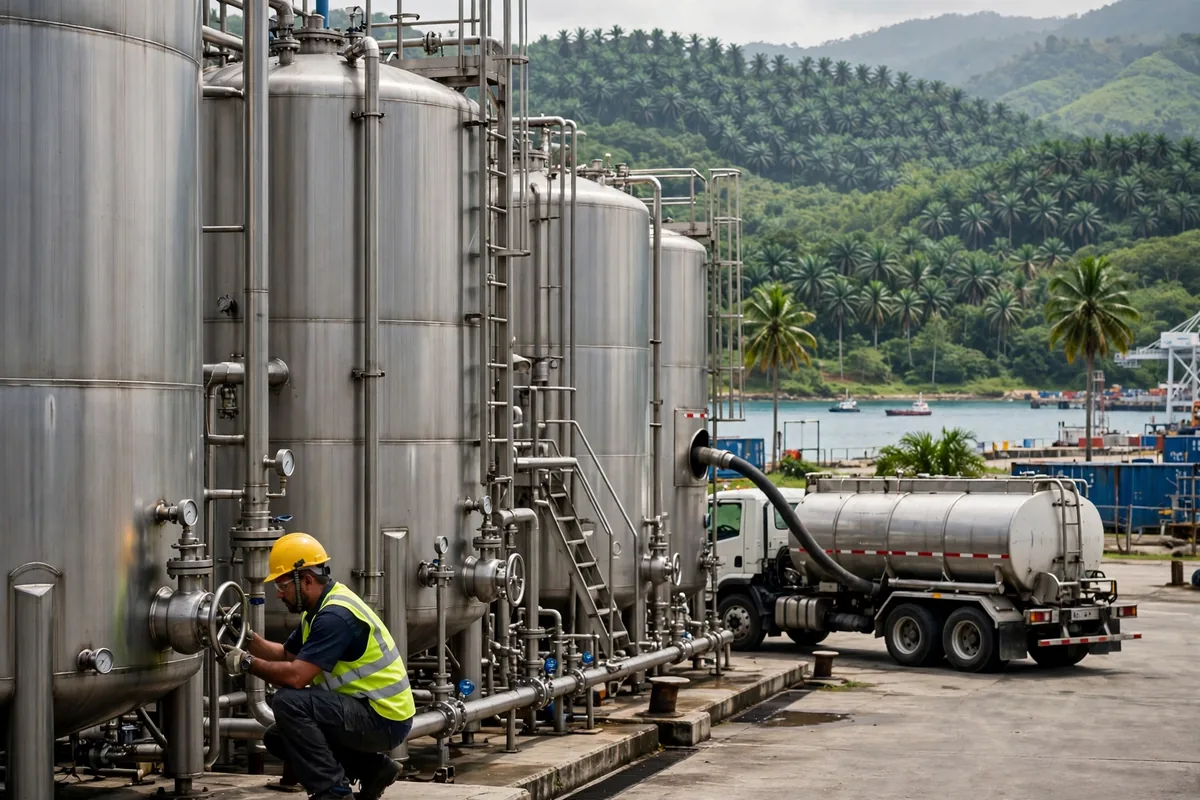
Case one. During the 2023 export season, I walked a bulk terminal with a client at seven in the morning. Trucks were already lined up far down the road, drivers drinking mate, completely unsurprised. The terminal manager told us the day's intake would not be decided by empty silo space. It would be decided by how fast weighing, sampling, and grading cleared the trucks in front of us. Bulk grain has to be weighed, sampled, and tested for moisture and foreign matter before anyone decides which silo it belongs in. Slow down any one of those gates and the whole line stops.
One truck that morning tested high on moisture and was sent for drying before storage. My client asked if they could just unload it first and sort it out later. The manager shook his head. Mix that load into good grain and the grade of the whole silo is at risk. When the outbound cargo fails the contract grade, you are not arguing about one truck anymore. That is the first lesson of grain storage: the terminal is not receiving cargo, it is receiving grades. Moisture, protein, and impurities all map to clauses in an export contract. Intake is already contract performance.
Here is the counterintuitive part. Buyers ask about capacity first: how many tonnes can you hold? I tell them to ask about turnover first. Run a simple hypothetical. Terminal A is bigger, but in peak season your grain sits, say, two weeks longer on average because intake and load-out are congested. Terminal B is smaller, but grain moves through in about half the dwell time. At the same storage rate per tonne, Terminal B can easily be the cheaper option in total, and it carries less vessel-delay risk. The days and rates in that example are illustrative, not quotes — for a real project, demand the terminal's intake and load-out records from the last two peak seasons and do the math yourself. Capacity is a static number. Turnover is money.
Trucks and barges: who waits for whom
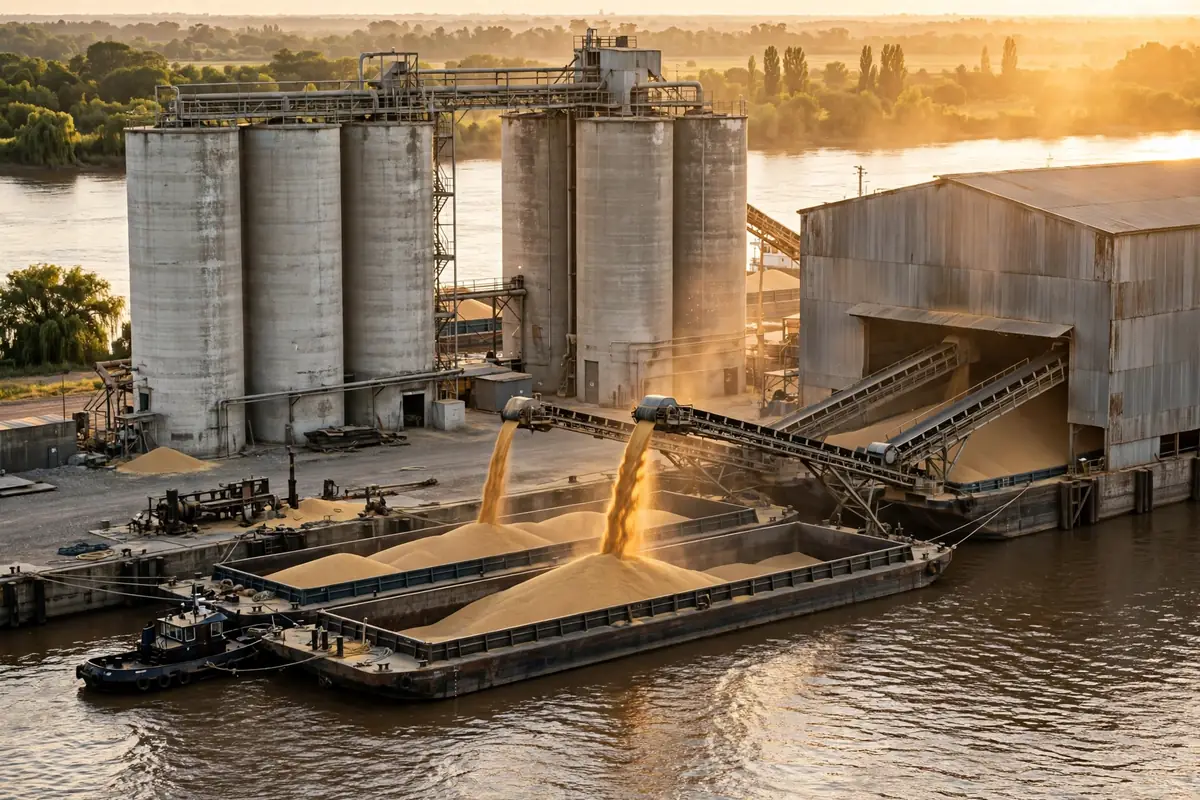
Grain reaches Rosario two ways. Trucks haul it straight from the producing regions. Barges bring it down the Parana from upriver. The two modes have opposite temperaments. Trucks are flexible, but in peak season the roads and the terminal gate jam together. Barges move large volumes with an attractive cost structure, but they live and die by river levels. When the Parana runs low, barges load lighter, voyages multiply, and schedules come apart. Low water on the Parana has been a recurring story in recent years. Before you sign anything, check the most recent season's water levels and draft restrictions against local navigation notices — do not rely on a brochure.
Case two. In 2024, a corn client planned to move most of his volume by barge because the per-tonne math looked great. Then low water forced lighter loading. He scrambled to backfill with trucks, paid peak truck rates, and — because he had not warned the terminal about the changed arrival pattern — queued all over again at intake. The margin on that cargo largely evaporated. His own post-mortem was brutally honest: the cheap plan was not wrong. Having no backup for the cheap plan was wrong.
When I advise clients on rosario argentina grain warehouse logistics, I put the trade-off on one page:
| Factor | Direct truck | Barge |
|---|---|---|
| Flexibility | High, adjustable in small lots | Low, moves in vessel-sized batches |
| Peak-season risk | Gate queues, unloading waits | Draft cuts, berthing queues |
| Best fit | Small lots, mixed grades, tight timing | Large lots, uniform grade, planned flow |
| Contract focus | Who pays for waiting time | How draft cuts and delays are shared |
Neither column wins. For large, uniform parcels, barges should be the backbone and trucks the supplement. For small, mixed lots, reverse it. What actually kills you is silence in the contract about waiting and delay costs. Peak-season queues are close to certain. The only question is whose account they land on.
In export season, write the queue into the contract
One more scene. A few seasons ago, an exporter's grain was already in store, waiting to load, when an upstream step slipped. The vessel waited for cargo, the cargo waited for inspection, and everyone blamed everyone else. I read their storage contract. It was a lovely document — capacity, rates, custody, all present. It did not contain a single line about queues or priority. When nothing is agreed, arguments are settled by relationships and volume of voice.
So here is what I push for in a Rosario grain contract. First, write the intake steps down with owners and time limits: weighing, sampling, grading, binning — who is responsible at each step, and what happens when a step overruns. Second, ask how peak-season receiving capacity is allocated. Is it first come, first served? Reserved by contracted volume? Do regular customers and spot customers stand in the same line? Third, price the value-added services — drying and cleaning especially — before the season starts. Peak-season surcharges are not a scandal, they are a custom; get the current season's quote from the terminal rather than accepting anyone's secondhand number. Fourth, settle grade disputes in advance: who re-tests, whose result governs, and who pays. In grain, grade is money. A vague clause here becomes a loud argument later.
Do not forget the paper flow. Bulk grain is commingled in big silos by grade. What you own is not a specific pile; it is a quantity-and-grade entitlement. If the warehouse receipts and title documents move slowly, your grain can be physically present and commercially stuck — financing and resale both jam. Eight out of ten first-time buyers I meet watch the physical flow and ignore the document flow. The losses almost always show up in the documents.
That is the real shape of rosario argentina grain warehouse logistics. The warehouse is not the product. Coordination is the product: trucks, barges, inspection, silos, and vessel windows arranged into one line that does not fight itself. When a terminal's sales team quotes you capacity and rates, that is the brochure talking. Ask for the intake records from their busiest weeks. Ask how they handled the queues. Ask what their plan is when the river drops. Vague answers are an answer.
Next time you negotiate a contract, remember to ask these three questions: Where exactly does my cargo rank in your peak-season intake priority, and will you write it into the contract? How do we split waiting costs from queues and draft restrictions? And what is the grade re-test process, and who pays for it? Ask those three, and you will know within minutes whether you are talking to an operator or to someone who just sells silo space.
By Susan, 3PL Sales Director