Here is my conclusion up front: if you are looking at the Rosario warehouse market, do not start with rent. Start with a simpler question — does your cargo actually need this river? Rosario matters because of where it sits: the loading belt along the Parana River, the suburban highway network of Santa Fe province, and, further west, the farming country of the Pampas. The closer your cargo is to the river, the more a warehouse here makes sense. If your cargo has nothing to do with the river, putting it in Rosario just adds a leg of trucking nobody asked for.
Put bluntly, Rosario is not a general-purpose distribution hub. It is a node built to serve an agricultural belt. Once you accept that, the location choices get much easier to argue about.
I have seen too many people get this backwards. An agricultural inputs trader I worked with started out chasing cheap space in a large suburban warehouse away from the river. The building was big, the docks were fine, and on paper it looked like a bargain. Then harvest season arrived and everything unravelled at once. Inbound trucks had to fight through congested suburban roads before they could even join the queue for the port area. Return loads were scarce, so drivers did not want the jobs. Once the goods reached the warehouse, they often had to be transferred again before they could enter the port process. The rent was lower, but the turnaround time per shipment stretched out, and during the busiest weeks the team spent its days chasing trucks and vessel schedules. The warehouse itself had become the bottleneck. The fix was not a bigger building. They split the operation in two: a receiving point near the producing area that did nothing but initial checks and short-term holding, and a riverside warehouse that only did consolidation and handover to outbound shipping. Smaller footprint, smoother books.
That story has two sides. A riverside warehouse wins on proximity to the vessel and loses on flexibility; a suburban warehouse wins on space and labour and loses a step to the shipping point. Which is cheaper depends on which stage your cargo most fears waiting at.
Three location lines in the Rosario warehouse market
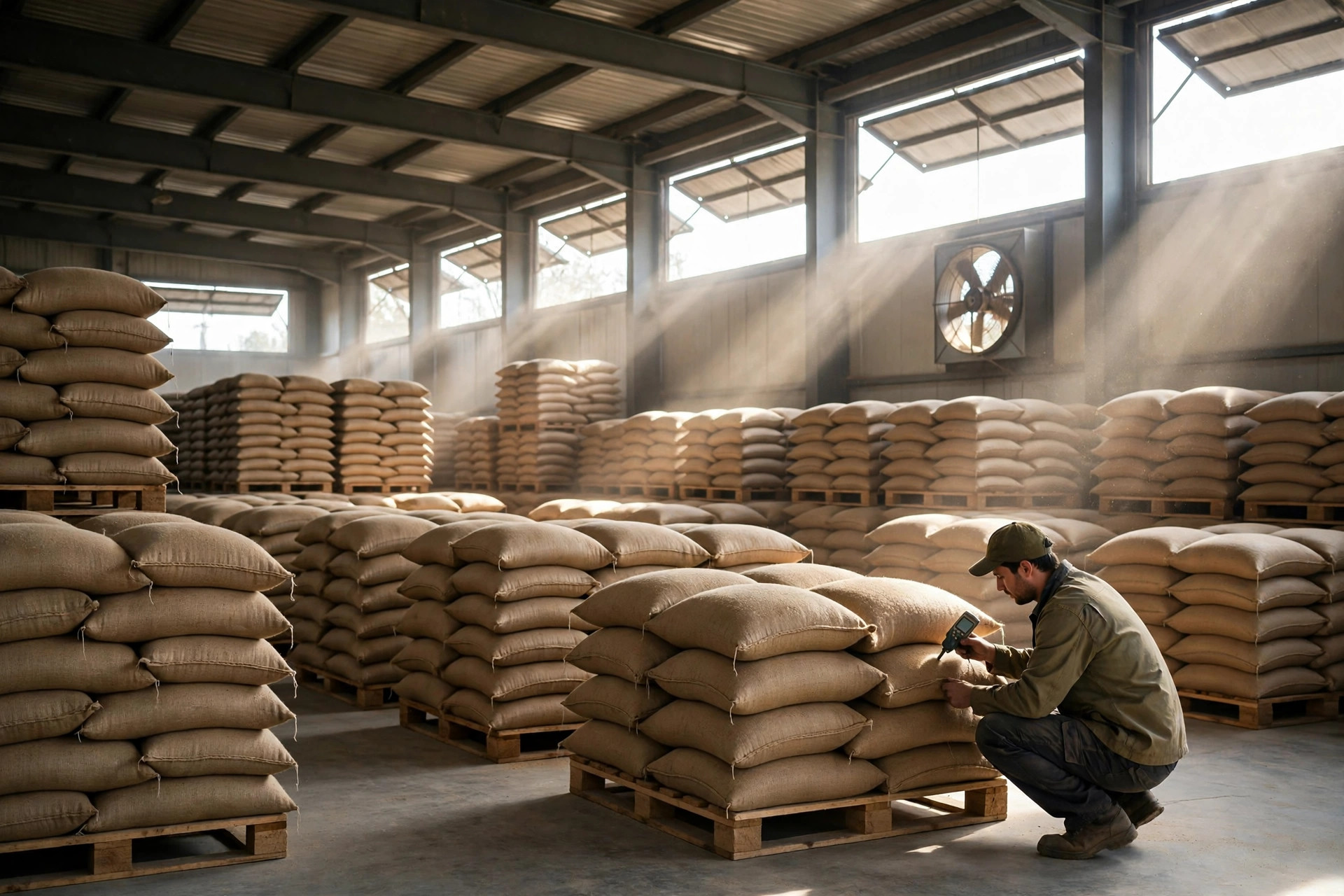
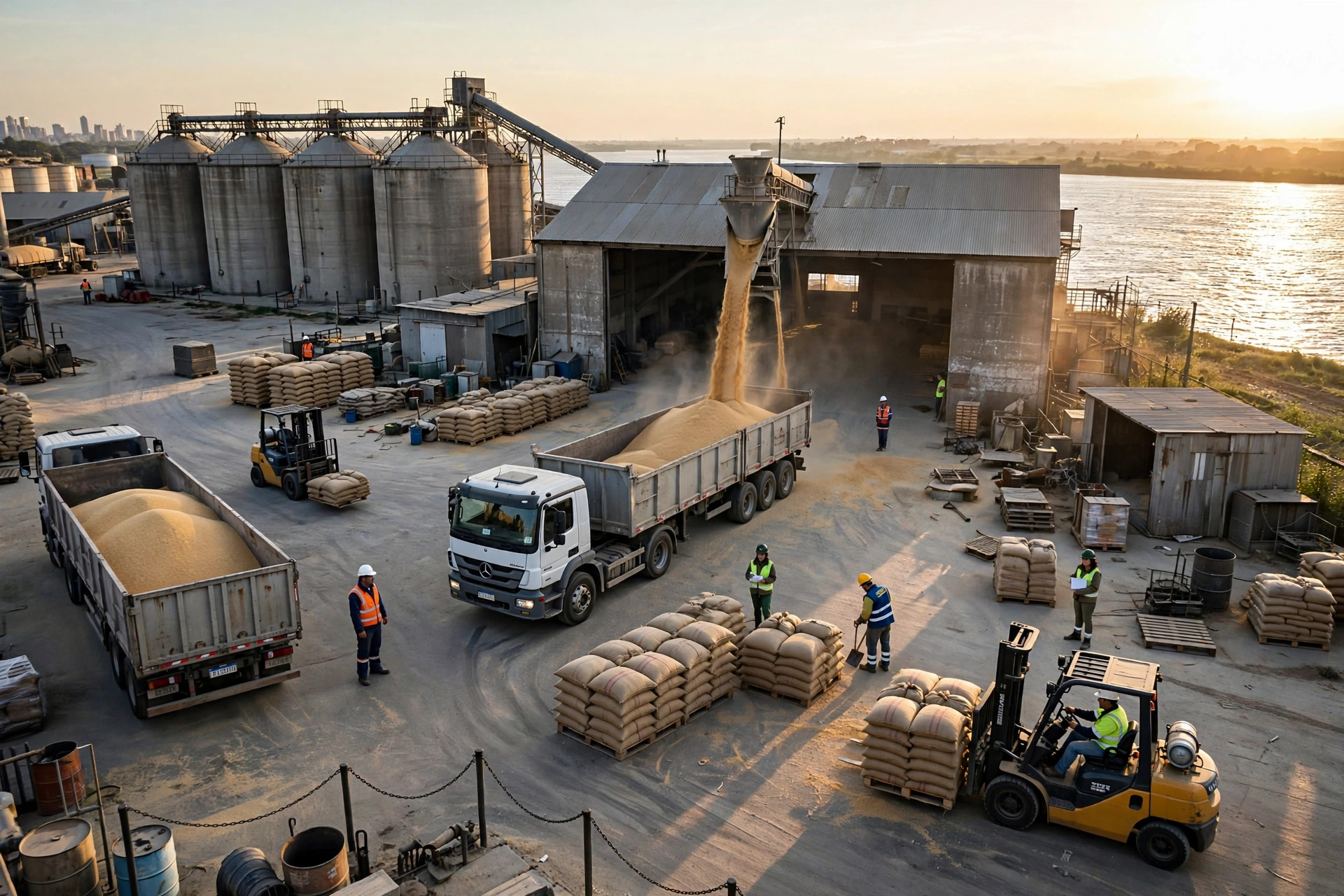
The first line runs along the river port. Warehouses here exist to connect with water transport: bulk grain, oilseeds, soybean meal and similar agricultural commodities come in, sit briefly, and go out by vessel. The rhythm follows harvest season and vessel schedules — continuous work when it is busy, half-empty when it is not. The cargo that fits this line shares a profile: large volume, highly standardised, sensitive to outbound timing, but with little need for picking or processing. If that is your cargo, being close to the river is a hard requirement, and every extra kilometre is a cost.
The second line is the suburban highway warehouse. Closer to the city and the highway network, it suits regional distribution and goods like farm inputs, food products and consumer goods. Farm inputs are the classic example: fertiliser, seed and machinery parts, with buyers scattered across producing areas, orders small and mixed, needing break-bulk, consolidation onto trucks, and dispatch timed to the farming calendar. A suburban warehouse shines here: easy in and out, easier hiring, room for simple processing and labelling. Its weakness is just as direct: it is far from the river, so bulk cargo routed through it pays for an extra transfer.
The third line is the producing-area receiving point. This is not a big warehouse in the traditional sense. It is a front-end buffer for harvest intake. Its value shows up most clearly at harvest time: if every truck from the producing areas drives straight to the riverside, the port area clogs. Receiving cargo nearby first, then sending it on in batches, keeps the rhythm steady. This kind of site is wrong for long-term storage and wrong for complex distribution. It is a buffer, nothing more.
None of these three lines is better in the abstract. They only match, or fail to match, a cargo. The most common mistake is comparing a suburban warehouse's rent with a riverside warehouse's rent, or demanding distribution flexibility from a riverside building. Location decides function, and function decides the cost structure. Do not reverse that order.
The Rosario trade-off: counting the whole journey, not just the rent
I do not recommend starting with the rent per square metre, because rent is only the visible part of the warehousing bill. What you really need to cost is the full journey from producing area to vessel side. The framework below is the one I use most often with clients when we talk location. Treat any specific rates, tariffs and market figures as subject to the latest local policy and on-the-ground quotes — the table ranks relative highs and lows only, and invents no numbers:
| Location direction | Cargo it fits | Biggest advantage | Biggest cost | What it fears most |
|---|---|---|---|---|
| Riverside belt | Bulk farm products, grain, oilseeds | Shortest handover to the vessel | Few choices, poor flexibility in peak season | Vessel schedules and river-level changes disrupting rhythm |
| Suburban highway warehouse | Farm inputs, food, regional distribution | Flexible in and out, can break bulk and do simple processing | Far from the river, so bulk cargo pays an extra transfer | Suburban road congestion in peak season, drivers hard to book |
| Producing-area receiving point | Harvest intake, initial checks, short holding | Relieves pressure on the port area, steadies intake rhythm | Unsuitable for long storage or complex distribution | Utilisation collapsing once harvest ends |
When you run the numbers, put four costs side by side: rent and labour, trucking there and back plus waiting time, re-handling and second loading, and the risk of demurrage-style losses when a vessel or a truck slips. Many proposals win on rent and lose on the other three combined. In peak season especially, truck waiting and rescheduling losses routinely exceed months of rent savings. Here is the counterintuitive part: the cheapest rent often produces the highest total cost, because it pushes your cargo furthest from the shipping point.
A second case makes the same point from the other direction. A food distributor shipped to regional stores and wholesale customers, not in bulk by vessel. Someone suggested a riverside warehouse because Rosario is a big logistics name, but site visits showed the riverside rhythm is set by vessel schedules, and small scattered orders could not be slotted in. A smaller suburban warehouse with a flexible picking area handled daily dispatch far better. A city's reputation does not put your warehouse next to its port; your cargo's direction does.
What belongs in Rosario, and which traps to walk around
Cargo that fits: bulk agricultural products and related primary processing, large in volume and ending at outbound shipping; farm inputs and machinery parts serving the Pampas, where orders follow the farming calendar; and regional consumer goods and food distribution for Santa Fe and neighbouring provinces, which a suburban warehouse covers well.
Some cargo needs caution. High-frequency, small-order e-commerce fulfilment is one: Rosario's advantage is not last-mile density. Cargo needing heavy custom processing and fine picking is another: the riverside rhythm does not suit it. And cargo with extremely tight timing that cannot tolerate vessel variation should think twice, because river shipping has a seasonal rhythm no warehouse can cover for.
Then there are the traps you only see on the ground. The first is looking at the warehouse and ignoring the road: can heavy trucks use the gate road, does it jam in peak season, are there truck access restrictions? Those questions matter more than floor area. The second is signing a one-year lease sized for peak volume; once harvest passes, empty space is pure cost, so negotiate flexibility before you sign. The third is treating the warehouse as the whole answer: customs, inspection, fumigation and vessel agency do not happen inside it. If documents or inspection stall, the cargo does not move. Draw the full chain first; the warehouse is one link.
One more factor gets overlooked: people. Harvest labour comes in pulses — a dozen workers may suffice in a quiet month, double that in peak season. Suburban hiring is usually easier. If you cannot staff the building, it does not run, so ask that question during site selection, not mid-peak.
So carry one question into any Rosario decision: does your cargo travel on this river, fear waiting, and need breaking into small orders? Bulk cargo on the river belongs near the riverside; farm inputs and regional distribution belong in a flexible suburban warehouse; if you fear harvest congestion, keep a buffer toward the producing area. A warehouse serves cargo, not a name on a map.
By Lao Mi, Supply Chain Veteran (20 yrs)