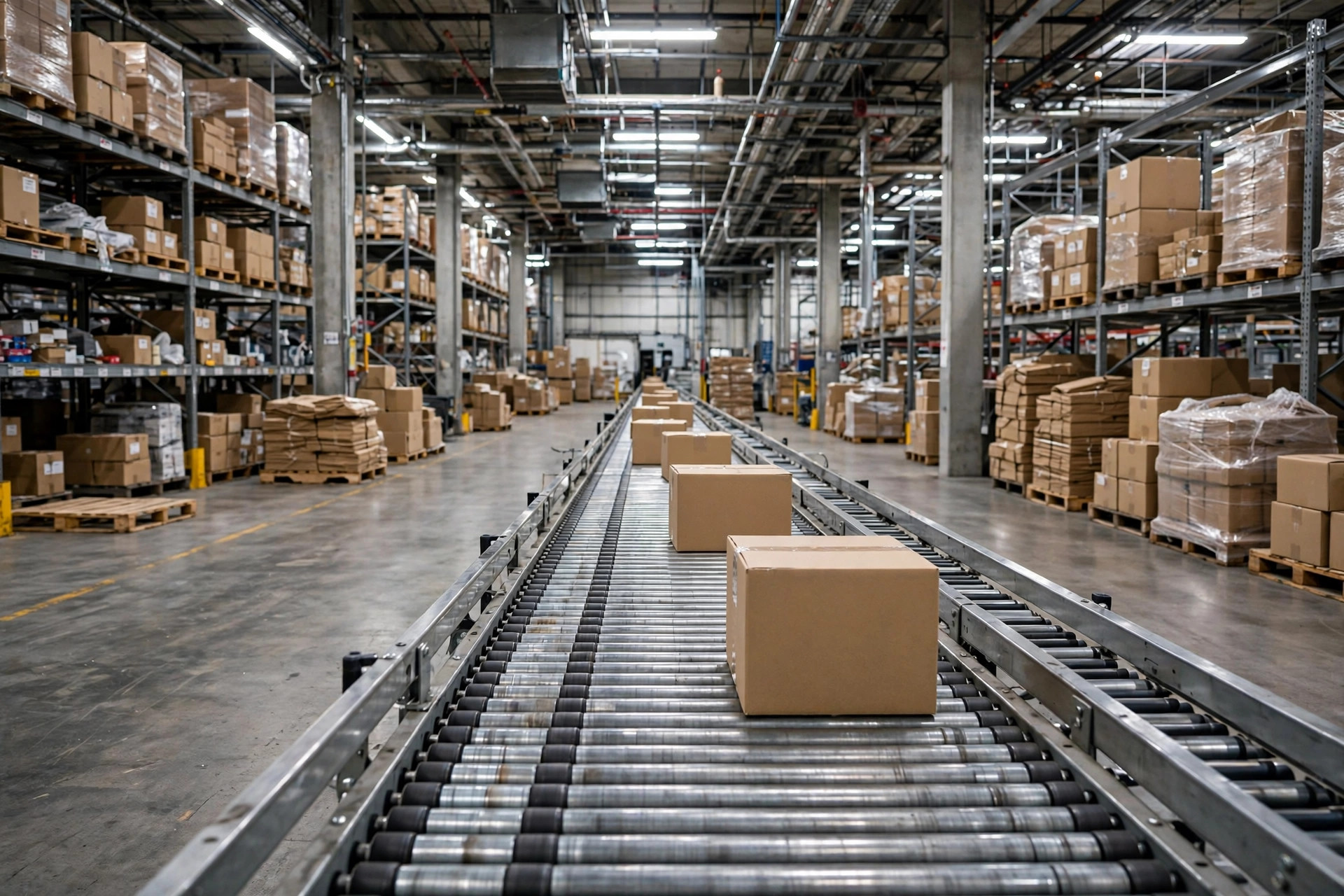
Think of roller and belt conveyors as chopsticks and a spoon. Both move things from A to B, but try drinking soup with chopsticks. In 2023 I worked on a 3PL project in Ontario where the owner held two quotes for the same 200-foot line — the roller option cost nearly double the belt. "Am I getting ripped off?" he asked. I told him: forget the quote for a minute. Look at your freight's personality first.
Roller vs belt conveyors: how they work — one rolls, one drags
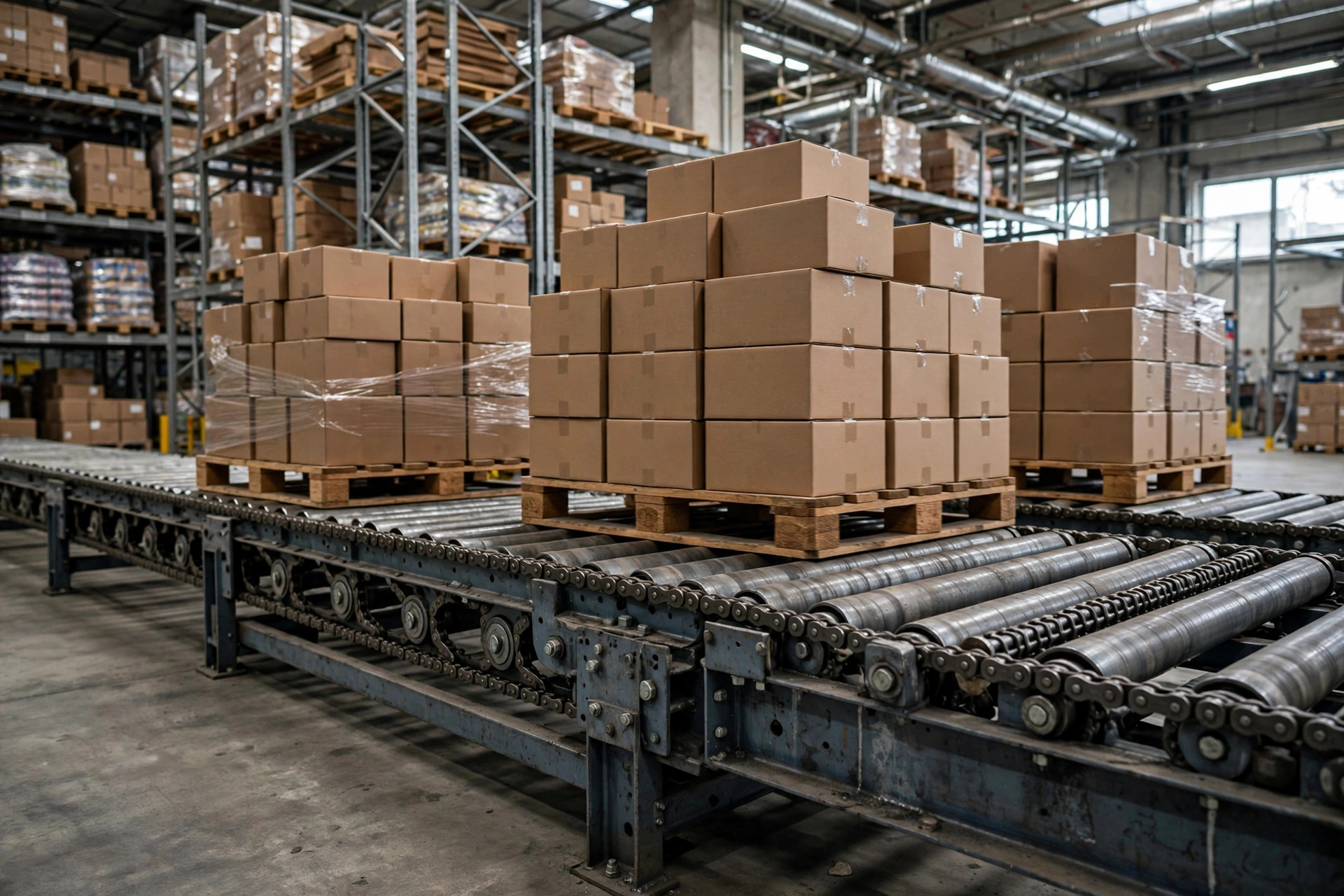
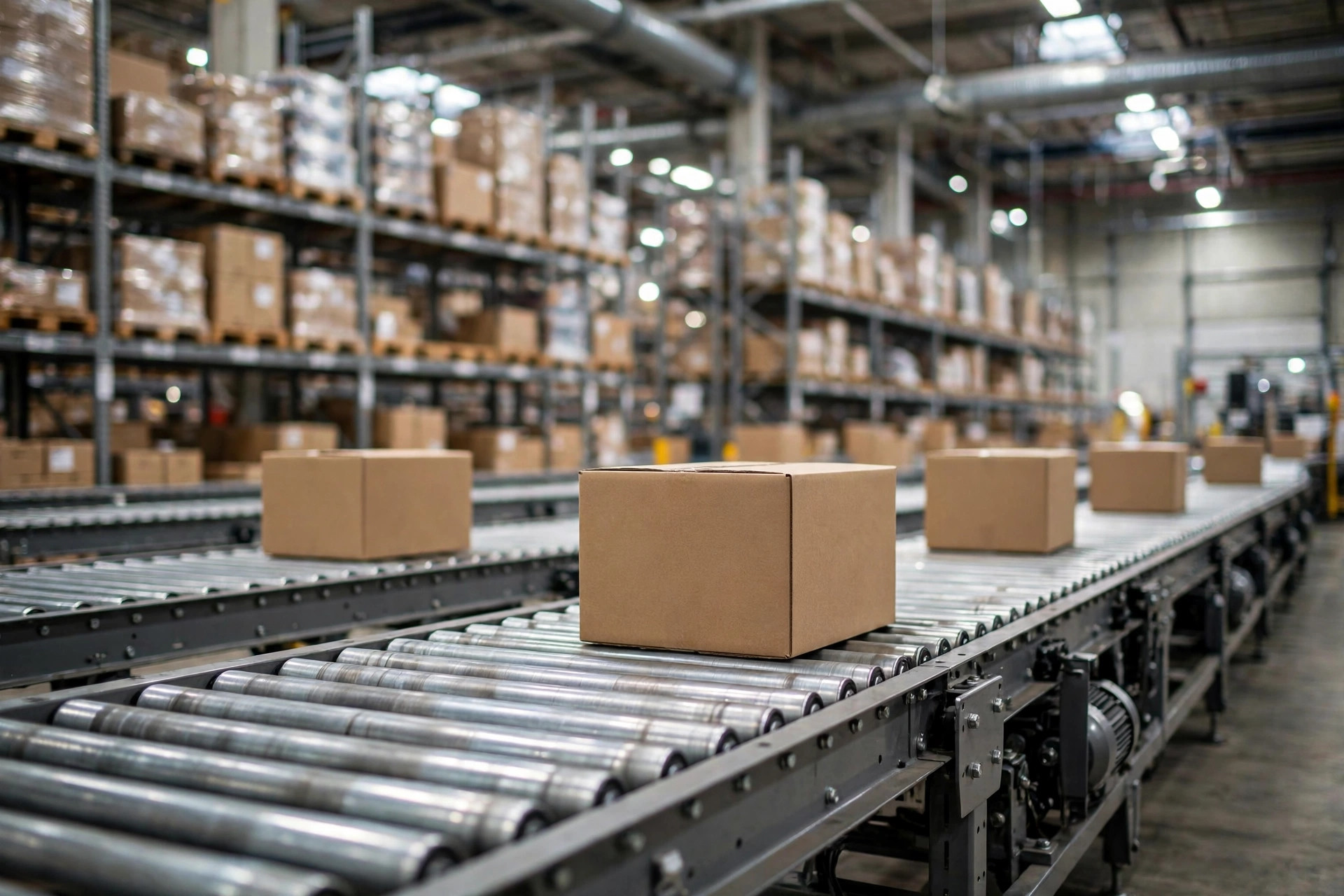
A roller conveyor is a row of rolling pins packed tight: the carton sits on the rollers, the rollers turn, the carton moves. Three ways to drive them: chain drive (strong, loud), O-belt drive (light, cheap), and MDR — motor-driven roller, a 24V DC motor hidden inside the roller itself, with zoned control so each section runs only when product is present and "sleeps" otherwise.
A belt conveyor is an airport baggage carousel: the product stands on a moving "road" and gets dragged along. Motor, pulleys, one endless belt. That's it.
Rollers make point contact — the bottom of the load must be hard and flat. Belts make surface contact — soft polybags, odd shapes, and small items all ride fine. Every selection rule below grows out of those two sentences.
Roller vs belt conveyor selection: the dividing line, in one table
| Dimension | Roller conveyor | Belt conveyor |
|---|---|---|
| Unit load | Heavy: up to 2,500 lbs per line, heavy-duty to tonnage | Light: heavy loads stretch and slip the belt |
| Speed | 20–800+ FPM (MDR zoned; high-speed lines exceed 800) | 15–200 FPM, smooth and continuous |
| Noise | Chain-driven around 80 dB; MDR as low as 40–60 dB | Quieter overall; the belt absorbs vibration |
| Accumulation | Built for zero-pressure accumulation, no hard contact | Accumulating wears the belt and causes slip |
| Product fit | Rigid bottoms: cartons, totes, pallets | Polybags, irregulars, smalls |
| Curves and inclines | Curves need special modules; weak on inclines | Natural curves, strong on inclines |
| Maintenance | Modular: swap one roller, one bearing | Belt tracking; a belt change stops the whole line |
| Energy | MDR runs on demand; can cut energy and maintenance nearly in half | Motor runs continuously |
These are the ranges you'll find in published manufacturer specs: MDR zones typically run 20–190 FPM, high-speed belt-driven roller lines push past 800 FPM, and roller-bed belt conveyors sit around 15–200 FPM. The noise row is the interesting one — a chain-driven roller line in a sort area measures around 80 dB, while an MDR roller can whisper at just over 40 dB, quieter than a normal conversation. Most people's gut says "rollers are the quiet workhorse." Wrong. When silence matters, belt and MDR are the answer.
Three dividing lines, that's all you need to remember:
First, the weight line: if your regular unit load crosses 50 lbs (about 23 kg), go roller. Second, the product line: soft bags, irregulars, and smalls go belt; rigid cartons and pallets go roller. Third, the layout line: curves and inclines go belt; accumulation and buffering go roller.
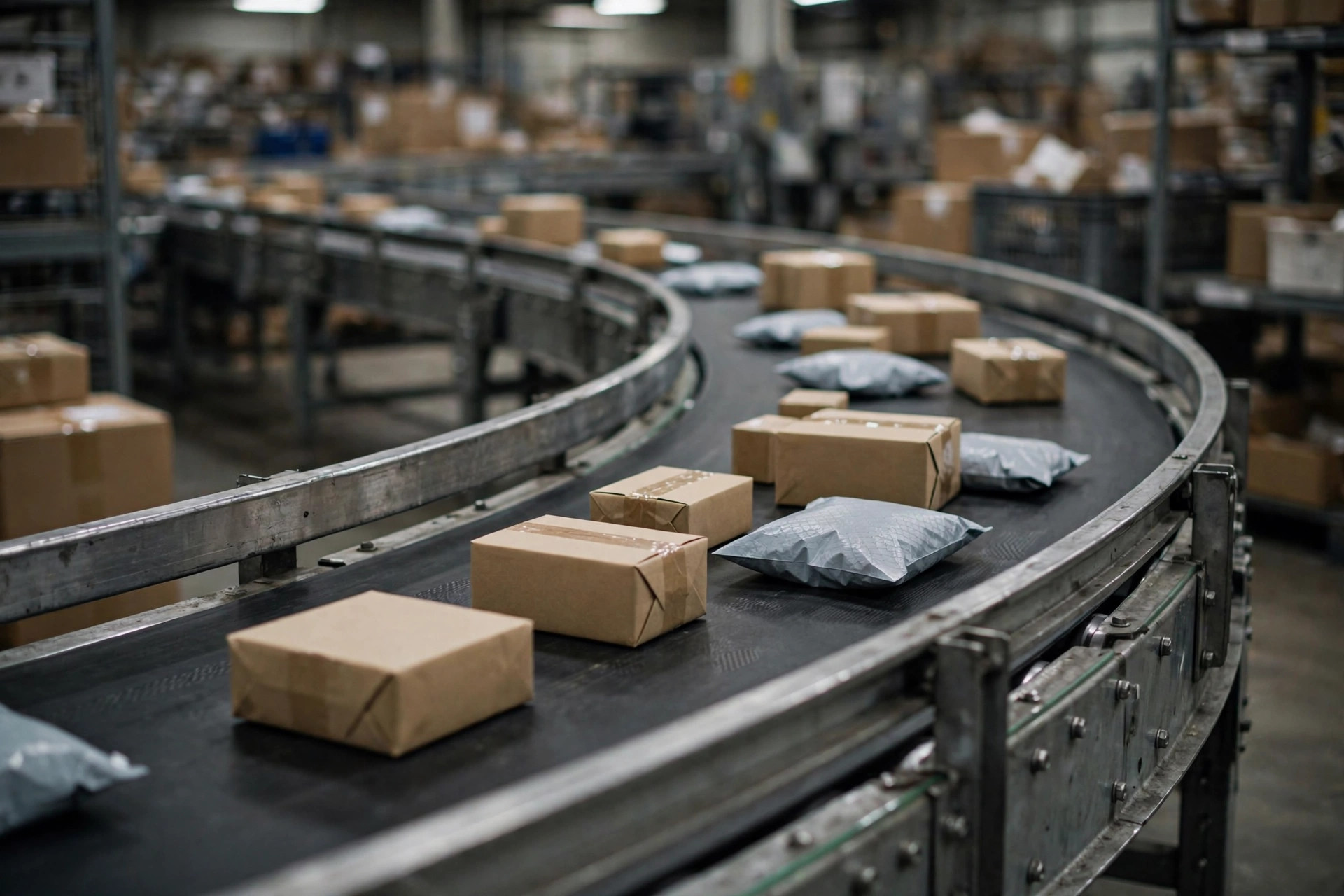
Two cases I've seen with my own eyes. In 2022, an auto-parts 3PL in Fontana picked belt to save money and ran metal parts with sharp edges on it. Three months in, the belt was slashed open; the replacement shut the line down for two full days, right in peak season, nearly breaching a customer SLA. They ripped the whole section out for rollers and never had that problem again. Flip side: in 2024, an apparel e-commerce warehouse in Southern California — heavy on returns, heavy on polybags — installed rollers. Bags jammed in the roller gaps four or five times a day. They switched to narrow belt with skirting, and the problem vanished. Both prove the same point: whatever you save upfront on the wrong conveyor, operations will collect back with interest.
A quick shot at a fake requirement I hear a lot: "Can we mix both — rollers and belt on one line, best of both worlds?" Unless you have clearly defined divert and merge points, the transitions, speed matching, and controls logic at the interfaces double your complexity. Pick one side using the three lines above, and swap in the other type only for the specific section that needs it. That's the sane approach.
Maintenance: each has its chronic disease
Belts suffer three chronic conditions: mistracking, splice failure, and punctures from sharp freight. Tracking is adjustable; splices — vulcanized or mechanical — have a finite life; and a belt change means full-line downtime plus the belt and the labor, neither cheap. Rollers have different ailments: dry bearings getting noisy, aging O-belts slipping, fried MDR driver cards. The good news is modularity — one bad roller, one zone down, not the whole line.
Then there's the hidden cost: energy. MDR zones run only when product is present. Compared with traditional systems idling 24/7, energy and maintenance costs drop by nearly half — a figure integrators cite often, and the longer the line and the more idle time, the wider the gap. People forget to put power in the five-year math. Don't.
Worth the money? Watch this one number
Don't compare quotes. Compare five years: equipment price plus five years of maintenance plus five years of power plus one unplanned downtime event, all divided by total cartons moved over five years. Cost per carton moved — whichever is lower wins. In every project I've touched, running over-50-lb units on belt looked ugly on this number; forcing polybags onto rollers bled money on jam-clearing labor.
So the dividing line is really one sentence: does your heaviest regular unit cross 50 lbs (about 23 kg)? Yes — rollers, no debate. No — check whether your freight is soft or rigid. The price gap on the quote is a first-year story; the wrong conveyor charges you for five.
By Da Liu, Automation Engineer