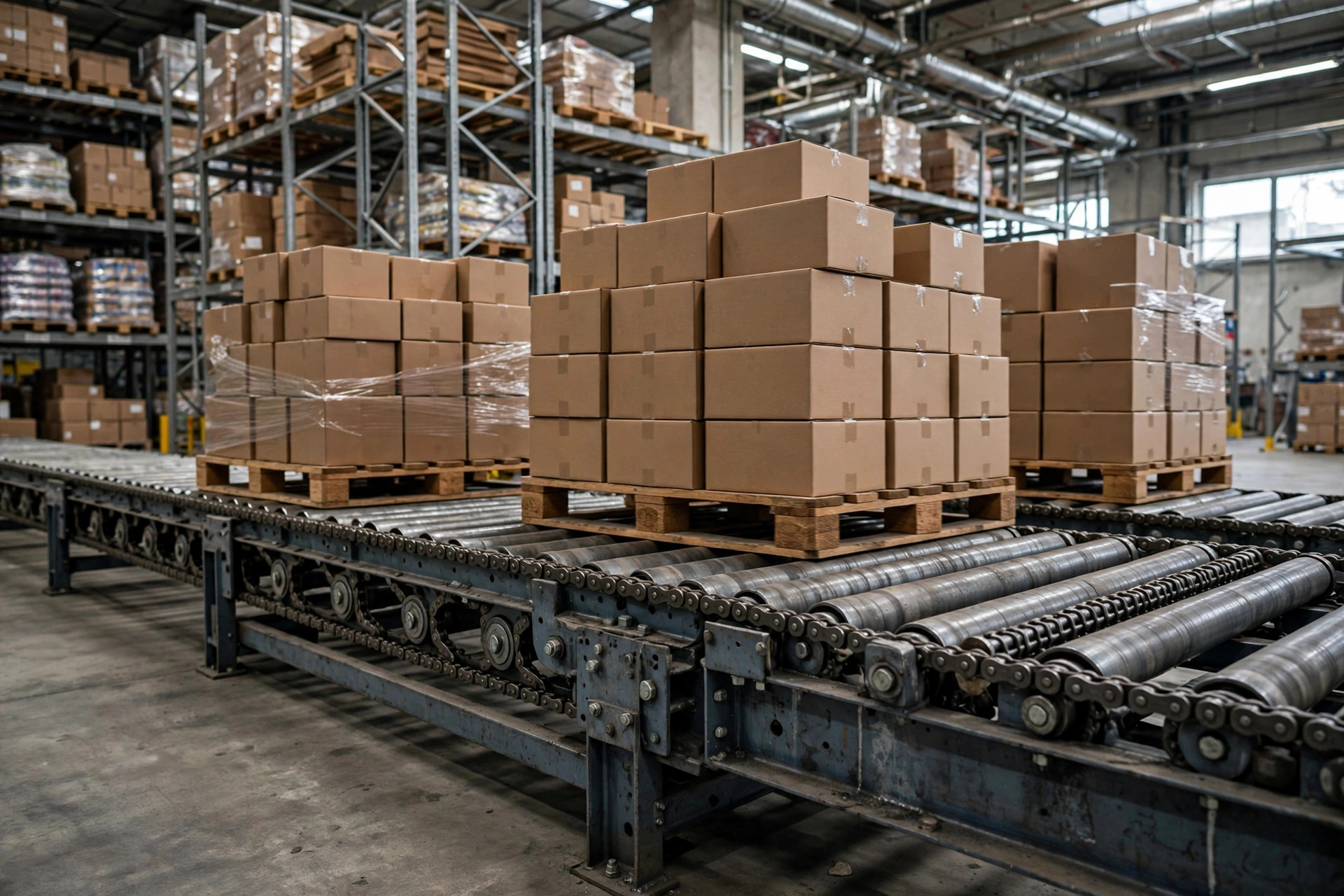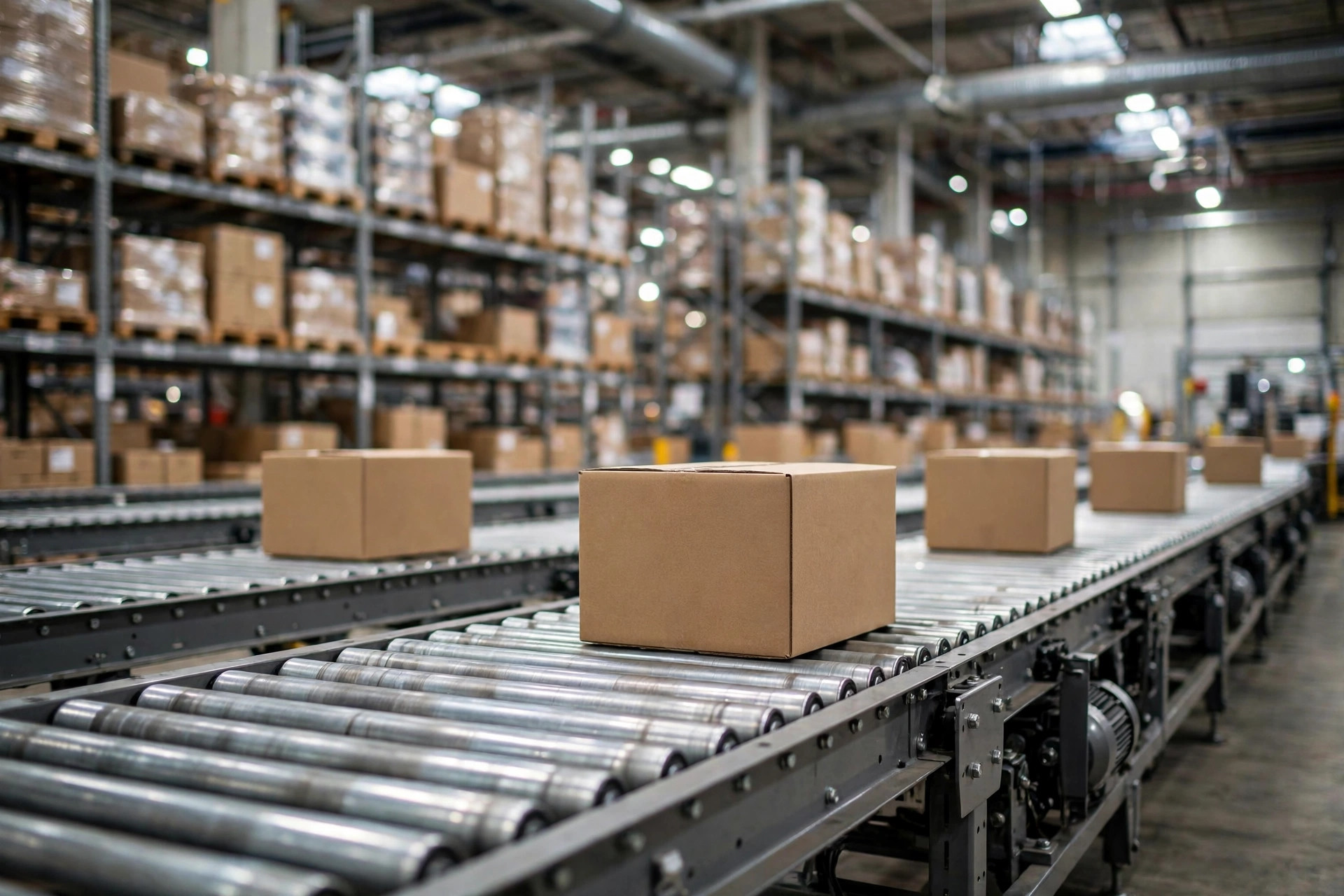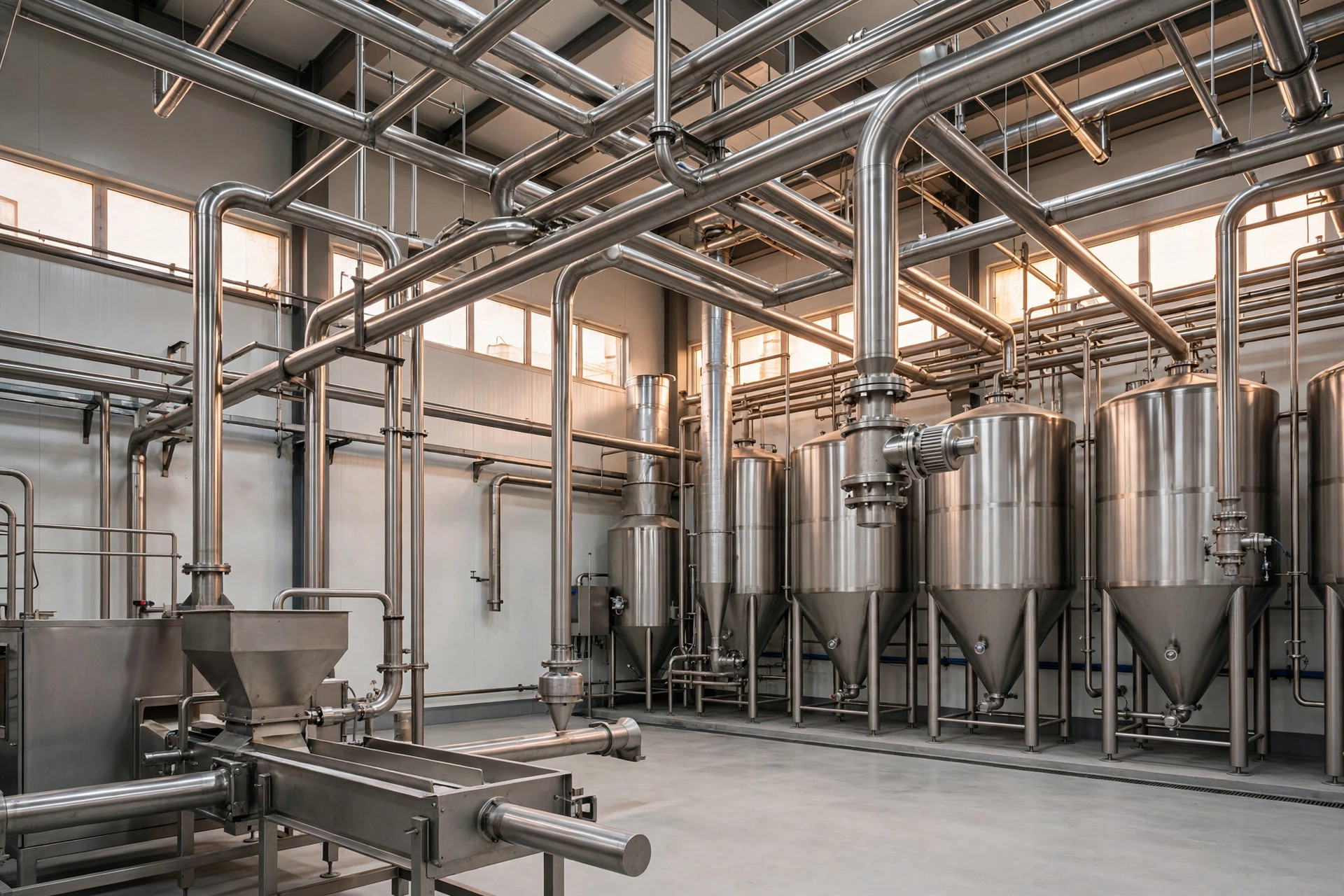
In March 2023, an infant-formula plant in Qingdao blocked its pneumatic conveying line three times in one month. The worst blockage stopped the entire batching line for six hours, with the mixers sitting idle waiting for material. The boss's first reaction was "the equipment is junk," and he had a shouting match with the vendor. Then I took one look: conveying air velocity at 24 m/s on a heat-sensitive powder. The milk powder was getting smashed to bits in the pipe, fines rate up almost 3 points. The system wasn't broken — it was mis-specified.
Think of it as watering flowers with a fire hose: the water gets there, but the flowers are ruined. Same story here — in pneumatic conveying, faster air is not better air. This piece walks through the traps I've actually stepped in: the principle, the dilute-phase vs. dense-phase decision line, blockage triage, and finally the math.
The Principle: Moving Parcels With Air
You can think of it this way: the pipe is a highway, the air is a fleet of trucks, and the powder is the passenger. There are two schools of thought depending on how the passengers ride:
Dilute phase: fast air (roughly 18-25 m/s), the material is suspended and "blown" through the line, low solids loading ratio (typically below 15). It's like a courier on a scooter — fast, one parcel at a time, but the per-trip cost isn't cheap.
Dense phase: slow air (single-digit m/s), the material moves in slug-like plugs pushed down the pipe, high solids loading ratio (roughly 15-50). That's a freight line — one full truckload, slower, but cheaper per ton, and the cargo doesn't get battered.
Dilute or dense is the single most important decision in the whole system. Get it wrong and everything after is patches. Here's the decision table I actually use in the field — print it and tape it to the wall:
The Selection Line: Dilute Phase vs. Dense Phase
| Item | Dilute phase (fast, lean) | Dense phase (slow, rich) |
|---|---|---|
| Air velocity | 18-25 m/s | 2-8 m/s |
| Solids loading ratio | Below 15 | 15-50 |
| Conveying pressure | Usually below 0.1 MPa | 0.1-0.6 MPa |
| Conveying distance | Best within tens of meters | Can reach hundreds of meters |
| Capacity per line | Relatively small | Large (several times dilute at same pipe size) |
| Energy use | Big blower, high kWh per ton | Much lower kWh per ton |
| Damage to material | Breaks fragile particles, wears pipe elbows | Gentle, good for fragile and heat-sensitive powders |
| What it hates | Long lines, many elbows | Poor-flowing or high-moisture material |
| Typical materials | Plastic pellets, grain, free-flowing powders | Milk powder, starch, fertilizer, fragile granules |
(These are standard engineering magnitudes — confirm against the vendor's selection manual and your own material tests.)
The decision framework is three steps. Step one: look at the material. Fragile? Heat-sensitive? Free-flowing? Delicate powders like milk powder and starch start at dense phase. Step two: look at distance and throughput. Short line, small volume — dilute phase is cheap and simple. Long line over a hundred meters, big tonnage — only dense phase makes the energy bill work. Step three: look at the site. More than five elbows, serious vertical lift — dilute-phase pressure losses will eat your entire margin, so go dense.
Here's the counterintuitive one: bigger pipe is not cheaper. People assume a fatter pipe means less resistance and a smaller blower. Wrong. With the same airflow, a bigger pipe drops the air velocity, the material "sits down" in the pipe, settles, and blocks. I've seen more than one project where the design institute bumped the pipe up one size "for margin," and the margin turned into blockages. Pipe sizing answers only to the calculation, never to gut feeling.
Blockage Triage: Three Field Moves
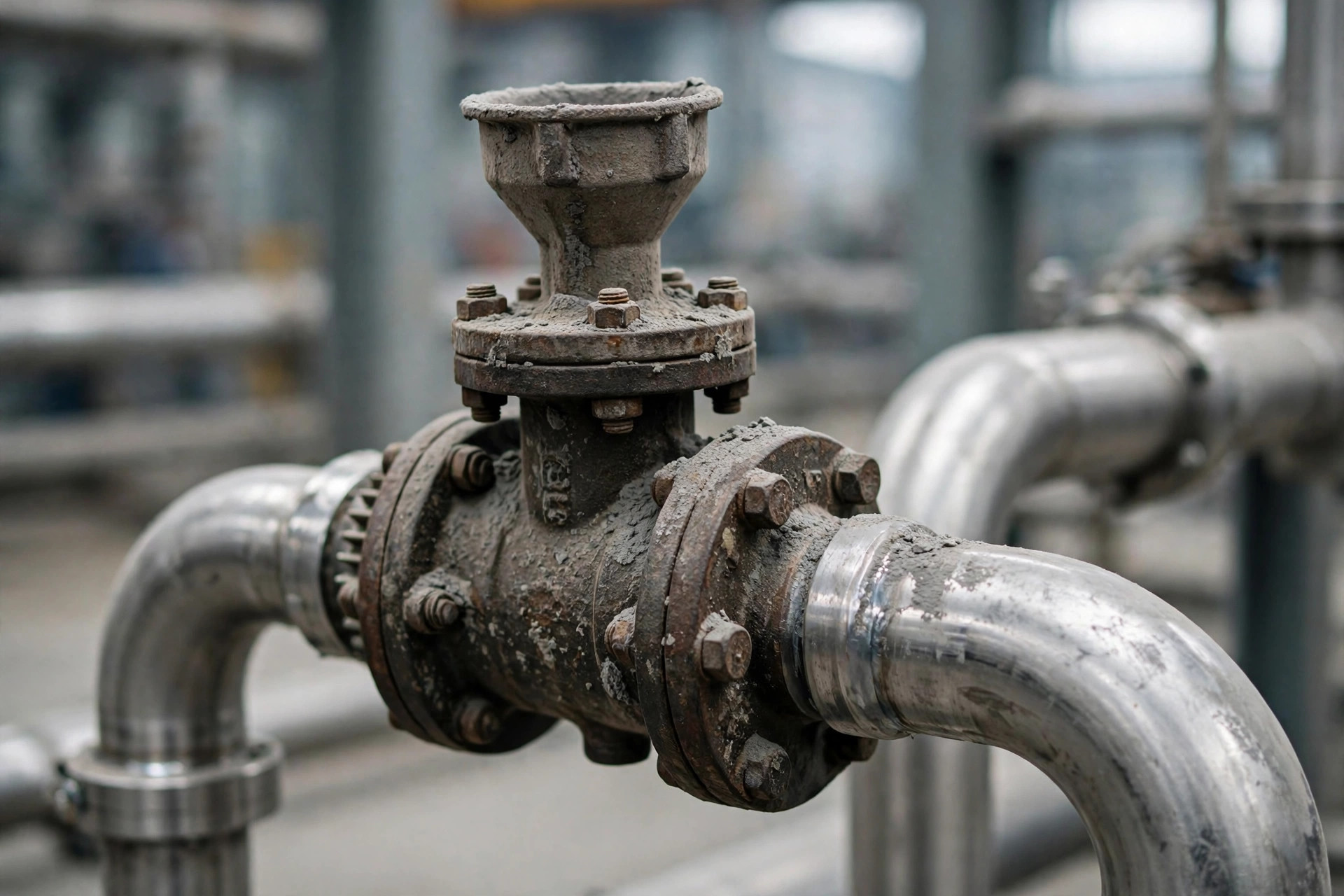
In June 2024, a chemical raw-material warehouse in Taixing, Jiangsu, blocked solid at the third elbow of its polyacrylamide powder line — six hours of downtime. Root cause: the solids loading ratio was running at nearly double the design value. The operator, trying to save time, dumped in a double batch: "the blower's running anyway." Too much material, the air couldn't carry it, it settled at the elbow, and the whole line died.
When it blocks, don't panic. Work this sequence:
Move one: blow back. Reverse the conveying direction and blow from the discharge end toward the feed end to loosen the plug. Eight out of ten minor blockages clear with 10-20 minutes of reverse blowing. Close the feed valve first, or you'll just pack it tighter.
Move two: tap and vent. If blowback does nothing, the plug is serious. Start at the elbows and tap along the pipe, listening — a dull thud marks the blockage. Open the nearest inspection port to vent, then blow back again. Remember: confirm the system is depressurized before opening any port. Opening a pressurized powder line gets you a face full of powder at best and a safety incident at worst.
Move three: pull the pipe. If the first two fail, accept it and break the line open. Isolate and lock out the valves upstream and downstream, tag out the silo side. While the spool is off, check the inner wall for wear — on a line that's blocked three times, the elbows are almost certainly worn thin. Replace them now and save yourself next month's repeat.
One safety red line: many food and chemical powders are combustible dust. Flour, starch, milk powder, polyacrylamide dust — at the right concentration, they explode. The system must have explosion protection designed in: venting panels, static grounding, dust concentration control. Explosion class and protection measures come from a certified lab's test report, not from anyone's gut. There is no "close enough" on this one — one incident is one too many.
Time to Call Out a Fake Requirement
Now for the unpopular opinion: some plants should never install pneumatic conveying at all.
You move 2-3 tons a day over 20 meters. Two integrators quote you: one offers a 400k pneumatic system, the other an 80k vacuum feeder plus screw conveyor. The boss picks the 400k system because it's "fully automatic and impressive." What happens? The tonnage is too small, the system runs at low load year-round, the blower spins half-empty burning electricity, and you still need a dedicated maintainer. That money would have bought a well-sealed, well-dedusted 80k setup with change to spare.
Pneumatic conveying is a scale tool, not a status symbol. Small daily tonnage, changing batches, a different material every week — stick with flexible mechanical conveying plus manual handling. Don't force it.
Is the Money Worth It? Watch This One Number
Time for the math. Ignore the sales pitch about "300% efficiency gains" and watch one number: cost per ton = (annual electricity + annual maintenance + annual depreciation) / annual tons conveyed, compared against what you do today (manual handling, mechanical conveying).
A reference calculation: a dilute-phase system typically starts at tens of kW of blower power, and with two-shift operation the electricity bill dominates the year. A dense-phase system costs 30-50% more to install but can cut electricity per ton by more than half. At ten thousand tons a year, the dense-phase premium pays itself back from the power bill in one to two years. At only a few thousand tons a year, dilute phase is cheaper and pays back faster. Run the breakeven, and the choice makes itself — no arguing needed.
How to choose a pneumatic conveying system comes down to three lines: delicate material goes dense phase, distance and throughput set the design, and you spend the money only after the per-ton cost is clear. Blockages aren't scary. Not knowing why they happen is.
By Da Liu, Automation Engineer