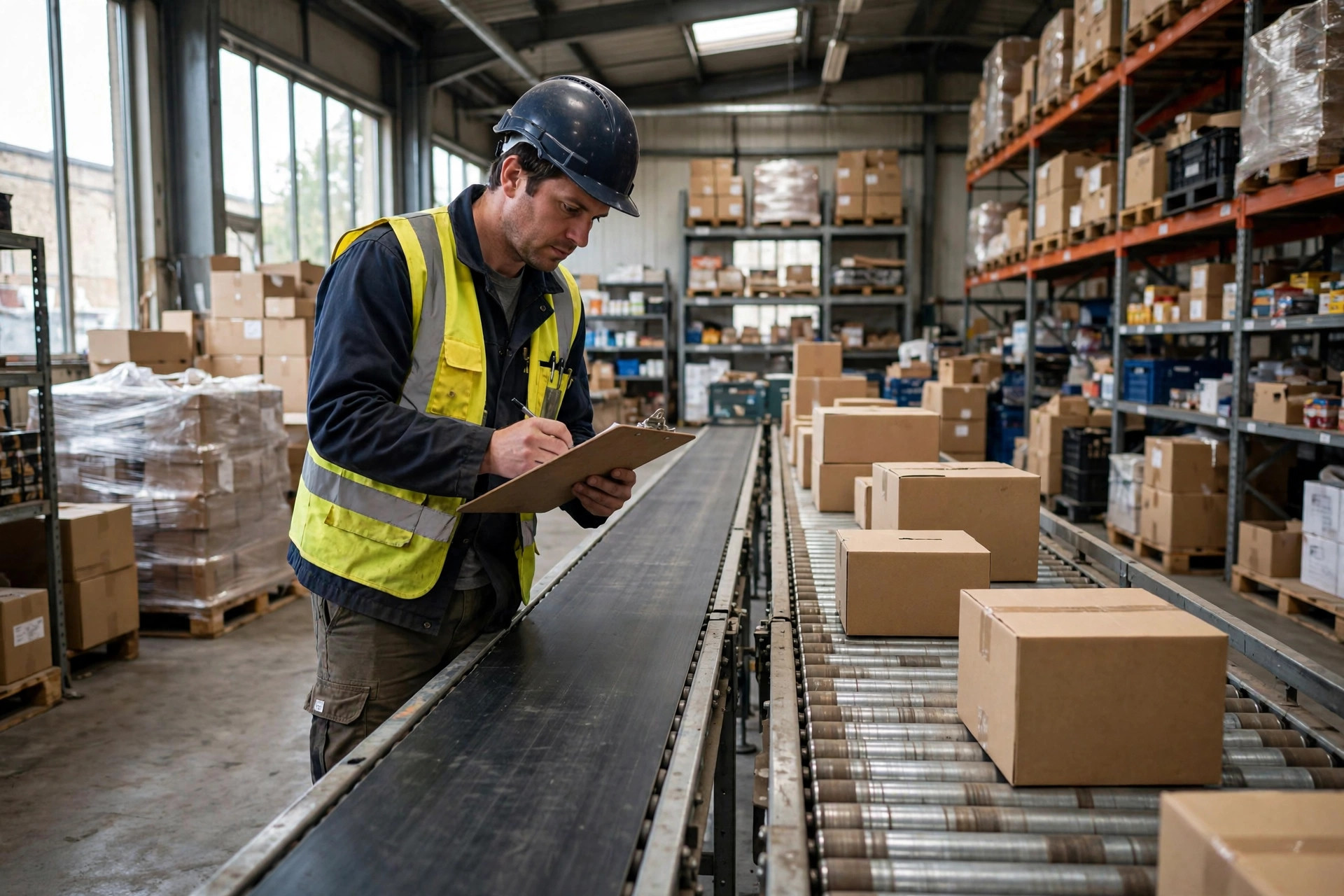
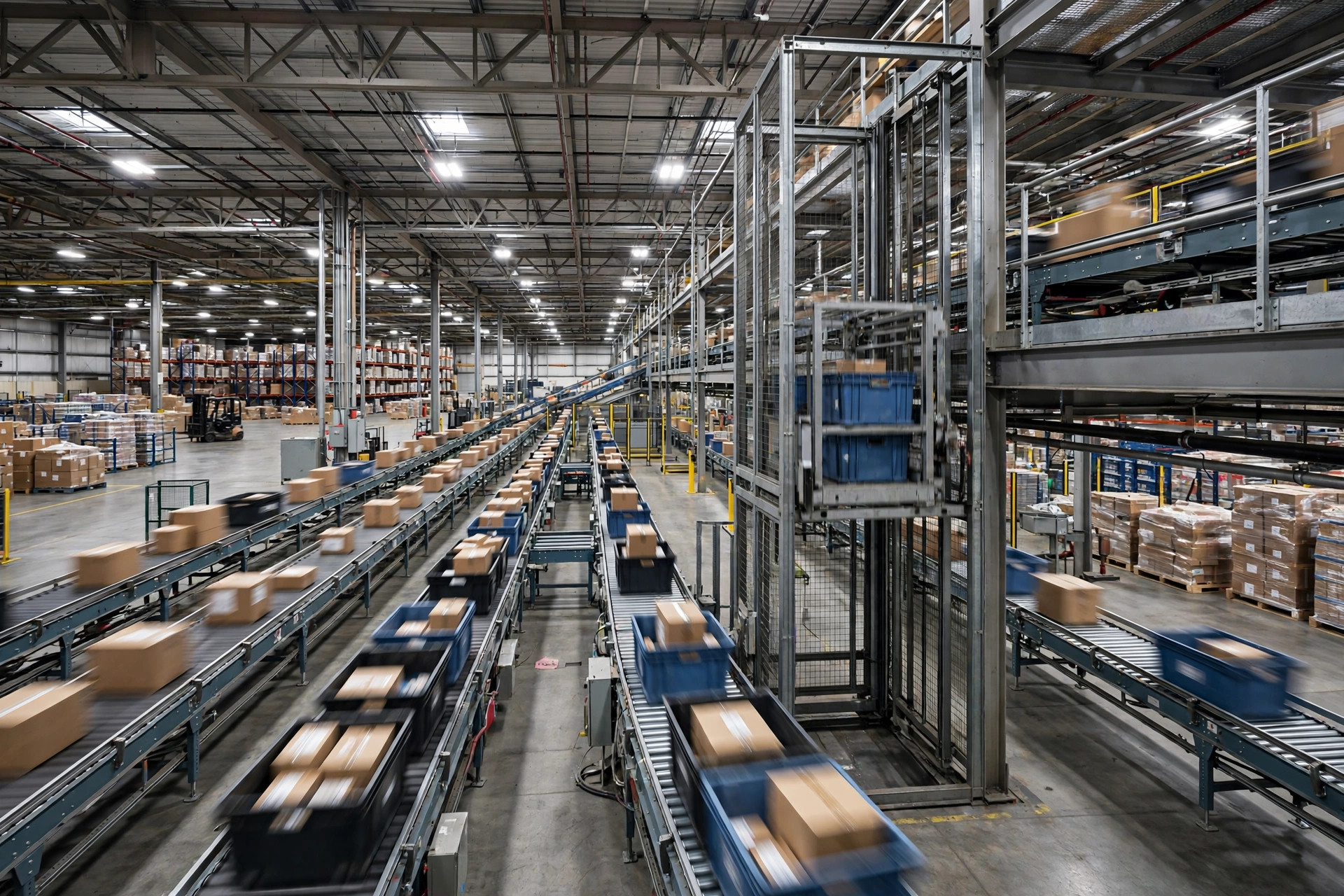
It was 2:10 in the morning, the week before peak season, at a 3PL warehouse in Ontario. My radio crackled: "Chute 37 is jammed!" I was the shift manager that night. I got there and found the discharge chute piled into a small mountain, the belt still feeding parcels into it, the whole cross-belt sorter throttled down, six people standing around the chute just staring at it.
Thirty-eight minutes of chaos. We never caught up on throughput for the rest of that night.
That story is now mandatory listening for every new hire in our building. Ask any warehouse manager and they'll tell you the same thing: a sorter chute jam is the warehouse world's classic "small problem, huge headache." Nothing breaks, nobody gets hurt — but the rhythm of the entire line falls apart.
Three Kinds of Jams — Know Which One You're Dealing With
After all these years, I've learned jams come in three flavors, and each one needs a completely different response.
Oversize parcels. This one is the most unfair. The sorter chutes have fixed widths — the dividers are typically 30 to 36 inches apart. But nobody stops the oversize freight upstream, so a 48-inch carpet roll rides straight onto the sorter and wedges itself at the chute entrance. Dead stuck. In the summer of 2024, at that same warehouse, a long carton holding a camping tent jammed the curve section and sat there for 2 hours — we couldn't pull it out and ended up dismantling that belt section.
The real problem isn't the equipment, it's upstream. If the induction scan doesn't catch the dimensions, everything downstream chains into failure. Our fix: a manual "long item" pull at induction. Anything over 42 inches doesn't ride the sorter — it goes to the manual sort lane. It's a hassle, but it beats dismantling a belt.
Full chutes. The most common one. Parcels stack higher and higher in a chute, rise above the belt surface, the next parcels can't discharge and back up into the sorter, and the line throws an alarm. Night shift is when it hits, because you're short-staffed — one person covering 8 chutes can't keep up.
Here's the honest truth: it's always the same handful of "hot chutes." One big client concentrates volume, the sort logic dumps a whole zip code range into one chute. Fine during the day. Deadly at night when headcount drops.
Foreign objects. The weirdest kind. In the winter of 2023, chute 12 at one of our buildings kept alarming. We dug in and found a keychain — some employee's, fallen out of a pocket into the chute, wedged in the roller gap at the curve. Another time it was a scanner wrist strap. The object itself is small, but once it blocks one spot, parcels pile up behind it one after another.
Oversize gets stopped by process, foreign objects by discipline, full chutes by early warning. Full chutes cost the most money, and they're worth the most effort — because they happen every single day.
Early Warnings for Full Chutes: Catch the Jam Before 2 AM
We've tried three approaches. Here's the real math on each.
| Approach | How it works | Upfront cost | Ongoing cost | What actually happens |
|---|---|---|---|---|
| Photoelectric sensors | Beam sensors on each chute, alarm at a set height | About $150–$300 per chute | Wipe lenses, realign | Too many false alarms — box tape glare and night-shift dust set them off |
| Weighing modules | Load cells under the chute, alarm on weight | About $800–$1200 per chute | Almost nothing | Accurate, but expensive when you have many chutes |
| Manual rounds | A person walks the chutes on a timer, calls out full ones on the radio | Zero | About $200–$260 per shift in labor | Most flexible, but misses happen when attention slips |
Let me tell you about the trap we fell into first: we installed photoelectric sensors on 40 chutes, nearly $10,000 spent. The result? Glare from packing tape, dust from the night shift — false alarms got so bad the team just muted the alarms. Money spent, habits ruined. That's the worst kind of loss.
So we went back to a low-tech method: manual rounds plus radio callouts. On night shift, one person is dedicated to walking every chute every 20 minutes. Anything stacked past two-thirds height gets a call: "Need someone at chute 22." Honestly, it's the least impressive-looking solution, but it works best — because a person sees things sensors can't. Light, bulky freight can stack high and still be fine. Heavy freight needs clearing at half height.
Here's the counterintuitive part: for full-chute warnings, automation isn't always more reliable than people. A sensor only reads height. A person reads the freight. Our current setup is a hybrid: the 10 hot chutes for big clients get weighing modules — expensive but accurate; everything else gets manual rounds. With that mix, full-chute line stoppages went from 6–7 a month to 1–2.
The Clearing SOP: Lockout/Tagout Is the Red Line
When a jam happens, how do we clear it? We have a fixed procedure posted on the wall next to every chute.
- Stop the line before touching anything. First call is to the control room to slow or pause that chute. Nobody reaches in while the belt is running. Ever.
- Lockout/tagout. If you need to get inside the chute or remove a divider, cut power to that section and hang your own lock. You keep the key. Nobody restores power on your behalf.
- Clear top-down. Take the upper parcels off first, then deal with the wedged one. Don't start by yanking the bottom piece — it only gets tighter.
- Use a pry bar for oversize, not your hands. For a wedged long item, pry it loose slowly with two people: one pries, one pulls.
- Run it empty for one cycle after clearing. Confirm nothing is left inside, dividers are back in place, then tell control to resume.
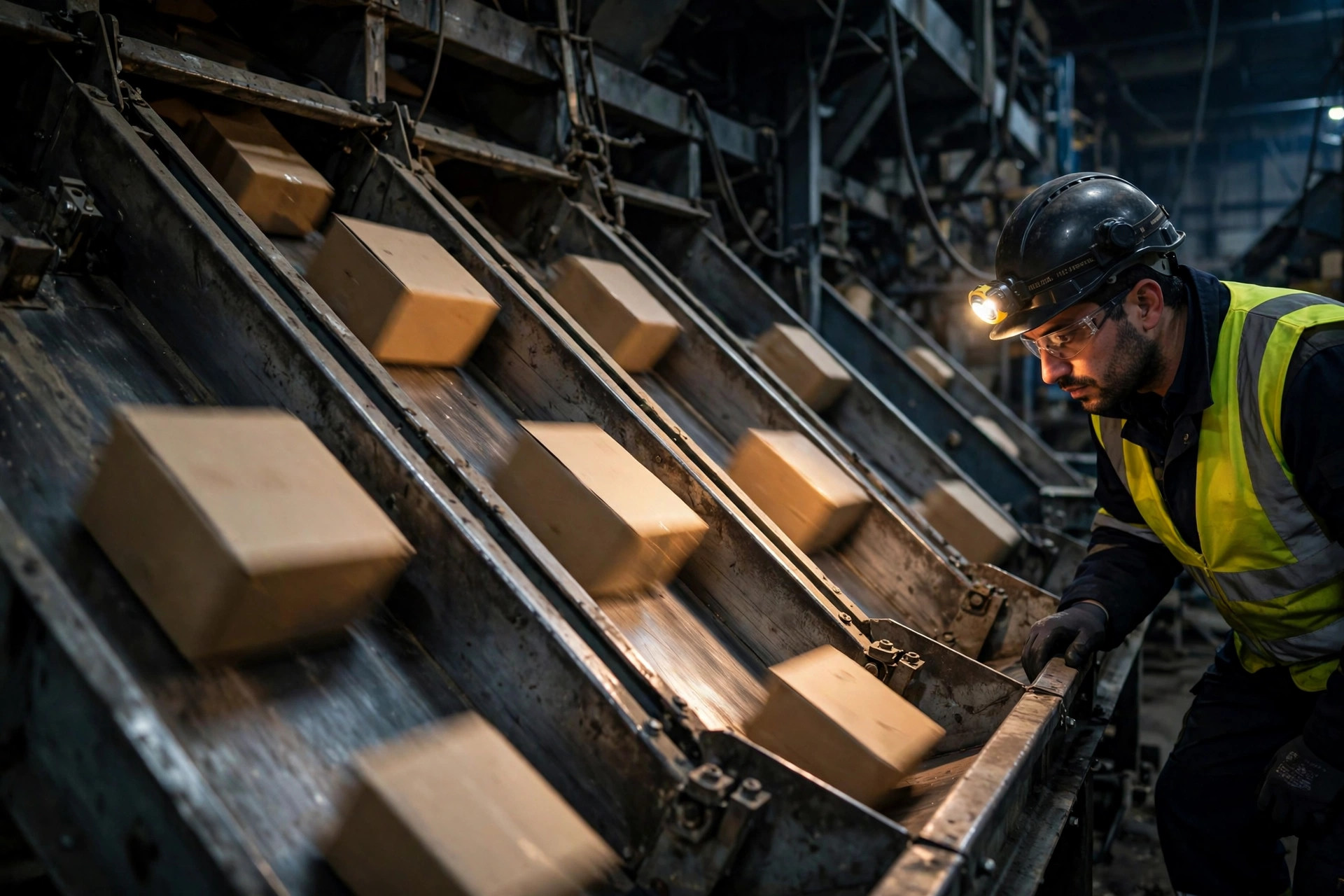
Another counterintuitive lesson: when a chute jams, the fastest way out is usually to slow down first. New hires panic and start grabbing parcels. The belt moves, a finger goes in. We had a minor injury in 2022 exactly that way. Since then, rule number one of the SOP is "stop the line first." Break it and you write a self-criticism — a real one, posted on the bulletin board.
One more word on lockout/tagout. Plenty of small warehouses think "I'm just grabbing it, it'll take five seconds" and skip the lock. But the sorter restarts from the control room remotely. You're elbow-deep in the chute while someone at the console gets an order to resume. I'm not trying to scare you — this has actually happened. One lock per person, key stays on you. That's the bottom line of the bottom line.
The Math: What One Jam Actually Costs
Using our building's numbers: a cross-belt sorter rated at 8,000 parcels an hour. One jam stops the line for 30–40 minutes on average, costing roughly 4,000 parcels of throughput for the night. In peak season, the trucks queued outside wait 2 extra hours, and the drivers' detention fees stack on top.
Now the prevention math: a night-shift rounds person costs about $220 a shift, roughly $6,600 a month. One line stoppage — lost throughput plus overtime to catch up — easily exceeds that. The arithmetic isn't hard. The hard part is getting the headcount approved, because on the nights when nothing jams, that person looks like they're just wandering around. Every warehouse manager knows this: prevention money is always the hardest money to get.
A Few Reminders for Fellow Operators
Chute jams are a prevention game, not a firefighting game. Hold the line on dimensions at induction, watch the hot chutes, nail the clearing procedure — do those three things and the sorter chute jam warehouse story goes from "every day" to "once in a while."
And one last honest word: don't fall for the equipment-upgrade trap. Plenty of buildings respond to jams by buying fancier sensors or wider chutes. I've watched too many places spend tens of thousands of dollars on upgrades and keep jamming anyway. The problem is usually not in the steel — it's in the process and the people. Get the staffing right, post the SOP on the wall, hand a lock to every person. Those things cost nothing. Do them first.
By Chen Feng, Warehouse Operations Manager