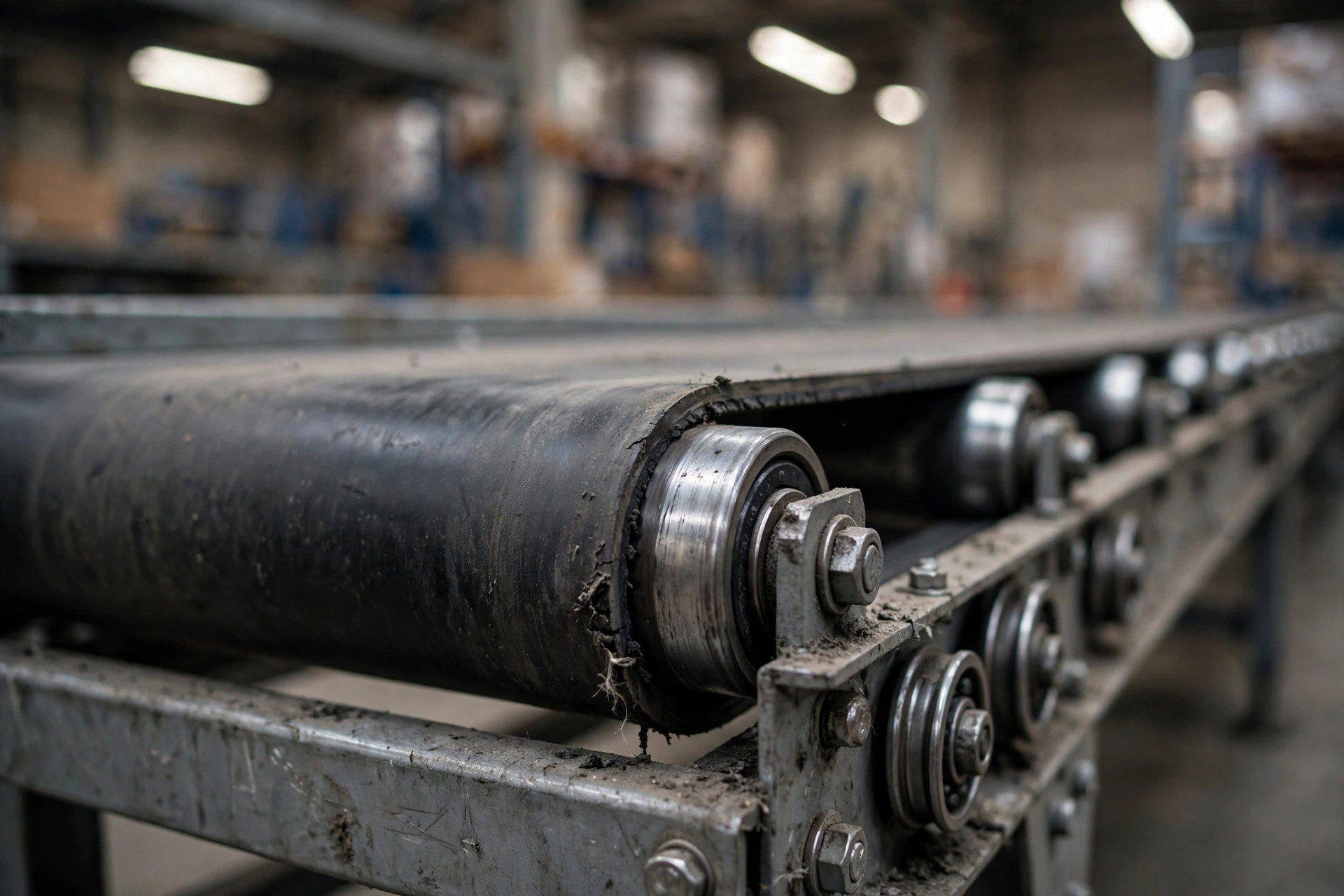
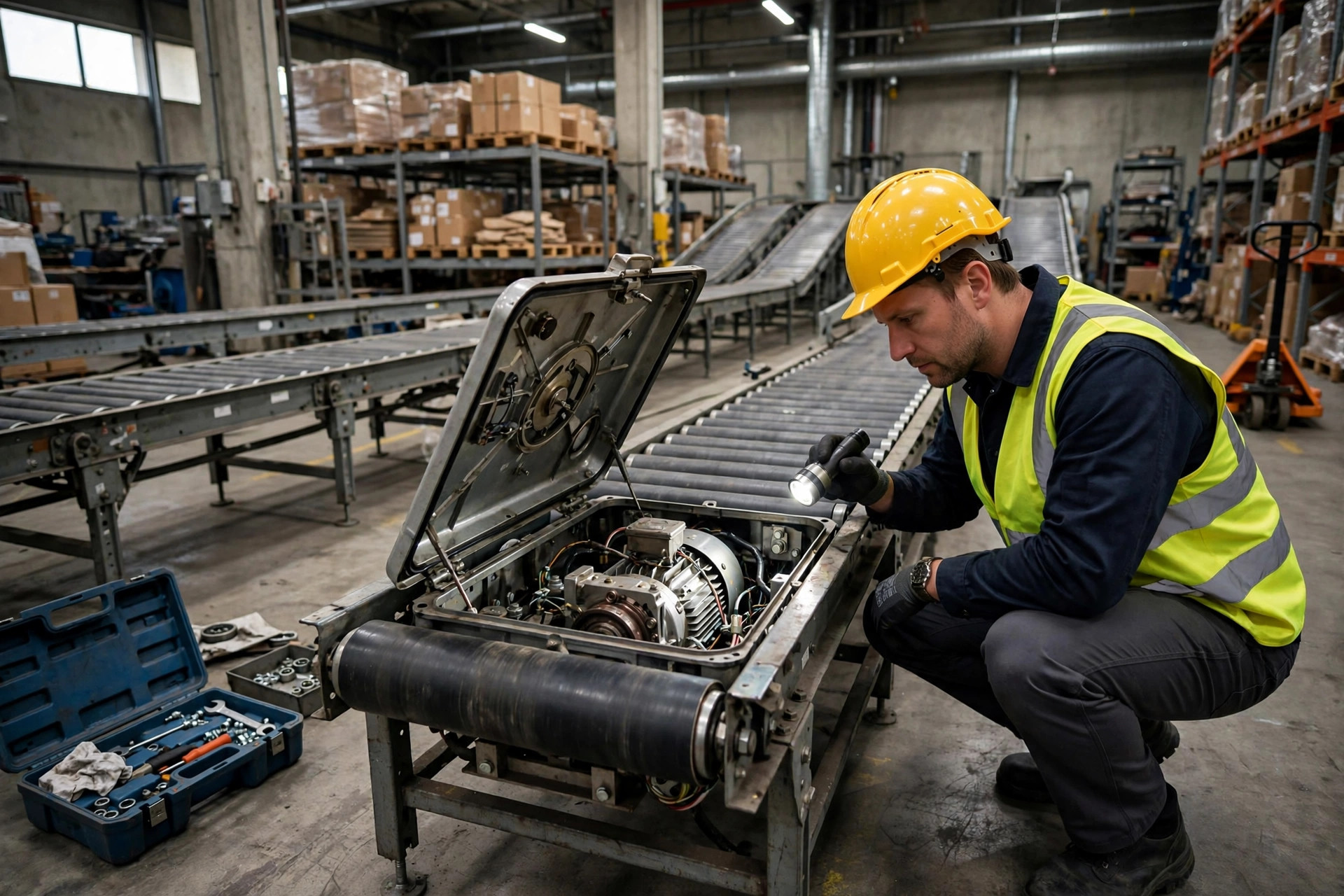
Of all the parts on a conveyor line, the gearbox is the one everybody ignores. People understand motors. Belts and rollers are visible and touchable. The gearbox sits in between — dark, heavy, and nobody wants to deal with it. But in my years as an integrator, unplanned downtime traced back to the gearbox more times than I can count. Think of it this way: it's the transmission of your conveyor. The motor spins at over a thousand RPM; the rollers only need a few dozen. Everything in between — trading speed for torque — is the gearbox's job. It's just like a car: the engine screams at 6,000 RPM while the wheels turn at a few hundred. Without it, the motor's power never reaches the ground.
How a Gearbox Actually Works
A motor delivers high speed and low torque. A conveyor needs the opposite: low speed, high torque — enough to drag a belt tens of meters long with hundreds of kilograms of product on it. Gears inside the box trade speed for torque. A 20:1 ratio means the motor turns twenty times for every single turn of the output shaft, and torque gets multiplied by roughly twenty (minus efficiency losses).
Here's a dividing line most people miss: gear type determines efficiency. Helical and bevel gears run at 95% efficiency or better. Worm gear sets often sit around 70%. Where does the missing 30% go? Heat. It's like two people moving the same load — one is calm and steady, the other is drenched in sweat. The second one isn't lazy; the design is just working harder. So under identical duty, a worm gearbox runs inherently hotter than a helical one. That's physics, not a quality problem.
Conveyor Gearbox Selection: Three Dividing Lines
Selection paralysis is real — datasheets can make your eyes glaze over. But only three lines actually matter.
First: size the torque with margin, but not too much. Calculate the required output torque from your load, then multiply by a service factor of 1.25 to 1.5 — standard practice in conveying to absorb starting shock and the occasional jam. Anything above 2 is waste: bigger, pricier, hungrier for power and floor space.
Second: let duty decide the type. A heavy sortation line running twenty hours a day gets a proper helical or bevel gearbox — continuous duty, good heat dissipation, long life. A light belt conveyor running four or five hours a day? A worm gearbox is perfectly adequate and cheaper. This is where I see the most "fake requirements": someone specs a premium imported helical unit for a short, lightly loaded line because they want to "do it right the first time." Using a sledgehammer to crack a nut — great hammer, wasted money. The first rule of gearbox selection is matching the duty, not stacking specs.
Third: mind the mounting and the load direction. Shaft-mounted, foot-mounted, flange-mounted — pick wrong and it won't fit on site, and one rework costs you two days. And watch radial loads: chain drives pull sideways on the output shaft, so check the gearbox's allowable radial load rating. Exceed it and the bearings die first. This is the most overlooked line, and the one most likely to blow up three months after commissioning.
Oil Leaks: Look at the Oil First, Then at the People
The most common gearbox "disease" is leaking oil. But here's a counterintuitive take: a leak doesn't mean the gearbox is dead, and a dry gearbox isn't necessarily healthy.
Most leaks first. Seven or eight times out of ten, it's the seals and the breather. Seals are rubber — they age and wear, that's normal life. A clogged breather lets pressure build up inside the housing, and oil squeezes out wherever it's weakest. A new seal costs pocket change; clearing a breather costs nothing. People who see a drip and shout "the gearbox is shot, replace it" are junking the car because of a flat tire. Pure waste.
Now the dry ones. Oil level chronically low (slow leak, nobody noticed), oil never changed, oil temperature chronically high — the outside looks spotless while the gears inside are grinding themselves to dust. Oil temperature is the most honest health metric a gearbox has: many manufacturers rate the upper limit around 90°C (check your nameplate and manual), and a stick-on temperature label costing a few dollars, glanced at weekly, beats any vibration analyzer. Hovering under 70°C? It's living comfortably. Camping above 85°C year-round? It's suffering, and its remaining life is being discounted daily.
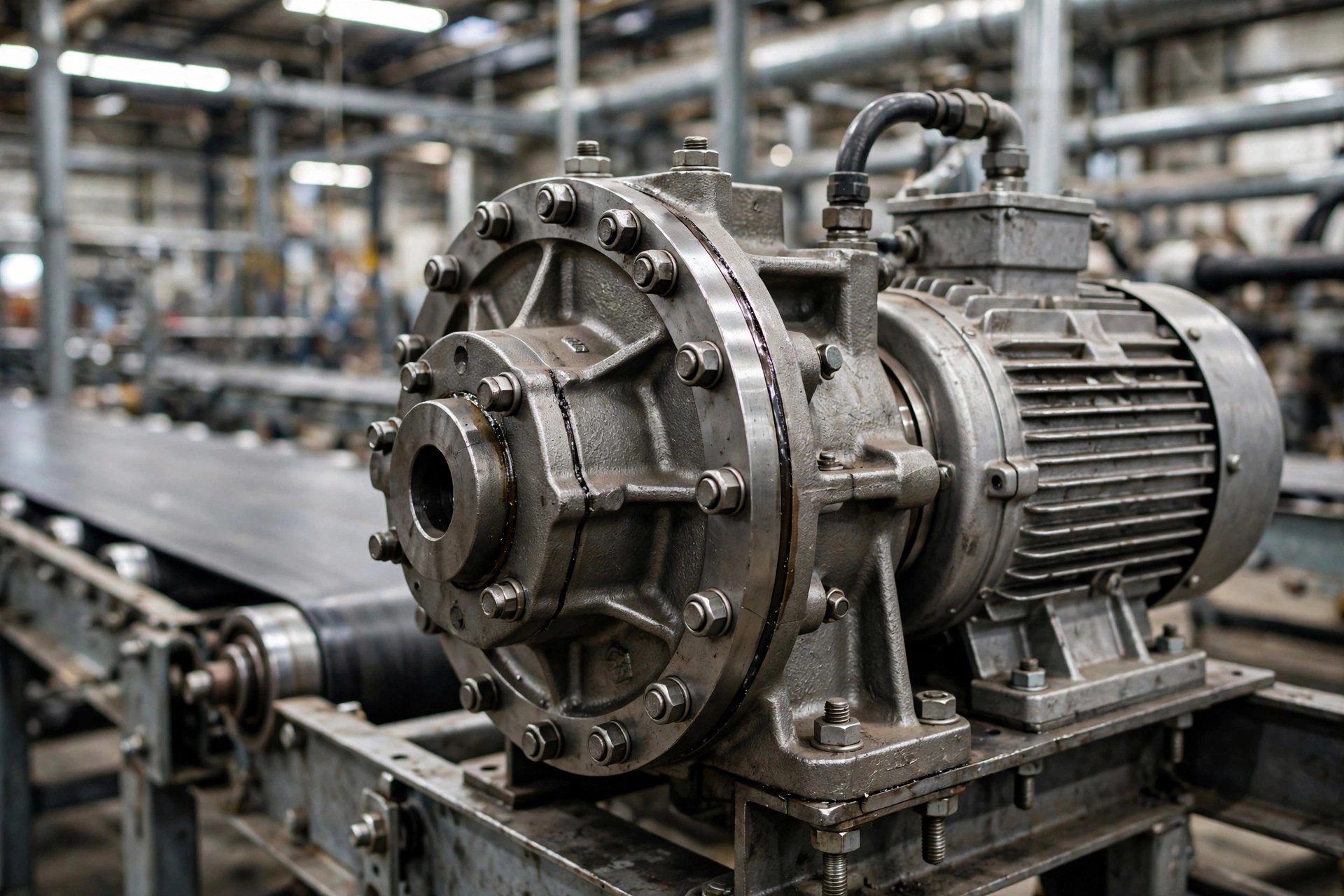
Three maintenance traps I keep seeing. One: change oil by operating hours, not by calendar. Manufacturers typically suggest around 5,000 running hours between changes (per the manual) — a line running 8 hours a day and one running 20 hours a day have oil-change intervals that differ by more than double. A blanket "change it yearly" wastes oil on the first line and abuses the machine on the second. Two: don't overfill. Oil above the max line gets churned, churned oil runs hot, and overheating from overfill hurts worse than running slightly low. Three: noise and vibration are early warnings. Worn gears and pitted bearings show up in sound and vibration long before failure — a regular listen-and-touch round beats waiting for it to seize.
And a trade-off worth stating: people ask whether they should upgrade to expensive synthetic oil. My take — the change interval matters more than the oil's price tag. Ordinary mineral oil changed on schedule beats premium synthetic oil left in for three years. Spend the money on "on time," not on "expensive."
When to Replace the Gearbox: Is the Money Worth It? One Number Decides
Repair or replace — every maintenance lead agonizes over this. Here's a calculable answer: if a single repair quote exceeds 60% of the price of a new unit, replace it, don't repair. A rebuilt gearbox never gets its factory sealing or gear-mesh precision back. A repair buys you six months; the second failure comes faster.
But there's a sharper calculation for the "let's just nurse it along" mindset. Two numbers: what one hour of downtime on this line costs you (idle labor, late orders, penalties — all of it), and what a new gearbox costs. The bigger the ratio, the more you should replace proactively instead of waiting for the breakdown.
Two years ago I worked on a project — an e-commerce sortation line where a gearbox had been growling for three months and nobody touched it, "still running fine." Then, the week before peak season, a gear stripped and the whole line went down for nine hours. The downtime cost more than forty times the price of that gearbox. The owner told me afterward: should have just swapped in a new one, it was a few thousand dollars. They now have a standing rule: gearbox oil temperature above limit for two consecutive weeks, or a repair quote crossing the 60% line, triggers automatic replacement. No meeting required.
So whether the money is worth it comes down to this one number: one hour of downtime cost, divided by the price of the gearbox. Above 10, you've lost the right to "nurse it along." Above 30, keeping a spare on the shelf pays for itself. The gearbox is the cheapest critical part on the line — don't let it decide your most expensive hours.
By Da Liu, Automation Engineer