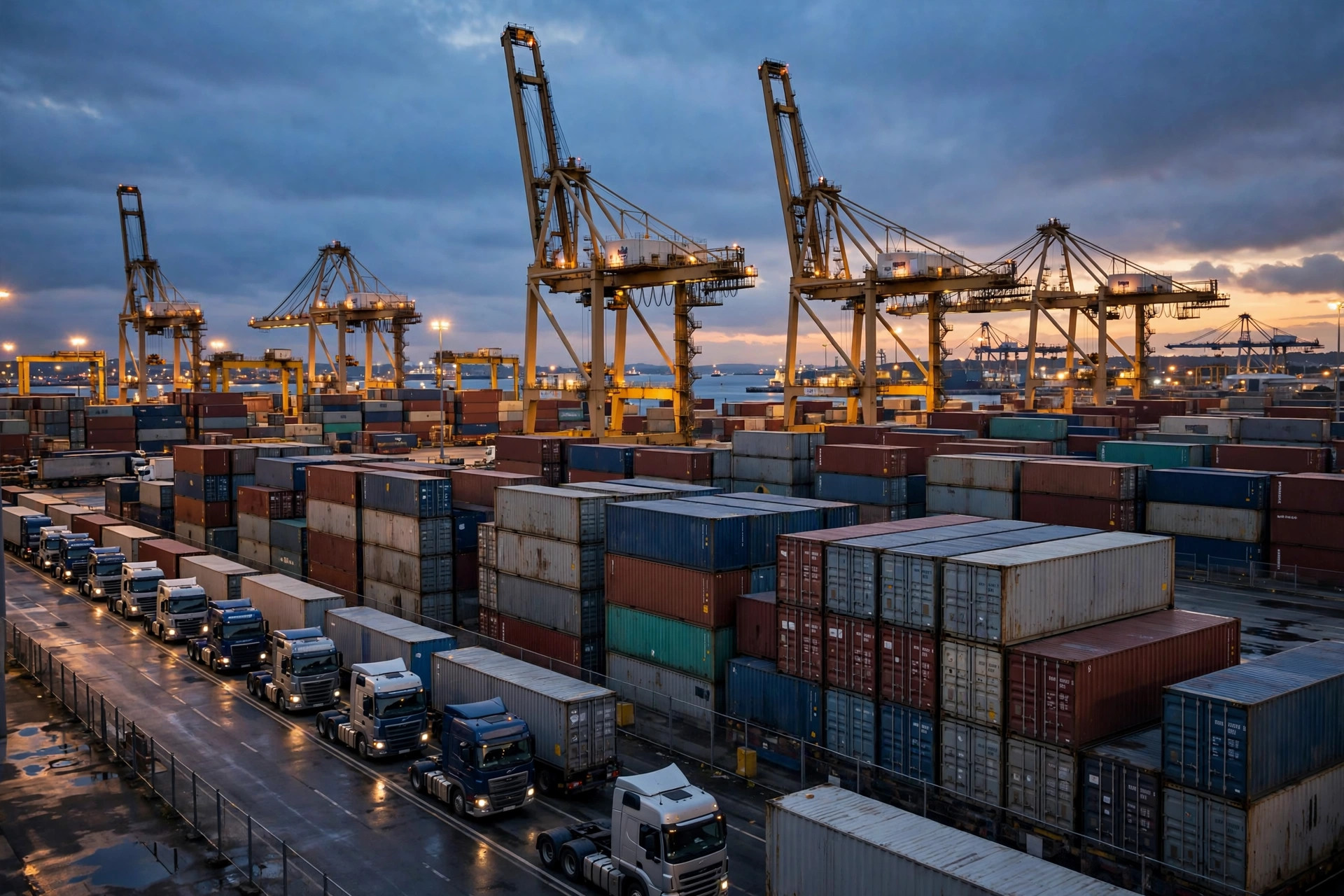
Port congestion warehouse receiving delay — that's the phrase nobody wants to live through, but if you import through the US West Coast, you've already lived it. Let me tell you what it looks like from the driver's seat. I've been hauling containers out of Long Beach and Oakland for fifteen years, and I'm telling you straight: what scares me isn't traffic. It's the email from the ocean carrier saying your sailing got blanked, or your box got rolled to the next vessel. It's like booking a dinner party and the guests cancel — but the kitchen already cooked everything. Your warehouse has the receiving appointment booked, the labor scheduled, and the freight? Still floating out there somewhere, or sitting at a different port entirely.
Last month I watched a vessel sit at anchor off Long Beach for three full days. My pickup number in the terminal's appointment system slid from Tuesday to Friday, one day at a time, and every morning the first thing I did was refresh the carrier app to see what the ETA had become. The driver group chat was full of cursing, but cursing doesn't move freight — and the warehouse's receiving appointment was carved in stone. If I can't pull the box, their unload crew stands around getting paid to wait.
I've seen this movie too many times. Two stories will tell you everything.
Story one: last fall, an importer of outdoor furniture, two 40-footers through Long Beach. Vessel was supposed to berth on a Tuesday. His warehouse out in the Inland Empire had a receiving appointment locked for Wednesday 8 a.m., six temp workers booked. Monday night, one email: this sailing rolled boxes back in Busan, his two containers missed the vessel — seven days late, just like that. Wednesday morning, six temps showed up at the warehouse. No freight. They still got paid for the day. The appointment was dead, rebooking pushed three more days out, and the boxes sat at the terminal racking up demurrage. All in, that shipment cost him several thousand dollars extra — on thin margins, that's the profit gone.
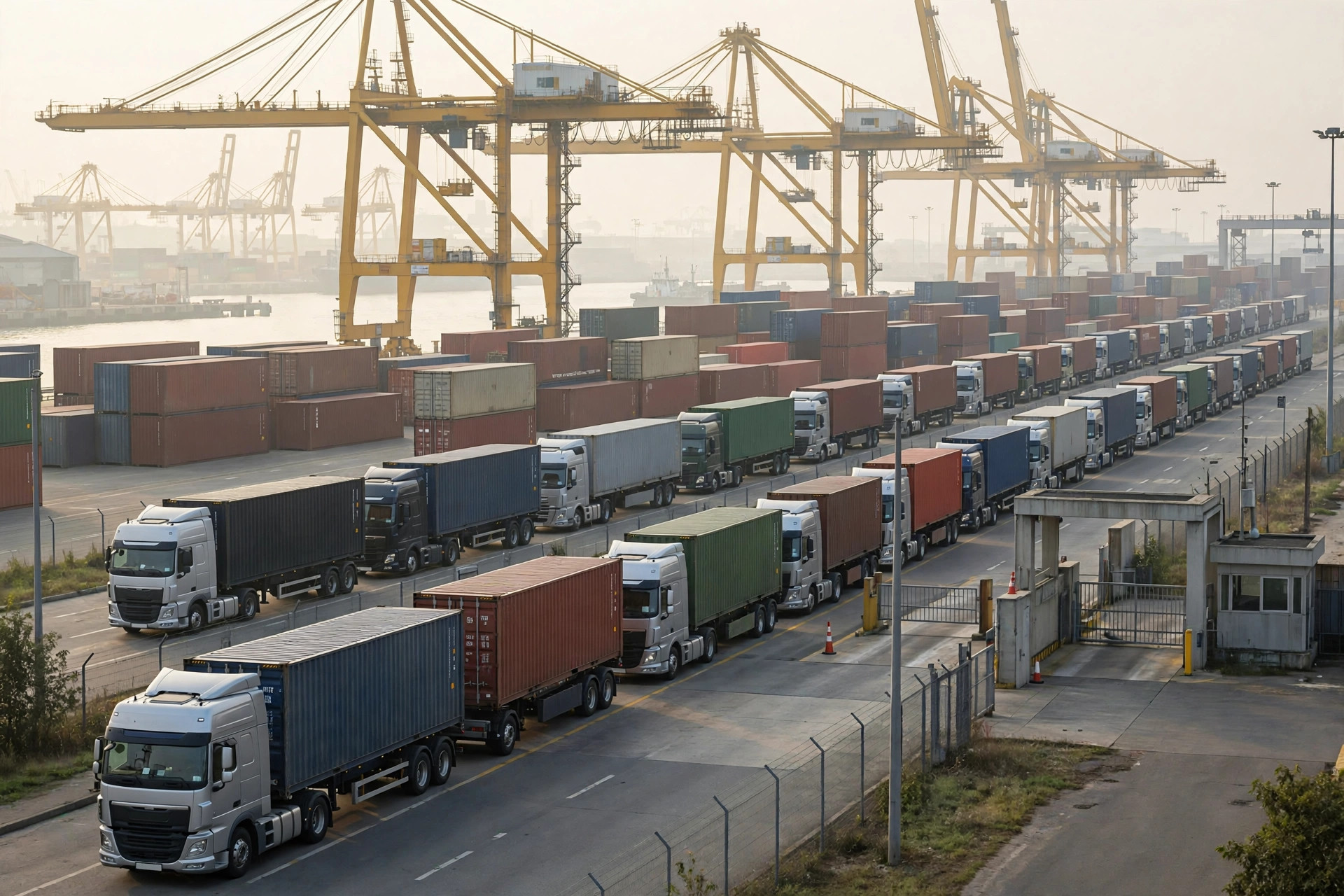
Story two is the one that really stings: the box arrived on time, but the terminal was jammed solid. Early this year at Oakland, the gate queue stretched onto the freeway, and clearing the gate could eat half a day. The warehouse appointment was non-negotiable: Thursday 10 a.m., miss it and you're done. I pulled the box Wednesday night thinking early is safe, right? Wrong. The warehouse said: we'll hold your door for 10 a.m. tomorrow, but there's no slot for you today — so the truck sat outside overnight with the box on the chassis, and the detention clock kept ticking. After Thursday's unload, the importer did the math: pulling early saved nothing, cost a day of detention, and burned a driver's whole night.
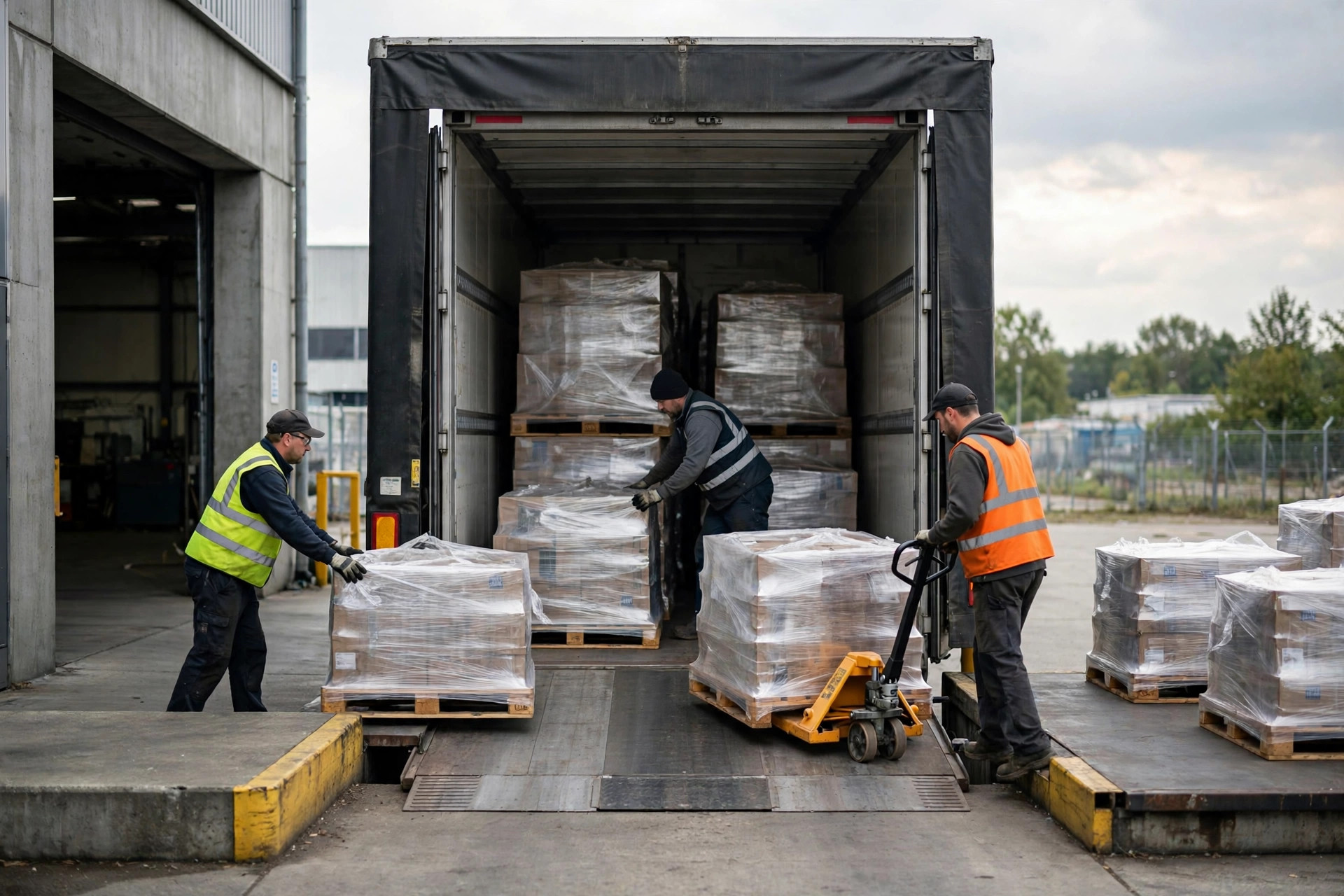
What this really means: port congestion doesn't kill you with delay — it kills you with uncertainty
A vessel running two or three days late? Manageable — the warehouse waits, the appointment slides, everyone copes. What kills you is the not-knowing. The ETA says one thing today and another tomorrow. A blank sailing lands in your inbox with a day's notice. Meanwhile the warehouse built its whole receiving plan on fixed times — appointments, labor, dock doors. A fixed plan meets a fluid reality, and something has to give.
That's what a port congestion warehouse receiving delay really is: not late freight, but freight you can't plan around.
Here's the counter-intuitive math most people get backwards: the moment demurrage starts looming, everyone's instinct is "get that box out of the terminal NOW." But when the port is truly congested, a driver can burn four or five hours just in the gate queue — one turn a day if you're lucky. Fuel, driver pay, the truck sitting idle — add it up and it can cost more than another day or two of demurrage. Check the carrier's and terminal's latest rate sheets for exact figures, but the math is yours: free days left, queue length, a day of yard storage. Three numbers, and the pull-or-wait decision answers itself. Pulling in a panic gets you a hot box nobody can receive — the warehouse turns you away, detention starts running, and you're paying on both ends.
And one more piece of plain talk: demurrage and detention are two different bills. Don't lump them together. Demurrage is what you pay for the box sitting too long inside the terminal, on the terminal's and carrier's terms. Detention is what you pay when the box is out of the terminal and you return the empty late. Plenty of importers watch demurrage like a hawk, pull the box, and feel like they saved money — then the warehouse can't unload for two days, detention runs wild, and every dollar "saved" walks right back out the door, with interest.
How to flex your receiving plan when port congestion hits
Appointments first — because in a port congestion warehouse receiving delay, the fixed-point appointment is always the first casualty. When vessel schedules are shaky, stop booking receiving appointments as fixed points — book them as windows. Tell the warehouse: freight should land sometime Wednesday through Friday, hold me a three-day window, and I'll confirm the exact slot 24 hours out. Most warehouses will work with you — they're just as scared of you no-showing a fixed slot and leaving a dock door idle. Windows are better for both sides: you stop begging to reschedule, and they stop rebuilding the day's plan around you.
Labor next. Never fully book temp workers three days out. My rule: the core crew stays on the original plan, temps get a soft hold only, and nothing is confirmed until the ETA firms up 24 hours before arrival. Blank sailings and rolled boxes routinely land with a day's notice — if your temps show up to an empty dock, you pay them anyway, and good luck getting them back next time. Stay close to your labor agency and keep one or two on-call names — that relationship beats any schedule.
Then staging. A pulled box with nowhere to go is the most expensive box in your supply chain. Work out a buffer plan with the warehouse before you need it: a day or two of yard staging and what it costs, or a nearby drop yard you can use. Don't start solving this with a box spending the night on a chassis — by then you have zero leverage.
Finally, the money. Nobody reads the demurrage and detention free-time terms when things are smooth, but when schedules fall apart, free time is cash. The moment a delay looks likely, do three things: check how many free days are left on that shipment; email the carrier or forwarder asking for extended free time — be polite, state the reason clearly, and outside of peak season you'll often get a day or two; and put every shipment's free-time expiry on one sheet, on the wall if you have to. Work the boxes that expire first. Don't wait for the invoice to remind you.
Here's the decision table I reach for every time a port congestion warehouse receiving delay starts brewing. Importers and warehouse folks can both use it:
| Vessel situation | Receiving appointment | Labor | Box / staging | Money watch |
|---|---|---|---|---|
| 1 day early | Move it up if you can, otherwise hold | No change | Ask the warehouse about an open door | Usually no extra cost |
| 1–2 days late | Slide the appointment, switch to a window | Temps rescheduled, core crew stays | Don't rush the pull — check gate queues first | Check free days remaining |
| 3+ days late | Cancel and rebook, don't hog someone else's slot | Release all temps, rebook 24h before arrival | Compare yard staging vs. leaving it at the terminal | Ask for extended free time |
| Blank sailing / rolled, new ETA unknown | Don't book anything until the new vessel and voyage are set | Book nobody, soft holds only | Don't pull — in most cases the box is cheaper inside the terminal | Watch the detention start date; don't pull a box you can't return |
There's an old saying where I come from: hope for the best, prepare for the worst. You can't control what the carrier does with a single email — but how your receiving plan flexes is entirely up to you. Windows instead of fixed points, elastic labor, and an eye on free time: get those three right, and the next wave of port congestion won't catch you flat-footed.
By Shifu Zhao, Trucking Veteran (15 yrs)