Late last month, 1:30 in the morning, outside a depot near the Port of Long Beach, I watched a driver squat by his rig with his head in his hands. The terminal had just rejected his loaded container — he'd missed the vessel cutoff, and the next sailing was five days out. That box was holiday-season cargo, and his customer was already losing it. Let me tell you something after all these years on the road: nine out of ten export drayage disasters come down to one thing — time. On the import side, the ship arrives and then you get busy; the box waits for you at the terminal. Export is the mirror image. The ship doesn't wait. The cutoff is a hard deadline.
A lot of people assume export drayage is just import played in reverse. That's dead wrong. Here's the whole run, start to finish, so you don't end up squatting by a depot at 1:30 AM.
Export Runs Backward Compared to Import
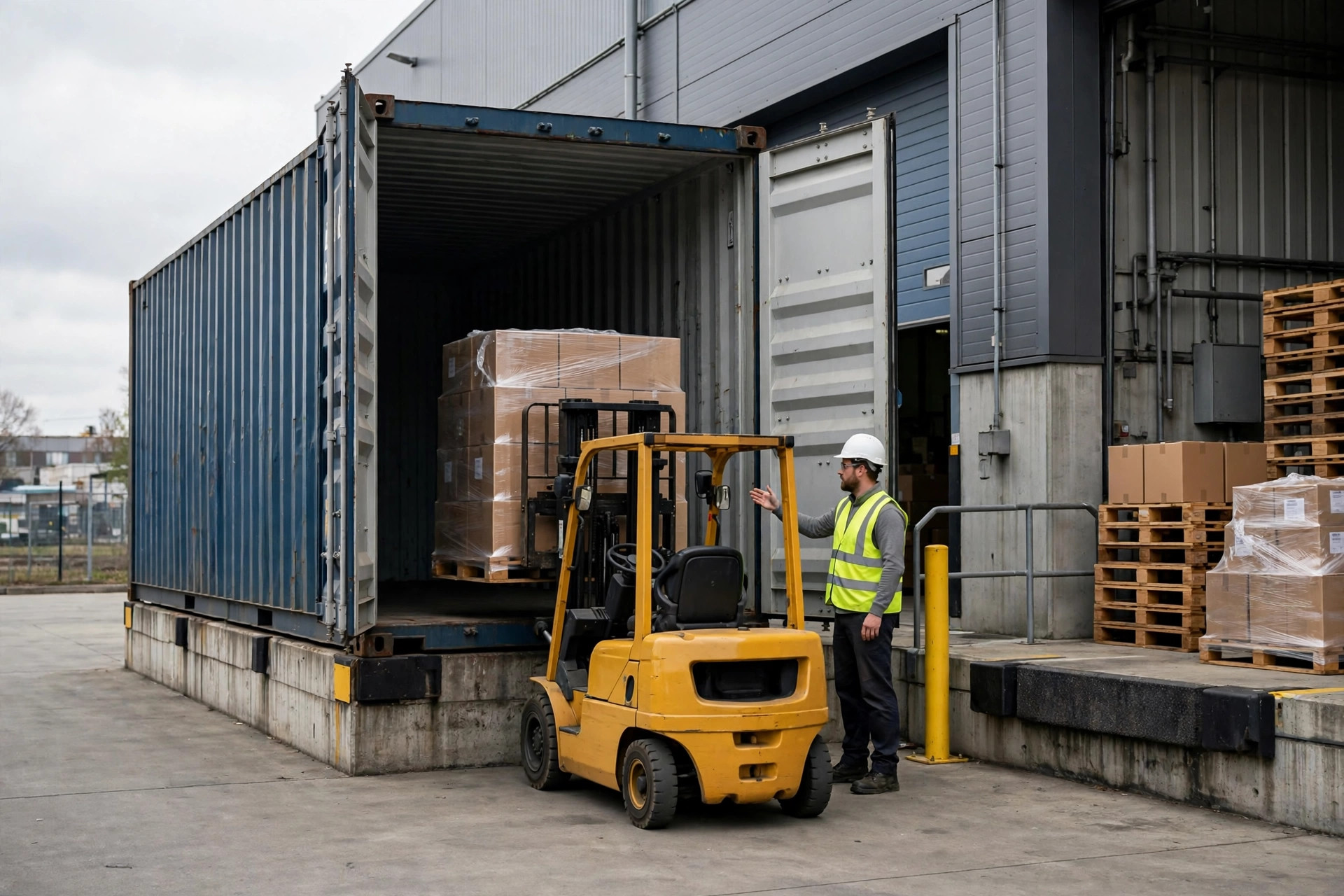
The full chain has six steps: book and get the SO (booking confirmation) → pick up an empty at the depot → haul it to the factory for loading → VGM weighing → customs clearance → return the loaded box to the terminal before cutoff. Looks simple. But against import, there are three differences, and each one can kill you.
First, time runs in reverse. On import, the terminal gives you free days after the vessel arrives — you pick up at your own pace. On export, once the cutoff hits, the gate closes. Not one minute of grace. The steamship line, the terminal, and the customs broker all run on fixed clocks; yours is the only flexible one. So you plan everything backward from the cutoff, with real buffer built in.
Second, you have to go hunt the empty. Import is "a loaded box waiting for you." Export is "you go find an empty box." Equipment shortages in peak season are normal, and chassis are even scarcer. I've driven to two depots before finding the right box type — fuel and hours gone. So when the booking confirmation lands, the first thing to check isn't the factory dispatch. It's where the empty pickup depot is and how far away it sits.
Third, VGM weighing is a hard gate. Since July 1, 2016, the SOLAS convention requires a verified gross mass for every export container — no VGM data, no gate-in, period. Two ways to get it: weigh the whole box on a scale, or add up cargo plus packaging plus tare weight item by item. Rookies leave this for return day, then sit in a two-hour scale line while the cutoff clock runs out.
Three Classic Ways This Goes Sideways
Missed cutoff. A couple of peak seasons back, a furniture-shipper friend loaded at his Ontario factory and didn't finish until the afternoon before cutoff. The driver hauled the loaded box toward Long Beach, hit traffic, and arrived to a closed gate. That container rolled to the next vessel — and the storage, rebooking fees, and customer claim pressure that followed cost far more than the drayage itself. In this business, the most expensive cost is never the freight rate. It's missing the boat.
Damaged empty, skipped inspection. Picking up an empty is like renting a car — skip the walkaround and every scratch becomes yours at return. I once pulled a box with a cracked floor; the forklift widened the crack during loading. The terminal inspector caught it at gate-in, held the box for repair, and there went the cutoff. Since then I live by one rule: inspect every empty at pickup, photograph everything, swap on the spot if it's damaged. Half an hour now saves a disaster later.
Overweight. Federal law caps truck gross weight at 80,000 lbs. Get caught heavy on the highway and it's a fine; show up heavy at the terminal scale and they turn you away. Factory crews love to stuff a box to the roof, and then the driver hits the scale and goes pale — overweight means hauling it back, unloading, reloading. Another round trip, another threatened cutoff. So during factory loading, the driver should be on-site watching two things: even weight distribution and staying under the limit.
A Backward Schedule: T-0 Is the Cutoff
Don't think forward on exports. Plan backward. This is a sample rhythm — every terminal and carrier differs, so always go by the cutoff on your booking confirmation and terminal notices:
| When | What | Watch out for |
|---|---|---|
| T-72 hrs | Booking confirmed; lock in cutoff time and pickup depot | Check depot distance before dispatching |
| T-48 hrs | Pick up empty + inspect and photograph | Swap damaged boxes on the spot; lock chassis early in peak season |
| T-36 hrs | Factory loading | Watch weight distribution; avoid overweight |
| T-24 hrs | VGM weighing + customs filing | Don't leave weighing for the last day |
| T-12 hrs | Return loaded box to terminal | Build in traffic buffer; early beats on-time |
| T-0 | Cutoff | Gate closes — not one minute of grace |
Here's the counterintuitive part: rookies obsess over shaving dollars off the freight rate; veterans obsess over how much buffer they built in. A few dozen bucks on the rate means nothing next to a rolled container. Buffer is the best investment in export drayage.
Straight Talk for Shippers and Warehouses
- When the booking confirmation arrives, read the cutoff first, then the pickup depot location — depot distance decides your dispatch day.
- Inspect every empty at pickup. Photograph it. Swap problems on the spot instead of carrying them to gate-in.
- At factory loading, watch two things: stay under the 80,000-lb federal limit, and get the VGM weighed and filed early.
- In peak season, treat chassis as scarce inventory — lock them ahead, don't go hunting on pickup day.
- Have customs paperwork and VGM data ready at least a day before cutoff. Don't let documents hold up the truck.
Ships don't wait, and neither do cutoffs. In exports, a day early is skill; an hour late is a story — the accident kind. Next booking, draw the backward schedule first, then dispatch the truck.
By Shifu Zhao, Trucking Veteran (15 yrs)