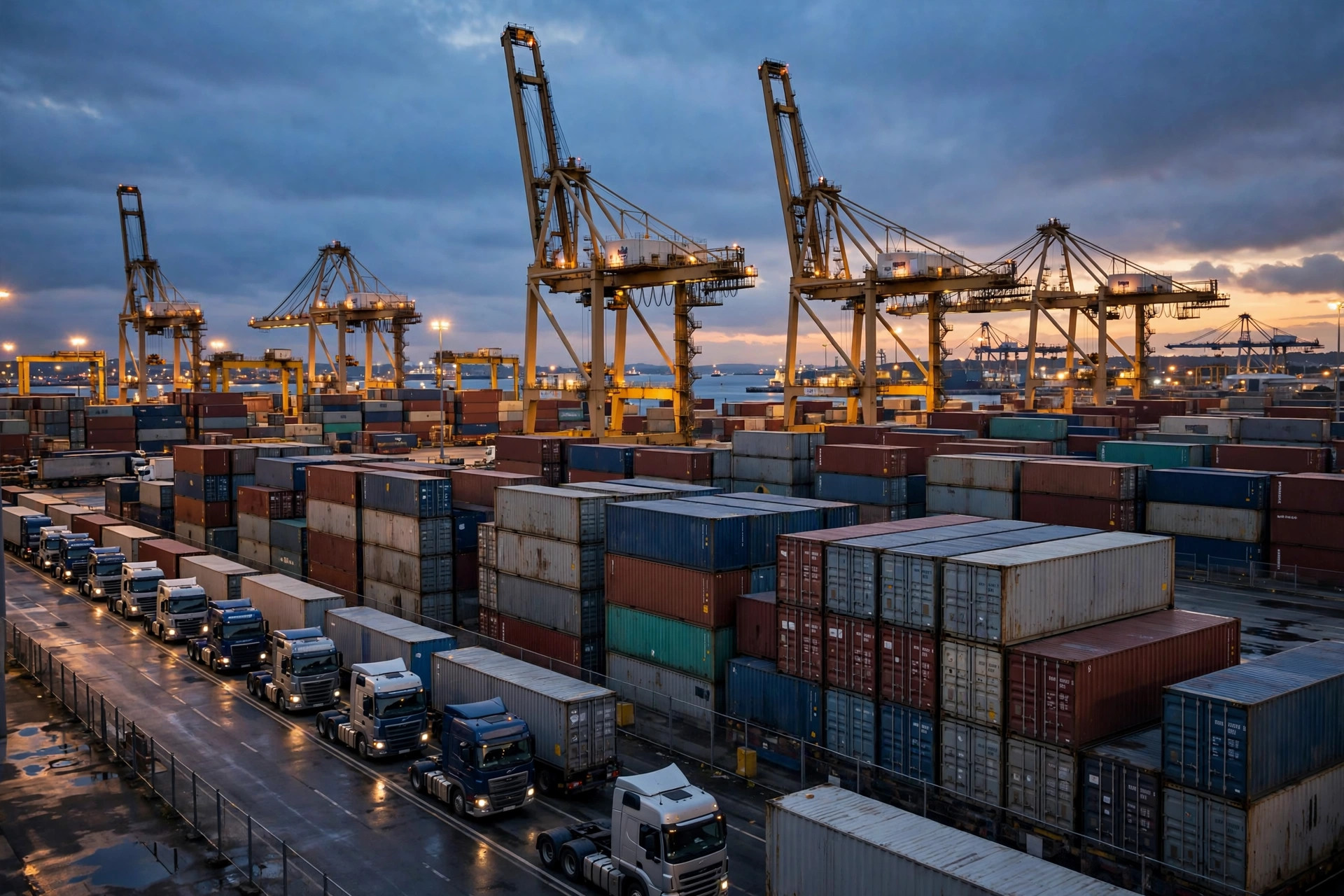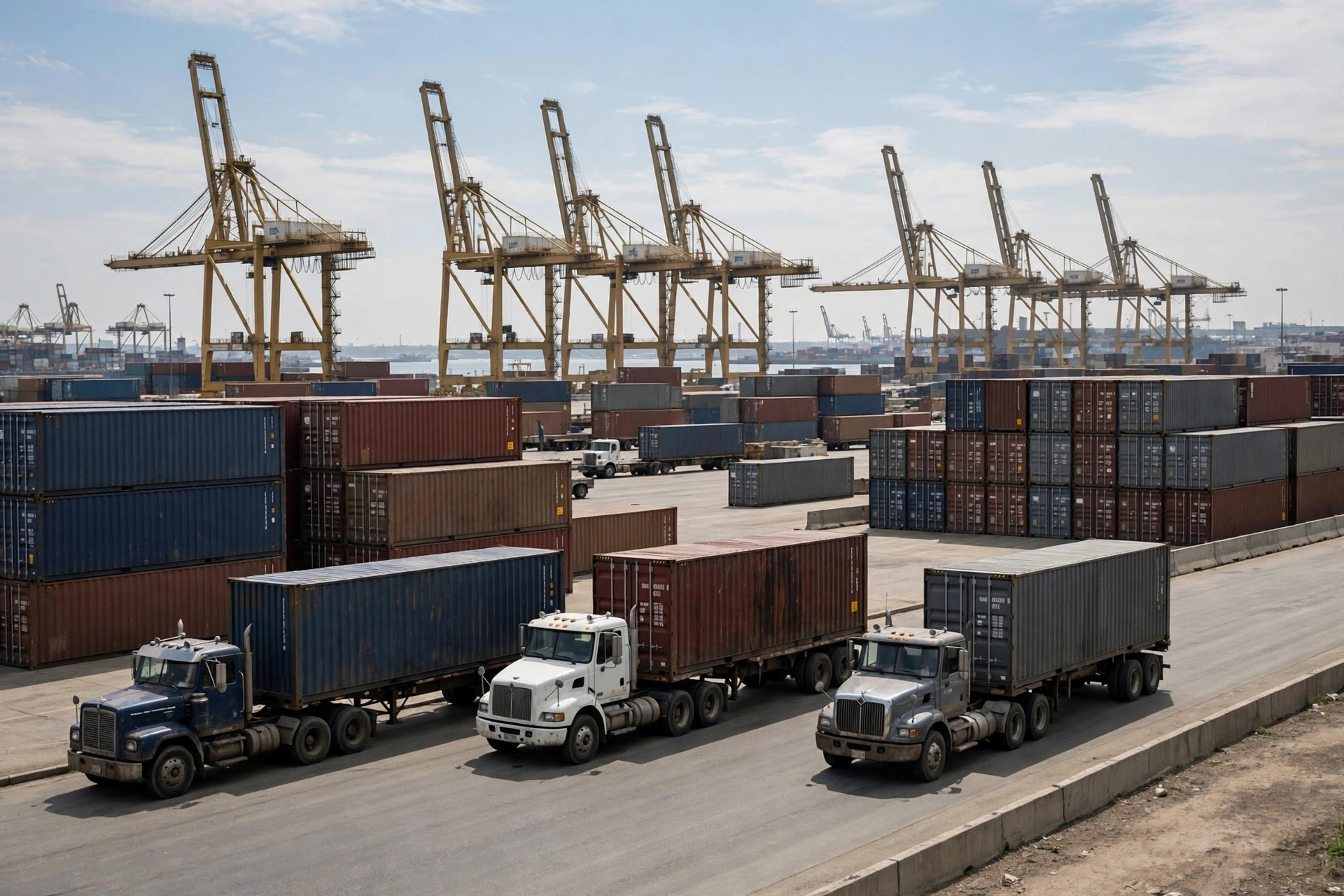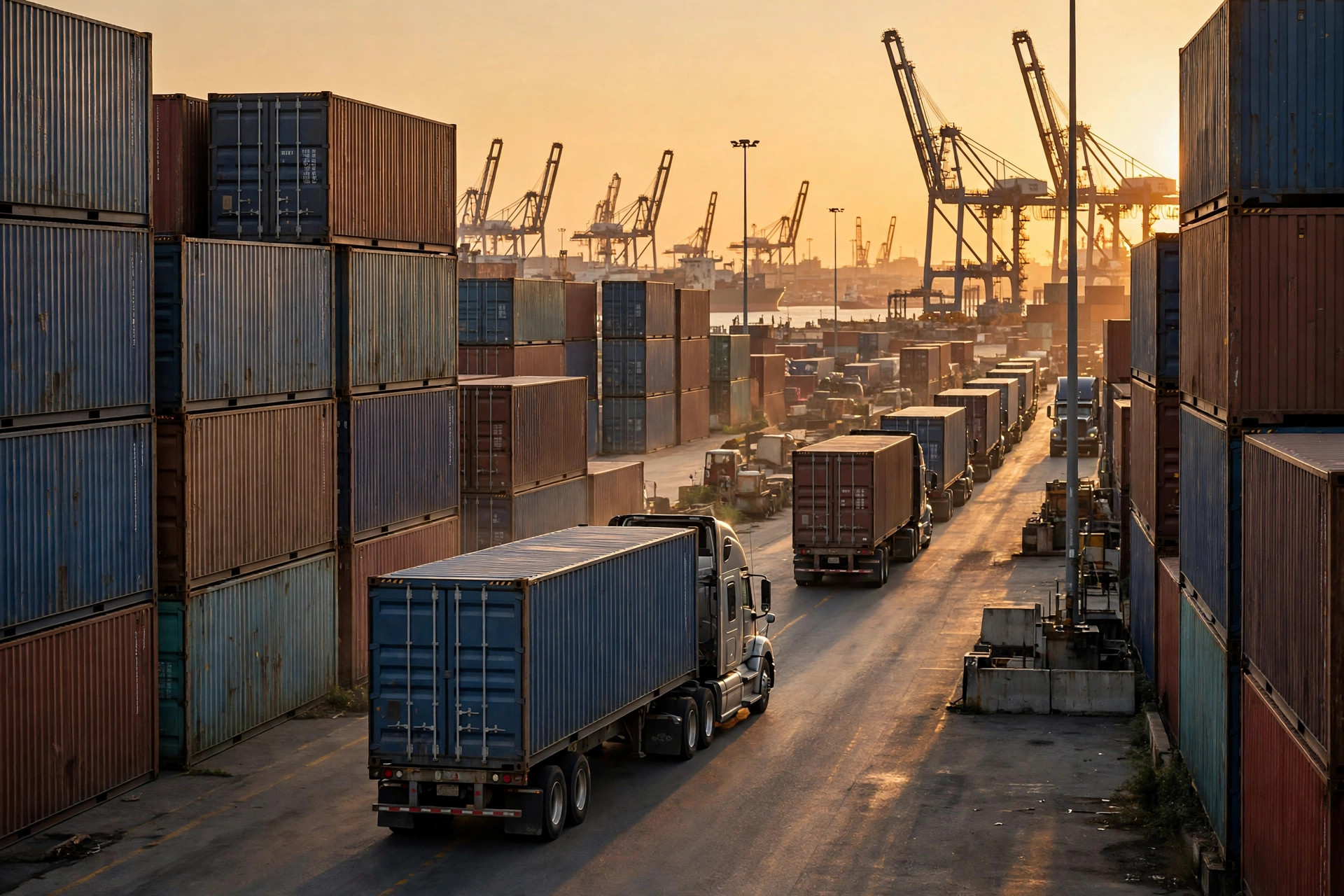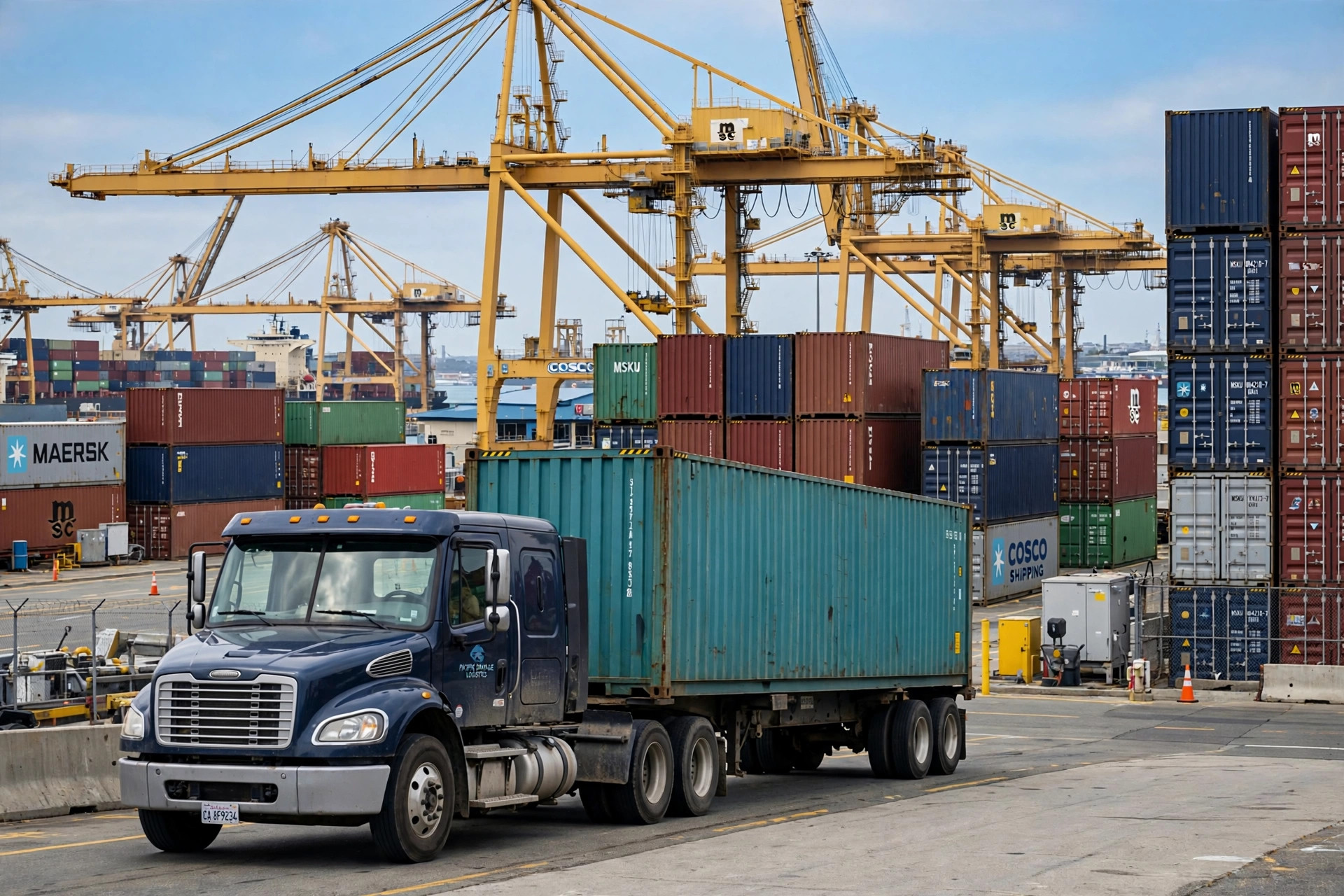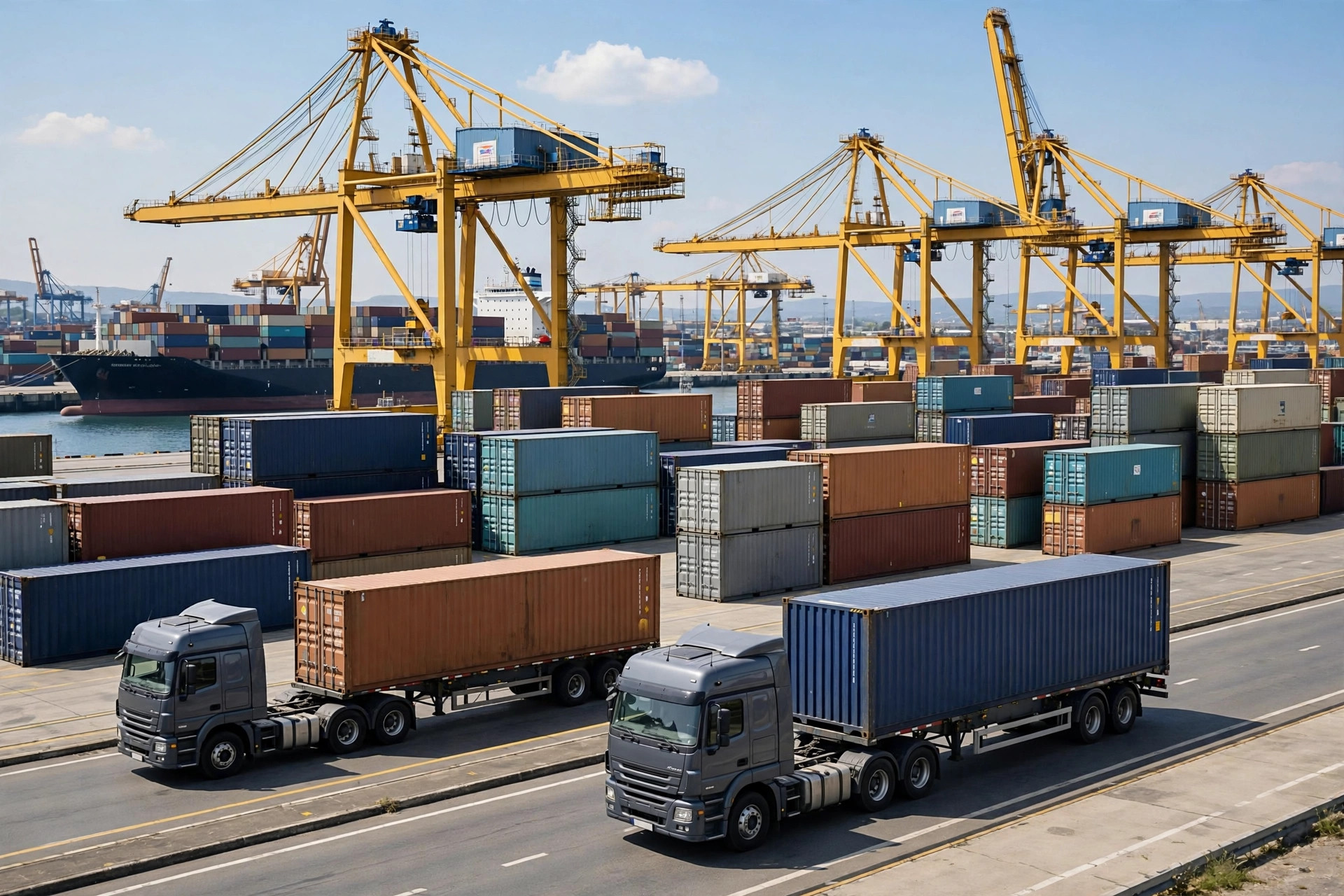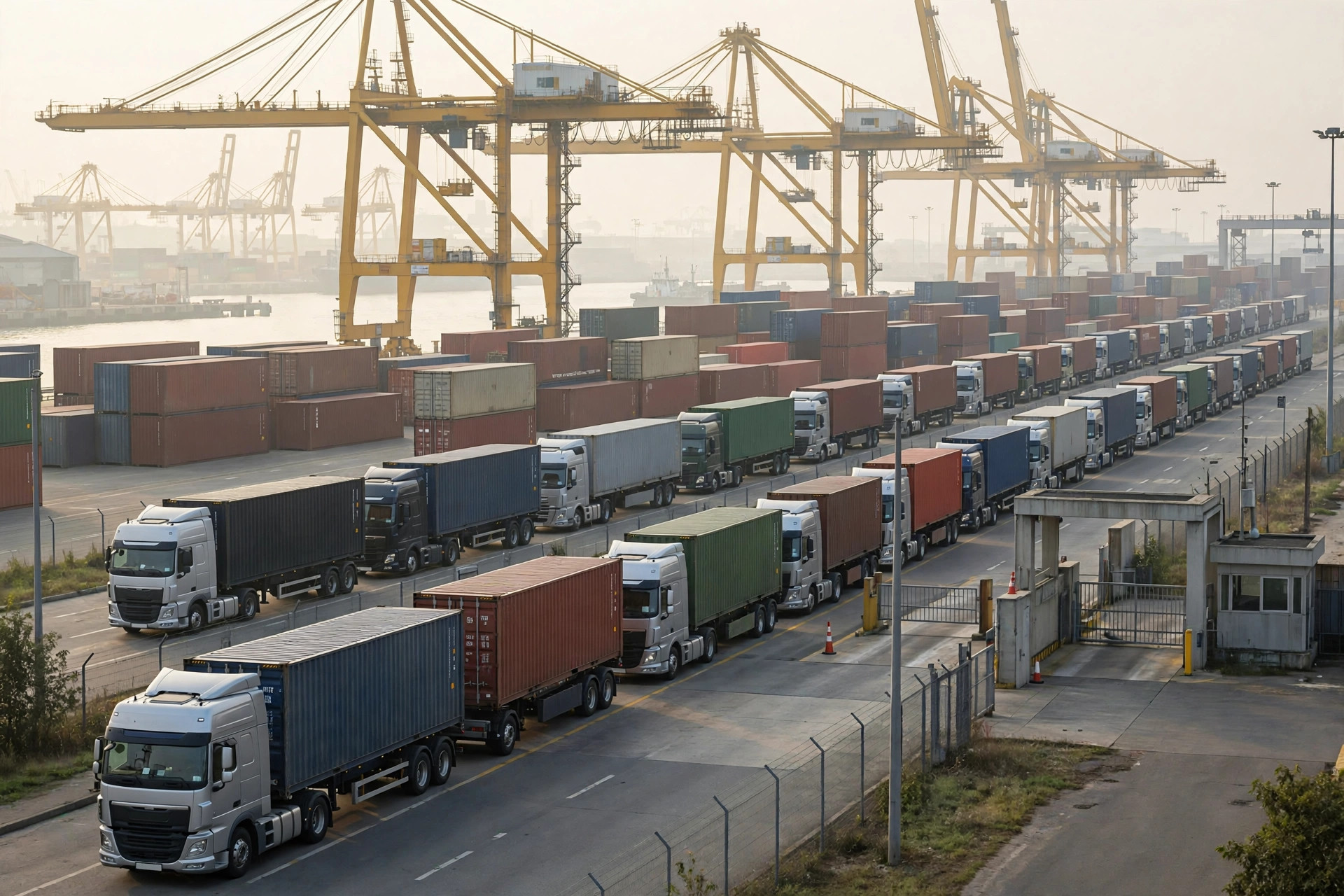
Let me tell you what I saw last summer at a terminal in Los Angeles. A driver showed up at 6:30 in the morning, counted forty or fifty trucks ahead of him, and figured he was early enough. Then at 7:00 the gates opened, and every truck that rolled in had one thing he didn't: an appointment number. He got waved off to the side and sat in that cab for six and a half hours — past one in the afternoon before he got in. He told me later that day's work cost him more than it earned. That's drayage today: without a terminal appointment, your truck isn't even a person at that gate.
I've been driving trucks for fifteen years, and if there's one thing I know about terminal appointment booking, it's this: that little booking decides whether the driver makes money that day or just burns diesel sitting still.
What This Tells You: A Terminal Appointment Is a Gate Pass, Not a Nicety
First, a word for the shippers out there: a lot of you think "pulling a container" just means sending a truck to the port. Not anymore. At the big terminals on the U.S. West Coast, everything runs on appointments. Empty or loaded, which box, which time window — all locked in through the terminal's booking system ahead of time.
Here's how terminal appointment booking usually works, from the major terminals I've run in LA. The terminal releases a set of appointment slots each day, chopped into time windows — 6:00–8:00, 8:00–10:00, and so on. Slots are limited, first come first served, dropping at a fixed time the day before. Exact release time, booking horizon, moves per account — all vary by terminal, so check the terminal's website for the latest policy.
Here's the part most shippers miss: the trucking company grabs those slots with its own account, not the driver. One appointment, one pickup. No slot, no entry that day. I've walked into dispatch offices and seen the dispatcher staring at the clock waiting for slots to drop, fingers flying. Two minutes late, and the day's work is shot.
Booking Hacks: What Drivers and Dispatchers Actually Do
Over the years I've learned that grabbing appointments isn't about fast internet — it's about good information:
Guard the release time like it's a load appointment. Every terminal drops slots at a different time, and it shifts between peak and slow season. Good carriers keep a chart with alarms. Miss the drop and you're picking through leftovers — a 2 a.m. window, or the last wave before closing.
The early wave isn't always the golden ticket. Here's the counterintuitive part — the very first wave often runs slowest. The gate isn't warmed up, and if the terminal worked the yard overnight, it's a mess in there. The second or third window usually moves the fastest.
Get the details right the first time. The appointment ties together container number, vessel and voyage, and plate. One typo and you're turned away at the gate. I've watched a driver lose two hours under the sun over one transposed letter.
With terminal appointments, what matters isn't how early you book — it's how well the pickup time matches everything downstream.
No-Shows and Late Arrivals: Terminals Don't Do Favors
Over the past few years, terminals have tightened appointment discipline, and no-shows cost money. Book and don't show — without a timely cancellation — and you pay a no-show fee. The amount varies by terminal and changes often, so I won't quote one here; check the terminal's current policy. But it's real money: dozens of no-shows a month hit the margin directly.
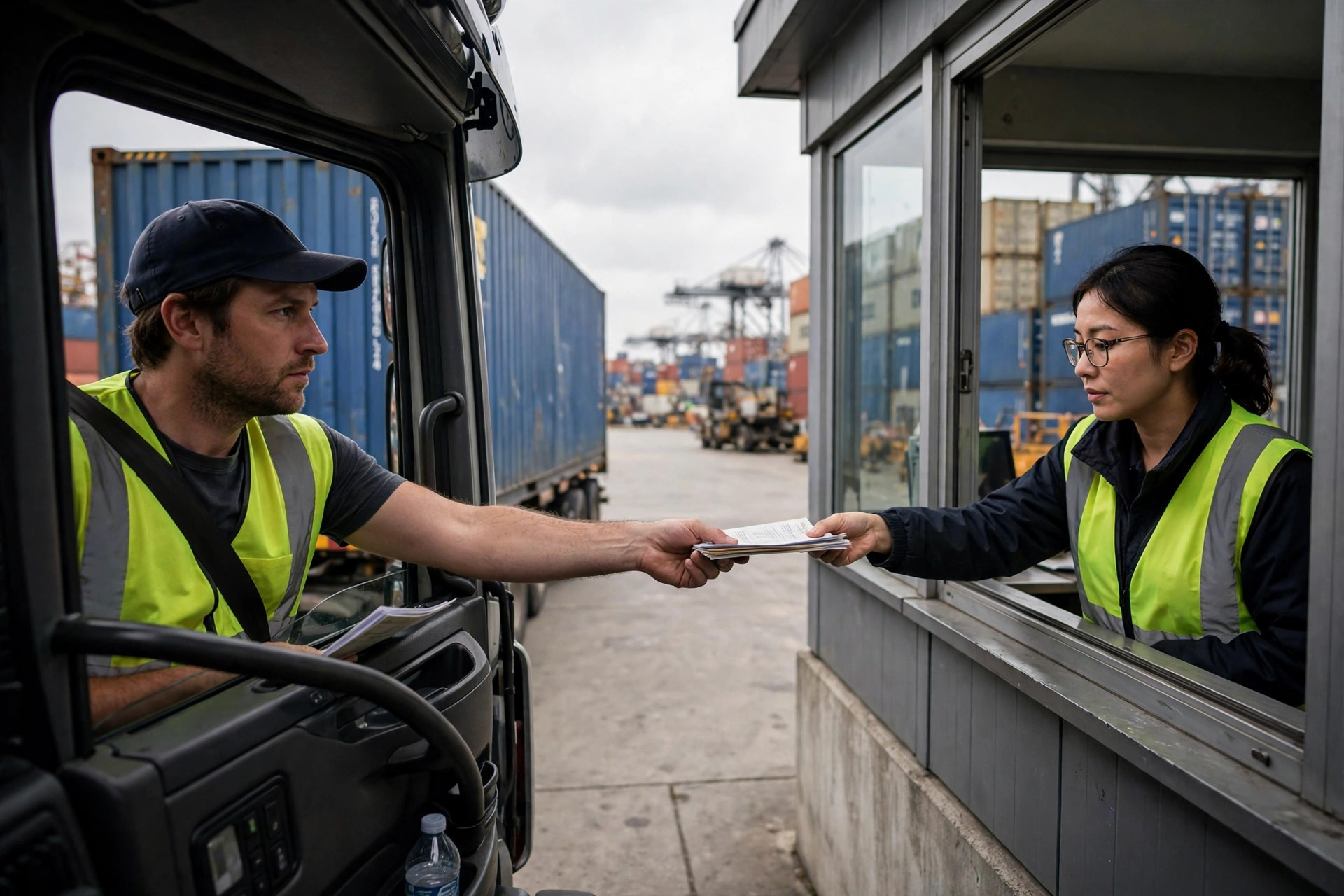
Late arrivals are worse. Terminals allow some grace, but show up too late and you're pushed to the back of the line — or the appointment gets voided and counts as a no-show.
The Cost of Waiting in Line (a Carrier's Math)
Let's do the arithmetic every drayage dispatcher does in their head:
| Approach | Gate wait | Loads you can run that day |
|---|---|---|
| On-time appointment | ~30 minutes | 2–3 |
| Rolling the dice, no slot | 3–6 hours (if lucky) | 1, if you're lucky |
One burned morning at the gate cuts a driver's daily capacity in half. The no-show penalty isn't the terminal being greedy — it forces everyone to take appointments seriously. Your empty slot blocks someone who actually wanted in.
The Hardest Part: Coordinating the Pickup, the Warehouse, and HOS
Look, the real skill isn't grabbing the slot. It's the coordination. One load is a chain: terminal appointment → pull the box → drive to the warehouse → the warehouse has its own receiving window → and the driver's hours of service still have to pencil out.
HOS rules limit daily driving and on-duty time — they get updated, so go by the current FMCSA rules. The point is, a driver isn't a machine. You can't have him queue at the terminal at 6 a.m., pull out at 2 p.m., and then hear "we're full today, come back tomorrow."
A true story from a couple of years back: a friend had an 8 a.m. appointment at the terminal and the box was out by 10. The warehouse was ninety minutes away in the Inland Empire — he could be there by 12:30. Sounds perfect, right? But one warehouse forklift was down, four trucks queued at the dock, and he didn't get unloaded until 4 p.m. His remaining HOS couldn't cover any meaningful run. That was his day.
What does that tell you? Lay the terminal pickup, the warehouse window, and the driver's clock on the same table. Here's the appointment planning checklist:
| Step | When | What to confirm |
|---|---|---|
| Slots drop | 1–2 days ahead | Which window did you get |
| Enter the terminal | Inside your window | Container and plate details correct |
| Exit the terminal | Window + in-terminal time | What time will you actually roll out |
| Arrive at warehouse | Exit time + drive time | Does the warehouse receiving window match |
| Done unloading | Inside warehouse window | How much HOS is left after |
Run through this table once, and the next time you run the same lane it's second nature. Fifteen years on the road taught me this: I'd rather let a container sit an extra half-day at the terminal for a well-timed slot than gamble my driver's hours on the road. HOS burned is real money. An extra half-day of storage is sometimes cheaper.
The Counterintuitive Bit: The Obvious Play Isn't Always Right
A lot of dispatchers think earlier is always better — grab the first wave, play it safe. I've shown you why that's wrong. Here's another: a later appointment can beat an early one, if it lines up with the warehouse. Driver doesn't roll out in the dark, pulls the box at midday, hits the warehouse's afternoon window — a calm, full day. In drayage, smooth isn't about early or late. It's about how well your terminal appointment matches your delivery appointment.
Advice for Shippers: Don't Pin the Pickup Too Tight
Some straight talk for the shippers, from the heart.
First, don't pin the pickup time down to the hour. The narrower your window, the harder the slot is to grab, and the higher the no-show risk. Give it half a day to a day of flex, and your freight actually arrives faster.
Second, give your carrier a heads-up in peak season. Get the container number and vessel info to dispatch two or three days early so they can catch the slot drop. After the box has sat three days, nobody can help you.
Third, book the warehouse unloading together with the terminal pickup. Everyone forgets this link. The warehouse needs an appointment too — ten minutes confirming the window can save your driver an overnight stay.
Fourth, treat no-show penalties as a shared cost. The carrier pays when the driver can't make it or the warehouse can't receive — but that cost lands on you eventually. Get shipper, carrier, and warehouse aligned, and no-shows drop on their own.
That long line of trucks outside the terminal gate — I've watched it for fifteen years. It won't disappear; the ships keep getting bigger. But whether you hold an appointment, and whether it's a well-chosen one, decides whether you're stuck in that line or rolling past it.
There's an old saying where I come from: sharpening the axe doesn't delay the chopping. With drayage, all the real work happens before the pickup. Grab the right slot, line up the times, and the rest of the road takes care of itself.
By Shifu Zhao, Trucking Veteran (15 yrs)