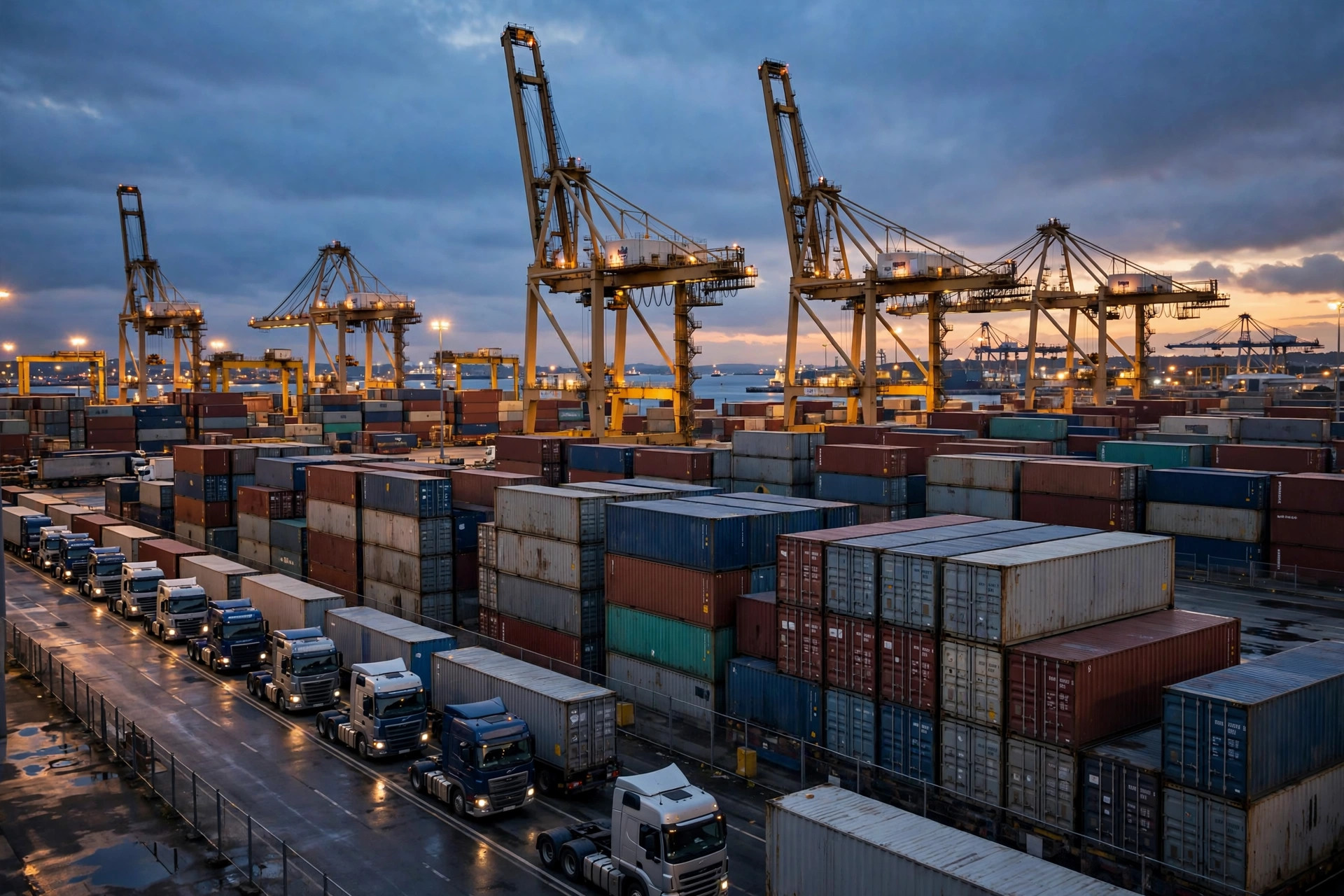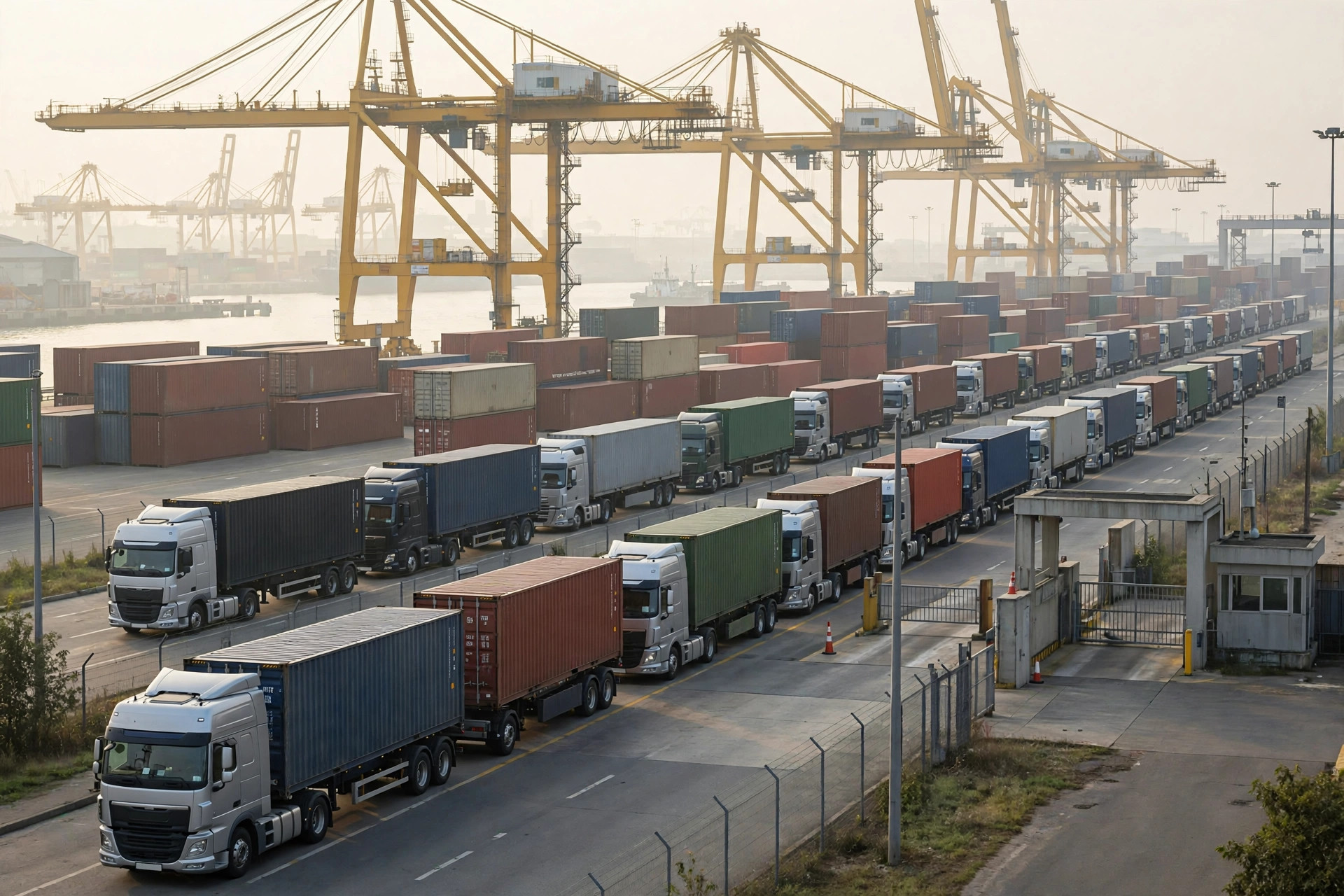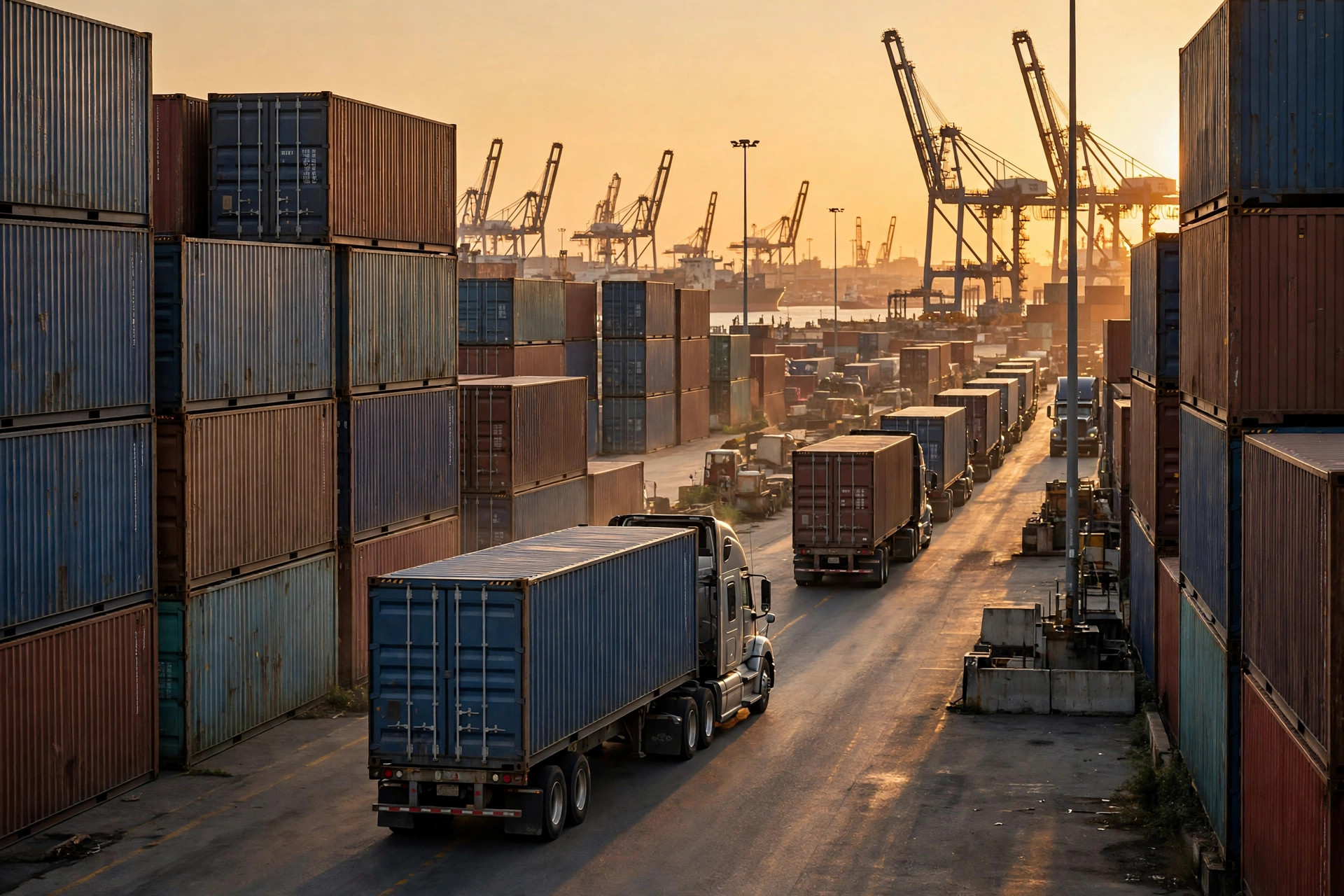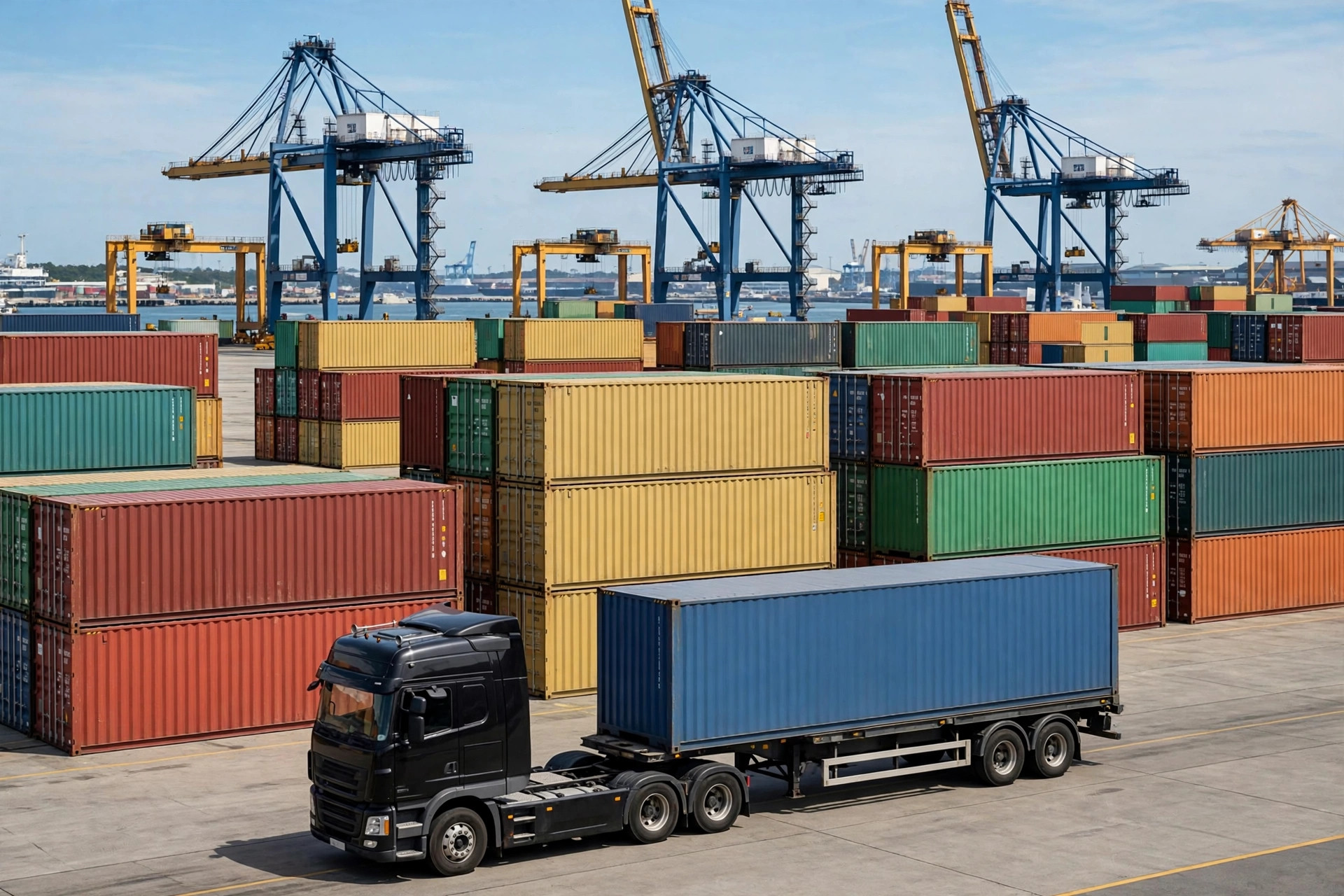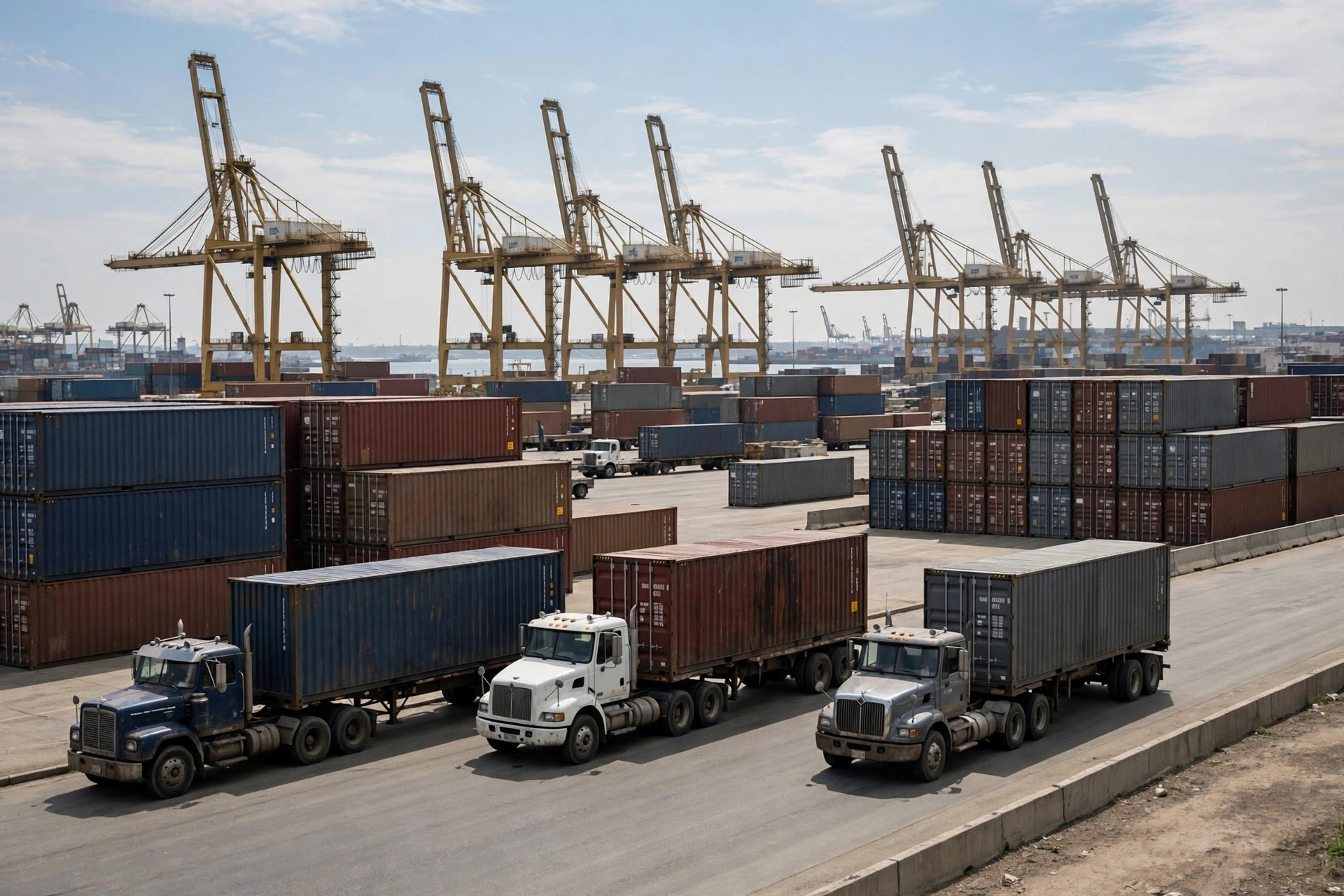
In the first half of 2025, while mapping the cost structure of the inland leg of US import containers, I noticed a pattern worth pausing on: picking up an identical 40-foot box from the Los Angeles–Long Beach port complex and delivering it to a warehouse, some shippers are perfectly comfortable letting a driver sit at the dock for three or four hours, while others would rather pay a separate drop fee and have the driver leave the box at the door and go. Live unload versus drop trailer — the per-box math between the two is much narrower than intuition suggests, and most shippers, in my observation, have never actually run the numbers.
Start with the data. According to FreightWaves' SONAR platform, US truck drivers wait an average of 119 minutes — nearly two hours — at each pickup or delivery point. Meanwhile, carrier tariffs typically grant only two hours of free waiting time, some as little as one. Beyond that, detention or waiting-time charges run roughly $75 to $98 per hour: one New Jersey carrier's 2022 published tariff billed $49 per half hour after two free hours (about $98 per hour), while a carrier in the Southeast charged $75 per hour after one free hour. Once the free window closes, the meter runs by the hour.
Chassis cost is the other large block. Direct ChassisLink (DCLI) publishes a daily rate of $24.95 for the first seven days in its Los Angeles–Long Beach inland premium pool, dropping to $20 per day from day eight; the comparable pool in Chicago bills $21.50 per day. Industry coverage puts the national average at roughly $25 to $30 per day. The critical detail: chassis are billed by the day, not the hour. Under a drop model, a box sitting at a shipper's door for two to four extra days adds $50 to $90 in unavoidable chassis rent.
The drop operation itself is usually billed separately. One carrier's published tariff lists the closely related "pre-pull" service at $125 per move plus fuel surcharge; a port authority tariff prices a live-unload round trip at $250. Drop fees vary substantially across carriers, so any shipper should check the published tariff of its own provider.
Two observed cases put the numbers on the ground. In early 2025, a Southern California home-goods importer bringing in roughly 800 TEU a year, warehoused in Ontario, received a steady three to five containers a day. Their receiving was classic live unload: the driver hauled the box to the warehouse, workers took 2.5 to 4 hours to unload it, and the driver then bobtailed the empty back to the yard. With forklifts and labor chronically tight, unload times routinely exceeded the two free hours. At $75 an hour, the average box generated $75 to $150 in waiting charges — several thousand dollars a month. The shipper initially assumed waiting was harmless since "the freight was already paid for"; the year-end reconciliation showed waiting fees had passed ten percent of total inland transportation cost.
The second case, from the same period, is a Texas-based e-commerce seller importing about 60 containers a month, using the drop model. The carrier dropped loaded boxes at a yard the seller leased, and the driver left immediately; the seller's own team stripped the boxes over the next two to three days at its own pace, then called the carrier to collect the empties. The extra cost per box came to roughly: a drop fee of a little over a hundred dollars, plus about $75 for three extra chassis days — just over $200 all in. Their receiving crew was three people; under live unload, drivers waiting four-plus hours would have been routine and, by the detention rate, more expensive. For them, drop was not a luxury option — it converted uncontrollable waiting time into a controllable fixed cost.
The comparison table makes the break-even visible:
| Cost item | Live unload | Drop trailer |
|---|---|---|
| Base drayage | Baseline | Baseline |
| Driver waiting | ~$75–98/hr after 2 free hours | Near zero (driver leaves) |
| Drop fee | None | Tens to low-hundreds per box (per carrier tariff) |
| Chassis days | Day of transport only | 2–4 extra days × ~$25/day |
| Container detention (per diem) | Per ocean-carrier standard | 1–3 extra days of exposure if empties return late |
| Pre-pull / yard storage | None | Additional if a yard is involved |
A rough calculation: the fixed premium of drop over live is about $125 for the drop fee plus $75 for three extra chassis days — $200. At a $75 hourly waiting rate, $200 buys 2.7 hours. In other words, if a warehouse's average unload time exceeds the two free hours plus 2.7 — roughly 4.5 to 5 hours total — live unload's waiting charges already exceed the fixed cost of dropping.
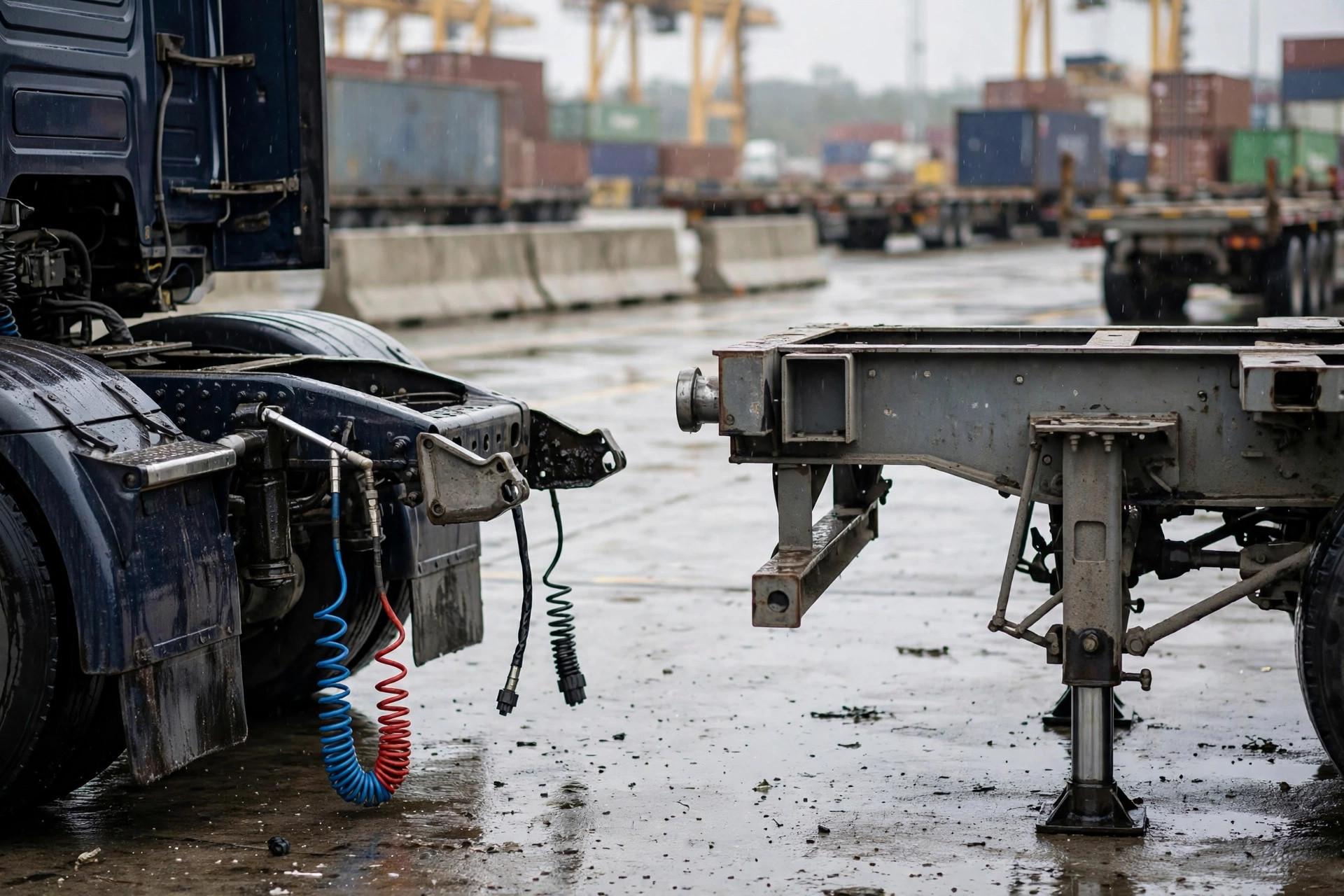
Here is the counterintuitive finding: most people assume drop is the expensive luxury. The data says the opposite. Drop fees are visible and fixed; live-unload waiting fees tick by the hour and are uncontrollable. For a warehouse with unstable receiving capacity, live unload's expected cost is higher. Equally counterintuitive: small-volume shippers are often better suited to live unload. The fixed costs of a drop — a hundred-plus dollars per move plus extra chassis days — amortize poorly across four or five boxes a month, whereas live unload, well organized, can reliably finish within the free two hours. High-volume shippers with constrained receiving should, paradoxically, lean toward drop. The deciding variable is not volume itself but the variance in unload time.
Why are more US shippers moving toward drop? Three layers of explanation. First, waiting costs became visible. In May 2024, the Federal Maritime Commission issued new billing rules for demurrage and detention, requiring carriers and terminals to issue itemized invoices within 30 days of charges accruing, with a 30-day dispute window for billed parties. Shippers saw, for the first time, exactly what they were paying for waiting. Second, warehouse labor shortages are structural, so unload times vary wildly — and drop decouples "unloading" from "transportation," eliminating waiting-time uncertainty. Third, e-commerce and fast-turn inventory demand flexible receiving windows, and drop lets the warehouse strip boxes on its own schedule. A 2018 study by the US DOT's Office of Inspector General estimated that detention costs drivers $1.1 to $1.3 billion in lost earnings per year — money that eventually finds its way into shipper invoices in one form or another.
The trend line favors drop for now, but drop is not the end state. Terminal free time keeps shrinking, and pre-pull is emerging as a third option between live and drop: the box is pulled early to the carrier's yard, avoiding terminal demurrage without consuming chassis days at the shipper's door. Over the next two to three years, as FMC enforcement tightens — note that in September 2025 the D.C. Circuit vacated a central provision of the rule on who may be billed, and the dispute continues — the attribution and measurement of waiting charges will only get more granular. The most practical step for a shipper is to pull its own last six months of waiting fees, chassis days, and drop charges and run them through the break-even formula above. Many companies will find the answer contradicts their intuition.
So the real question is not "which mode is better" but "does your warehouse's unloading capability match the mode you chose?" If unload times are stable and controllable, live unload remains the cheapest answer. If unload times are a lottery, drop's fixed cost is effectively insurance. The next variable worth watching: as terminal free time compresses further and pre-pull becomes standard practice, where will the cost boundary between live and drop move?
By Dr. Chen, Supply Chain Researcher