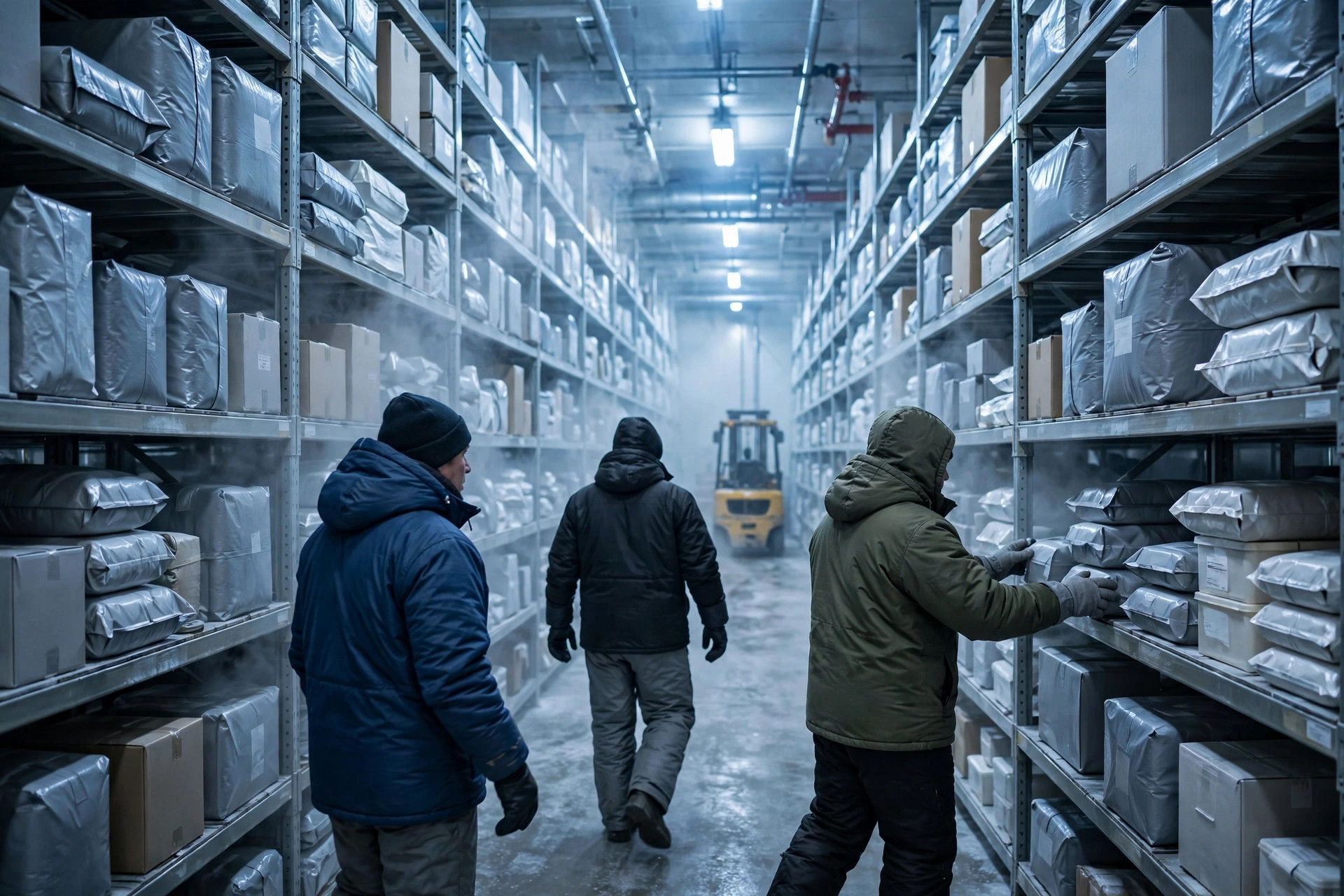
My phone buzzed three times on the nightstand at 3:07 in the morning.
Anyone who's pulled night shifts in a cold storage warehouse knows what that means — nothing good ever buzzes at 3 a.m. I squinted at the screen: "Cold Room 3 temperature excursion. Current: 11.2°C. Duration: 23 minutes." I sat straight up. Cold Room 3 held insulin. GSP requires 2–10°C. At 11.2, we were out of spec.
I called Xiao Li, the night-shift hand. His voice was shaking: "Feng, it's the strip curtain... we were unloading and the curtain got rolled up and never dropped back down. I just went in — the cartons near the door don't even feel cold." I told him to drop the curtain, move the door-side pallets deeper inside. Half an hour later the room was back at 9.6°C and the alarm cleared. We ran a full deviation investigation on that insulin batch afterward — pulled the continuous curve, 23 minutes of excursion, peak 11.2°C. The client's quality team reviewed it and released the goods. A scare, nothing more.
But it left me sweating: if that night there had been no automatic alarm, if we'd been relying on a guy walking the floor every two hours, that batch would have sat above 11°C for four or five hours. Here's the honest truth — in pharma cold chain, temperature and humidity records are furniture nobody looks at, right up until the day they become your only piece of evidence.
The Day the Inspector Came, the Logbook Couldn't Save Us
This was three years ago. We'd just landed our first serious pharma client, and they sent a quality auditor. He sat down and his first sentence was: "Show me the last three months of cold room temperature and humidity records."
I carried out three handwritten logbooks, feeling pretty good about it — we had a dedicated person logging every two hours, neat handwriting, never a gap. He flipped two pages and closed the book. "I need continuous records, not spot checks."
My face went red. The GSP appendix on automatic temperature and humidity monitoring is unambiguous: sensor terminals must update at intervals no longer than 30 minutes, with automatic recording, automatic alarming, and long-term data retention. A handwritten log every two hours leaves a ninety-minute blind spot. If there's a real excursion, what do you prove it with? I told him we were short-handed on nights. He waved it off: "That's not a staffing problem. That's a systems problem."
We got an observation that day — no lost business, pure luck. But from that day on I understood: temperature records aren't something you fake for the regulator. You're only fooling yourself.
The Tuition We Paid: Sensors, Alarms, Calibration — Temperature Records Forgive Nothing
After we installed the automatic monitoring system, I thought we were done. Then the next year we brought in a validation company to do a temperature mapping study of the cold room, and the report floored me: we'd installed 12 sensors, all lined up neatly along one wall. The report showed the temperature difference between the door area and the fan outlets could run 4°C — and all 12 of our sensors sat in the "comfort zone." Not a single one covered the spots that mattered.
The old-timer from the validation company said something I've remembered ever since: "Sensors aren't installed for the inspector. They're installed for the worst case." We re-laid the whole sensor map afterward: inside the main door, at the refrigeration unit's return-air vent, the pallet positions facing the two fan outlets, the dead zone in the middle of the rack stacks, the top storage level — seven points total. We went from 12 sensors to 7, and coverage actually got better.
Alarms cost us tuition too. When the system first went in, alarms only sounded on the monitoring-room PC. The night-shift kid wore earbuds and dozed off — never heard a thing. Once a compressor failed and the room climbed to 13°C before anyone noticed. After that we went three-tier: 10 minutes of excursion texts the shift hand, 30 minutes with no action auto-calls the shift supervisor's phone, one hour unresolved calls me directly. That 3 a.m. wake-up call? That was the second tier doing its job.
Calibration is where most warehouses trip. GSP requires monitoring equipment to be calibrated on schedule. One busy year we forgot — two sensors ran four months past their calibration due dates, and a flying inspection wrote us up. The inspector's exact words: "How do you prove four months of data is accurate?" We had no answer. Now we do it this way: the system flags calibration a month before expiry, QA schedules it, and any data from an overdue sensor gets flagged yellow — every deviation gets investigated, no exceptions.
How We Run It Now: Seven Sensor Points for GSP Temperature Records Plus Three Routines
No theatrics. After three years of getting burned, here's exactly how our warehouse does it today:
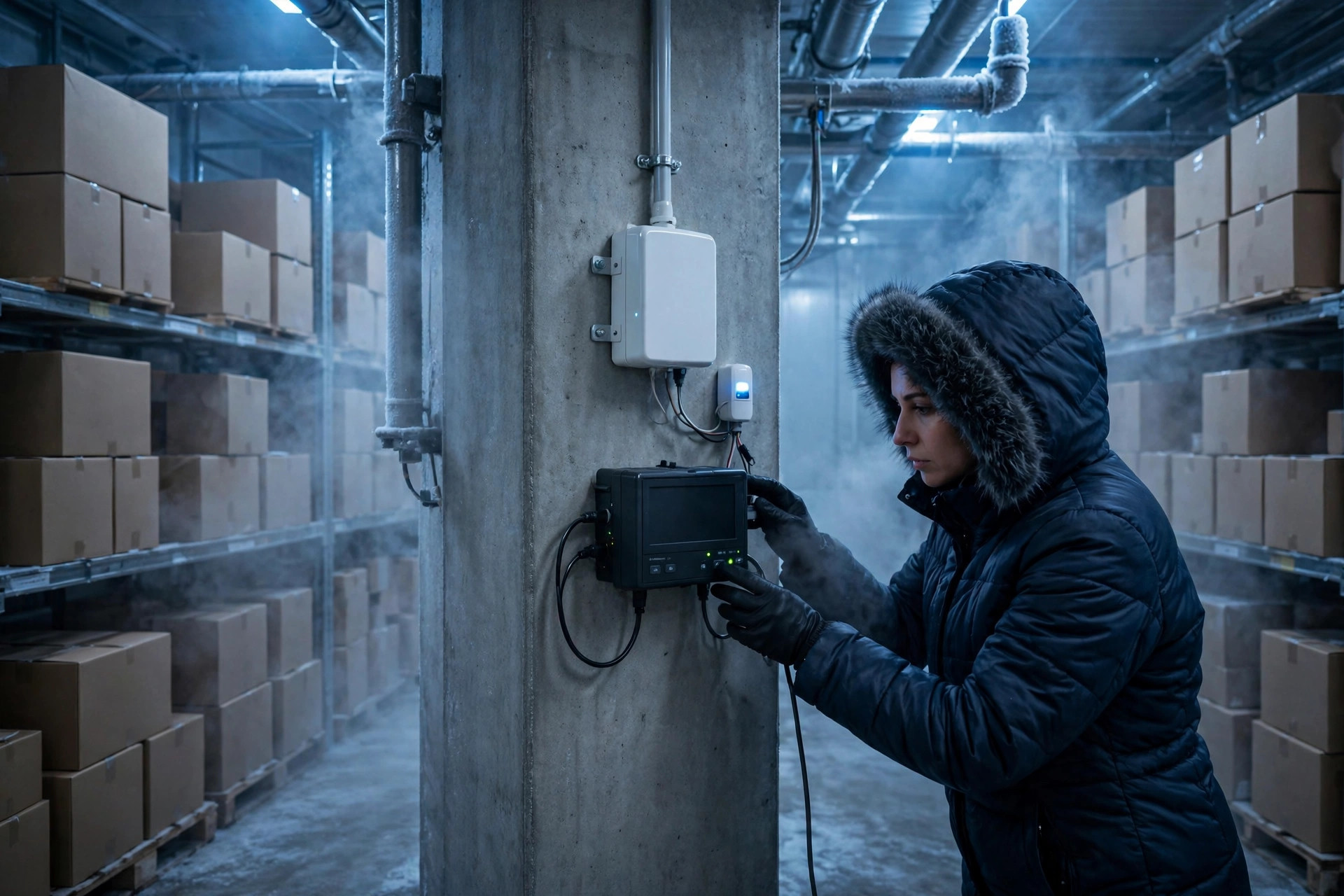
Sensor layout (7 points, every one of them earns its place): inside the main door, at the refrigeration return-air vent, the pallet positions facing both fan outlets, the dead zone mid-stack, the top storage level, and the backup unit's changeover vent. Each point has a tag with its ID and location, matched one-to-one in the validation report.
Recording and retention: the system logs automatically every 30 minutes, caches locally during network or power outages, and backfills on recovery. We retain data for five years — GSP's main text requires records and vouchers to be kept five years, so we align temperature data to the same standard and skip the argument with inspectors. Exact local requirements should be confirmed against your provincial regulator's current inspection practice and the latest published policy.
Three routines — daily, monthly, yearly:
- Daily: the first thing at shift handover is a glance at the last 24 hours of curves — any spikes? When the veterans train newcomers, I make them learn to read the curve before they learn to drive a forklift. Read the curve and you know the cold room's temperament.
- Monthly: QA exports the full curves and alarm log, archives them, and opens deviation investigations where warranted.
- Yearly: every sensor gets recalibrated, and the cold room gets a fresh temperature mapping study — mandatory after any re-slotting, compressor swap, or racking change.
Running the numbers on the side: manual logs vs. automatic monitoring
Plenty of peers ask me: is the automatic system actually worth it? Here's our warehouse's math.
Manual logging: three shifts, at least one person per shift doing logging and walkarounds part-time — that runs into serious six-figure annual labor cost (do your own math with local wages). And what that money buys is spot checks. When a real excursion happens, the logbook can't defend you. Worse: pharma clients now list automatic temperature monitoring as a hard bidding requirement. Without the system, you don't even qualify to bid.
Automatic monitoring: a 7-to-10-point system — hardware, installation, and validation — costs a low five figures one time, plus modest annual calibration and maintenance. Spread over five years, it's cheaper than manual labor, and it comes with 24-hour alarming thrown in.
I ran this math three years ago. The conclusion was one sentence: manual logging saves small money and gambles the entire account.
Two Counterintuitive Calls
First: more sensors is not better. Some warehouses mount 20 sensors on one wall to "look compliant." Inspectors shake their heads at that. GSP wants sensor points that represent real storage conditions — 20 sensors crowded in the comfort zone lose to 6 placed at the door, the fan outlets, and the dead zones. Extra sensors just multiply your maintenance and calibration bill. Why pay for that?
Second: colder is not safer. 2–10°C means 1°C is also non-compliant. Freeze a vaccine or a biologic and it's scrap — worse than an over-temperature event, because an excursion can be assessed through deviation review, but a frozen product is gone, period. We had a new handler who figured "one degree lower is safer insurance." Old Zhang stopped him on the spot: "You're practicing on the client's goods."
Three reminders for fellow operators
After all these years in cold storage, three honest reminders:
First, go check your sensors' calibration certificates today. Anything overdue — schedule it now, not when the inspector asks you to explain yourself.
Second, call yourself at 2 a.m. and see whether the alarm text actually wakes you up. An alarm that can't wake you is no alarm at all.
Third, try exporting last year's temperature data. If you can't, your "long-term retention" exists only on paper.
Temperature records are furniture nobody looks at — until the day they're your only evidence. Stay sharp out there.
By Chen Feng, Warehouse Operations Manager