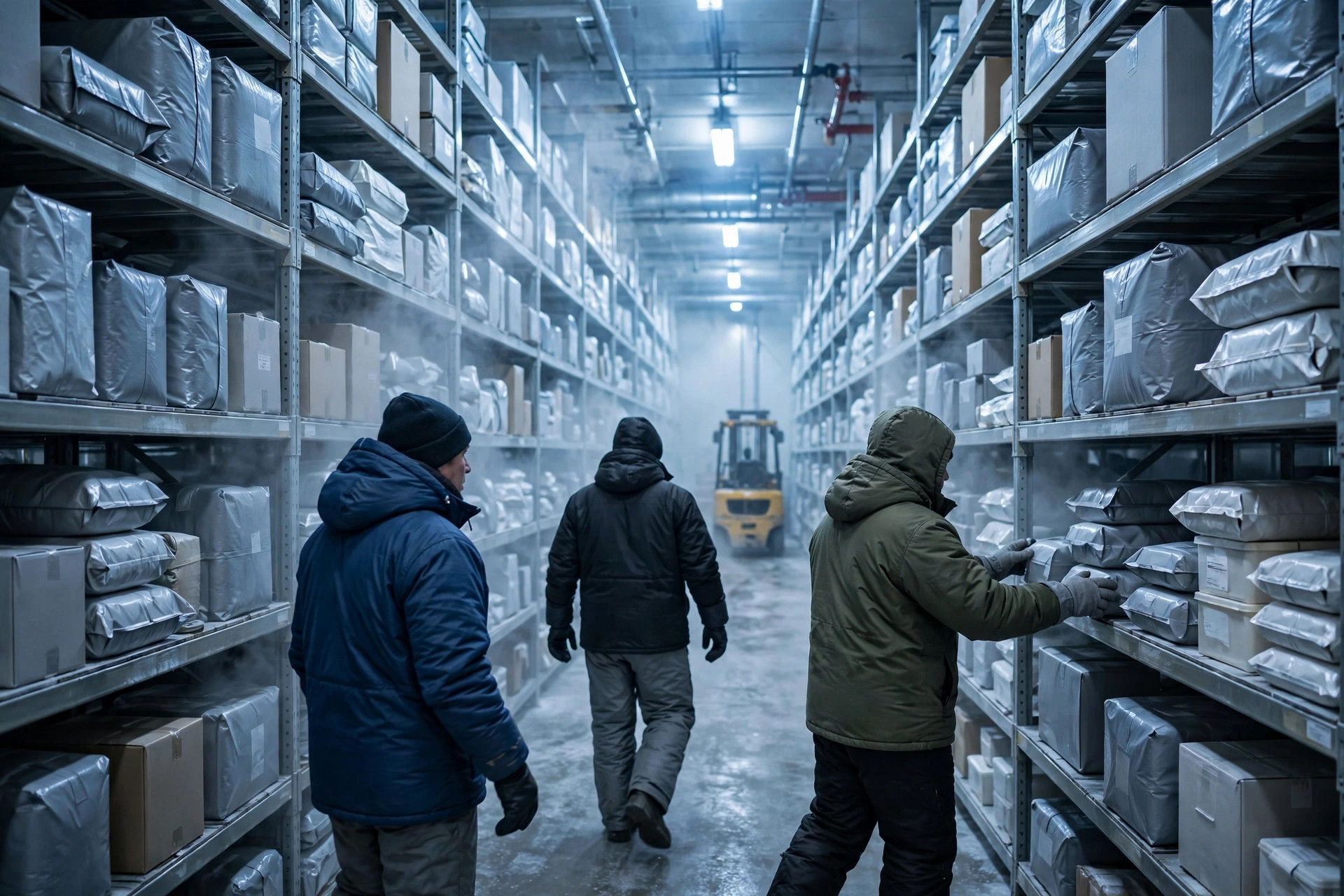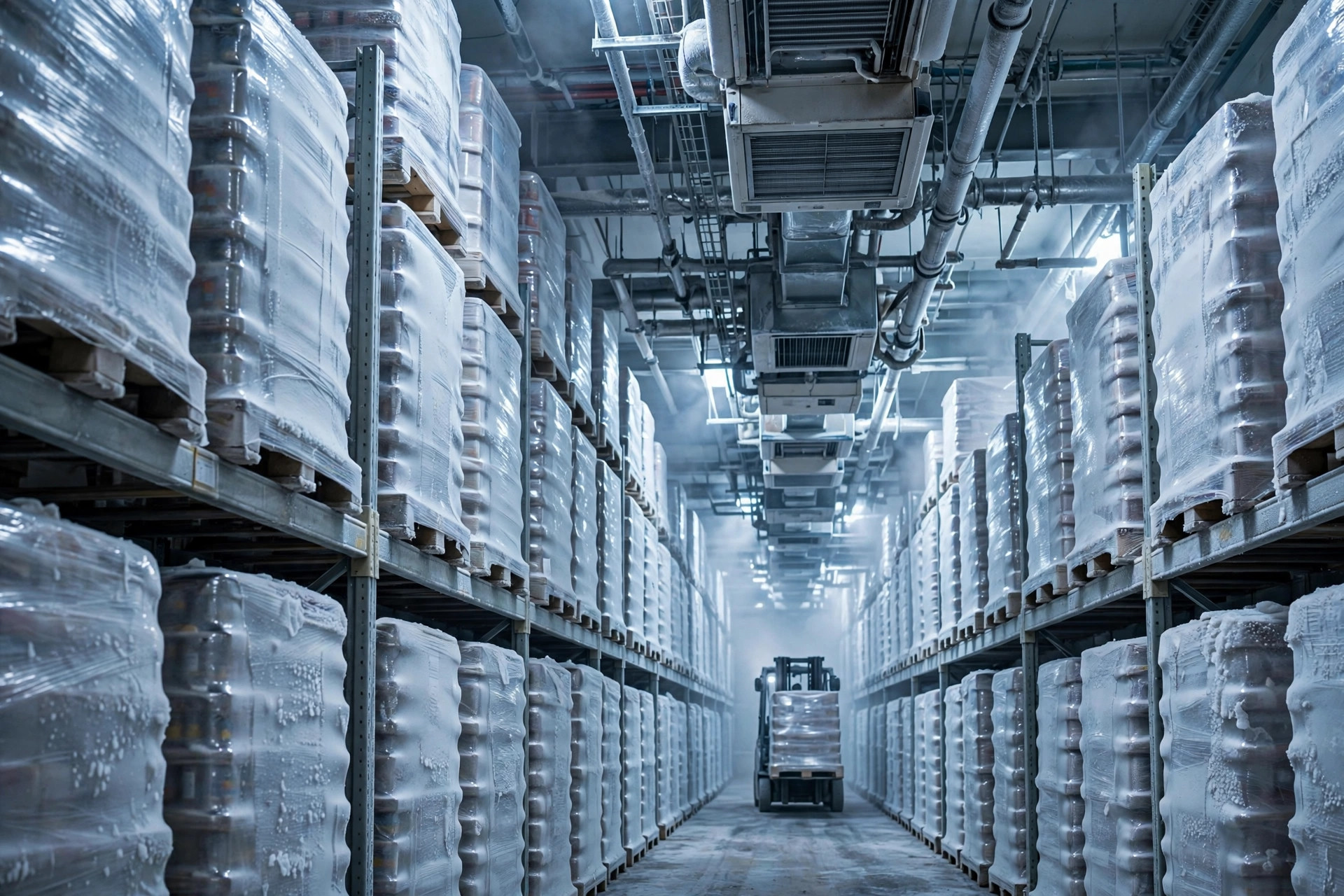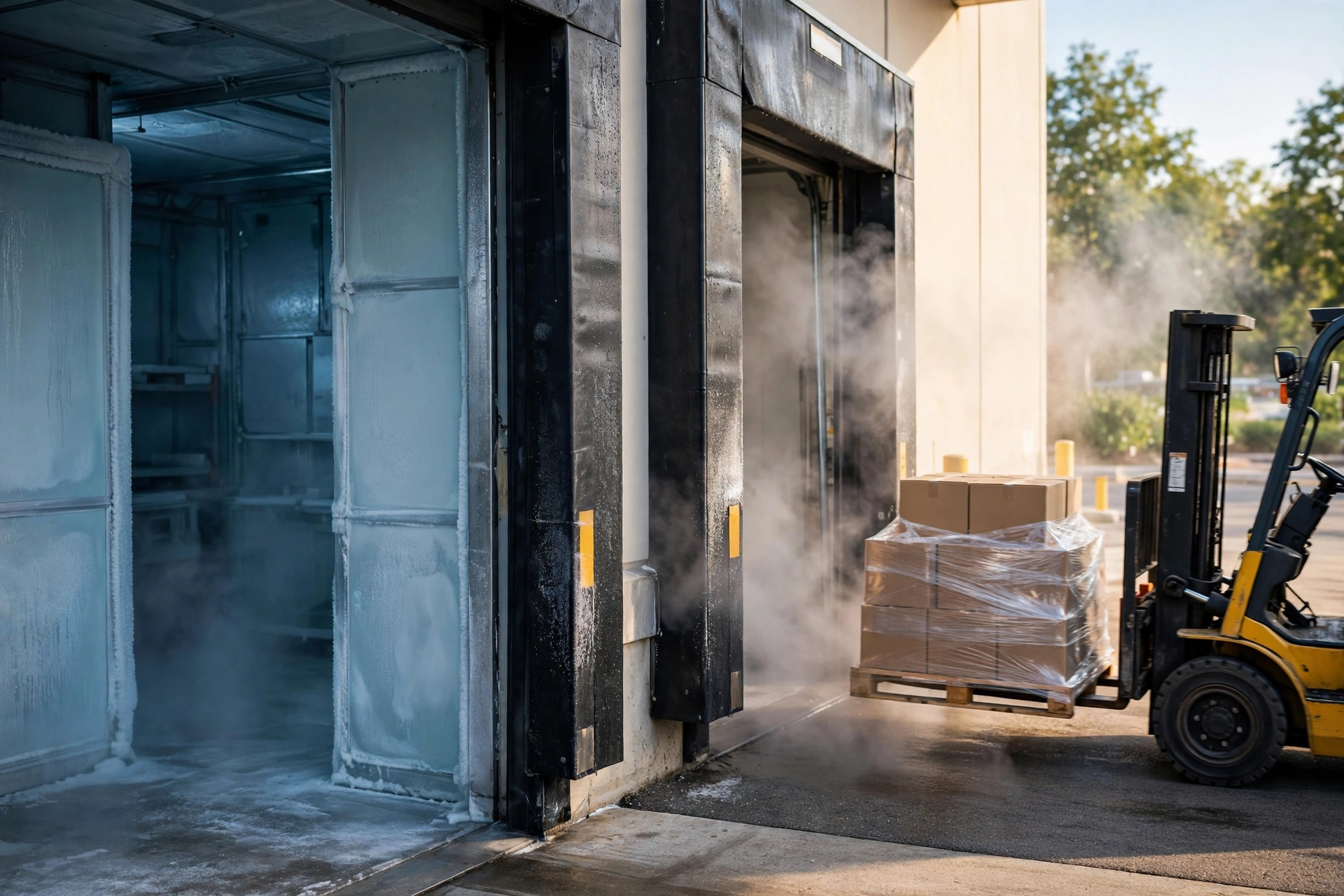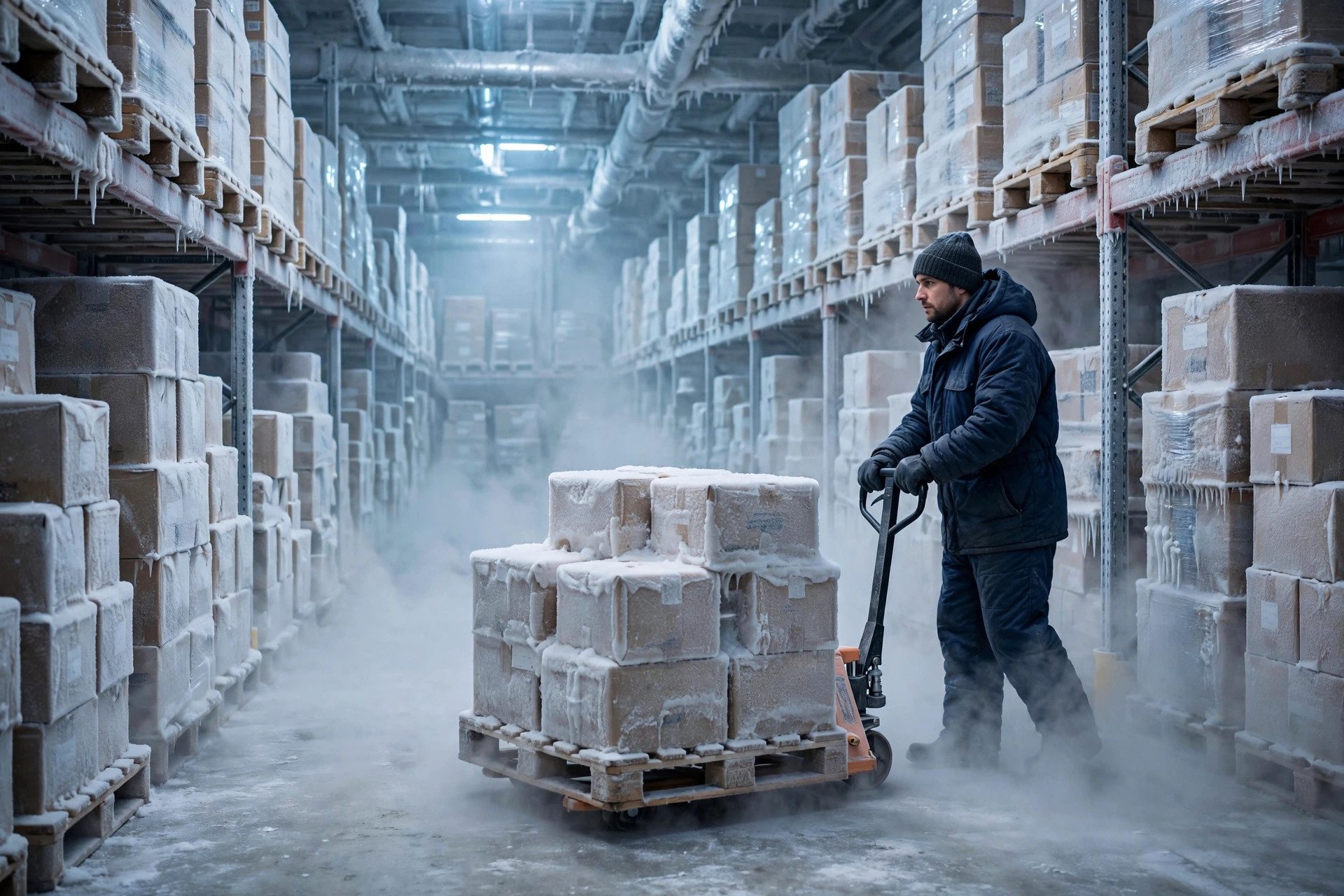
Fifteen years hauling reefer freight across this country, and I'll tell you something the warehouse guys don't always want to hear: the coldest room in the building isn't the most dangerous ground. It's the doorway — that few meters of concrete where the freezer meets the dock. Warm air hits cold floor, moisture condenses, and before anyone notices, you've got a sheet of ice that looks exactly like wet concrete. One step, and you're skating. This piece is about cold storage floor icing: why doorways ice up, who pays when someone goes down, and what a cold storage operator can actually do about it — from prevention to de-icing to daily checks.
The Dallas Fall: 4 AM on a Sheet of Ice
Last January I was unloading at a frozen-food distribution center in Dallas, Texas. It was bitter cold. I got there around 2 or 3 in the morning and waited in the lot for my door. My turn came a little after 4 AM. Under the dock lights the ground looked shiny — I figured it was just wet.
The kid from the warehouse drove the forklift out to grab my pallets, stepped off the machine, and his foot went sideways out from under him. Ankle twisted, half a pallet of boxes tipped over on the dock. That mess cost nearly two hours of unloading. I was supposed to be at my next pickup by 6 AM — missed the appointment window completely and sat around for most of the morning. One load's schedule, eaten up by a patch of ice at the door.
I asked the warehouse supervisor about it later. He said in winter it happens "once or twice a month, like clockwork." Here's the thing about cold storage floor icing: it's never a small thing. Forklifts slide and hit product. People slide and get hurt. Drivers like me sit and burn hours. Everybody loses at once.
Fresno's Off-Season Ice: Blame the Defrost Water
Here's one that wasn't even winter. A couple summers back, I was loading at a cold storage in Fresno, California — 90-something degrees outside, teens below zero inside. That facility's evaporator defrost drain just dumped straight onto the ground by the doorway. Defrost water ran out, hit the temperature boundary at the door, and cycled: water at noon, ice overnight. That patch of floor was glossy around the clock.
I watched a forklift come out of the door with two pallets of chicken wings. Rear wheels broke loose on the ice, the pallets tilted, and the driver had to crank the wheel hard to keep them from swinging into my cab. He was experienced and he saved it. Afterward the warehouse folks mopped the water and said "mop it and it's fine." Look — mopping treats the symptom. The defrost runs dozens of times a day. You can't mop your way out of that. Half the root cause of cold storage floor icing is the door; the other half is the water.
The Pattern: Ice Grows at the Busiest Door
After all these years on the road, I've noticed something counterintuitive: the freezers that ice up worst at the doorway aren't the coldest ones — they're the ones whose doors open the most.
It's simple physics. The busier the door, the more often it opens, the more warm moist air floods in. That moisture hits the cold floor at the threshold and freezes into frost, then ice. The high-volume, high-throughput facilities — the ones doing the most business — have the most dangerous doorways. Plenty of managers think "as long as our room temperature holds, we're fine." Any driver who's been around knows: the room can be perfect and those three meters at the door can still put somebody on the ground.
And ice doesn't take seasons off. Winter is cold air pushing in from outside. Summer is defrost water plus a bigger temperature gap. Year-round, the doorway ice never really clocks out.
What Actually Works Against Doorway Icing
Over the years I've seen every anti-slip trick in the book. Here's an honest ranking, based on what I've actually watched work:
| Measure | How it works | Effectiveness | Watch out for |
|---|---|---|---|
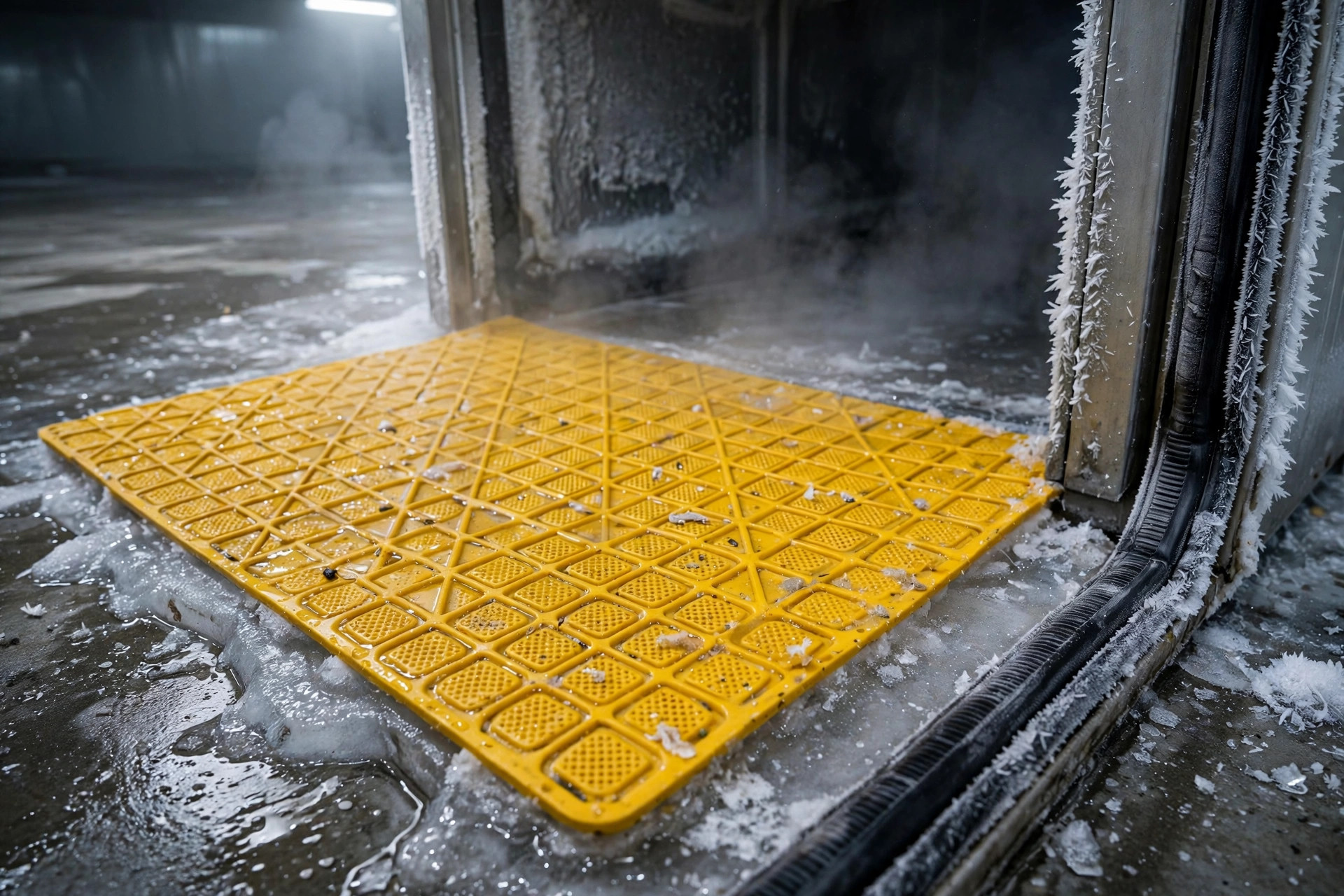
| Anti-slip mats | Rubber/perforated mats laid at the threshold | ★★★★★ | Mats must be anchored — a loose mat is itself a trip hazard |
| High-speed doors / strip curtains | Cut warm, moist air inflow when doors open | ★★★★★ | Replace torn strips promptly; a torn curtain is no curtain |
| Defrost water rerouting | Drain defrost water to a floor drain or outside, never at the door | ★★★★ | The cheapest fix; plenty of older buildings just have this one pipe wrong |
| De-icing agents / salt | Melt ice after it forms | ★★★ | Emergency use only; near food areas use food-safe products, and clear the meltwater fast |
| Scheduled ice scraping | Scrape the doorway ice on a set schedule each shift | ★★★ | Depends on people watching; night shifts are where it gets skipped |
| Heated flooring | Heating elements under the threshold slab | ★★★★ | Great for new builds; expensive retrofit for older sites |
I'll tell you what: the best defense is always a combination. Doors or curtains to keep the moist air out, rerouted drains to keep the water out, mats to keep feet planted. Salt alone is a losing game — it melts the ice into water, the water refreezes, and you're back where you started.
A Doorway Checklist for Cold Storage Managers
This is my outsider's checklist — a delivery driver's view of the doorway. Walk it once a week:
- Any glossy ice layer or water film within three meters of the door
- Anti-slip mats in place, anchored flat, no curled edges or lifted corners
- Strip curtains / high-speed doors intact, opening and closing properly, never hanging half-open all day
- Defrost drain outlets — where do they actually discharge? Any of them dumping at the doorway floor?
- Night and early-morning shifts: is anyone assigned to check the doorway ice situation on a schedule?
- Is the doorway lighting bright enough for drivers and pedestrians to see the floor's sheen at a glance?
- Are forklift operators and loaders actually wearing their slip-resistant boots?
- Every slip or slide incident: was it written down, and did anyone figure out the cause?
It's a short list, but each line has an incident behind it. Especially that last one — too many warehouses handle an accident and move on. Next shift, new crew, same patch of floor, same fall.
Two Words for Shippers and Fellow Drivers
If you're a shipper reading this: when you tour a cold storage, don't just check the room temperature and the price. Go stand at the doorway for three minutes. A facility that's sloppy at the door will eventually cost you at the worst moment — schedule slips, damaged product, insurance fights. Shippers end up paying for all of it.
And for my fellow drivers: at a freezer door, look at the floor before you look at the freight. If the ground shines, don't rush out of the cab — get the warehouse crew to deal with it first. If you have to walk it, take small steps and don't turn your back on a slope. Ten minutes sorting out an icy doorway beats two weeks on the couch. On-time matters, but your legs matter more.
Closing
Fifteen years out here, and I've come to see it clearly: in this business, it's not who has the fanciest equipment that wins — it's who sweats the small details. That patch of floor at the door looks like nothing, but it's where people, machines, and freight all collide. Where the ice grows, the risk gathers.
There's an old saying among us drivers: slow is smooth, smooth is fast — one extra look at the doorway saves a world of trouble on the road.
By Shifu Zhao, Trucking Veteran (15 yrs)