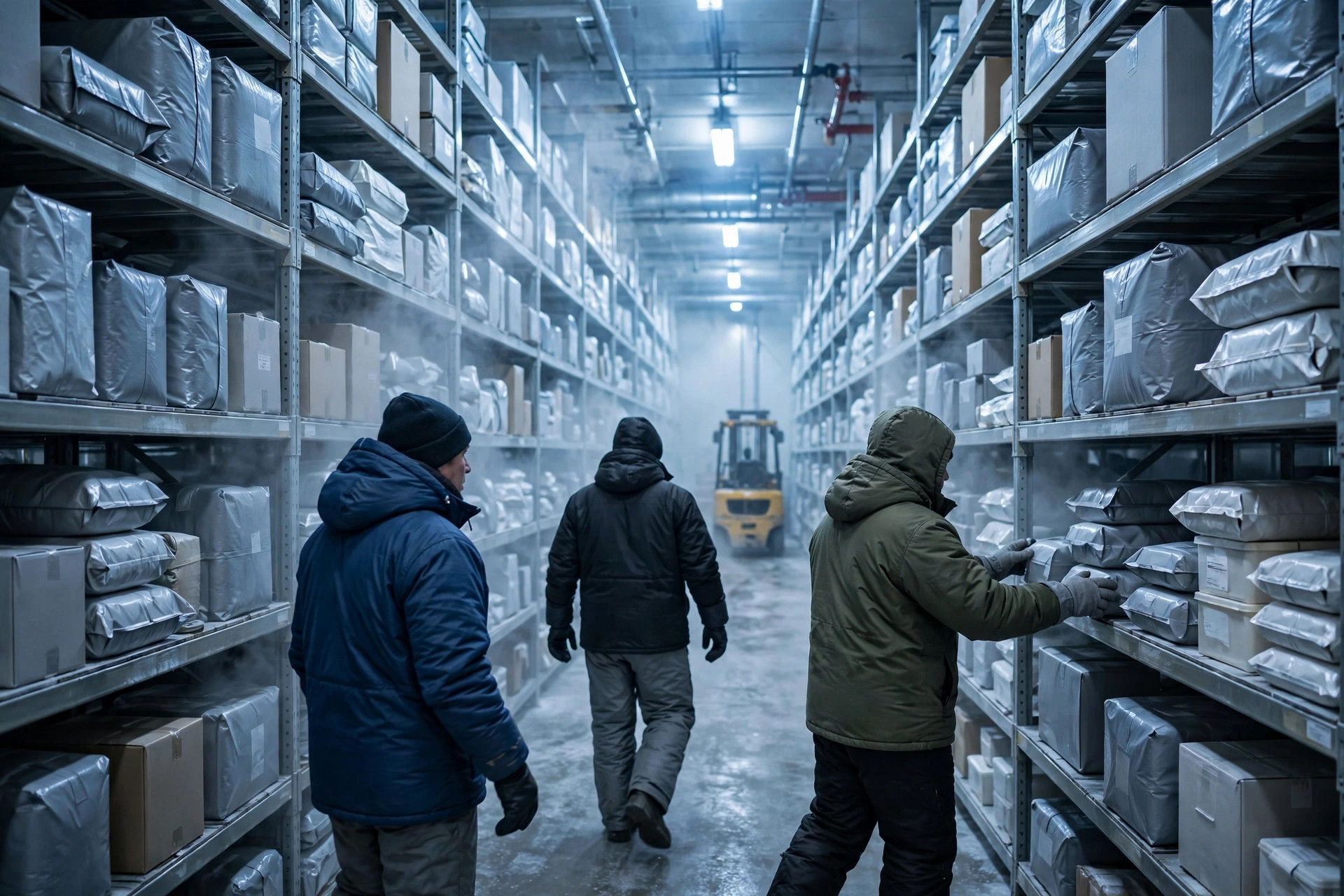
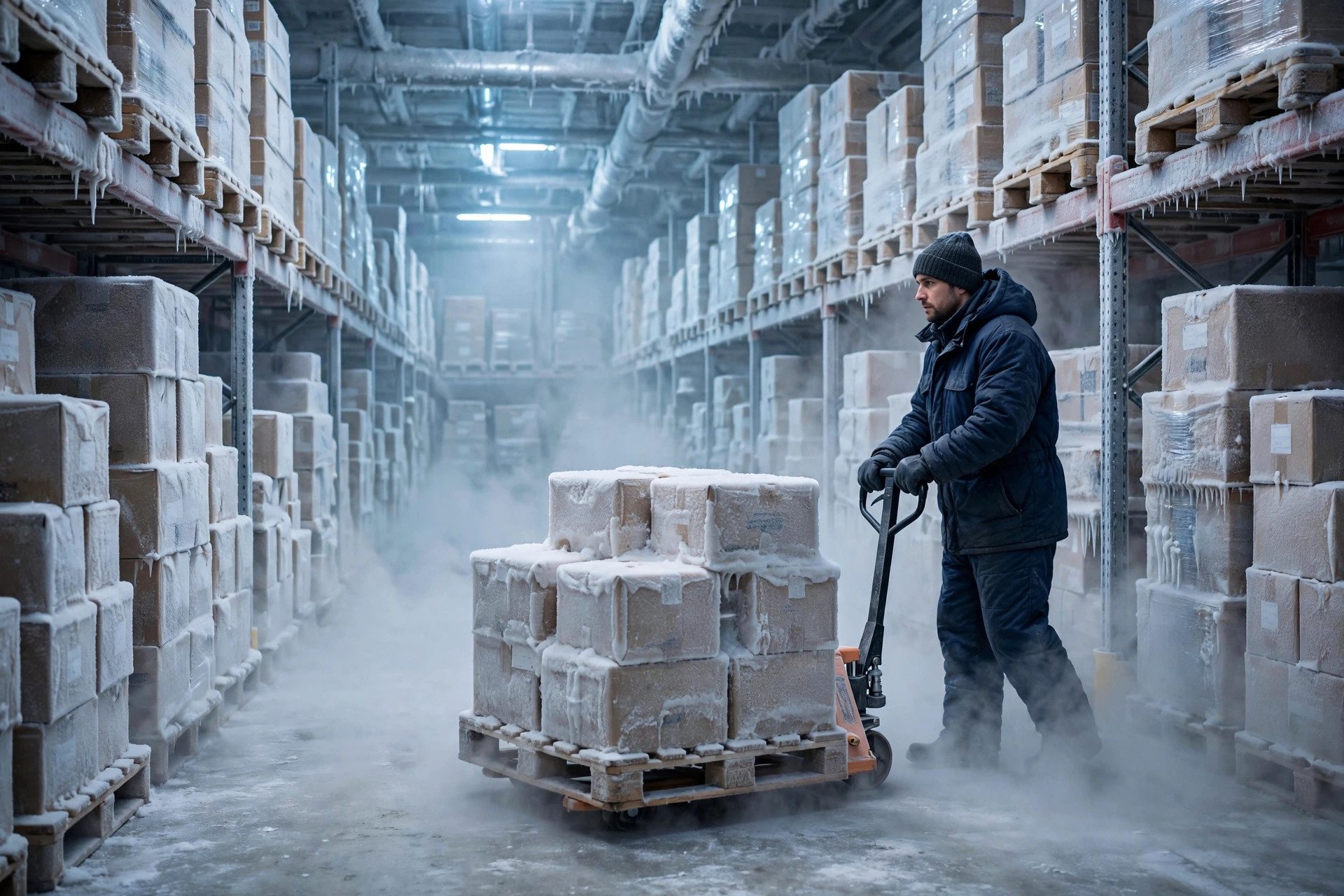
Over the past year, visiting temperature-controlled tenants across Southern California, I kept running into the same pattern: operators renting rooms with blast-freezing capability and using them as ordinary cold storage. Already-frozen product sat at -30°C for months, doubling power bills for no quality gain. A blast freezer and a chill room are engineered for fundamentally different jobs. Using one as the other is like hiring a sprinter to run a marathon.
The Pattern: A Blast Freezer Treated as "Just a Colder Cold Room"
Two cases I saw firsthand illustrate the problem.
In early 2025, a seafood importer in Vernon, California leased cold storage that included a blast freezing room. Their salmon arrived already at target core temperature and could have gone straight into conventional frozen holding. Instead, to "save one handling step," they stacked full pallets in the blast room and left them there for six months. A neighboring tenant with equivalent square footage was paying roughly 40% less for electricity that quarter. The culprit wasn't the utility rate: the blast room's compressor plant was running near full load around the clock. That plant is designed to drive product through its freezing curve in hours, not to hold temperature for months.
The second case, in September 2024, involved a central bakery kitchen in the City of Industry. They pushed chilled dough — product that belongs at 0–4°C — into a -30°C blast room, reasoning that "colder is safer, and it saves leasing a separate chill room." Months later, checks found cracked dough surfaces and a dry, firm crumb after proofing. Moisture inside the dough had formed ice crystals that ruptured the gluten network. Chilled dough was never supposed to go through a freezing process at all. That batch cost more than twice the electricity of a plain chill room — more money for worse quality.
Both cases share one root misconception: equating "colder" with "better preserved." In cold chain, quality is never decided by absolute temperature. It is decided by whether the temperature regime matches the product's process requirements.
The Data: Blast Freezer vs Chill Storage, Side by Side
Put the key parameters next to each other and the difference is stark:
| Dimension | Blast Freezer | Chill Storage |
|---|---|---|
| Temperature band | -30°C to -40°C air temperature (verify against equipment vendor specs) | 0–4°C for fresh food; 2–8°C typical for pharma |
| Design function | Freeze product "through": drive core temperature to -18°C within hours | Hold temperature steady for weeks or months |
| Pull-down speed | Typical target: core from ambient to -18°C in 4–6 hours (order of magnitude; varies with product thickness) | No pull-down function; product must arrive at target temperature |
| Energy intensity | Roughly 2–3x the refrigeration energy per unit volume of a chill room (order of magnitude; depends on equipment and local tariffs) | Baseline |
| Rent premium | Cold storage with a blast room typically rents 30–50% above plain chill space (order of magnitude; check local market quotes) | Baseline |
| Door-opening impact | Each opening dumps a massive heat load; compressors run extended high-load recovery | Slow temperature recovery; modest recovery load |
One dimension deserves emphasis: a blast freezer is process equipment; a chill room is storage equipment. Process equipment works in batches — product goes in, gets driven through its freezing curve in hours, and moves out to a holding freezer. Storage equipment works in months — product goes in and the temperature doesn't move. Running process equipment in storage mode costs more than electricity: sustained high load shortens maintenance intervals and eats into service life.
Why It Works: Speed, Not Cold, Is What Protects Quality
The real value of blast freezing isn't coldness. It's speed — and that comes down to the physics of water crystallization.
As food cools toward 0°C, its water begins to crystallize. The zone from -1°C to -5°C is known as the zone of maximum ice crystal formation. The longer product lingers there, the more time water molecules have to migrate and cluster into large, sharp ice crystals. Those crystals puncture cell walls like thousands of tiny knives. On thawing, the damaged cells can't hold their juices — moisture, nutrients, and flavor leak out together. The industry calls this drip loss.
The blast room's job is to shove product through that danger zone with -30°C forced air: from -1°C to -5°C in minutes, not hours. Water freezes in place before it can migrate, forming micro-crystals too small to damage cell walls. After thawing, texture stays close to fresh. That's why seafood and prepared foods depend on blast freezing — not because they're "afraid of warmth," but because they're "afraid of slowness."
The reverse logic matters too: product held at 0–4°C never enters the crystal formation zone, so there is no crystal damage to worry about. Pushing chilled dough into a blast room inflicts quality damage that would never have existed otherwise.
And here is the counterintuitive point: for long-term storage, what matters isn't how cold it is, but how stable it is. Blast rooms, with frequent product turnover, defrost cycles, and violent temperature pull-downs, typically swing far more than chill rooms. Already-frozen product parked long-term in that fluctuating environment is more prone to surface desiccation and freezer burn. The EU's quick-frozen foodstuffs directive (89/108/EEC) requires stable -18°C or below at every point of the product — the operative word is stable, not lower. Best practice reflects exactly this: the blast room only does the "drive-through," then product moves immediately to a -18°C to -25°C holding freezer. Don't make a sprinter run a marathon.
A Decision Framework: Which One Does Your Product Actually Need
Pulling the data and the physics together, here is a practical framework. Start with the product, then the process:
| Product type | Verdict | Rationale |
|---|---|---|
| Sashimi-grade seafood (tuna, salmon) | Blast freeze — at even lower temperatures | Raw-grade seafood commonly uses -45°C to -60°C ultra-low freezing (check vendor and buyer specs); intact cell structure is the whole value proposition |
| General frozen seafood and meat | Blast freeze (around -30°C), then move to holding freezer | Drip loss from slow freezing shows up directly in selling price; high-value product can't absorb it |
| Prepared meals, ready-to-cook foods, frozen bakery | Blast freeze | For central kitchens producing in batches, blast freezing protects both shelf life and texture |
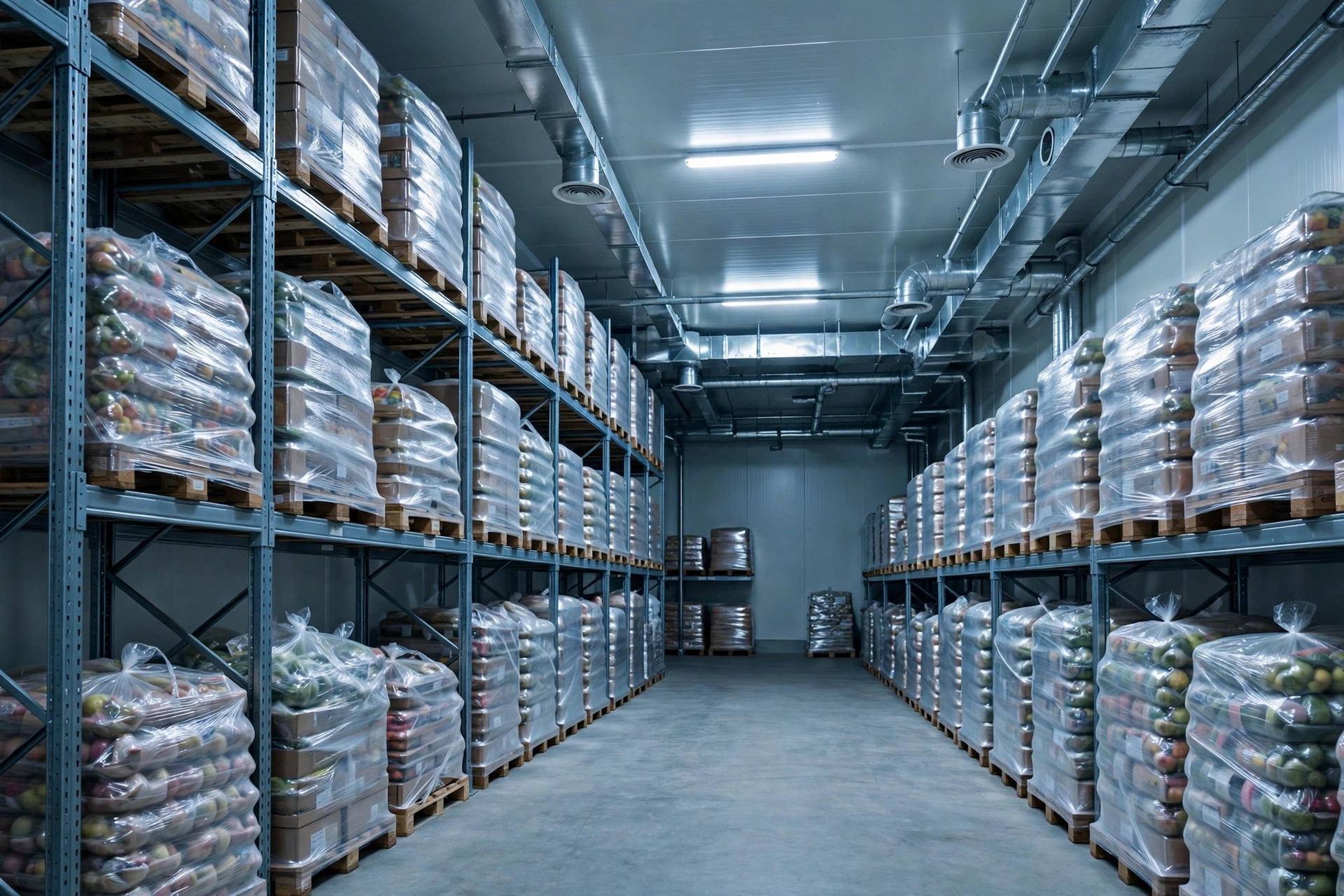
| Chilled dough, fresh dairy, produce | Chill storage is enough (0–4°C) | These products neither need nor should undergo freezing |
| Chocolate, dry goods, ambient seasonings | Ambient storage | Putting them in cold storage is pure waste |
| Already-frozen long-term inventory | Holding freezer (-18°C to -25°C), not the blast room | The most common mismatch: the blast room only does the drive-through |
Three questions settle most decisions. First: does my product need to cross the crystal formation zone at all? If not, chill it. Second: is this batch-by-batch drive-through or long-term holding? The former belongs in the blast room, the latter in the holding freezer. Third: how much of what's sitting in my blast room is already frozen through — just occupying expensive space?
Trend Assessment: The Cost of Getting It Wrong Is Rising
Looking ahead, the penalty for "blast room as storage" will only grow. Three lines of evidence.
First, energy costs are structurally rising. Commercial electricity rates in California have climbed steadily, and with blast rooms running at 2–3x the energy intensity of chill rooms, the same misuse produces a larger dollar loss every year. The old "convenience" surcharge is getting harder to ignore.
Second, prepared foods and central kitchens keep growing. North American prepared-food markets continue to outpace overall food growth, so genuine demand for blast freezing as a process is rising — but that doesn't mean every tenant needs its own blast room. Batch-based third-party blast services, or a small in-house blast cell used strictly for the drive-through with all storage in holding freezers, is the more rational shape.
Third, cold storage design and pricing are diverging. Newer facilities zone by process intensity — blast zone, holding zone, chill zone, each separately designed and metered, with rent and power billed apart. Once blast freezing becomes a separately priced process service instead of a fuzzy line item bundled into rent, tenants will rerun the math — and those parking inventory in blast rooms will feel the price signal first.
An open question to close with: if cold storage rents were ever priced by process intensity rather than square footage, would your current temperature-zone layout still hold up? The blast freezer vs chill storage debate looks like an equipment choice. Underneath, it's a choice of cost structure — and the right answer isn't on the thermometer. It's in your product's process requirements and your power bill.
By Dr. Chen, Supply Chain Researcher