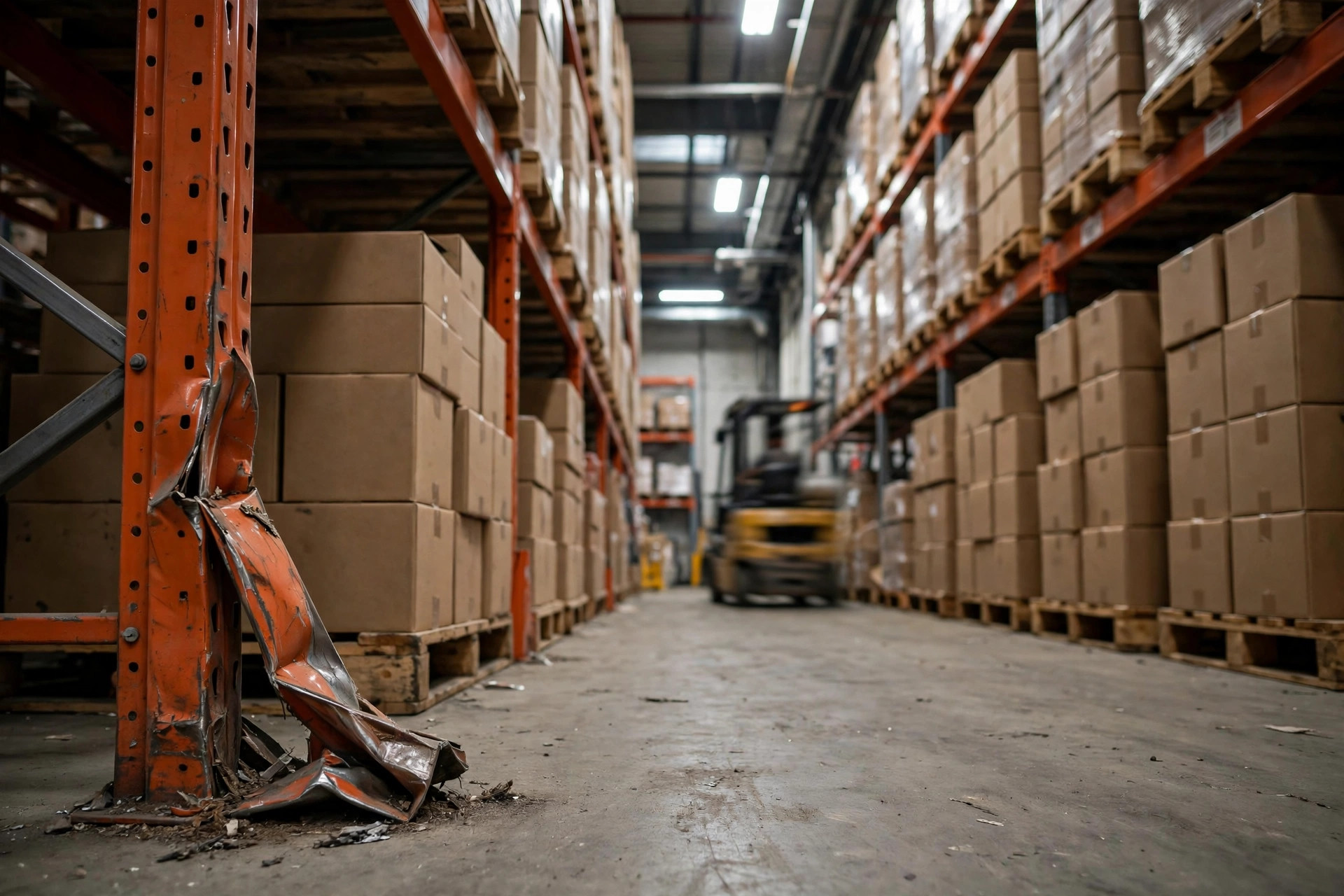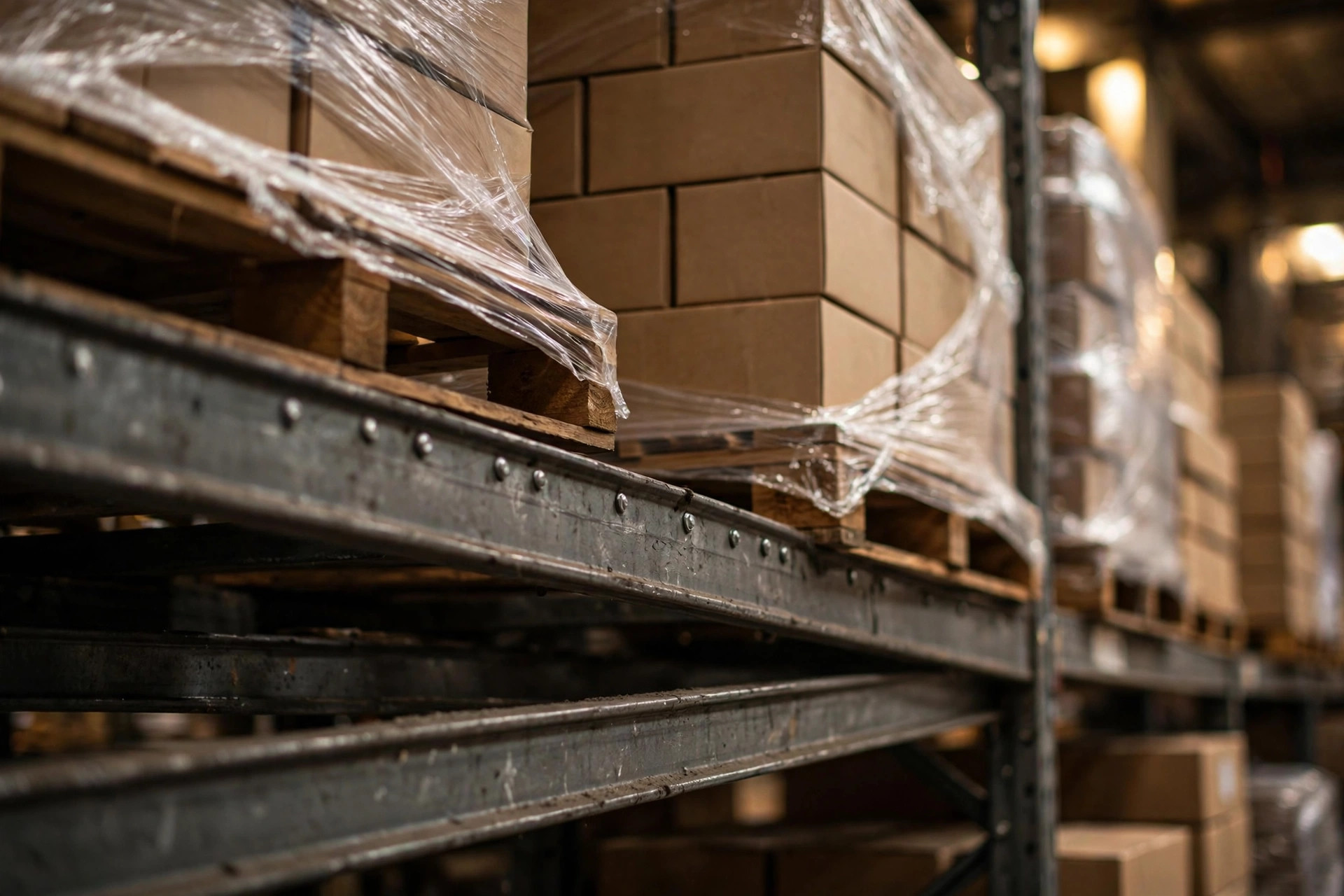
One pallet, a couple hundred kilos heavier than usual, squeezed into an open slot. It saves a location. What does it cost when it pushes past the pallet rack beam capacity on the sign? Run that math first. Then talk about safety.
Most overloading is not deliberate. A forklift driver is in a hurry. Locations are tight. A heavy pallet goes onto an empty beam and the shift moves on. The sign is still on the wall. The rack is still standing. So everyone assumes nothing happened. That is exactly where the accounting goes wrong. A beam that did not break is not proof it was not overloaded. No accident is not proof no money was lost.
What the Pallet Rack Beam Capacity Sign Actually Says
The most important line on a load sign is the uniformly distributed load, or UDL, for each beam level. Uniformly distributed means the weight is spread evenly across the full beam. It does not mean piled in the middle. It does not mean heavy on one end and light on the other. The same beam behaves very differently when a pallet sits centered versus when it sits off-center. A pallet loaded off-center may look like it only uses half the slot, but it works the beam and its connectors harder.
Reading the sign takes three checks, and missing any one of them means you did not really read it. First, confirm which level and which beam type the sign covers. Do not apply a number from an upper level to a lower level. Second, confirm the unit and the pallet count. Two pallets per level and three pallets per level are different math. Third, treat the number as a ceiling, not a target. Running at the ceiling month after month spends your entire safety margin and leaves nothing for the unexpected.
How much one specific beam can actually hold? Do not guess from experience. Use the rack manufacturer's load sign and a structural engineer's calculation for your own rack. Beams from different manufacturers, with different spans and different steel, carry very different numbers. Borrowing another warehouse's number for yours is one of the most expensive ways to "save money."
Overloading Without a Collapse Still Leaks Money
In the fall of 2024, a third-party warehouse in eastern China took on a batch of temporary heavy goods. The client's pallets were heavier than usual, and locations were full. The crew placed two heavy pallets side by side on a beam group normally used for light goods. The beam did not break. Nothing fell. Two weeks later, an inspection found one beam visibly sagging in the middle, with a connector loose on one side. That beam group shut down for three days for unloading, inspection, and replacement. A rented overflow area added another bill. The client's goods survived. The three days of downtime and reshuffling wiped out the profit on the job.
Early in 2025, an e-commerce warehouse in southern China paid a steeper tuition. During a promotion peak, heavy and light goods were mixed on the same beams, and several beam groups carried off-center loads for weeks. A pallet slid from a high level, damaged two pallets below, and grazed a worker. Damaged goods, medical costs, downtime, customer claims, plus a full inspection of the whole bay — the bill dwarfed whatever the extra locations had "saved." The manager's postmortem was blunt: had they run the numbers beforehand, nobody would have called those locations a saving.
Put both stories in one table and the conclusion gets cold and clear:
| What you pay for | What one overload can cost | What prevention costs |
|---|---|---|
| Damaged goods | One falling pallet takes the pallets below with it | Store by load sign, by zone and level — zero extra cost |
| Downtime and reshuffling | One beam group down for days, orders delayed | Catch deflection early, replace one beam, small shutdown |
| Injury and claims | One accident can eat a year's profit | Control mixed storage and off-center loads, cut the odds |
| Inspection and reinforcement | Full-bay inspection, beam replacement, structural review | Regular inspection plus a logbook, far cheaper |
This table has no exact dollar amounts, because every warehouse's goods value, rent, and labor are different. Plug in your own numbers: how much does one day of downtime cost in delayed orders, and how much does reinforcing one beam group cost? Once you do, the saving from overloading turns out to be the most expensive "saving" in the warehouse.
Here is the counterintuitive part. A beam that breaks is the easiest overload to spot. The expensive kind is the one that does not break. Deflection grows a little. A connector loosens a little. Fatigue builds up in the connections a little. The rack still stands, but the safety factor has already been eaten away. The next overload, a light forklift bump, or a tremor can become the final straw. Overloading without a collapse is borrowing on credit.
Three Moves That Keep Pallet Rack Beam Capacity Under Control
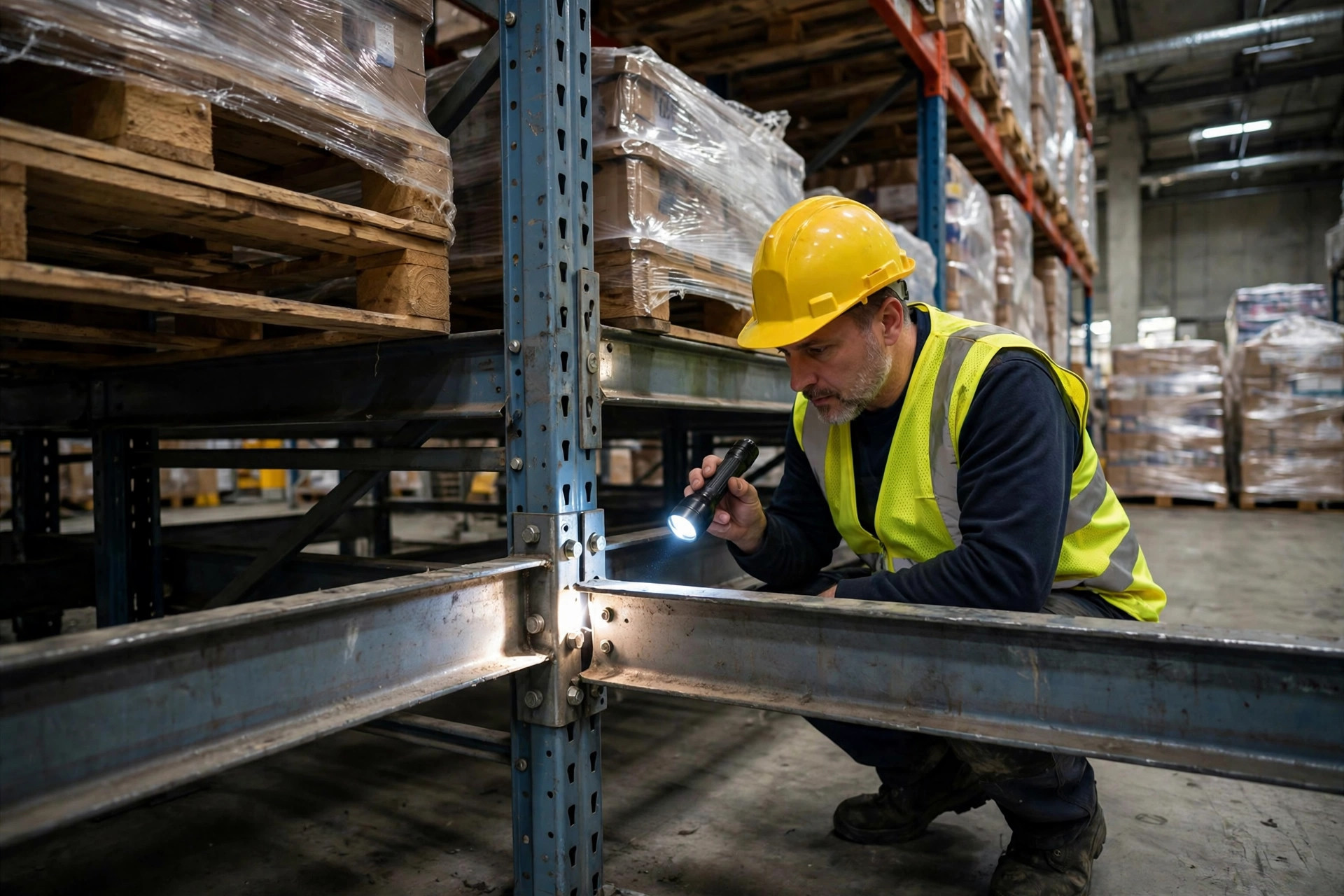
First move: look. During inspection, crouch down and sight along the beam at eye level. Check for sag in the middle. Check connectors for looseness, disengagement, or deformation. Do not just scan from the aisle. Sag looks very different standing up versus crouching down.
Second move: verify. Every week, pull a sample of locations and match the actual pallet weights against the load sign. Focus on mixed-storage zones and temporary zones — that is where overloading lives. When you find an overloaded pallet, move it the same day. Do not write it up as "next time." Overloading charges interest every day it stays.
Third move: log it. Keep one logbook for deflection, loose connectors, beam replacements, and structural reviews. Whichever zone keeps showing problems, that zone's storage rules need to change. The logbook is not for inspectors. It is for the next person running the numbers: which goods overload most often, which row of beams deserves reinforcement first. The data is all in there.
One more leverage point saves real money: split by weight at receiving. Send heavy goods straight to the zone rated for them when they arrive. Do not wait until putaway to sort it out. A few extra minutes at receiving buys you no reshuffling, no shutdown, no beam replacement. That money is well spent.
Run the full math on pallet rack beam capacity and it comes down to one line: the number on the sign is not a suggestion, it is a cost line. Cross it and you save a location fee while paying for damaged goods, downtime, and claims. Hold the line and you spend a few minutes on inspection while protecting a whole bay of racking and a year's profit.
By Lao Zhou, Logistics Cost Analyst