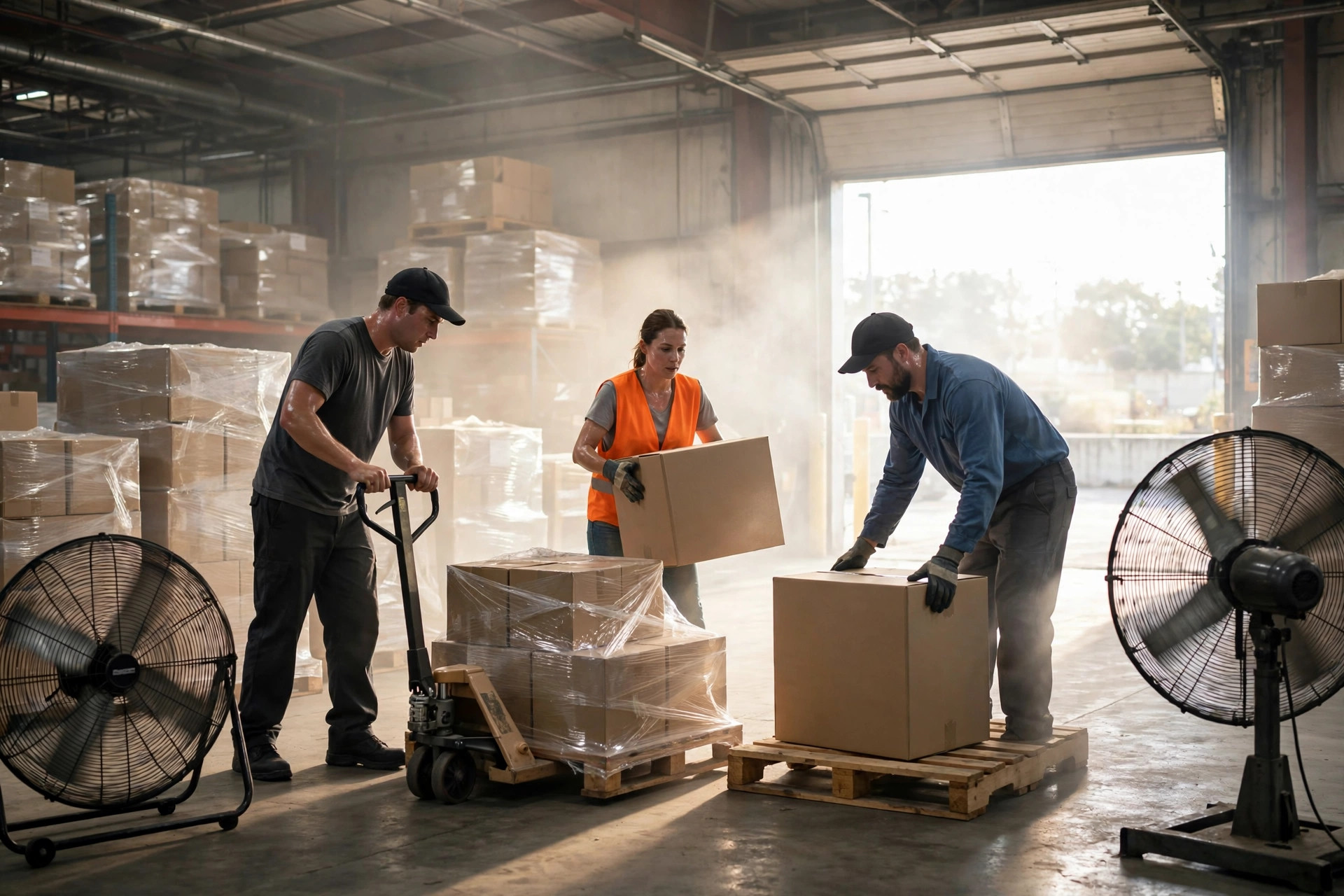
It was 11:30 at night last summer, on the night shift when Xiao Wang stepped on a pallet board lying upside down in the aisle. That night taught our crew more about pallet nail injury prevention in the warehouse than any safety poster.
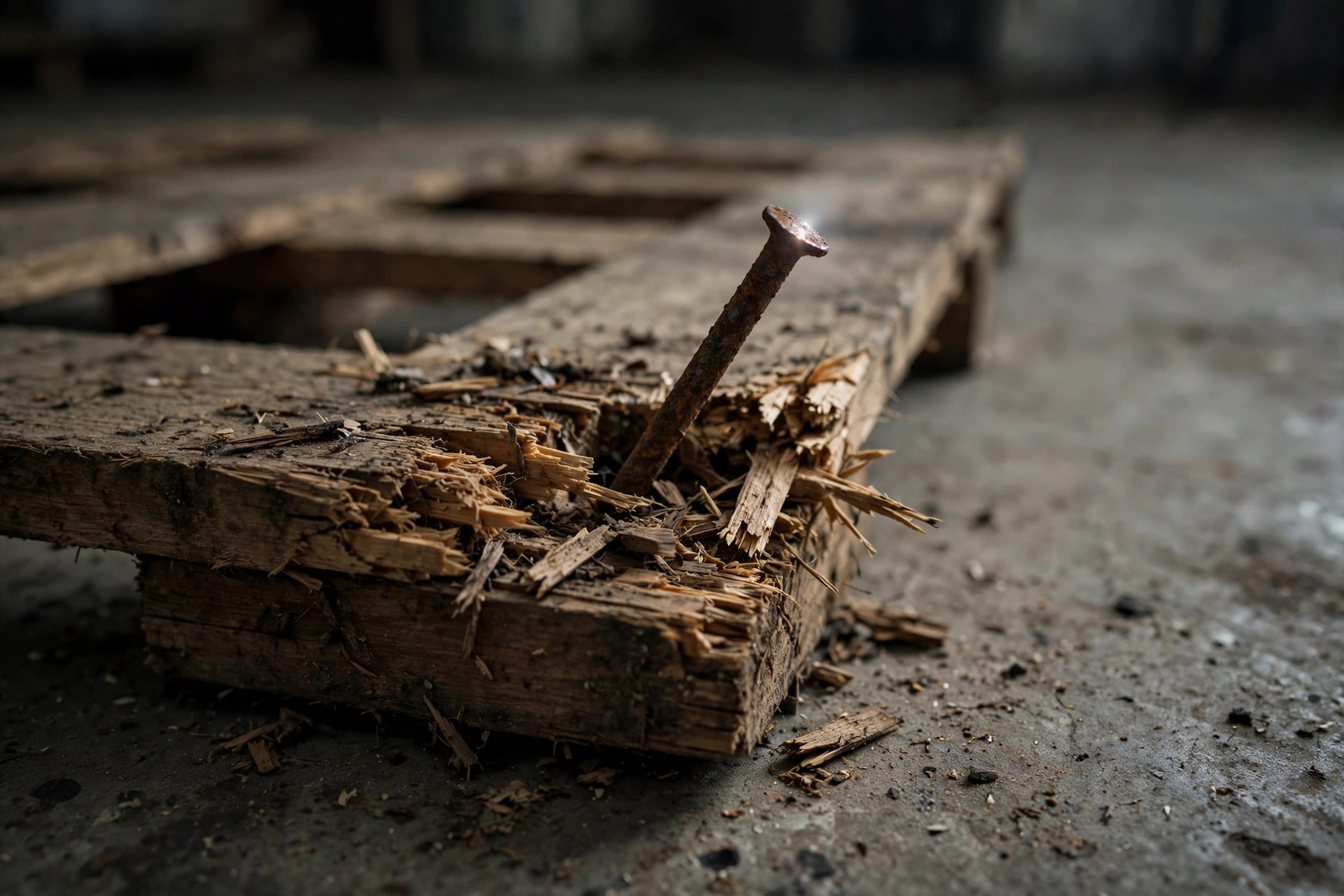
The whole lane heard him hiss. A nail went straight through his shoe sole, a couple centimeters deep, and came out bloody when he pulled it. I told him to get to the clinic. He waved me off — "I'm fine, I'm fine" — dabbed iodine on it, slapped on a bandage, and went back to work. Nobody thought twice.
Three days later his foot was swollen like a bun and he was running a 102 fever. Straight to the ER. The doctor said if he'd come in half a day later it could've gone sideways — the wound was infected, heading toward sepsis. A week of antibiotics, two weeks off. When he came back he said: "Feng, I never thought one nail could take me down like that."
I've run warehouses for over a decade, managed a 200-person operation at my peak. I've seen forklifts hit racking, I've seen pallets fall from height. But the thing that sticks with me most is that nail. No noise, no movement, no space taken. It just lies there, waiting.
Why Pallet Nail Injuries Keep Happening in Warehouses
We traced it back afterward — where do the nails come from? Three sources:
First, returned pallets. A supplier's shipment comes in, the pallets get stripped and tossed aside. Boards loosen, nails pop up, nobody deals with them. These are the most dangerous — they look like pallets but they're half-broken.
Second, repaired pallets. We used to have old-timers who'd fix pallets themselves to save money. They'd hammer nails in crooked, heads not flush; two months later everything's loose. Those DIY pallets are full of hidden nail hazards.
Third, pallets broken during handling. A forklift misses the entry, a board snaps, and the broken end keeps half a nail sticking out. The driver's in a hurry, dumps the broken pallet in a corner, done.
Put those three together and your warehouse has dozens of "booby traps" lying around at all times. The board Xiao Wang stepped on had slid out of a pile of returned pallets.
What One Nail Actually Costs: The Real Math on a Pallet Nail Injury
Most people only count the medical bill. That's the smallest part. We ran the full numbers on Xiao Wang's case — pallet nail injury prevention in the warehouse starts with understanding what you're preventing:
| Cost item | Amount (approx.) | Notes |
|---|---|---|
| ER visit + antibiotics | $2,000–$5,000 | Insurance covers part; deductible + copay on us |
| Workers' comp premium increase | 10%–30% bump next year | The claim follows you for 2–3 years |
| Replacement labor | $150–$200/day × 12 days | Night shift is already short-staffed; temp labor costs more |
| OSHA inspection + penalties | Up to ~$16,550 per serious violation (check OSHA's official site for current figures) | Nail injuries are a foreseeable hazard — no dodging this |
| Incident investigation + paperwork | 3–5 days of supervisor time | Reports, interviews, corrective actions, all of it eats hours |
| Morale damage | Can't quantify, but it's the most expensive | For two weeks nobody wanted to walk that aisle on nights |
Add it up: one nail, easily $30,000–$50,000. And that's when nothing catastrophic happened.
A worse one: a food warehouse in another state a few years back. A worker got a nail through his foot, didn't treat it in time, and the infection turned into sepsis. ICU. OSHA walked in, fined them tens of thousands, and the insurer bumped their workers' comp rate a full tier. The owner later told a buddy over dinner: "I wish I'd spent twenty grand replacing every pallet in the building."
Here's the thing: preventing a nail injury costs under fifty bucks — the price difference on a compliant pair of safety shoes, a magnetic sweeper, a checklist. That's it.
The Counterintuitive Take: The Cheapest Protection Guards Against the "Smallest" Thing
Talk safety with warehouse folks and everyone jumps to forklift collisions, rack collapses, fire drills. All important. But after all these years running floors, I've landed on a counterintuitive conclusion:
The most overlooked injuries in a warehouse are the ones that don't look like accidents.
A forklift crash — the whole building knows. A nail through the foot? The guy himself is embarrassed to report it. If Xiao Wang's foot hadn't swollen up like a bun, he'd never have gone to the hospital. Our anonymous survey afterward suggested the real occurrence rate of these "embarrassing" injuries is 3–5x the reported number.
And here's a trade-off most people never work through: cheap pallets vs. nail risk. Used wood pallets run $6–8 each, new ones $12–15, plastic pallets $30 and up. Every boss does the math on "pallet purchase cost." Nobody does the math on "pallet nail cost." But put that $30,000–$50,000 table in front of them and the question answers itself. We swapped every high-risk wood pallet in our returns area for plastic. Fourteen months later: zero nail injuries.
I'm not saying every warehouse should go all-plastic — that's a rich man's solution. The point is tiering: where people walk the most (picking zones, returns, aisle entries), use good pallets. Pure machine-stacked storage areas can keep wood pallets, but only after they pass nail inspection.
What We Do Now: Four Non-Negotiable Rules
We tried other things first. Started with fines — $50 for a dumped broken pallet. Two months: zero effect, nails everywhere. That's when it clicked: you can't fine your way out of this; you need a process that gives nails no chance to show up. Pallet nail injury prevention in the warehouse comes down to process, not punishment. Now it's four rules, no exceptions:
One, pallet triage at receiving. Every incoming pallet gets a glance from the receiver: boards loose? nails popped? Anything with a raised nail gets a red tag and goes straight to the repair area that same day. A pallet that skips triage doesn't enter the storage area. This is the cheapest rule and the most effective one.
Two, magnetic sweeper + nail checklist in the repair area. After fixing a pallet, roll a magnetic sweeper around the floor. Don't underestimate this — half of nail injuries happen because "we fixed it but didn't clean up." The checklist is three items: nail heads flush? Broken boards cleared? Floor swept with the magnet? Sign it before the pallet goes back out.
Three, safety shoes are the floor, not an option. We used to have people walking the floor in sneakers — "I'm just moving a small box." After Xiao Wang, the rule is simple: puncture-resistant safety shoes with a steel or Kevlar midsole, or you don't enter the floor. The company covers half, the employee covers half. Nobody complains anymore — they all saw Xiao Wang's foot.
Four, broken pallets don't spend the night. Any damaged pallet found during the day goes to repair or scrap the same day — no "temporary" staging by the aisle. Temporary is permanent; that's the iron rule. We put a red scrap-pallet bin in returns and one in picking. When it's full, it gets hauled. Crude, but it works.
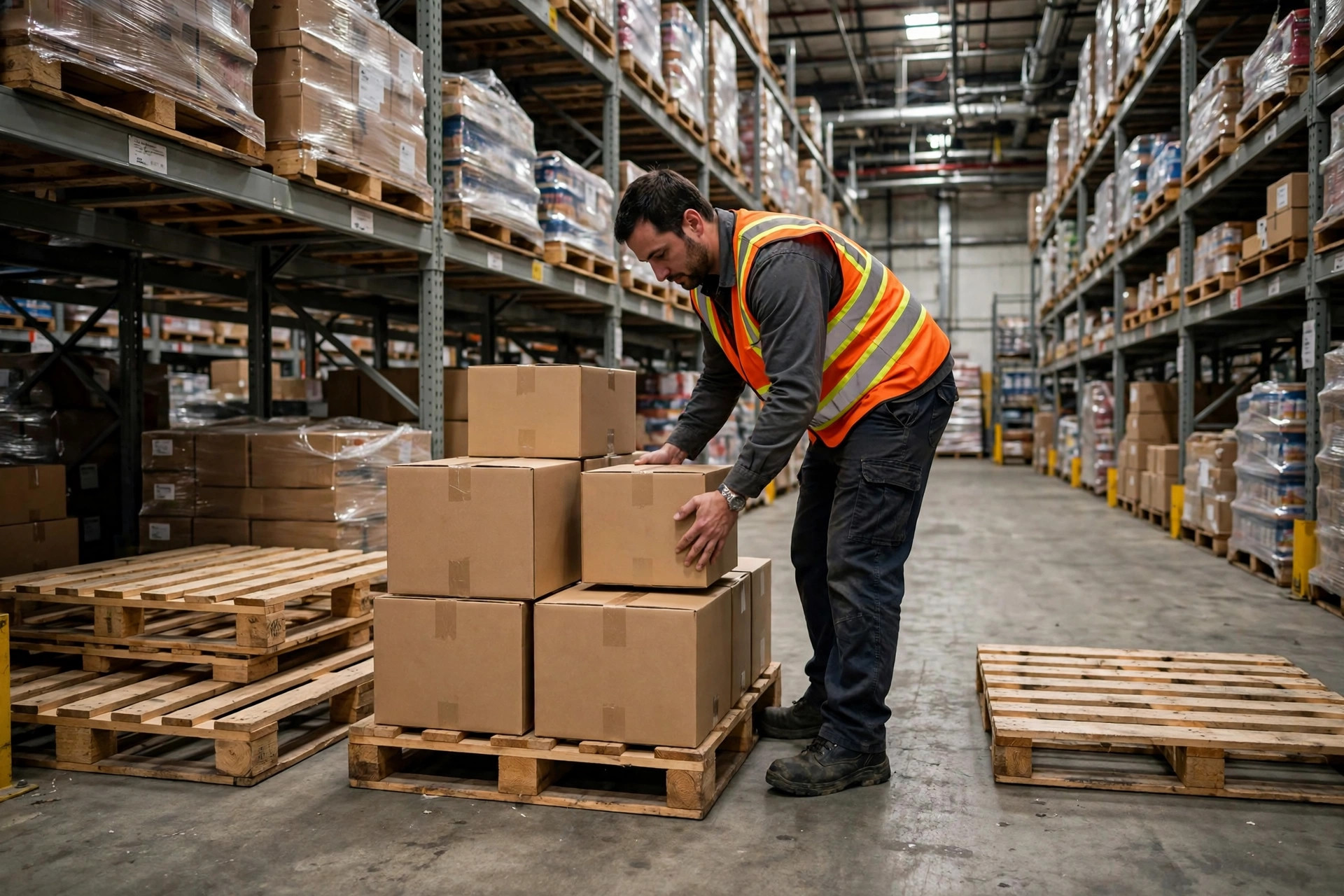
Fourteen months running these four rules: zero nail injuries. When OSHA came through for a general inspection, the inspector walked the returns area, asked who managed the pallets, and wrote down "good practice." Getting complimented by OSHA is harder than winning an award.
Three Reminders for Fellow Warehouse Folks
First, don't wait for an injury to start checking nails. My biggest regret after Xiao Wang's accident: I'd seen raised nails on pallets before and thought "probably fine." In a warehouse there's no "probably fine" — there's only "hasn't happened yet."
Second, make nail awareness the first lesson for new hires — it's not overkill. In our warehouse now, the buddy's first-day walkthrough includes pointing at a pallet: "See a raised nail, walk around it, come tell me." New people are the most likely to get hurt because they don't know to be afraid yet.
Third, do the full math, not the purchase-order math. Next time a boss says "replacing pallets is too expensive," put that $30,000–$50,000 table on his desk. Prevention is always cheaper than cleanup — and with pallet nail injury prevention, that's literally, word-for-word true.
Warehouse safety isn't about who buys the most expensive equipment. It's about who treats the "small stuff" like it matters. A nail goes through a foot, but it tests the management. When it comes to pallet nail injury prevention in the warehouse, the cheapest win is the one nobody brags about. Have you checked your pallets today?
By Chen Feng, Warehouse Operations Manager