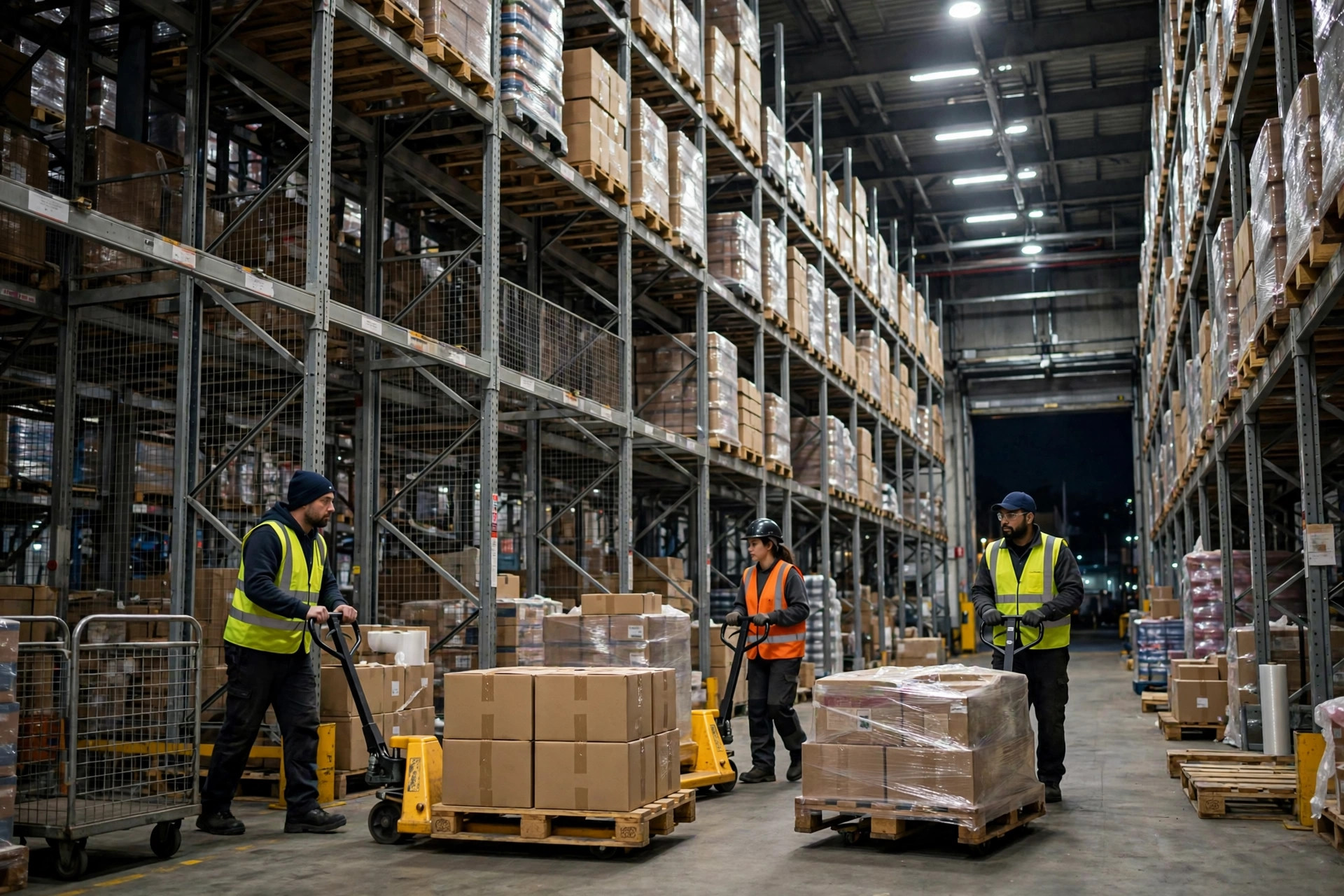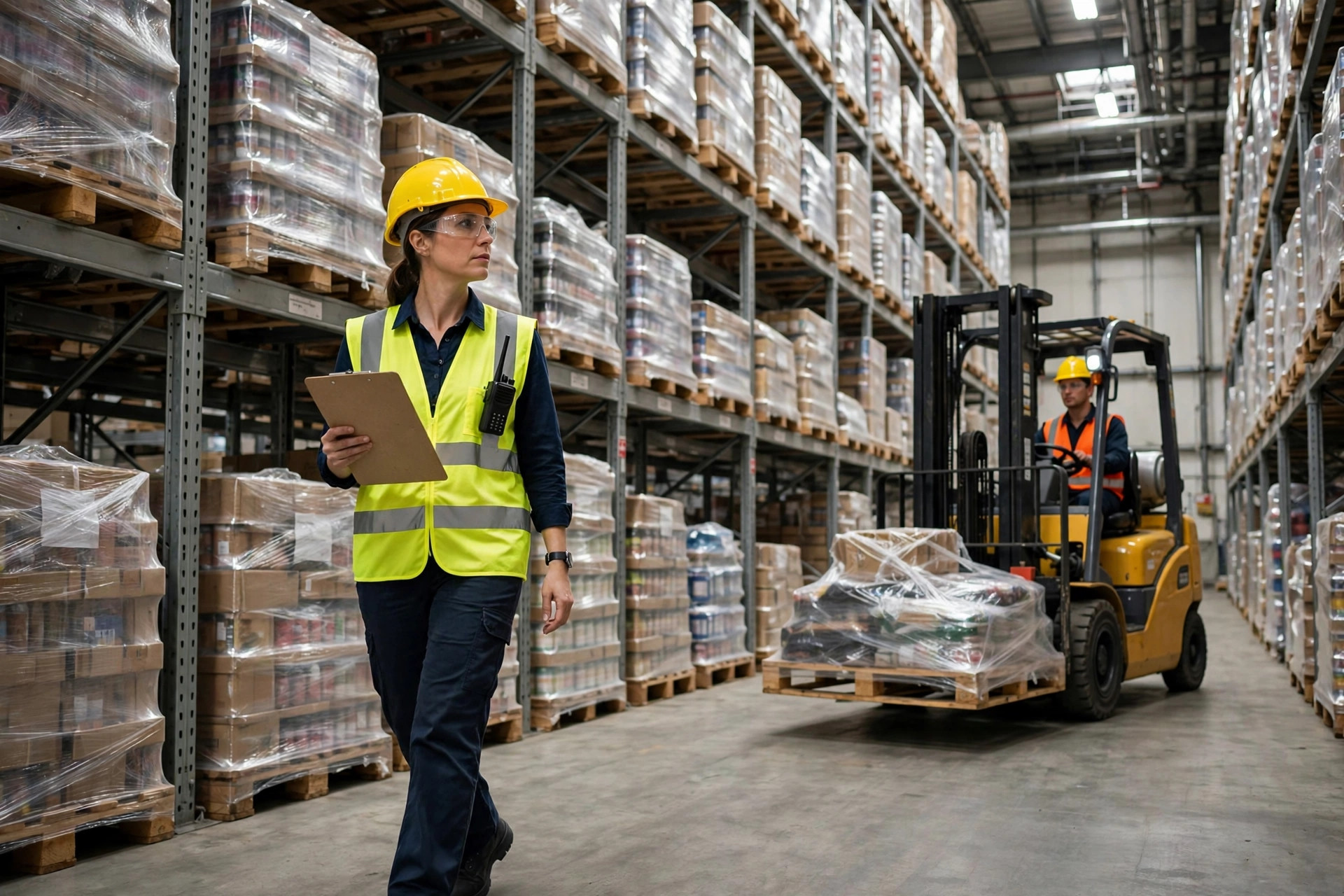
Let me open with the ledger. A 150-person warehouse in the United States spends roughly $180 to $350 per employee per year on personal protective equipment — high-visibility vests at $6 to $10 apiece, safety-toe boots at $70 to $120 a pair, safety glasses at $10 to $20, cut-resistant gloves at $12 to $25, plus hard hats, hearing protection, and metatarsal guards. That is $27,000 to $54,000 a year for the whole building. Now the question that decides who writes the check: who pays for PPE, the worker or the company?
The answer is written into federal regulation — OSHA 1910.132(h), the employer-pay rule. The principle is one sentence: PPE needed to comply with the standard must be provided by the employer at no cost to employees. But the rule carries four exceptions, and getting any one of them wrong means either wasting money or eating a serious-violation citation worth tens of thousands of dollars (check OSHA's current published penalty levels). This article settles the question of who pays for PPE under the OSHA employer rule: what the employer must pay for, what the four exceptions actually say, and how the disputed cases get decided in practice.
Who Pays for PPE: The Must-Pay List First
Paragraph 1910.132(h)(1) takes a hard line: protective equipment used to comply with the standard "shall be provided by the employer at no cost to employees." No negotiation. OSHA's own guidance lists the items an employer must pay for — here is that list mapped to warehouse reality:
| Item | Employer must pay? | Warehouse context |
|---|---|---|
| Hard hats | Yes | High-bay racking, loading areas |
| Reflective safety vests | Yes | Forklift/pedestrian shared zones |
| Hearing protection | Yes | Sortation or packing areas above the noise threshold |
| Non-prescription eye protection, face shields | Yes | Packing, cutting, chemical handling |
| Chemical-resistant gloves and aprons | Yes | Battery rooms, cleaning chemicals |
| Metatarsal guards | Yes | Locations with falling-object risk |
| Respiratory protection | Yes | Dust, fumigation operations |
| Replacement PPE | Yes, unless lost or intentionally damaged | 1910.132(h)(5) |
Two lines deserve attention. First, replacement: when PPE wears out in normal use, the employer pays for the replacement. The only carve-outs are PPE the employee has lost or intentionally damaged. Many warehouses do not know this and argue with workers over replacement costs they are legally required to cover.
Second, and this one bites: 1910.132(h)(6). If an employee brings their own adequate PPE, the employer may allow its use — but the employer cannot require workers to provide their own PPE. And "adequate" is the employer's call. Cheap self-bought gear that does not meet the hazard standard is still the employer's liability.
The Four Exceptions: Who Pays for PPE When the Worker Brings Their Own
The four exceptions to the employer-pay rule are narrow, and each has a condition attached. Miss the condition and the exception dies:
| Exception | What it covers | Condition | The money read |
|---|---|---|---|
| 1. Non-specialty safety-toe footwear | Ordinary steel-toe shoes or boots | Employer permits wearing them off the jobsite | The most disputed line in warehousing — see the case below |
| 2. Non-specialty prescription safety eyewear | Ordinary prescription safety glasses | Same condition: allowed off the jobsite | Specialty eyewear (laser, special impact ratings) is not excepted |
| 3. Everyday clothing | Long-sleeve shirts, long pants, normal work boots | Worn as ordinary clothing anyway | Not PPE at all |
| 4. Weather-only gear | Winter coats, gloves, raincoats, ordinary sunglasses, sunscreen | Used solely for weather protection | Cold-storage gear counts only if it protects against cold alone |
Exceptions 1 and 2 turn on a single phrase: "provided that the employer permits such items to be worn off the job-site." In plain terms: if company policy says the boots stay inside the facility and cannot be worn home, the boots are no longer "non-specialty." They have become job-dedicated equipment, the exception fails, and the employer pays.
One more buried line: 1910.132(h)(3). If the company has already issued strap-on metatarsal guards, and an employee asks to wear shoes with built-in metatarsal protection instead, the employer does not have to reimburse the shoes. Note the order — the guards must be issued first. Skip the guards and tell workers to buy their own metatarsal boots, and the bill is the employer's again. For high drop-risk locations this saves thousands a year, but only when the guard purchase comes first. Get the sequence backwards and the savings evaporate.
And the "upgrade" case: if the company-issued boot is compliant and the worker wants a fancier pair, the employer does not owe the price difference. In practice nobody tracks that delta per employee — standardize one model, buy in bulk, and the administrative cost of tracking upgrades disappears.
Case one: a 200-person distribution center in Dallas, 2024. Company policy said safety-toe boots were the employee's own expense — but the same employee handbook required boots to be worn only inside the facility. An OSHA inspection found the contradiction: boots that cannot leave the site do not satisfy the (h)(2) exception, so the company owed 200 pairs. At roughly $90 a pair, that was $18,000 in back-provisioning alone, before any citation. The irony: deleting the "no wearing offsite" line from the handbook, or simply buying in bulk at around $60 a pair, would have cut the bill in half. Wasted money.
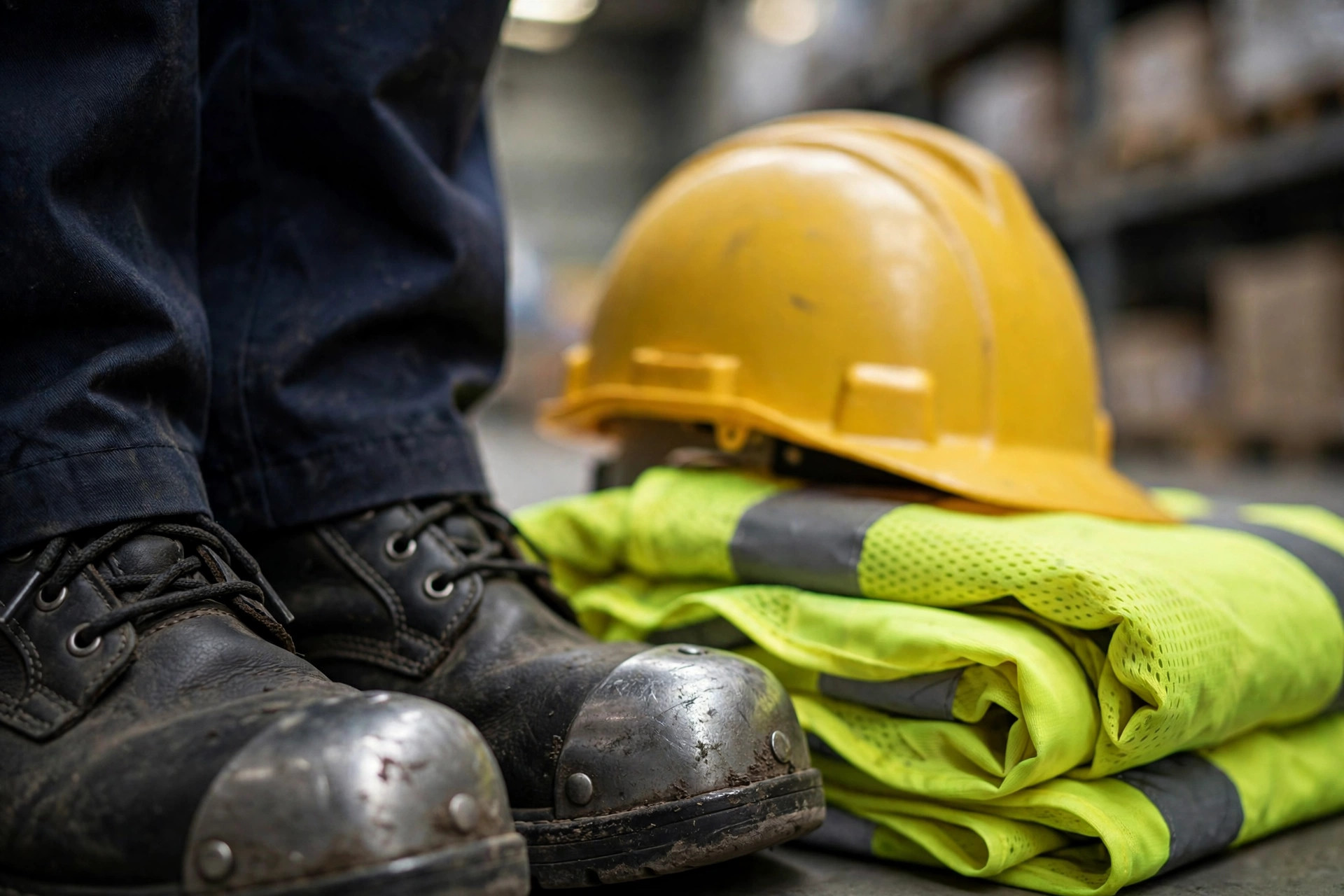
Case two: a cold-chain warehouse in Illinois, 2023. A picker wore self-bought steel-toe boots from an online seller — $40, with a toe cap that did not meet the impact standard. A tipping pallet crushed his toes. The company argued the boots were the worker's own purchase. But 1910.132(h)(6) is explicit: when employees supply their own PPE, the employer must verify it is adequate. The company had never inspected the boots. The medical and lost-wage costs dwarfed the site's entire annual PPE budget. Here is the counter-intuitive part: letting workers bring their own PPE looks like savings, but it keeps the adequacy-verification duty — and the liability — on the employer. The inspection cost plus the risk exposure adds up to more than bulk purchasing ever would.
The Counter-Intuitive Verdict: An Exception Is Not a Savings Strategy
Three calculable judgments to close the ledger:
First, "may not pay" is not "should not pay." A compliant pair of safety-toe boots costs $70 to $120. A single serious-violation citation costs orders of magnitude more. The exceptions are legal safe harbors, not budget strategies. Using them to save small money is gambling against citation odds.
Second, bulk purchasing is the real savings lever. Exception 1 allows self-purchase, but a worker buying retail pays $90 to $120 while the company buying at volume pays $60 to $80 — with uniform specifications and a single adequacy review that satisfies (h)(6). For a 150-person site: the self-buy model shows zero nominal spend but full risk exposure; the bulk-buy model spends about $10,000 and zeroes the exposure. Not a hard calculation.
Third, the replacement rule is a hidden savings point. Under (h)(5), normal wear-and-tear replacement is the employer's bill — but many sites have no exchange process, so workers keep wearing degraded PPE. Degraded PPE is the same as no PPE when an incident happens. A simple exchange log — old item returned, new item issued, losses and damage signed off by the worker — eliminates the arguing and the risk.
The bottom line, in numbers: a 150-person warehouse running a full employer-pay, bulk-purchase model spends roughly $150 per person per year — two vests at $8, one pair of boots at $75, plus about $60 in glasses, gloves, and earplug consumables — for a site total near $22,500. One serious citation costs several times that. Under the OSHA employer-pay rule, full employer payment for PPE is not a cost; it is the cheapest insurance policy in the building. Keep the four exceptions for the lawyers. Do not budget around them.
By Lao Zhou, Logistics Cost Analyst